


You are probably living in two entirely different relationships right now. One is the perfect romance your girlfriend portrays on her Instagram Stories, filled with highly curated date nights and glowing captions. The other is the silent treatment, the circular arguments, and the crushing feeling that no matter how much you give, it is never enough. Standard relationship advice tells you that communication is the key to solving issues. But if you are dealing with a toxic partner, communication is just a tool they use to gather information and use it against you.
The earliest narcissistic girlfriend signs usually do not show up in major blowouts. They hide in plain sight on her social media feeds. The indicators aren’t just in what she posts, but in how she uses her digital presence to control your perception of reality and outsource her self-worth. In this article, I am going to walk you through exactly how modern manipulation operates online. We will dissect the behavioral patterns, analyze the science of digital addiction, and give you a tactical roadmap to protect your mental health.
The Core Concept: Narcissistic Girlfriend Signs Redefined
To truly understand what you are up against, we need to throw out the old definitions of vanity. Posting a few too many selfies does not automatically make someone a narcissist. Modern social media has transformed how personality disorders manifest. It has automated the need for external validation, turning engagement metrics into a literal lifeline for a fragile ego.
Table of Contents
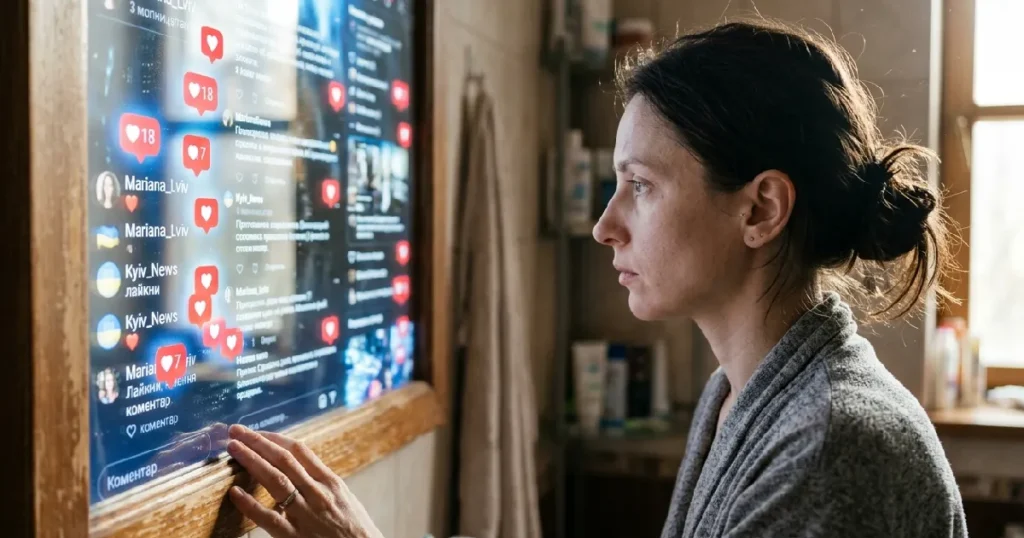
When you are dating someone with untreated Narcissistic Personality Disorder (NPD), they lack a stable internal identity. They depend entirely on “narcissistic supply,” which is external validation, attention, or even fear from others. Social media platforms are essentially massive, automated supply generators. Every notification, like, and comment acts as a micro-hit of dopamine that temporarily fills their internal void. When that supply runs low, or when you fail to provide the exact type of worship she demands, you will experience the backlash of her dysregulation.
What is Pathological Narcissism in the 2026 Digital Context?
Pathological narcissism in the digital era is a social identification disorder where an individual outsources their entire self-worth to an online audience. Unlike healthy self-esteem, this condition is driven by a deep lack of empathy, an unreasonable sense of entitlement, and an absolute willingness to exploit their partner to maintain a perfectly curated public image.
The Science of Social Media Addiction and Narcissism
There is a documented, biological reason why your girlfriend seems more attached to her phone than to you. Recent studies from clinical journals like the National Center for Biotechnology Information confirm that individuals high in narcissistic traits are significantly more likely to develop severe social media addiction. This addiction serves as a psychological soothing mechanism. When a narcissist feels a dip in their incredibly fragile self-esteem, they use platform engagement metrics to inflate their ego back to a grandiose state.
This creates a tolerance effect. Much like a substance dependency, she needs increasingly extreme content to get the same high. What started as cute couple photos quickly devolves into controversial “vague-posting,” heavy use of filters, or creating artificial drama online just to watch the comment section light up. If you interrupt this cycle by setting a boundary or asking for genuine connection, you are not just annoying her. You are threatening her emotional regulatory system, which triggers what we call narcissistic rage.
7 Actionable Steps to Detect and Manage Digital Narcissism

Instead of offering general relationship advice, I am going to give you a pattern recognition manual. Social media is basically a digital crime scene when you are dating someone with these traits. Here are seven behavioral markers you need to watch for.
Step 1: Audit the Validation Frequency and Reaction to Underperformance
Observe her behavior when a post does not receive the expected number of likes or comments within the first hour. A healthy person might shrug it off or delete it because they do not like the photo. A narcissist will experience an emotional crisis.
- Do This: Notice if she becomes irritable, picks a fight with you over something unrelated, or aggressively seeks reassurance from you immediately after a post “fails.”
- Not That: Do not dismiss it as her just being passionate about her personal brand or hobbies.
- Why? Narcissists view social media metrics as a direct reflection of their value as a human being. If the audience does not applaud, she feels worthless, and she will punish you for it.
Step 2: Identify Digital Triangulation Patterns
Triangulation is a highly manipulative tactic where she brings a third person into your relationship dynamic to make you feel insecure, jealous, or replaceable. Choosing Therapy notes that this is a classic divide-and-conquer strategy designed to keep the manipulator in a position of power.
- Do This: Look for strategic interactions with her exes or “new male friends” in the comments or on her close friends list. Pay attention if these interactions happen right after you have set a boundary or during an argument.
- Not That: Do not blindly accept the “he is just a friend, you are acting crazy” defense without looking at the convenient timing of the interaction.
- Why? She is trying to keep you in a state of constant competition. If you are anxious about losing her, you will work harder to earn her affection.
Step 3: Decode the Weaponization of Therapy Speak
This is perhaps the most frustrating modern development. Modern manipulators have learned to use the language of psychology to mask emotional abuse.
- Do This: Notice if she regularly uses terms like “protecting my peace” to justify giving you the silent treatment. See if she claims you are “gaslighting” her simply because you calmly disagree with her version of events.
- Not That: Do not assume that because she uses clinical terms, she is emotionally mature or healthy.
- Why? This healing facade is the hardest form of manipulation to detect because it exploits your desire to be a supportive, understanding partner.
Step 4: Monitor the Idealization vs. Devaluation Cycle
A toxic partner’s feed often tells a story of extreme highs and lows that completely contradicts your lived reality.
- Do This: Check if she “love-bombs” you with a gushing, deeply romantic post right after she has done something incredibly hurtful. She is using the public post as a way to reset the narrative and look like a saint.
- Not That: Do not take a public compliment as a sign that the relationship is actually improving in private.
- Why? That post is not for you. It is a performance to convince her followers that she is the perfect girlfriend, while simultaneously confusing you into staying.
Step 5: Analyze the Smear Campaign Infrastructure
Narcissists start their exit strategy long before the actual breakup. They do this by subtly demeaning you to their followers, laying the groundwork to play the victim later.
- Do This: Notice if she shares relatable memes about toxic partners, or writes vague posts about healing from bad relationships that are clearly aimed at you.
- Not That: Do not ignore these indirect attacks. They are carefully designed to isolate you from her social support network.
- Why? If she can convince everyone that you are the toxic one, you will have no one to turn to when she finally discards you.
Step 6: Evaluate the Lack of Reciprocity in Digital Support
Relationships with people who have severe personality disorders are inherently one-sided. You are expected to be an eternal cheerleader, but you get nothing in return.
- Do This: Observe if she expects you to share, like, and comment on every one of her posts immediately, while she completely ignores your achievements or even mutes your content online.
- Not That: Do not keep giving digital supply in the hopes that she will eventually reciprocate your kindness.
- Why? In her mind, your role is to be an adoring fan, not an equal partner.
Step 7: Recognize Communal Narcissism in Philanthropic Posts
This is the “Saint” persona. A communal narcissist gets their ego boost from being perceived as the most charitable, helpful person in the world, a concept frequently documented by the American Psychological Association.
- Do This: Compare her public kindness to her private behavior. Does she treat service workers terribly but post long essays about social justice and empowerment?
- Not That: Do not let her public good deeds blind you to her consistent mistreatment of you behind closed doors.
- Why? Communal narcissists use their perceived goodness as a shield. If they are a “saint,” then anyone who criticizes them (like you) must be the villain.
Here is a quick breakdown to help you spot the difference clearly:
| Action | Healthy Partner | Narcissistic Partner |
| Posting a Selfie | Sharing a moment or look they feel genuinely good about. | A calculated fishing mission for compliments to regulate their mood. |
| Response to Conflict | Prefers private discussion, active listening, and compromise. | Resorts to public vague-posting, blocking, and victim-playing stories. |
| Use of “Boundaries” | A tool to protect their own time, energy, and mental health. | A weaponized phrase used to control your behavior and isolate you. |
| Mentioning an Ex | Only if factually relevant, with absolutely no intent to cause jealousy. | Used strategically to “triangulate” and trigger your anxiety and insecurity. |
The Simplified True Story: The Turnaround
Meet Mark. Mark was dating Sarah, a rising social media influencer who specialized in “positive mindset and wellness” content. At first, everything felt incredible.
But after six months, Mark was completely exhausted. On camera, Sarah was the most supportive, glowing partner imaginable. Off-camera, it was a totally different reality. Late at night, sitting on the edge of the bed while furiously tapping her perfectly manicured nails against her phone screen, Sarah would berate him for “ruining her aesthetic” if he was not dressed perfectly for her sudden photo ops. When he calmly tried to talk to her about how draining this was, she would cross her arms and weaponize therapy terms, telling him his “unhealed trauma” was making him “project” his insecurities onto her.
Mark realized he was basically a prop in Sarah’s life. He started paying close attention to her posts. He realized that whenever they had an argument, Sarah would immediately post a highly edited video to her 50,000 followers about dealing with “toxic masculinity.” She was running a silent smear campaign right in front of him.
The turnaround happened when Mark decided to stop providing her with digital supply. He stopped liking her posts. He stopped arguing. He started using the gray rock method, becoming as emotionally uninteresting as a dull stone. When Sarah realized she could no longer use Mark to fuel her image, she discarded him for a new “soulmate” within three weeks. Because Mark finally understood the pattern, he felt a massive wave of relief instead of heartbreak.
Comparative Analysis: Narcissism Vs. High Self-Esteem
It is vital that you make a definitive choice about what you are actually dealing with in your relationship. Many people confuse narcissism with high self-esteem, but they are exact opposites.
Narcissism is a rigid defense mechanism designed to protect a core of extremely low self-worth. It requires constant external validation to survive. High self-esteem, on the other hand, is a stable, internal sense of worth that does not require putting others down or begging for likes on the internet.
If you suspect she has these toxic traits, try the boundary test today. Set a small, reasonable boundary. Tell her, “I am going to keep my phone in my pocket during our dinner tonight so we can just focus on each other.” A healthy person with good self-esteem will happily agree. A person with NPD will view this as a personal attack on her access to her digital validation source, and she will likely react with anger, guilt-tripping, or a sudden crisis.
“Narcissists don’t change. You can’t love them out of it, and you can’t fix them.”
This quote from clinical psychologist Dr. Ramani Durvasula perfectly captures the reality you must accept. It means you must stop pouring your empathy and energy into a bottomless vessel, because her disorder is a problem with self-regulation, not a lack of your love.
Common Mistakes And How To Avoid Them

When you are deeply entangled with someone who manipulates reality, it is easy to fall into emotional traps. Here are four common mistakes you might be making right now, and exactly how to fix them.
Mistake 1: Explaining “Why” You Are Hurt
Do not fall into the explanation trap. You cannot make her understand your feelings because she lacks the necessary empathy to process them. To her, your pain is just data she can use to manipulate you later.
- What to do instead: Keep your statements brief and final. Instead of saying, “It really hurts me when you flirt with other guys on your stories,” you should say, “I do not find that behavior acceptable in a relationship. I am going to go for a walk now.”
Mistake 2: Engaging with “Flying Monkeys”
Narcissists often recruit mutual friends or family members to do their dirty work. These people are called flying monkeys, a dynamic heavily discussed by experts in Psychology Today. They will reach out to you saying things like, “She is so heartbroken, why are you being so mean?”
- What to do instead: Realize these friends have been manipulated by her smear campaign. Reply smoothly: “I appreciate your concern, but there are two sides to every story. I have decided to keep my private matters private. Let us talk about something else.”
Mistake 3: Trying to Fix Her Social Media Addiction
You cannot love someone out of a personality disorder. Her addiction to algorithmic validation is a deeply rooted attachment issue that usually stems from early childhood trauma. It is not your job to be her unpaid therapist.
- What to do instead: Stop commenting on her posts. Stop checking her likes or monitoring who she follows. Move your focus entirely back to your own career, goals, and hobbies. Take your energy back.
Mistake 4: Taking the “Discard” Personally
When she eventually leaves you for someone else, you will probably feel like you were not good enough. You need to understand that the new person is not better than you. They are just a fresh source of supply who has not yet seen the monster behind the mask.
- What to do instead: Remind yourself daily that her behavior is a reflection of her internal disorder, not your worth as a partner. She is repeating a cycle that has nothing to do with your value.
“Trauma bonding is the misuse of fear, excitement, and sexual feelings to trap another person.”
This insight from Dr. Patrick Carnes, who pioneered research on trauma bonds, is vital for your recovery. When you feel terrified to leave but utterly miserable staying, you are not in love; you are chemically addicted to an intermittent reinforcement cycle.
Frequently Asked Questions
What is a covert narcissist on social media?
Unlike overt narcissists who are incredibly loud and boastful, covert narcissists use highly vulnerable tactics. On social media, they frequently post about their emotional struggles, their terrible exes, or vague health issues to garner massive sympathy. The key indicator is that despite playing the victim, they still maintain extreme entitlement and completely lack empathy for you.
Why does she keep blocking and unblocking me?
This manipulation tactic is known as the blocking game. It is a form of digital intermittent reinforcement designed to keep you in a state of high anxiety. By unblocking you, she suddenly rewards you with her presence, forcing your brain to release dopamine and severely deepening the chemical trauma bond between you.
What should I do about an online smear campaign?
The absolutely best response is no response at all. Narcissists thrive on your emotional reaction. If you attempt to defend yourself publicly, you will look guilty and unstable to the audience she has already primed. Keep quiet, document all of her abusive text messages privately, and completely refuse to engage in public drama.
Can a narcissistic partner ever truly love you?
Clinically speaking, people with this disorder experience ideal love, which is a fantasy where you are a perfect object that reflects their own greatness. When you inevitably show human flaws or set a boundary, that idealization instantly turns to devaluation. They love how you make them feel, but they cannot love you.
How do I protect my digital privacy after a breakup?
Immediately switch all of your social media accounts to private. Remove any mutual connections who might report back to her, and disable your active status and read receipts everywhere. Narcissists constantly use your digital footprints to track your emotional state. By completely disappearing, you permanently remove their power over you.
Final Takeaway
Navigating a relationship with a digital-era narcissist requires tactical precision, not just standard communication skills. The behavioral signs on social media we have covered today, from aggressive therapy-speak to constant triangulation, are not just annoying quirks. They are systematic methods of control designed to erode your self-esteem while propping up her artificial public persona. Your ultimate task for the next 24 hours is not to confront her, because that will only feed her ego. Your job is to go totally digital ghost. Mute her on all platforms, utilizing the gray rock method to become completely uninteresting. Stop looking at her stories, and reclaim your peace. When the intense noise of her curated reality finally stops, you will be able to hear your own intuition again.
My Closing Remarks
Listen to me closely because I have seen this destroy too many good men in my practice. Stop trying to negotiate with a psychological terrorizer who wears a pretty smile and uses healing crystals as a weapon. You are exhausting yourself trying to prove your worth to someone who literally lacks the neurological hardware to appreciate it. I know it hurts, and I know you desperately want to fix her, but your empathy is a loaded gun she is pointing right back at your own head. Walk away, block her on everything, and do not look back. You deserve an equal partner, not an emotional parasite.
More Related Stories for You
If you want to dive deeper into understanding personality disorders and how they manifest in relationships, check out these excellent resources. We have linked them directly to the topics that matter most:
- Learn more about the core characteristics and how to spot them early in this guide on personality traits.
- Need a perspective switch? Read about the reverse dynamic and the red flags to watch for in signs of a narcissist boyfriend.
- Discover how these behaviors play out in daily routines and public settings by reviewing personality traits examples in real life.