
 Nicole Adkins
The traits you treat like a diagnosis are more movable, more costly, and more context-bound than any quiz ever admitted.
Key Points
- Personality traits examples in real life are not permanent labels. They shift with age, role, and how heavily you lean on them.
- The traits people praise most can quietly cost you money, promotions, and honest relationships when the dose runs too high.
- Real change stays possible well past thirty, and the lifespan data is clearer than most personality quizzes admit.
Contents
Table of Contents
We treat personality like a diagnosis we received at twenty-two and never get to update. The reliable one. The anxious one. The people-pleaser. We walk around wearing those labels as if they were carved into bone.
You have probably done this to yourself. You have also done it to other people.
Someone might think Maya is just “so nice.” But what they don’t see is the raise she never asked for, the weekend she could not protect, and the slow heat of resentment she keeps calling kindness.
Someone might think Jordan got boring after thirty. But what they don’t see is conscientiousness coming online. That is the trait tied to planning, follow-through, and self-control. His friends call it a personality death. The data calls it a common adult shift.
Someone might think the quiet colleague lacks drive. But what they don’t see is low extraversion paired with high follow-through. Extraversion is the pull toward stimulation and social energy. Its absence is not a lack of ambition. It is a different engine.
Here is the short answer you came for. Personality traits examples in real life are repeatable patterns of thinking, feeling, and acting. They are not a costume and not a life sentence. Their value depends on dose, timing, and the room you are standing in.
That last part is the piece most lists skip. A trait is not a gold star. It is a volume knob.
The Big Lie About Fixed Personality Traits
Most of us were handed a story that personality sets like concrete around age thirty. After that, you manage it. You do not rebuild it.
Recent lifespan research tells a different story. A study in Communications Psychology found that everyday people rate the Big Five traits as far more stable across a lifetime than almost any other personal quality. The Big Five are openness, conscientiousness, extraversion, agreeableness, and neuroticism. Those are the five broad patterns psychologists use to describe how you tend to think, feel, and act. When researchers compared actual change over time, those same traits moved as much as, and often more than, things people already accept as changeable, including life satisfaction.
You already believe your happiness can shift. You were taught your personality cannot. The evidence does not support that split.
A large meta-analysis of 229 longitudinal studies found something even more useful. Individual differences in change were biggest in childhood and smaller in young adulthood. They never disappeared. Significant change showed up across the whole lifespan. The quietest period varied by trait and landed anywhere from the thirties to the mid-seventies.
That is permission, not poetry. If you feel unlike the person you were at twenty-four, you are not broken. You are inside a normal human pattern most quizzes still refuse to print.
Offline Personality Traits Examples in Real Life
Scroll long enough and you start to confuse visibility with character.
Kindness that nobody posted. Patience in a boring meeting. The text you did not send. The deadline you hit when no one was watching. These are offline-sport traits. They do not scale on a feed. They are the reason people actually trust you.
Digital life rewards a narrow slice of extraversion and a polished kind of openness. Openness is curiosity and comfort with new ideas. Online, it can start to look like constant novelty. Offline, the traits that hold a life together are slower. Follow-through. Discretion. The ability to sit in an uncurated moment without performing it.
This gap matters because platforms now prize “realness” while training you to edit yourself. Gen Z reports more anxiety, loneliness, and dissatisfaction tied to online use. The hunger for authenticity is real. So is the fatigue of performing it.
If your character only works when there is an audience, it is not character yet. It is content.
Why Single Personality Traits Never Work Alone
Here is the part most trait lists get wrong.
A trait almost never walks into the room by itself. It arrives in combination. That combination is what other people actually experience.
High conscientiousness plus high neuroticism can look like excellence from the outside. Neuroticism is the tendency toward worry, mood swings, and emotional reactivity. Inside, it can feel like you are sprinting on a thin ankle. You hit every deadline and cannot enjoy any of them.
High extraversion plus low agreeableness can look like leadership. Agreeableness is the pull toward warmth, cooperation, and keeping the peace. Without enough of it, charm becomes a steamroller. People laugh in the meeting and vent in the hallway.
High openness plus low conscientiousness can look like vision. It can also look like a graveyard of half-built projects.
Think of each trait as a volume knob, not a light switch. The same setting that fills a room with warmth can drown out every other voice. The question is never “Do you have the trait?” The question is “At this volume, in this room, what else gets silenced?”
That is the multiplier effect. One praised quality, paired with the wrong second trait, becomes a reputation you did not mean to build.
The Dark Side of Good Personality Traits
We love a simple moral. Empathy good. Ambition good. Niceness good.
Real life does not grade that way.
Take agreeableness. People with this trait are easier to work with, quicker to help, and slower to start a fight. They are also, on average, easier to underpay. Research summarized in The Conversation points to the same uncomfortable pattern. Agreeable people often earn less over a career. They negotiate less aggressively. They absorb conflict instead of naming it. At the extreme, the same warmth slides into people-pleasing, a hard time saying no, and a higher risk of being used.
Maya was 34 and the person every team wanted on the project. She answered late emails. She softened other people’s bad news. She told herself this was emotional intelligence. When the promotion went to a colleague who interrupted more and apologized less, she called it politics. It was not only politics. It was a trait running at a volume the role no longer rewarded.
The trait did not fail her. The dose did.
Left unexamined, an overused “good” trait can quietly become the reason a career stalls or a relationship ends. That is not a reason to become cruel. It is a reason to stop confusing self-erasure with virtue.
Conscientiousness has a dark side too. At a healthy level it looks like reliability. At an extreme it looks like rigidity, overwork, and a marriage that runs on checklists. Neuroticism has a usable side as well. The same sensitivity that feeds rumination can feed pattern detection, if you give it a job other than social replay.
The binary is the trap. Dosage is the skill.
How Personality Traits Shift From Your 20s to Your 50s
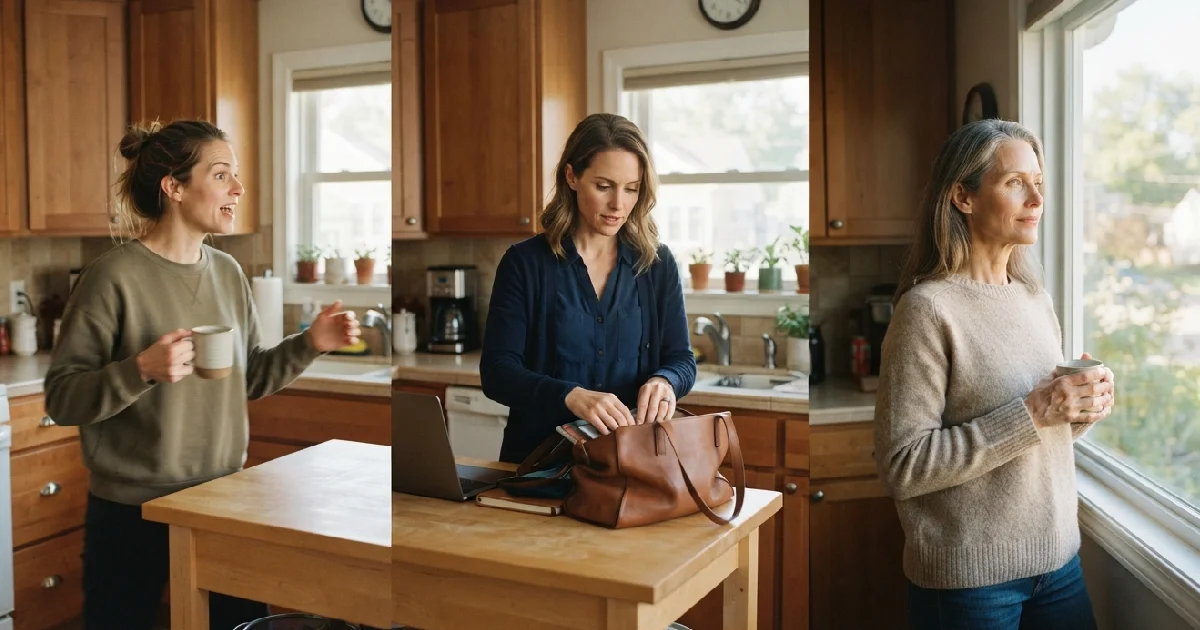
The same trait does not look the same at every age. That is one of the most useful personality traits examples in real life, and almost nobody maps it.
In your twenties, high openness can look like possibility. New cities. New identities. A refusal to be fenced in. By your forties, that same openness may look like a willingness to revise a career rather than a hunger to abandon one. The trait did not vanish. The job it does has changed.
Conscientiousness tends to rise across adulthood. That is the largest and most consistent climb in the Big Five. It is also why so many people wake up at thirty-one and hear their old friends say they got serious. You did not become boring. Your future started mattering more than your Friday.
Neuroticism tends to fall. Not for everyone, and not in a straight line. But the average trend is a slow drop in emotional volatility. If you feel slightly less hijacked by every slight than you did at twenty-three, that is not numbness. That is development.
Extraversion can look like nightlife at twenty-two and like a smaller circle with deeper loyalty at fifty. Agreeableness can look like fitting in when you are young and like conflict-avoidance that costs you honesty later.
Most people in this situation do not realize the discomfort they feel is often a trait changing jobs, not a self falling apart.
Workplace Personality Traits That Predict Promotion
Ambition is not one trait. Different roles ask for different mixes.
A UK study of more than 19,000 workers, discussed in research on Big Five personality traits in the workplace, found distinct patterns by role. Entrepreneurs tended toward low neuroticism, high openness, high conscientiousness, and high extraversion. Managers looked similar, with one sharp difference. They also tended toward lower agreeableness. Supervisors were most clearly tied to high conscientiousness.
Read that again if you have been trying to “be nicer” your way into a management seat. The role may be asking for cleaner decisions, not warmer ones.
This is not a command to flatten your warmth. It is a map. Before you chase a title, compare the role’s demand to your natural mix.
- Builder / entrepreneur energy: steady nerves, curiosity, grit, social voltage.
- Manager energy: the same mix, plus a greater willingness to disappoint people in the short term.
- Supervisor energy: reliability first. The calendar, the standard, the follow-up.
If you are high in agreeableness and you want authority, the work is not becoming a different species. The work is building one muscle the role requires: a clean no.
Spotting Toxic Personality Traits Without Overdiagnosing
The internet turned every bad date into a clinical label. That habit feels like protection. It often becomes a new kind of blindness.
The Dark Triad refers to three socially aversive traits: narcissism, which is inflated self-focus and a need for admiration; Machiavellianism, which is cold strategic manipulation; and psychopathy, which is low empathy plus high impulsivity. These patterns are real. They also are not a permanent villain costume. A 2025 study of more than 1,000 adults ages 18 to 81 found that Dark Triad levels shift across the lifespan. Even the traits we treat as moral life sentences move with age and context.
That does not mean you should stay in a harmful dynamic and wait for someone to “grow out of it.” It means you can judge behavior, set a boundary, and still refuse the cheap thrill of diagnosing a whole person from three red flags.
Watch for patterns, not vibes.
Does this person rewrite events so they are never at fault?
Do you leave conversations smaller than you entered them?
Do favors arrive with a hidden invoice?
Those questions are more useful than a comment-section label. Most people who have been hurt reach for a diagnosis because a diagnosis feels like a lock on the door. A boundary is the actual lock.
Realistic Ways to Rebalance Your Personality Traits
You do not need a new personality. You need a few better settings.
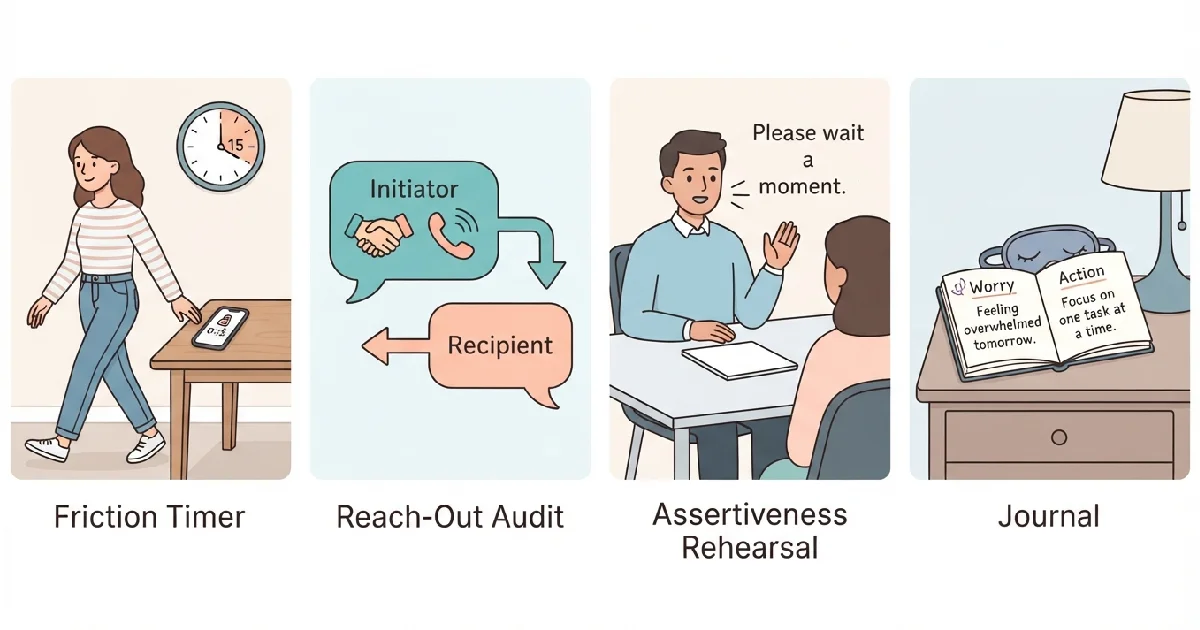
The Friction Timer. Spend 15 minutes a day on something unscripted. No phone. No audience. Cook badly. Walk without a podcast. Sit with a half-finished thought. This rebuilds your tolerance for an unedited self, which is the opposite of the performance loop that leaves you exhausted and oddly unknown.
The Reach-Out Audit. For one week, track who starts the contact. If you initiate 80 percent or more of the conversations in a relationship, treat that as data, not as proof you are “the better friend.” It is often a people-pleasing pattern: difficulty saying no, a habit of suppressing your own needs, and a higher chance of being taken for granted. You can renegotiate. You can also step back.
The Assertiveness Rehearsal. Once a month, practice one clean ask. A deadline extension. A rate increase. A boundary around weekends. Keep the language short. “I can deliver this Thursday. Wednesday is not possible.” You are not training yourself to become harsh. You are training the muscle agreeable people underuse.
The Pattern Log. If neuroticism runs high, give the worry a job. At night, write the loop in one or two sentences. Then write one action it pointed to. Anxiety wants a problem to chew. Hand it a task instead of a social replay.
A useful question to ask yourself this week is simple. Which trait am I running too loud for the life I say I want?
You came in wearing a label. You can leave with a knob.
The person who called you “the nice one” or “the intense one” or “the reliable one” was describing a setting, not a soul. Settings can move. Slowly. Unevenly. For much longer than you were told.
You are not a finished product. You are still tunable.
My Closing Remarks:
I have watched capable people treat a single trait like a life sentence and then wonder why the room never changed. I did it too. I called over-functioning “being good” until it started collecting interest in my sleep and my relationships. The day I stopped defending the dose was the day my life got honest. That honesty is not gentle. It is the first kind thing you can do for a future you have not met yet.
More Related Stories for You:
- If the Friction Timer feels hard because your mind will not sit still, start with a few simple mindfulness exercises and treat them as reps, not as a personality transplant.
About The Author