
 Nicole Adkins
The real red flags rarely show up during a fight. They show up in the quiet moment right after you ask for something small.
Key Points
- The clearest signs of a narcissist boyfriend show up in private, small moments, not in public arguments.
- Chronic exhaustion, unexplained body symptoms, and a charming public mask often reveal more than any single blow-up fight.
- Once you know what to look for, you can test the pattern yourself this week, not after another year of doubt.
Contents
Table of Contents
We tell ourselves that love is supposed to feel steady, that doubt is something you push through rather than something you listen to. You have probably done exactly that for months, maybe longer. You explained away the cold reaction after your good news. You decided his silence after a small disagreement meant he needed space, not that he was punishing you.
That gap between what you see and what you feel doesn’t close just because you decide to be patient.
Someone might think your boyfriend is simply an intense, passionate man who loves hard. What they don’t see is the three hours of silent treatment that follows every time you make plans without him.
Someone might think he’s confident, the kind of man who fills a room. What they don’t see is how that same confidence turns cold and cutting the moment you disagree with him at home.
Someone might think you’re too sensitive, reading too much into normal relationship friction. What they don’t see is the version of him that only you get to witness, and how different he becomes on the drive home from every family dinner.
Here is the honest answer, the one most people wish someone had told them sooner. A narcissist boyfriend rarely reveals himself through one dramatic blow-up. He reveals himself through how he treats your boundaries when no one else is watching. A tiny “no” that triggers rage, icy silence, or a guilt trip tells you more about him than any grand gesture ever will.
What Actually Makes a Boyfriend a Narcissist?
Narcissistic Personality Disorder, or NPD, is a clinical diagnosis describing a lasting pattern of grandiosity, a deep need for admiration, and a real lack of empathy for other people’s feelings. You can read the formal diagnostic picture through the Mayo Clinic’s overview of narcissistic personality disorder.
But here’s the part almost nobody names.
Most boyfriends who show these patterns will never sit in a diagnostic chair. You’re not trying to diagnose him. You’re trying to understand a pattern that is already shaping your daily life, your friendships, and your trust in your own judgment.
For years, people repeated the idea that narcissism affects only about 1 percent of adults, which made it feel rare and almost exotic. A large NIH-funded study by Stinson and colleagues, published in the Journal of Clinical Psychiatry, found lifetime NPD rates closer to 6.2 percent. That’s not rare. That’s someone many of us know, or love.
Underneath the confidence sits something far more fragile than it looks. Research summarized by the American Psychological Association describes narcissism as often built on an unstable sense of self-worth, one that depends on a steady stream of admiration from other people to feel secure. Psychologists sometimes call this need “narcissistic supply,” meaning attention, praise, or even conflict that feeds his sense of importance. When that supply runs low, the mask slips, usually at home, rarely in public.
Clinicians also describe two general styles. Overt narcissism looks the way you’d expect: loud, showy, obviously self-focused. Covert narcissism is quieter and much harder to spot, showing up as chronic victimhood, sulking, or quiet control instead of open bragging. The Cleveland Clinic’s overview of narcissistic personality disorder notes that both styles share the same core: a fragile self hidden under a defense that keeps real closeness out.
The 9 Undeniable Signs of a Narcissist Boyfriend
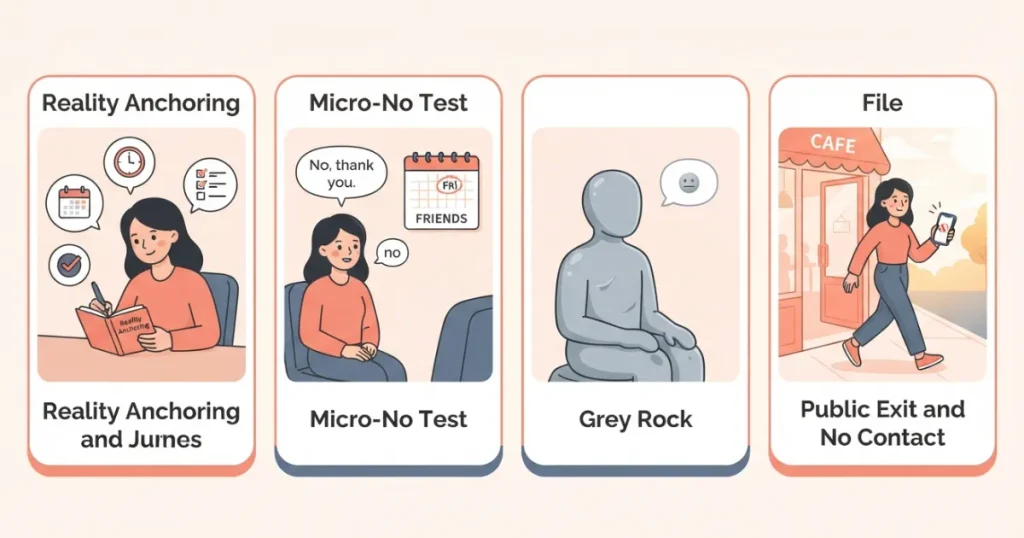
These signs of a narcissist boyfriend, the same ones people miss when they’re dating a narcissist for the first time, rarely show up all at once. They build slowly, which is exactly why they’re so easy to dismiss until you name them out loud.
1. The Public Persona Split
He’s warm, funny, and attentive in front of friends, then flat or cold within minutes of the front door closing. This split isn’t an accident. Covert charm works as a control tool because it makes you the only witness to who he really is, so if you ever describe the private version, people struggle to believe you.
2. The 9pm to 3am Exhaustion Cycle
Arguments with him don’t end, they loop. He repeats the same points, reframes your words, and keeps going until you’re too tired to keep defending yourself and simply agree just to end it. That exhaustion isn’t accidental. Your surrender often feels like a win to him.
3. Micro-Bashing of Your Achievements
You share a promotion or good news, and instead of joy you get a backhanded comment. “Must be nice they lowered the bar.” He frames it as a joke, but the timing always lands right after your wins, never your losses.
Why Does He Always Talk About His “Crazy” Exes?
Pay attention to this one early, ideally within the first few weeks of dating a narcissist without knowing it yet. Relationship psychologists have long noted that a pattern of blaming every past partner, friend, or boss is one of the strongest signals of externalized accountability, meaning he never sees his own part in a conflict. If every ex was “crazy,” “jealous,” or “too sensitive,” you’re getting a preview of what he’ll eventually say about you.
5. Physical Disconnection Cues
He walks a few steps ahead of you in public, or reaches for your hand only when someone is watching. Warmth appears on cue, then disappears the moment the audience does. Physical affection becomes a performance rather than a genuine connection.
Here’s something almost no dating guide tells you. The same fragile self-worth driving his need for admiration is also what makes real closeness feel dangerous to him. Intimacy requires being seen as ordinary and flawed, and that threatens the image he’s spent years building.
Picture it like a dimmer switch instead of a light switch. He doesn’t turn the warmth off all at once. He turns it down so slowly, night after night, that you don’t notice the room going dark until you can barely see your own reflection anymore.
6. Reacting to Small “No’s” With Rage or Silence
You mention wanting a Friday night with friends, nothing dramatic, nothing new. His face changes. Maybe he goes quiet for the rest of the night. Maybe he raises his voice over something this small. Guidance from the National Domestic Violence Hotline identifies control over small pieces of autonomy, your schedule, your friendships, your plans, as one of the earliest and most reliable predictors of escalating control in a relationship.
7. Weaponizing Therapy Language Against You
Gaslighting, a term Merriam-Webster named its Word of the Year in 2022 for good reason, describes making someone doubt their own memory or perception of events. The irony almost nobody talks about is that manipulative partners have learned this vocabulary too. He might call you “triggered,” accuse you of “projecting,” or claim he’s “setting a boundary” while doing the exact thing that hurt you in the first place.
8. Reversing Victim and Offender Roles
Somewhere in the middle of a conflict he started, he becomes the injured party. Trauma researchers call this DARVO, short for Deny, Attack, and Reverse Victim and Offender. He denies what happened, attacks your character for bringing it up, then positions himself as the one truly suffering. You walk away apologizing for a fight you didn’t start.
9. Isolating You From People Who’d Validate Your Doubts
Slowly, the friends who used to check in start hearing from you less. Family visits get harder to schedule. He frames it as wanting more time together, and it feels sweet at first. What it actually does is remove the people who might say the words you’ve been afraid to say out loud.
The Physical Toll of a Narcissist Boyfriend No One Warns You About

Most people searching for signs of a narcissist boyfriend are looking for emotional clues. Few expect their body to become the messenger instead.
Chronic relationship stress keeps your nervous system on constant alert, which means your body keeps producing cortisol, the primary stress hormone, at levels it was never built to sustain. Over time, that steady flood shows up as physical symptoms most people never connect back to their relationship. Survivors of narcissistic abuse describe this pattern constantly in recovery communities, yet it barely gets mentioned outside of them.
Jenna, a composite of many women I’ve heard from over the years, spent eight months seeing doctors for stomach pain, hair thinning, and a fog that made her feel unlike herself at work. Every test came back normal. It wasn’t until a therapist asked about her relationship, almost as an afterthought, that the pieces started fitting together. Her body had been keeping score long before her mind caught up.
If you’re dealing with unexplained gut issues, hair loss, chronic fatigue, or a brain fog that won’t lift, it’s worth mentioning your relationship stress to your doctor alongside your physical symptoms, not after you’ve “figured out” the relationship. Treating the body and processing the relationship can, and should, happen at the same time.
The Micro-Boundary Test: The Real Litmus Test for a Narcissist Boyfriend
Most people wait for a huge fight to prove their doubts are real. That approach has it backwards.
The far more accurate test is small. Set one minor, non-negotiable boundary this week: an hour to yourself, a dinner with a friend he’s never liked, a night without checking in every hour.
Watch what happens next, because his reaction, not the argument that follows, is your real data point. Calm acceptance, even if he’s not thrilled about it, is a normal response. Rage, guilt-tripping, hours of silence, or sudden “concern” about your safety are not normal responses to a small ask. They’re control dressed up as care.
Realistic Ways to Protect Yourself From a Narcissist Boyfriend
Knowing the signs matters, but knowing what to actually do with them matters more.
How the Grey Rock Method Actually Works
The grey rock method means becoming as unreactive and uninteresting as a plain rock: no visible emotion, no argument, no engagement with bait. It only works when it’s total. Half-hearted grey rocking, calm one day and reactive the next, tends to backfire because it teaches him exactly which button gets him a reaction.
The reason it works when done fully comes back to narcissistic supply. Reactions, even angry ones, feed that need for attention and control. Remove the reaction consistently, and there’s simply nothing left for the pattern to feed on.
One place to start is keeping a private, dated voice memo or journal entry right after any conflict, writing only what was said and done, not your interpretation of it. This practice, called reality anchoring, becomes a lifeline when he later insists a conversation happened differently than you remember it.
Another place to start is the Micro-No Test described above, used deliberately before any major decision like moving in together or getting engaged.
A useful question to ask yourself this week: if a friend described this exact relationship to you, using these exact words, what would you tell her to do?
If you decide to leave, plan the conversation in a public space or through a clear, final message, then move into firm no-contact right away. Narcissistic partners often escalate charm briefly after a breakup, sometimes called hoovering, and consistency is what keeps that door closed for good.
You Now Know What You Were Never Taught to Look For
Remember the version of him that only shows up once the front door closes? You don’t have to keep wondering if you imagined it.
That dimmer switch you’ve been living under has a name now, and so does every small moment that made you question your own memory.
You didn’t miss the signs of a narcissist boyfriend because you weren’t paying attention. You missed them because you were taught to look for fireworks, not for the quiet way someone dims a room. Now you know exactly where to look, and that alone changes everything about what happens next.
My Closing Remarks
Here’s what I’ve learned that most people won’t say out loud: loving a narcissist boyfriend doesn’t make you weak, foolish, or “too much.” His fragile ego needed someone empathetic enough to fill it, and that’s not a flaw in you, that’s a target on your empathy. You survived a relationship built to keep you doubting yourself, and you’re still here, reading, learning, choosing yourself. That’s not small. That’s everything.
More Related Stories for You
- If you want to understand what real recovery and treatment can look like for narcissistic patterns, this guide on narcissistic personality disorder treatments walks through the options in plain language.
About The Author