


Most online advice about toddler behavior is actively making your life harder. You are likely exhausted. You sit on the floor after a massive grocery store meltdown, rubbing your forehead, feeling completely overwhelmed by guilt. You desperately want to raise a kind human being. But right now, you just want the screaming to stop. You read the blogs. You watch the perfectly curated videos telling you to just take deep breaths. It feels like a joke.
Actually, let me back up and tell you the truth. If your current approach is leaving you drained and your house feels out of control, you are doing it wrong.
The secret to mastering Gentle Parenting for Toddlers is not about being a human punching bag. It is about authority. The proven hack for this discipline style is balancing deep emotional empathy with unshakeable physical boundaries. It requires parents to proactively offer choices, use strictly limited verbal intervention during meltdowns, and confidently enforce logical consequences without yelling, shaming, or endless negotiating.
You do not need to whisper while your kid throws a shoe at your head. You need a structured game plan. I am going to give you exact scripts and steps you can use today. Forget the theoretical noise. We are going to look at the psychology of toddler tantrums and fix the daily power struggles. This is about taking your power back while protecting your child’s heart. You deserve to enjoy these years. Let’s get to work right now.
Redefining The Core Concept: Authority Without Fear
Before we get into the exact scripts, we need to completely reset how you view toddler tantrums. Many parents accidentally slip into the permissive parenting trap because they are terrified of traumatizing their kids. They think that setting a boundary will damage their connection. This is entirely false.
Table of Contents
Your toddler is experiencing massive brain changes. Their prefrontal cortex, which is the logical and reasoning center of the brain, is severely underdeveloped. They physically lack the neurology to calm themselves down when they feel frustrated. When you understand the basics of child development by reading trusted resources at Psychology Today, you realize that your child is not giving you a hard time. They are having a hard time.
“A child’s behavior is a window into their internal world, not a reflection of your parenting.”
When you accept this, the pressure vanishes. When you stop taking their terrible behavior personally, you can step into the role of a confident leader instead of a reactive, angry participant. You become their anchor. Kids need us to survive their emotional storms, not fix them. They need to know that you are strong enough to handle their biggest, ugliest feelings without crumbling or lashing out.
5 Actionable Steps to Handle Any Public Meltdown
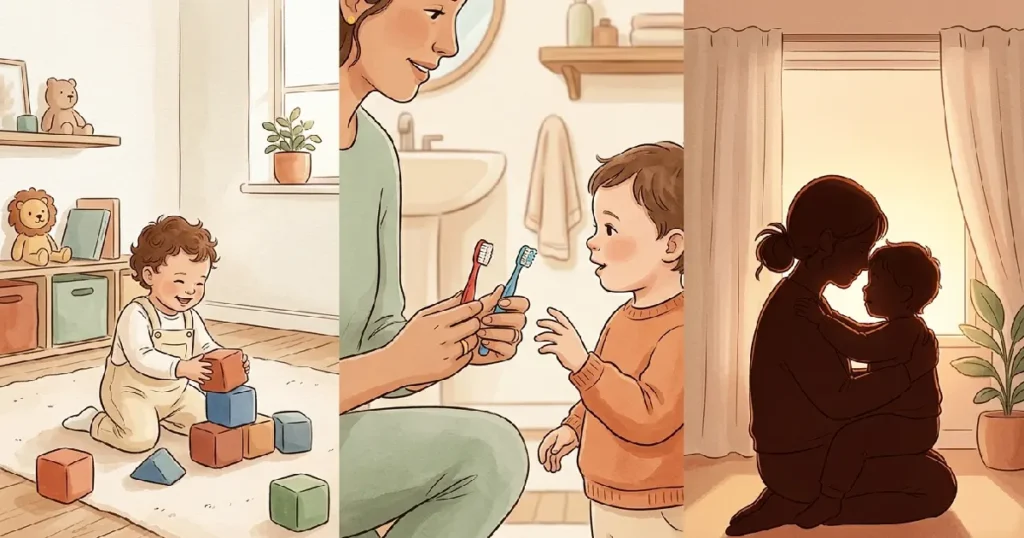
If you have ever dealt with a child screaming in the middle of a target aisle, you know it is maddening. You feel the eyes of every stranger burning into the back of your neck. You need a proactive system. Here is the exact, step-by-step guidance you can use to take control.
Step 1: Create a “Yes Space” to Prevent the Storm
The fastest way to trigger toddler defiance is by constantly following them around saying “no.” Toddlers are biologically wired to explore their environment. If you fight this biology, you will lose every single time. You need to use environmental design.
- Do this: Designate one room or specific area in your home where everything is one hundred percent safe and accessible. Anchor the furniture to the walls. Remove all fragile items. Put child locks on the dangerous drawers but leave safe cabinets open with Tupperware for them to play with.
- Not that: Leaving your expensive decor on low coffee tables and getting angry when your child naturally touches it.
When you build a safe environment, you drastically reduce the number of times you have to correct them. The experts at Zero To Three note that proactive environmental management is a massive part of emotional regulation for both parent and child.
Step 2: Offer Choices Within Boundaries
Toddlers desperately want autonomy. They want to feel like they are in charge of their own lives. When you issue a flat command, their instinct is to push back. You can bypass this completely by offering a choice that still leads to your desired outcome.
- Do this: “It is time to leave the park. Do you want to hop to the car like a bunny, or walk to the car like a giant bear?”
- Not that: “Get in the car right now.”
Notice the difference? The boundary (leaving the park) is non-negotiable. But how they get there is up to them. You give them the illusion of control, which completely diffuses their need to fight you.
Step 3: Calm Physical Intervention
I might be wrong about this, but I bet you negotiate too much when your child is acting out. If your child is running into a parking lot, hitting a sibling, or throwing dangerous items, words are useless. You must act physically, but you must do it calmly.
- Do this: Confidently pick up your thrashing child and remove them from the situation. You are the safe physical container. Hold their hands gently but firmly so they cannot strike you.
- Not that: Standing three feet away, pleading with a screaming child to “please listen to mommy” while they continue to destroy a store aisle.
Physical intervention does not mean hurting your child. It means recognizing that they are out of control and stepping in to keep them safe. Authoritative child care resources at Child Mind Institute remind us that firm physical boundaries provide a deep sense of security for dysregulated kids.
Step 4: Provide the Script and Limit Verbal Input
When a toddler lashes out, it is almost always because they lack the vocabulary to express their frustration. You have to literalize their feelings for them. Give them the exact words they need to use.
- Do this: Kneel down to their eye level. Keep your face neutral. Say firmly, “I will not let you push your sister.” Then, give them the script. Say, “Tell her: I need space!”
- Not that: Asking a dysregulated, angry toddler, “Why did you do that? Why are you acting like this?”
They do not know why they did it. Do not demand logical answers from an illogical brain. Keep your words incredibly brief. The more you talk during a meltdown, the more you overstimulate their already panicked nervous system.
Step 5: The Post-Storm Redirect and Repair
The tantrum will eventually end. Their little bodies will run out of adrenaline. This is the most important part of the entire process. You sit with them in silence while the storm passes. Then, you reconnect.
- Do this: Wait until they take a deep sigh and their shoulders drop. Open your arms. Say, “You were so angry that we had to leave the park. That was really hard. I love you so much.”
- Not that: Holding a grudge. Punishing the child hours later for a meltdown that has already passed.
The Empathetic Story: Sarah and the Heavy Metal Trucks

Meet Sarah. It was exactly 5:15 PM on a Tuesday. The kitchen smelled like burning garlic. Sarah was frantically stirring pasta while her two-year-old son, Leo, repeatedly threw his heavy metal toy trucks against the glass oven door. She felt a familiar, hot spike of panic in her chest. She crouched down, rubbing her temples, and tried to reason with him. She used her softest voice, explaining how the glass could break and how sad that would make everyone.
Leo looked right at her, smiled, and threw another truck. Sarah lost it. She screamed, grabbed the truck, and Leo collapsed into a full-blown shrieking puddle on the floor. The guilt hit her instantly. The next evening, she tried a completely different approach. The moment Leo raised his arm to throw a truck, she did not say a word about feelings. She swiftly and gently intercepted his hand mid-air. She looked him in the eye and stated firmly, “I will not let you throw trucks in the kitchen.” She then scooped up all the trucks and placed them on a high shelf. Leo still cried, of course.
But the throwing stopped immediately. He realized her boundaries were solid brick walls, not swinging doors he could push open. She did not yell. She did not shame him. She just took confident control of the environment.
Common Mistakes and How To Avoid Them

Even with the best intentions, parents routinely sabotage their own efforts. You read a book about respectful parenting, try it for three days, and then give up because your kid seems to be getting worse. Here are the four major mistakes you are likely making, and the exact steps to fix them today.
Mistake 1: Talking Too Much During The Meltdown
This is the number one error I see in my practice. Parents think that verbalizing their child’s feelings will magically stop the crying. It will not. When a toddler is in the red zone of a tantrum, their auditory processing shuts down completely. They literally cannot process your long, drawn-out sentences about emotional validation.
Here is what you need to do instead:
- Stop explaining your reasoning.
- Use a mantra for yourself, such as “I am safe, my child is safe.”
- Use single-phrase directives. “Safe hands.” “Feet on the floor.”
- Rely on your physical presence. Sit nearby and breathe heavily. Your child’s nervous system will eventually mirror your slow breathing.
Mistake 2: Confusing Gentle With Permissive
Many parents fall into the permissive parenting trap. They let their kids rule the house because they are terrified of causing trauma. Permissive parenting is actually highly anxiety-inducing for children. If you never say no, your child feels like there is no captain steering the ship. They will escalate their bad behavior just to force you to finally set a limit.
If you want to maintain a healthy dynamic, you need to understand the difference between healthy boundaries and weak rules. A strong relationship requires leadership. Look at family dynamic advice on sites like Marriage.com to see how a lack of structure harms the whole family unit.
Here are the warning signs that you are being permissive:
- You apologize to your child when you enforce a necessary boundary (e.g., “I’m so sorry, but you really have to take your medicine now”).
- You use the word “okay?” at the end of commands (e.g., “It is time for bed, okay?”).
- You give back the toy you just confiscated because the crying makes you uncomfortable.
“Discipline is about guiding behavior, not punishing the child for having big feelings.”
When you internalize this quote, you realize that letting your child experience the natural consequences of their actions is actually the most loving way to teach them about the real world.
Mistake 3: Fearing The Extinction Burst
Listen to me clearly. When you start setting firm boundaries, your child’s behavior will temporarily get worse. This is a documented psychological phenomenon called an extinction burst. The American Psychological Association provides great resources at APA. detailing how behavior modification works.
If your child is used to getting an extra cookie every time they scream, they learn that screaming works. When you suddenly stop giving the cookie, their brain panics. They think, “Wait, screaming always works! I must just need to scream louder!” They will throw the biggest tantrum you have ever seen. If you give in during this extinction burst, you just taught them that level-ten screaming is the new baseline required to get what they want. You must hold the line. It will pass in a few days if you remain totally consistent.
Mistake 4: Skipping the Repair Phase
We all lose our temper. You are going to yell. You are going to snatch a toy away aggressively. You are going to say things you regret. Perfection is a toxic myth. The mistake is not losing your temper; the mistake is pretending it did not happen.
When you skip the repair phase, your child internalizes your anger and blames themselves. You must go back and fix the rupture in the relationship.
Here is your exact script for repairing after you lose your cool:
- Get down on their level.
- Take ownership without blaming them. “Mommy yelled earlier. I was feeling very frustrated, but it is never okay for me to yell at you.”
- Reaffirm your love. “I am sorry. I love you, and we are on the same team.”
Frequently Asked Questions
What is the main rule of respectful discipline?
The main rule is to separate your child’s identity from their temporary behavior. It relies on deep empathy combined with firm physical boundaries. You must focus on understanding the root cause of the defiance rather than simply punishing the symptom. You act as the confident leader, calmly modeling the emotional regulation your child currently lacks.
How do you discipline a toddler effectively?
You discipline a toddler by enforcing logical consequences instead of relying on fear or shame. Discipline literally translates to teaching. If your child throws a toy, you calmly put that toy away for the day. You hold the boundary firmly but kindly, ensuring the consequence is directly related to the specific misbehavior they just displayed.
Why is my child’s behavior getting worse?
If behavior worsens, you have likely fallen into the trap of permissive parenting. Toddlers biologically crave boundaries to feel safe. If you endlessly negotiate, over-explain, or fail to enforce physical limits, your child will loudly escalate their behavior. They are actively testing your limits just to find out exactly where the safe boundary actually is.
What to do when a child hits you?
When your child hits, immediately intervene physically by blocking their hands or stepping back. Say firmly and briefly that you will not allow hitting. Do not over-explain or ask them why they are angry in that heated moment. Keep everyone safe, wait for the emotional storm to pass, and discuss their big feelings much later.
Does this approach mean there are no consequences?
No, this approach relies heavily on consistent boundaries and consequences. However, it utilizes logical consequences rather than punitive, unrelated punishments. If a child refuses to put their shoes on, they do not get to go to the park. The boundary is strictly maintained without any yelling, allowing the natural outcome to become the ultimate teacher.
Final Takeaway
You do not need to overhaul your entire personality to be a good parent. You just need a few reliable tools in your back pocket for when the chaos hits. Remember, the goal is connection before correction, but connection does not mean giving up your authority.
Here are four things I want you to do in the next 24 hours:
- Stop asking questions. Change your phrasing from “Are you ready for lunch?” to “It is time for lunch. Do you want the red bowl or the blue bowl?”
- Audit your living space. Find one room and remove everything you constantly have to tell your child not to touch. Create your yes space.
- Breathe first. The next time your child starts screaming, do not immediately react. Take one deep breath and remind yourself that it is not an emergency.
- Forgive yourself. You are carrying a heavy mental load. Give yourself some grace.
My Closing Remarks
I have a secret most therapists will not say out loud. Sometimes, I really do not like my kids. There are days when the screaming makes me want to drive away. That does not make me a bad mother. It makes me human. You are not damaging your child by locking yourself in the bathroom to cry for two minutes. Perfection is a toxic myth. Show up messy, apologize when you yell, and try again tomorrow. You are doing a great job.
More Related Stories for You
If you found this guide helpful, check out these related resources to build a healthier household:
- Read about setting healthy tech boundaries in our guide on screen time limits for preschoolers.
- Learn how modern technology affects developing brains by exploring AI tutors and child cognitive development.
- Discover actionable strategies for building empathy early with social-emotional learning for toddlers.