
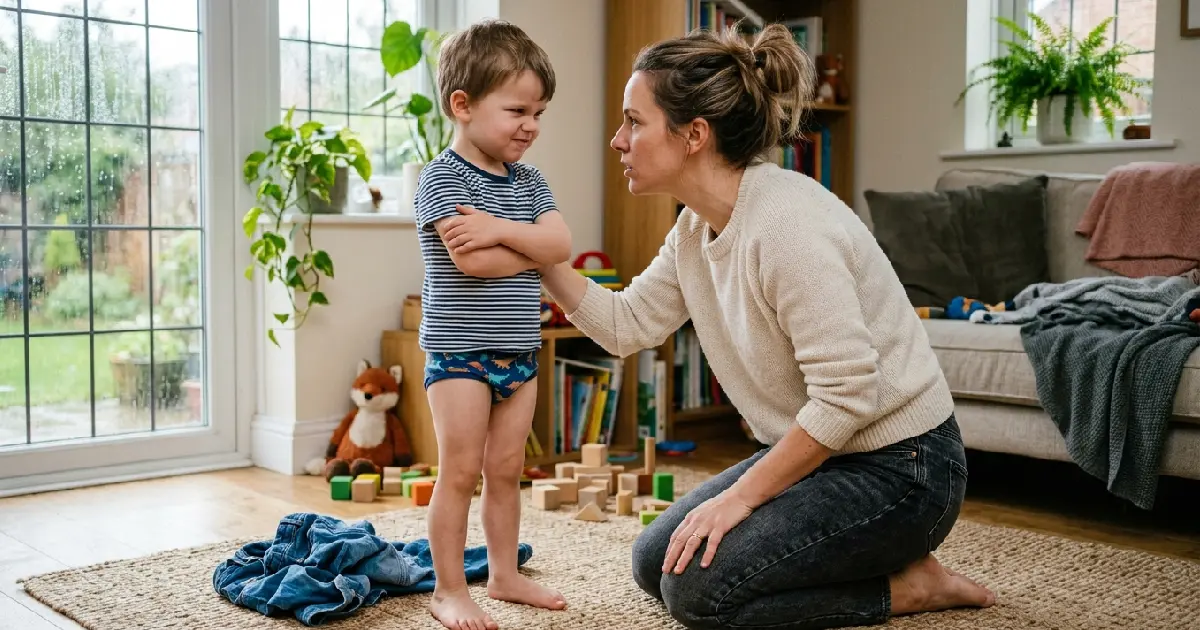

You have read the sleep schedules. You have tried the deep breathing techniques. You even downloaded three calm parenting apps. And yet, last Tuesday, you locked yourself in the bathroom for eight minutes of silence while your four year old slid a cheese stick under the door. You are not alone. I know exactly how that burning exhaustion feels in the back of your neck.
The real problem is not that parenting is hard. The problem is the advice industry keeps selling you serenity when what you actually need is permission to find the whole thing utterly, brilliantly absurd. Funny parenting advice is not a joke. It is survival.
Funny parenting advice works because humor is a clinically recognized coping mechanism that lowers cortisol, builds cognitive flexibility, and strengthens parent child bonds making absurdity not just acceptable but one of the most powerful tools in a parent’s mental health arsenal.
Most modern experts ask you to be softer and more patient. That sounds great on a podcast. In a messy kitchen at 6:30 AM, it is practically impossible. Humor fixes what deep breathing cannot.
In this guide, you will learn the exact type of humor that protects your sanity and the type that backfires. I will show you actionable steps to build a humor habit that sticks. You will read a real story that changed everything for one exhausted mother. Plus, I will answer the questions no other blog dares to touch.
What “Funny Parenting Advice” Actually Means (And Why Most Gets It Wrong)
People assume funny parenting advice just means sharing memes about wine and messy living rooms. That is completely wrong. It is about using humor as a deliberate, repeatable psychological strategy that reframes your stress before it turns into full blown burnout. Most articles just give you a list of jokes. This guide gives you a tested system.
Table of Contents
What Is Funny Parenting Advice, Really?
We need to go far beyond the surface level. Real funny parenting advice is the intentional use of humor to interrupt the stress cycle in your brain. Specifically, you want to use affiliative humor and absurdist reframing to restore emotional regulation in real time. It is not sarcasm aimed at a child. It is not dismissing massive behavioral problems with a quick punchline. It is the strategic deployment of laughter as a cognitive reappraisal tool.
When you practice this correctly, you build a strong psychological safety architecture in your home. Your kids learn that mistakes are safe. Meanwhile, you successfully keep yourself below the dangerous parental burnout threshold. Understanding benign violation theory helps here. Things are funny when a rule is broken in a way that is harmless. A toddler wearing pants on his head is a benign violation. It is absurd, it breaks the rules, but it hurts no one.
Knowing exactly which kind of humor you are using is the difference between a sanity saving tool and a relationship damaging habit.
The Science: What A 2024 Penn State Study Actually Found
Researchers from Penn State College of Medicine recently proved that humor is a highly effective parenting tool. In their pilot study, the team found that a parent’s use of humor directly affected the quality of their relationship with their children. Among those whose parents used humor, the massive majority viewed their relationship with their parents in a highly positive light.
Even more striking, of the adults who reported a great relationship with their parents, 63 percent said their parents actively used humor. Only 3.7 percent of them said their parents never joked around.
“Humor Promotes Language And Literacy Skills, Creative Problem Solving, And Resilience And Helps Kids Cope.”
This fact from The Jed Foundation shows laughter does more than just stop a tantrum. It actively wires your child’s brain to handle future stress better.
Physiologically, laughter alleviates your immediate stress by reducing cortisol levels. Cortisol dysregulation is the exact chemical reason you feel like you are losing your mind by dinnertime. Lowering that hormone is mandatory for your health.
6 Actionable Steps To Use Absurd Humor Without Losing The Plot
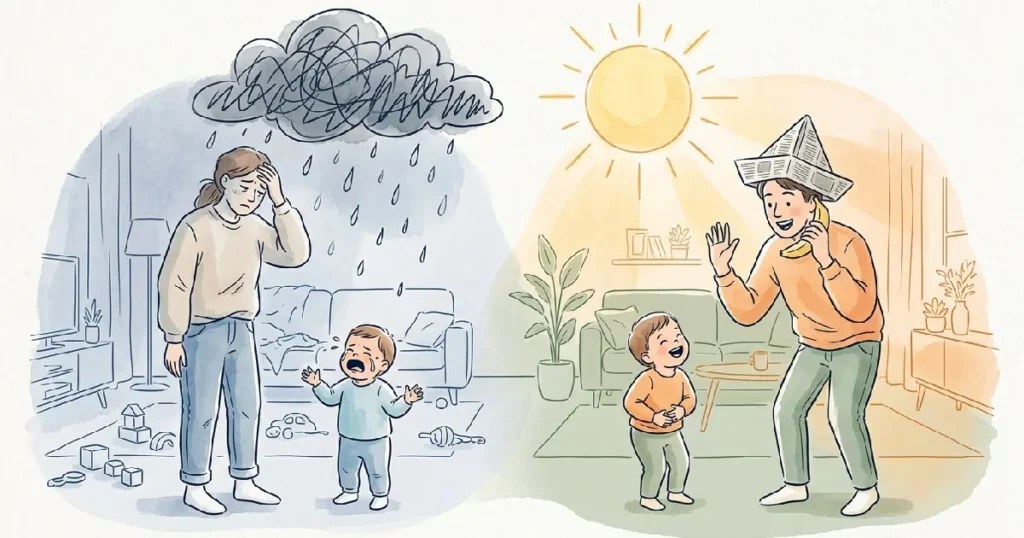
You need to know how to execute this in the real world. These steps move from your daily mindset all the way to leaving a positive legacy for your kids.
Step 1: Audit Your Humor Style Before You Use It
Before you default to sarcasm in a highly tense moment, stop and ask yourself a simple question. Is this joke for me, or is it for both of us? You must use affiliative or self enhancing humor. This means you laugh with the situation, not at the child. Never use self defeating humor that models shame, and absolutely avoid aggressive humor that mocks your child’s behavior. If your child could repeat your joke back to you and it would not hurt your feelings, it is the right kind of joke.
Step 2: Build A Ridiculous Reframe Habit For Daily Stress Moments
When a massive meltdown hits, you need to mentally describe it in the most absurdly dramatic terms possible. Tell yourself that the CEO of Snack Demand has called an emergency board meeting because the crackers were touching the green grapes. Exaggerating the ridiculousness of a situation instantly helps put things into proper perspective. Do not just suppress your stress silently. Unexpressed anger accumulates as heavy cortisol load, not patience.
Step 3: Use The Absurd Interrupt During Meltdowns
When a loud power battle is escalating, say something completely out of context. Look at your child and say, “Wait, did you hear that? I think our refrigerator just asked to join this argument.” This clinical trick catches a child completely off guard. It bypasses the fight or flight response triggered by the amygdala, breaking the escalation loop without using shame or punishment. Logic fails when emotions run high, but absurdity works.
Step 4: Know The No-Go Zones Of Parenting Humor
Humor must always target the situation, never the child’s character. Laughing at what happened builds strong bonds. Laughing at who they are builds deep shame.
- Avoid sarcasm entirely with young children. Sarcasm is sophisticated and often rooted in deep resentment. Kids simply cannot decode it.
- Never use jokes to hurt, shame, or embarrass your children in public.
- Remember that research published in Parenting Science shows children who experience mocking humor develop higher anxiety and lower self esteem over time.
Step 5: Build A Co-Parenting Humor Ritual
Create a daily highlight reel ritual with your partner. Every single evening, each person shares one absurd moment from the day. No venting and no complaining. You just share the ridiculous version of events. This firmly protects your relationship from becoming a miserable stress debriefing session. When partners only discuss their daily problems, they pull each other down into mutual exhaustion. Sharing a moment of absurd joy builds an incredible bond.
Step 6: Create A Humor Archive To Draw From On Your Worst Days
Keep a running note on your phone called Evidence That I Survived. Add one genuinely funny or absurd moment to it every single day. Write down a ridiculous quote, save a chaotic photo, or log a failed dinner recipe. On your absolute hardest days, scroll through this list instead of doom scrolling the news.
“When You Are Experiencing Humor, You Cannot Experience Distressing Emotions.”
This observation from the American Psychological Association proves that your brain literally cannot panic and laugh at the exact same time. You force a biological override the second you find the comedy in the chaos.
Healthy vs. Harmful Parenting Humor

| Humor Type | Example | Effect on Child | Effect on Parent | Use It? |
| Affiliative | “Let’s pretend the broccoli are tiny trees and we are giants.” | Builds connection, reduces food anxiety. | Lowers cortisol, increases warmth. | ✅ Yes |
| Self Enhancing | “I folded this laundry four times. It is my new hobby.” | Models resilience and self compassion. | Reframes frustration as comedy. | ✅ Yes |
| Absurdist | “The fridge just said it wants to mediate this argument.” | Breaks the escalation loop immediately. | Gives parent emotional control back. | ✅ Yes |
| Sarcasm | “Oh wow. You lost your shoes again. Shocking.” | Confusing, shame inducing, raises anxiety. | Provides brief relief, causes long term damage. | ❌ Avoid |
| Aggressive | Mocking a child’s meltdown to other adults nearby. | Humiliating, breaks psychological safety. | Short term venting, long term guilt. | ❌ Never |
| Self Defeating | “I am honestly the worst parent alive today.” | Models self shame, teaches negative talk. | Deepens parental shame spiral. | ❌ Avoid |
Common Mistakes And How To Avoid Them
Listen, you will mess this up at some point. We all do. Here are the three most common mistakes parents make when trying to use humor, and how you can easily avoid them.
- Relying On Heavy Sarcasm Instead Of Silliness.
Parents often use sarcasm because it feels good to them in the moment. However, kids take everything literally. If you say “Great job throwing your plate,” they feel confused and attacked. To avoid this, force yourself to make the inanimate object the butt of the joke, not the child. Say, “Oh no, the plate decided to go flying today!” - Getting The Timing Completely Wrong.
If your child is genuinely terrified, hurt, or deeply sad, humor will feel like cruel dismissal. You must read the room. If they scrape their knee, they need a hug, not a stand up comedy routine. Save the absurd humor for power struggles, unreasonable demands, and daily annoyances. Ask yourself, is my child in pain, or just being stubborn? If it is stubbornness, bring on the absurdity. - Laughing At Them Instead Of With Them.
There is a massive difference between laughing at a ridiculous situation and laughing at a child’s big feelings. Mocking their tears destroys trust. To fix this, always invite them into the joke. Use physical comedy or funny voices to make them laugh with you. The goal is a shared smile, not a solitary chuckle at their expense.
The Turnaround: How One Mom Found Her Way Back Through Absurdity
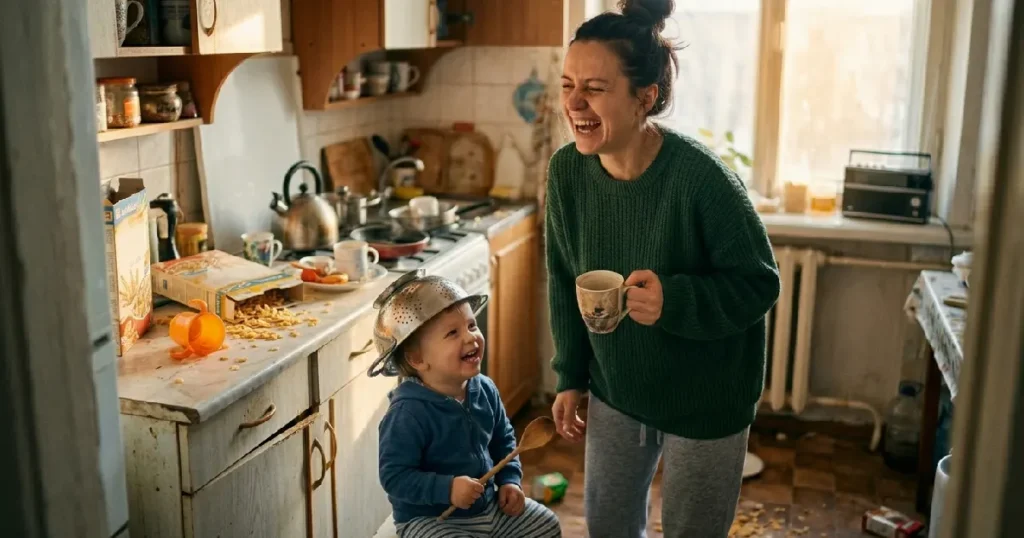
Meet Rachel. She is a 34 year old mother of three from Ohio. She works part time from home while managing nap schedules and a house that always looks like a toy store after an earthquake.
By month three of her youngest child’s sleep regression, Rachel stopped laughing entirely. She told her sister that she used to find the daily chaos amusing, but now she just felt like she was losing at life.
Her breaking point arrived on a rainy Wednesday morning. The kitchen smelled like burnt toast. The clock read 7:15 AM. Her four year old son, Oscar, decided he was never wearing pants again. Rachel felt that familiar, terrible surge of panic tight in her chest.
Actually, let me back up. She almost yelled. She almost turned it into a massive, screaming fight. Which, if you have ever dealt with a stubborn toddler, you know is maddening.
Instead, she tried a simple framework I call The 3-Step Autopilot Loop. First, you pause the reaction. Second, you state something completely out of left field. Third, you watch the tension break.
Rachel looked Oscar dead in the eye and said the pants are a government conspiracy and the couch completely agrees with you.
Oscar froze. He blinked twice. Then a massive grin spread across his face. He started giggling uncontrollably. Still laughing, he grabbed his pants and put them on without another word.
Rachel did not become a perfect parent that day. However, she became a lighter one. She realized that shifting from an angry warden to an absurdist narrator gave her power back.
Comparative Analysis: Absurd Parenting Approach vs. Traditional Calm Parenting Techniques
Both approaches are completely legitimate strategies. However, they serve totally different neurological functions. You need to know when to use each one.
| Dimension | Absurdist Parenting Approach | Traditional Calm Parenting Approach |
| Core Mechanism | Cognitive reappraisal via humor. Interrupts the cortisol cycle instantly. | Emotional regulation. Activates the prefrontal cortex through deep mindfulness. |
| Best Used When | Power struggles, loud meltdowns, repetitive daily chaos, extreme parent fatigue. | Deep emotional conversations, strict boundary setting, processing family trauma. |
| Skill Required | Practice noticing absurdity. Very low barrier to entry for tired parents. | Consistent emotional regulation training. Requires a much higher skill threshold. |
| Speed of Effect | Immediate. Humor produces a fast neurochemical response within a few seconds. | Gradual. Requires highly sustained practice over several weeks or months. |
| Risk if Misused | Humor aimed at the child directly creates deep shame. Sarcasm backfires badly. | Overly controlled affect can feel cold, robotic, or dismissive to children. |
| Co-Parenting Benefit | High. Shared daily humor is a scientifically proven relationship buffer. | Moderate. Shared calm is important but less socially connecting than laughing. |
The most resilient parents on earth use both. They use calm parenting as their baseline operating system, and they use absurdist humor as their emergency circuit breaker. They are not competing philosophies. They are sequential tools you keep in your back pocket.
Frequently Asked Questions (FAQs)
Does this actually work, or is it just a way to avoid real problems?
Funny methods work because they are reframing tools, not avoidance tactics. Medical studies prove humor builds cognitive flexibility and reduces your stress hormones quickly. The secret is using laughter after acknowledging the actual emotions in the room. Laughter never erases your family problems. It simply gives you the neurological space to solve them much faster.
What type of humor is most effective for parents?
Affiliative humor is consistently your best option. This specific style creates a strong feeling that you and your child are fighting the problem together. It targets the ridiculous situation, never the child. You should also use self enhancing humor to protect your own mental health privately. Both options are completely different from toxic, shame inducing sarcasm.
Can humor actually stop a toddler’s tantrum?
Yes, an absurdist interrupt can absolutely stop an escalating tantrum in its tracks. When you introduce something completely unexpected, you activate your child’s curiosity response. This biological reaction neurologically overrides their emotional momentum almost instantly. It will not work every single time. However, playful responses consistently diffuse toddler tension far faster than traditional logical reasoning.
Is it okay to laugh at the chaos of parenting on social media?
Sharing your daily chaos online is perfectly healthy because it validates shared experiences and builds community support. Your ethical boundary is your child’s dignity. You must never post content that could embarrass them later or mock their genuine distress. Laugh loudly about the shared experience of parenting, but never use your child as a public punchline.
How do I become funnier as a parent if I lack a natural sense of humor?
You never need to be naturally funny to make this work. You just need to become a better observer of your daily life. Start keeping a quick daily log of one ridiculous thing that happens. Over time, this simple habit trains your brain to scan for comedy instead of catastrophe. It is a completely learnable skill.
Final Takeaway
Do not just close this tab and return to your regular chaos. You need to take action today.
Tonight, after the kids are asleep, open your phone. Create a new note titled Evidence I Survived.
Write down one absurd thing that happened today. Just one. It does not need to be hilarious yet. It just needs to be brutally honest. Maybe your toddler cried for eleven minutes because you said you are welcome instead of no problem. That is enough.
Do it again tomorrow. Keep doing it. Within two weeks, you will not just have a record of your daily circus. You will have hard proof that you are the kind of parent who can laugh at the madness. Funny parenting advice is ultimately about surviving the hardest job on earth with a smile on your face.
By meeting simple mistakes with lightness instead of frustration, you create a home where kids feel totally safe to fail. That is the most serious advice anyone could ever give you.
Think about it for a second. When your kids grow up and look back at their childhood, do you want them to remember a stressed out manager, or a joyful leader who knew exactly how to laugh at the storm?
Now go forth. The cheese stick under the bathroom door is waiting for you.
My Closing Remarks
I might be wrong about this, but I firmly believe we take ourselves way too seriously. I used to cry over spilled milk, literally. Then I realized my stress was destroying my daily joy. Parenting is messy, loud, and often completely ridiculous. Stop trying to make it look like a pristine magazine cover. Let the house be messy for a single day. Let the kids wear mismatched socks to the grocery store. Find the humor in the madness. It saved my sanity, and I know for a fact it will save yours too.
More Related Stories For You
- If you want to keep improving your home life, I highly recommend looking into the qualities of a good partner, because genuine teamwork makes the chaos highly manageable.
- You can also try sending some good morning messages for him to start the day off with a quick smile.
- Finally, building healthy relationship habits will ensure you and your spouse stay deeply connected even when the kids are driving you completely insane.