Sara Carmen

Chemistry is easy to spot. The traits that predict a lasting bond are quieter, and most people never think to test them.
Key Takeaways
- The healthy relationship qualities that survive commitment show up on boring Tuesdays, not on anniversaries.
- Calm can feel like boredom when your history trained you to chase intensity, and this piece helps you tell the two apart.
- Every trait below comes with a small test, a metric, and the look-alike that fools smart people.
The short answer: Healthy relationship qualities are repeatable behaviors that keep a bond safe under stress: fast repair after conflict, clean fighting, answered bids for attention, boundaries that survive a no, everyday honesty, shared joy, and two people who stay whole on their own.
Contents
Table of Contents
We have all done the silent math in the car after dinner. The night was 90% lovely, one comment landed like a pinprick, and you are deciding whether to raise it or swallow it. You swallow it. Then comes the question nobody says out loud: normal settling-in, or am I talking myself into something?
That question gets harder when a relationship runs hot and cold. Behavioral science calls the hook intermittent reinforcement: unpredictable rewards keep us seeking harder than steady ones, the same schedule that powers slot machines. Warm, distant, then wildly warm again can feel more “passionate” than someone simply, reliably kind.
What follows are seven healthy relationship qualities defined as behaviors you can watch, each with a test you can run this week.
Why the traits of a healthy relationship hide in plain sight
Most checklists grade the highlight reel: vacations, anniversaries, how they treat the waiter on date three. In my work with couples, the most honest data comes from ordinary weeks: sick-day logistics, a delayed flight, who apologizes first and whether it sticks.
Attachment research going back to John Bowlby describes the goal as a secure base: a person whose steadiness frees you to take risks in the rest of your life. A secure base is mostly invisible while it works, which is why calm gets misread as “no spark.”
One client, “Maya” (a composite from my practice), nearly left the kindest man she had dated because nothing felt urgent. Her homework was simple: track her body, not her mood. Shoulders down, deeper sleep, no rehearsing texts. The spark she missed was anxiety.
The table below contrasts raw intensity with the quality of a good relationship, moment by moment.
| Moment | Intensity-driven bond | Secure, lasting bond |
|---|---|---|
| After a spat | Days of silence, then a grand gesture | An awkward but real repair within a day |
| A quiet Tuesday | Restless, decoding hidden meaning | Comfortable silence, zero detective work |
| You share a win | “But what about…” | “Tell me everything.” |
| You say no | Sulking, guilt, a debt to repay | “Okay, next time.” |
The 7 healthy relationship qualities, and how to test each one

This relationship qualities list works because every trait is a behavior, and every behavior leaves evidence. Run the tests on ordinary weeks. Stress is the real interviewer.
1. Repair that lands
Every couple ruptures. Gottman’s lab found the difference lies in repair attempts: the joke, the touch, the “can we start over?” that stops a spiral. What matters is whether repairs get offered and accepted.
Metric: after a minor spat, does someone reach back within 24 to 48 hours, and does it work? Watch the counterfeit: fluent apologies with zero behavior change. I call it apology inflation. The words get cheaper every round.
2. Conflict without contempt
In the study behind the famous 5:1 ratio, stable couples kept roughly five positive moments (a nod, a joke, a touch) for every negative one during conflict (Gottman & Levenson, 1992). Contempt, the eye-rolls and mockery, stands out across this research as the strongest divorce signal. Gottman’s later work puts about 69% of disagreements in the perpetual bucket, rooted in personality rather than solvable problems.
So grade the recurring fight: humor and respect, or scorekeeping? Count contempt markers across your next three disagreements. When mockery becomes the house style, you are facing something deeper than nerves, and our guide to narcissism in relationships helps you name it.
3. Bids that get answered
A bid is any small ask for attention: “look at this bird,” a sigh, a meme. In Gottman’s six-year follow-up of newlyweds, couples still married had turned toward bids 86% of the time. Divorced couples managed 33%. Love lives in these split seconds.
Test: over one weekend, count ten bids from each of you and log the response as toward, away, or against. The look-alike is grand-gesture generosity paired with daily ignoring. Vacations are easy. Looking up from the phone is the skill.
4. A no that survives contact
Respect stays abstract until you decline something. Say a small no (“I’ll skip trivia night”) and watch the next 24 hours. Healthy: mild disappointment, zero punishment. Unhealthy: the guilt tax, sulking, or warmth withdrawn until you pay.
Edge case: some partners accept your no beautifully while quietly abandoning their own. Chronic self-erasure breeds resentment on a delay. Test both directions: can you say no, and can they?
5. Honesty when nothing is at stake
Big lies get the attention, but small ones set the price of truth. If tiny admissions (“I forgot to call,” “I spent 80 dollars”) trigger lectures or cold shoulders, emotional safety erodes and both of you start editing. That is how couples get blindsided by facts that were true for years.
Metric: in the past month, did either of you soften or hide a low-stakes fact to avoid a reaction? The trait you want: truth stays cheap to tell.
6. Joy that gets multiplied
UCLA researcher Shelly Gable found that how a partner responds to your good news predicts relationship health even better than their response to bad news (Gable et al., 2004). The winning style is active and constructive: stopping, asking, reliving the win with you. The subtle killer sounds practical: “Won’t that mean more hours?”
Test: share three small wins this week and classify the replies. Envy hides well inside practicality.
7. Two whole people
Healthy closeness has seams. Each of you keeps friends, interests, and opinions the other does not share. Safety fuels exploration; it never cancels it.
Watch the fake: “independence” that is really avoidance, a partner who needs no one and calls it strength. The working metric: a Saturday apart produces zero punishment texts, and a personal win still gets celebrated. Fusion feels romantic at month two and like a cage by year two.
The mirror test: what qualities do you bring to a relationship?
Couples researchers keep landing on the same uncomfortable finding: healthy relationship qualities live in the space between two people. You are half of every ratio on this page.
Three prompts, answered honestly in writing:
- When did I last offer a repair first, without keeping score?
- What happens to my face when my partner shares good news?
- Which small truth did I edit this month, and what was I protecting?
Two edge cases deserve mercy before judgment. A partner in genuine crisis (grief, a health scare, a brutal work season) can run below baseline for weeks; judge character by the recovery, not the dip.
And if you grew up with chaos, a calm partner may feel flat for a month or two. That flatness usually lifts. Contempt does not fade on its own.
The qualities of a successful relationship are mostly plain skills practiced under mild stress. Good news: skills can be learned by both of you.
Four tests to run before you commit
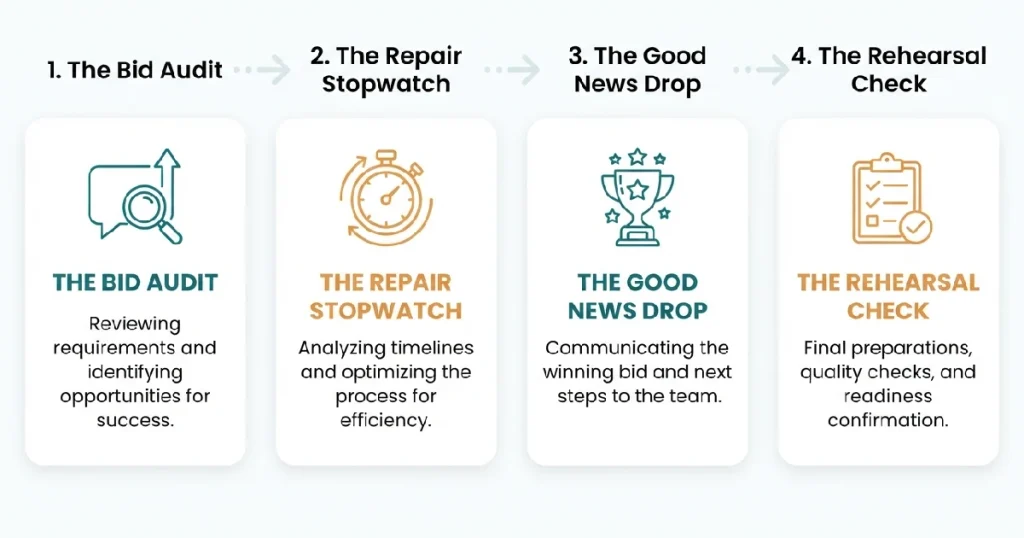
One place to begin is the smallest test that scares you a little. Consider running these in order across the next month.
1. The Bid Audit
Pick one weekend and log ten bids from each of you: what was asked, what came back. Skip announcing the audit, since performance changes the data. Under six of ten answered? Try: “I notice we miss each other’s small stuff, and I’d love us both to practice looking up.”
2. The Repair Stopwatch
After your next minor clash, time the gap until someone reaches back. Offer yours early: “I got sharp last night. That’s on me. Can we rewind?”
Then note the part people skip: did the repair get accepted, or stored as ammunition? Acceptance is the real metric.
3. The Good News Drop
Share a genuine small win in person, phones down. “I got picked to lead the project.” Watch the first ten seconds: questions and energy, or a pivot and a “but.”
Run it three times before drawing conclusions. Everyone has distracted days.
4. The Rehearsal Check
Notice whether you rehearse tiny requests (“can we get Thai?”) before saying them aloud. Rehearsal is your nervous system pricing the risk of a reaction.
If you catch it, name it gently: “I’ve noticed I practice small asks before I bring them to you. I don’t want that for us. What do you think is going on?”
Frequently Asked Questions
Can these qualities develop later, or do they need to exist now?
Repair and bid-turning improve with practice when both people want to. Contempt and stonewalling rarely budge without serious help. Grade the trend line over three months, not a single week.
How long until I see someone’s real pattern?
Stress reveals character faster than time does. A trip, a flu, a family visit, and one honest disagreement surface more in three months than a year of curated dates. Treat the third occurrence of a behavior as your data point.
Is feeling bored with a kind partner a red flag?
Sometimes it is withdrawal from intensity, which fades after six to eight weeks of steady contact. Sometimes it is a genuine mismatch, which deserves respect too. Calm with warmth underneath is safety; calm with nothing underneath is information.
Back to the car after dinner. The pinprick comment no longer needs to be swallowed or blown up. You have a map: raise it small, watch the repair, judge the pattern by the third occurrence. The qualities of a good relationship become evidence you can collect instead of a vibe you hope holds.
The love that lasts is the love that repairs.
My Closing Remarks
I spent years thinking my job was to help people find the right person. These days I mostly help them slow down enough to see the person already in front of them.
If this list stirred up grief about a past relationship, that is worth honoring. You learned the price of missing signs. Take the map, keep your warmth, and let someone earn the yes.
More Related Stories for You
Curious how these traits show up in one person before the relationship even starts? See our breakdown of the green flags of a genuinely good partner and check which ones you have been underweighting.
About The Author