
 Sara Carmen
The wedding gets the planning. The marriage gets the leftovers. Here’s how engaged couples can flip that script before they say “I do.”
Key Points
- Emotional intimacy is built through accumulated daily moments, not grand romantic gestures, making the engagement period your most valuable training ground.
- Research shows couples who turn toward each other’s small “bids for connection” stay together at dramatically higher rates than those who don’t.
- Vulnerability is a learnable practice, not a personality trait, and pre-marriage is the safest window to practice it.
Contents
Table of Contents
You’ve Planned the Flowers. Have You Planned the Friendship?
Someone might think they have plenty of time to figure out the emotional side of marriage after the wedding. After all, isn’t that what “happily ever after” is for?
But what they don’t see is the quiet drift that begins long before the vows. The missed glances across the dinner table during venue tastings. The conversations that never get past “Did you confirm the caterer?” The slow, almost imperceptible replacement of real connection with logistical coordination.
You know this feeling. You’re deep in wedding planning, and your relationship has started to feel less like a romance and more like a joint project management venture. You tell yourself it’s temporary. Once the wedding is over, things will go back to normal. They will, for about three months, until the U-shaped curve of marital satisfaction starts its predictable dip, and you realize you never built the tools to survive it.
According to Gottman, emotional intimacy is one of the strongest predictors of long-term relationship stability, with a correlation coefficient of 0.85. The couples who build it before the wedding carry it through every season after.
Here’s what that actually looks like in daily life, and how you can start today.
What Emotional Intimacy Actually Means (And What It Doesn’t)
It’s Not Just Talking About Your Feelings
Most engaged couples assume emotional intimacy means deep late-night conversations about childhood wounds. It can include that, but it is so much more.
Emotional intimacy is the felt sense of being fully known by your partner and choosing to stay anyway. It’s knowing that you can say the worst thing, the embarrassing thing, the scared thing, and the other person will lean in instead of pulling away.
It is not:
- Co-dependence (where you cannot function without the other)
- Constant harmony (which is actually a warning sign)
- Physical attraction or chemistry (though those matter too)
- Knowing every detail of your partner’s day
The Three Dimensions of Intimacy Most Couples Ignore
A 2025 peer-reviewed study of 1,058 participants found that emotional, intellectual, and recreational intimacy were all significant predictors of marital satisfaction for both men and women. Most couples only focus on the first.
Intellectual intimacy is the experience of sharing ideas, debating beliefs, and challenging each other to think differently. It’s the conversation that starts with “I read something interesting today” and goes somewhere unexpected.
Recreational intimacy is the bond built through shared experiences, the inside jokes from a road trip, the pride of finishing a puzzle together, the quiet companionship of walking the same trail.
If you want to build emotional intimacy, you need to invest in all three. Otherwise you’re building a house on one corner of the foundation.
Why Building It Before Marriage Is Non-Negotiable
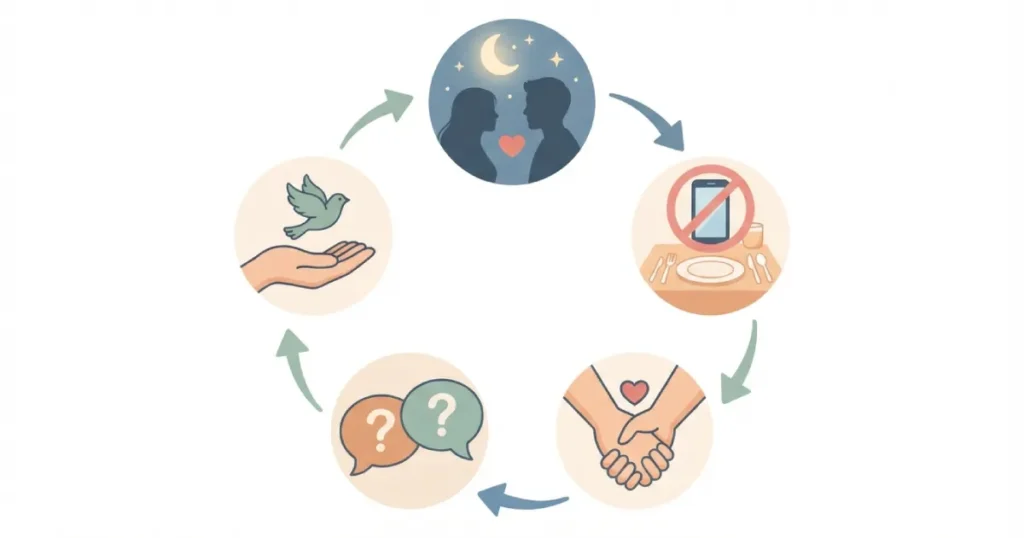
The U-Shaped Curve Your Relationship Will Follow
Marital satisfaction follows a predictable pattern: high in the early years, dipping in the middle, and stabilizing later. This isn’t a pessimistic view. It’s a researched reality, and it comes with a clear implication.
Couples who build a deep emotional foundation before marriage are simply better equipped to handle the dip when it arrives. They have the muscle memory of turning toward each other. They have already practiced being vulnerable when stakes were low.
Couples who skip this work are essentially signing a contract for a project they haven’t trained for.
The Vulnerability Gap Engaged Couples Don’t Know They Have
Here’s a number worth sitting with: 48% of Gen Z men hold back from emotional intimacy for fear of seeming “too much.” More than half of them said they felt ashamed after being vulnerable. This is from Hinge’s 2025 Gen Z dating report, based on roughly 30,000 daters worldwide.
The same report found that 84% of Gen Z daters want new ways to build deeper emotional connections.
You read that right. The people craving closeness are the same people most afraid to reach for it. This is the vulnerability paradox: your armor feels like it protects you, but it actually locks you inside the conflict. Dropping the armor feels terrifying, but it is the only move that changes the game.
Engagement is the safest time to practice dropping the armor. The stakes are lower. The love is already declared. You have room to be clumsy.
The Gottman Framework: Small Moments, Enormous Impact
What “Bids for Connection” Are and How to Spot Them
John Gottman’s decades of research at The Gottman Institute identified something deceptively simple: bids for connection. These are the small attempts one partner makes to get attention, affection, or engagement from the other.
A bid can be as subtle as sighing after a long day. As obvious as “Look at this dog.” As vulnerable as “I missed you today.”
Couples who stayed together turned toward each other’s bids 86% of the time. Couples who divorced? Just 33%.
The difference is not love. It is attention.
The 86% vs. 33% Rule, and What It Means for Engaged Couples
During engagement, bids get lost in the chaos of planning. You might say “I’m overwhelmed with decisions today” and hear back “Did you book the photographer yet?”
That response is not malicious. It is just someone optimizing for the wrong variable. The variable you actually need to optimize for is connection. The wedding will happen with or without that optimization. The marriage will not.
A useful practice: once a day, pause and ask yourself, “What bid did my partner make in the last 24 hours that I missed or misread?” Just notice. Over time, the noticing becomes automatic.
Daily Habits That Build Real Emotional Intimacy

1. The 10-Minute Nightly Check-In
Most couples have a version of “How was your day?” The problem is that this question reliably produces surface-level answers.
A better structure, drawn from emotionally focused couples therapy: each night, take 10 minutes (phones in another room) and ask each other three questions:
- What was the best part of your day?
- What was the hardest part?
- What do you need from me tonight?
This is not a business meeting. It is a practice in staying curious about your partner’s inner world. The format does the work so you don’t have to remember what to say.
2. The Friendship Audit
Couples who prioritize friendship alongside intimacy are 86% more likely to report higher relationship satisfaction. This statistic, often attributed to Gottman’s research, reframes what makes a marriage last. It is not passion. It is companionship.
Ask yourselves: Would we want to be friends with each other if we weren’t dating? Do we genuinely enjoy spending time together without an agenda? Can we laugh easily?
If the answers feel uncertain, you have just identified the most important area to invest in before the wedding.
3. The Phone Rule That Protects Your Shared Time
A 2025 meta-analysis confirmed that partner phubbing (phone snubbing during shared time) is significantly associated with lower relationship satisfaction, reduced intimacy, and increased conflict. About 46% of adults report experiencing it in their relationship.
The fix is not a digital detox retreat. It is one rule: phones face-down during meals, during the nightly check-in, and during the first and last 30 minutes of the day. That is it. Three protected windows. The rest of the time, you can use your devices normally.
The research is clear: it is not total screen time that erodes intimacy. It is screen time during the moments that matter.
4. How to Make Vulnerability a Practice, Not a Personality Trait
Some people seem naturally open. You have probably envied them. But vulnerability is not a personality trait. It is a skill, and it is built through small, repeated acts of sharing what is true.
Start with low-stakes honesty. Instead of “I’m fine,” try “I had a harder day than I expected, and I’m not sure why.” Instead of pretending to love the venue choice, say “I had a different image in my head. Can we talk about it?”
Each time you offer a true sentence, you make the next one easier. You are training your nervous system to believe that honesty is safe with this person. By the time stressors arrive in marriage (and they will), the pathway is already clear.
5. The Weekly Curiosity Date
Pick one evening a week. The activity matters less than the structure. The structure is: each person brings one question the other has never answered. Examples:
- What is a belief you held at 20 that you no longer hold?
- What is something you are quietly proud of that I might not know about?
- When do you feel most loved by me, and when do you feel most alone?
- What is a fear you have about our future together that you haven’t said out loud?
Take turns. Listen without fixing. This is not a discussion. It is an excavation.
Conversations to Have Before You Say “I Do”
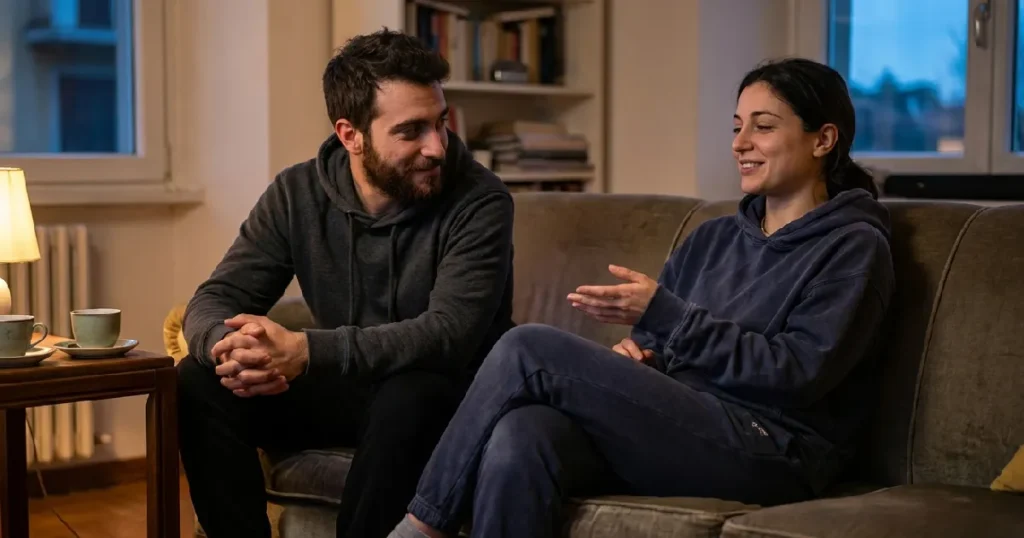
Questions That Go Deeper Than Wedding Plans
Most premarital conversations focus on logistics: where to live, how to handle finances, whether to have kids. These matter. But the conversations that predict long-term intimacy are different.
Try these:
- How do you like to be comforted when you’re sad? How do you comfort others?
- What does “home” feel like to you, and where have you felt it?
- What is one thing your family of origin did around conflict that you want to repeat, and one thing you want to do differently?
- When you feel distant from me, what do you typically do? What would you like to do?
How to Talk About Emotional Needs Without Starting a Fight
The Gottman Institute identifies the four horsemen of relationship communication: criticism, contempt, defensiveness, and stonewalling. The antidote to criticism is what Gottman calls a “soft startup.”
Instead of “You never listen to me,” try “I feel unheard when I’m sharing something important, and I want to figure out why.” The first statement attacks character. The second describes a specific moment and invites collaboration.
Couples who complete premarital counseling report stronger communication, greater emotional intimacy, and more confidence about their future together. Most couples skip it. But you can replicate the core exercises at home using the questions and structures above. The barrier to entry is simply starting.
A Story You Might Recognize
Maya and Jordan came to me eight months before their wedding. They were not in crisis. They were in logistics. Every conversation had become a to-do list. They had stopped asking each other real questions. The romance was not dead. It was just buried under 47 open browser tabs.
We replaced one evening a week with what they called “the no-venue rule”: no wedding talk, no phones, just a question and a glass of wine. Within two months, they had more emotional intimacy than they had felt in over a year. The wedding planning got easier, too, because they were no longer trying to solve life from a place of depletion.
The intimacy did not come from a grand gesture. It came from a small, consistent practice.
How to Sustain Emotional Intimacy After the Wedding
What Changes When You’re Married (And What Shouldn’t)
The demands of everyday life, including stress, packed schedules, and daily routines, can gradually wear away at this essential bond. The couples who maintain intimacy after the wedding are not the ones who try harder. They are the ones who protect what they built.
Three habits that travel with you:
- The nightly check-in continues, even when you are tired. Especially when you are tired.
- The phone rule stays. The dishes can wait 10 minutes. The texts can wait 20.
- Curiosity stays alive. Ask questions you already know the answer to. People change. Stay current.
Staying Curious About Each Other’s Inner World
Staying responsive and curious about each other’s inner worlds ensures both partners consistently feel valued and understood. Curiosity is not about having new information. It is about signaling that the other person’s experience still matters to you, even after you have heard a thousand versions of it.
My Closing Remarks
I have sat with hundreds of couples preparing for marriage, and the ones who thrive share one thing in common: they treated the engagement not as a countdown to a party, but as a rehearsal for a life. The wedding is one day. The intimacy is the everyday work. And here is what I want you to hear clearly: the fact that you are reading this article means you are already doing the work. Most couples never ask these questions. You are asking them now. That matters more than any seating chart.
More related stories for you:
- If you are still in the wondering phase of your relationship, you might want to explore the signs he is going to propose to help you prepare emotionally for the transition from dating to engagement.
About The Author