
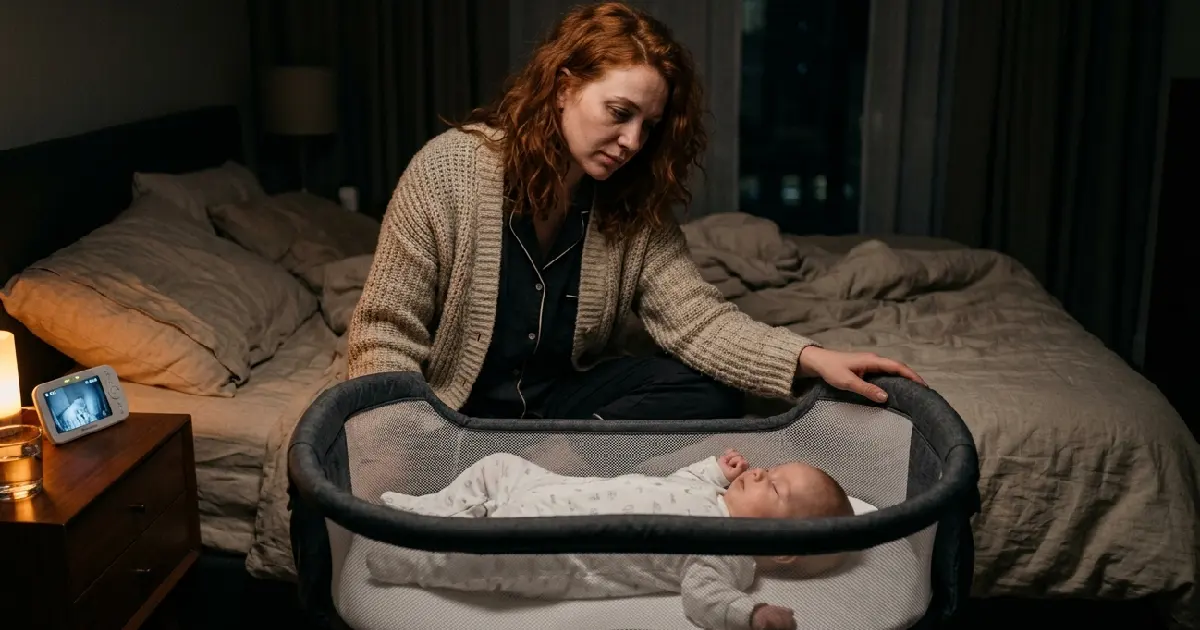

The internet lies to new parents. You do not have to wait a magic number of months to upgrade your baby’s sleep space. Actually, let me back up. It is exactly 3:14 AM. You are staring at your rapidly growing baby. They just attempted a messy roll, pressing their face uncomfortably into the soft mesh of your expensive bedside bassinet. You grab your phone in the dark. With one thumb, you frantically type when to move newborn to crib into the search engine, begging the universe for a straight answer. Instead, you get a wall of terrifying warnings and contradictory age brackets.
If you have ever dealt with this, you know it is absolutely maddening. You are terrified of making a terrible mistake, yet you are so sleep-deprived you can barely think straight. I see this exact flavor of panic every single week in my family therapy practice. Parents sit on my couch, practically vibrating with guilt, convinced they are doing everything completely wrong.
Here is the blunt reality. Age is the absolute worst indicator of crib readiness. Everyone focuses strictly on the calendar. That is a dangerous game. Popular advice oversimplifies a deeply personal transition. You do not need another generic timeline. You need a definitive, milestone-based safety checklist. You need absolute permission to trust your own eyes, ignore your mother-in-law, and make a change that protects your baby while saving your sanity.
Here is what we will cover today:
- The shocking room-sharing paradox nobody talks about.
- The five physical signs your baby is ready tonight.
- Scripts to handle pushy relatives or anxious partners.
- A step-by-step survival plan for the first week.
What “Moving To The Crib” Actually Means
Parents often feel entirely overwhelmed because they are trying to solve three distinct problems at the exact same time. Most internet articles confuse a simple sleep surface upgrade with a massive room change. Breaking these down into a simple trinity makes the process immediately manageable.
Table of Contents
The Parent’s Decision Trinity
I might be wrong about this, but I suspect you are conflating a few different milestones. Let’s pull them apart so you can breathe.
First, you have the sleep surface upgrade. This first choice is purely about upgrading the physical sleep space to accommodate a growing body. This transition is triggered by size, safety limits, or physical milestones. It can happen anytime from birth to six months. During this phase, the crib just replaces the bassinet and remains in your bedroom.
Second, you have the room transition. This secondary move is heavily guided by safe sleep guidelines. To understand the baseline rules, you can review the latest guidance from the American Academy of Pediatrics, which advises sharing a bedroom with your baby for at least the first six months. Moving the crib across the hall is a distinct logistical shift.
Third, you have complete nursery independence. This final step represents your baby sleeping entirely on their own, often without you checking the video monitor every four minutes. This is a separate family decision entirely, carrying its own unique emotional timeline.
The Shocking Room-Sharing Paradox
Parents constantly feel trapped between contradictory advice because the medical data itself contains a deeply confusing paradox. Presenting the complete, honest picture helps you make an educated choice rather than a fear-based guess.
“Room-sharing decreases the risk of SIDS by as much as 50 percent, making it the gold standard for early infancy.”
This quote from Dr. Rachel Moon highlights why the early months matter so much. You cannot ignore that statistic. The highest risk period for sudden infant death is between two and four months of age. Room-sharing during this window is non-negotiable in my professional opinion.
However, there is a massive catch that pediatricians rarely advertise. The AAP strongly recommends room-sharing for at least six months, but their own data reveals a complicated twist. Research published in the journal Pediatrics found that after four months, room sharing actually results in less nighttime sleep, more frequent night wakings, and a documented increase in unsafe sleep practices by exhausted parents.
This paradox is not designed to confuse you. It is science showing that family realities matter. The safest path is observing the minimum safe room-sharing period for the first six months, followed by a deeply personalized assessment of your family’s mental health and sleep quality.
The Five-Factor Crib-Readiness Checklist
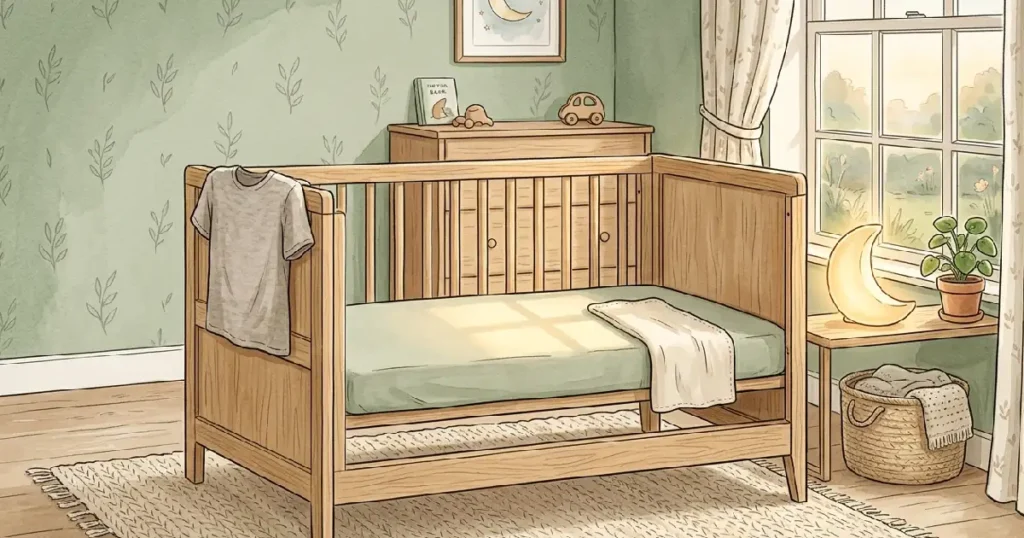
Relying on generic age brackets ignores your baby’s unique physical development and places them at unnecessary risk. Put the calendar away. Look at your child. If you see these signs, it is time to make the switch.
- Developmental Motor Milestones. Once a baby can roll from back to tummy or shows clear signs of attempting to roll, they can easily become wedged against a bassinet’s soft mesh sides. This creates a direct suffocation risk. Do not wait until a full, successful roll has happened. The nighttime attempt itself is the safety trigger.
- Bassinet Size And Weight Limits. Every bassinet features strict manufacturer limits, typically capping around fifteen to twenty pounds. Check your manual. For specific product recall information, you can always cross-reference the Consumer Product Safety Commission database. If your little one is sitting independently or has met the physical limits set by the manufacturer, their bassinet is no longer structurally safe.
- Mutual Sleep Quality. After four months of age, your physical presence in the room might stimulate more frequent wake-ups. Your baby hears you cough, turn over, or breathe heavily. You hear their active sleep grunts. If maternal mental health is crashing, action is required. As noted frequently in Psychology Today, chronic maternal sleep deprivation is a primary trigger for postpartum depression.
- Crib Safety Setup. Your new crib must be verified safe before your baby ever sleeps in it. The mattress must be incredibly firm. There should be absolutely no loose bedding, pillows, bumper pads, or stuffed toys. A bare crib is a safe crib.
- Environment Optimization. The crib environment needs to replicate the sensory comfort of the bassinet experience. Maintaining a consistent temperature between 68 and 72 degrees Fahrenheit deeply soothes a young infant’s developing nervous system.
Meet Jessica: From Terrified To Confident In Five Days
Jessica (name changed for privacy) was a client of mine. She was thirty-one years old and a deeply anxious first-time mom. Her son, Eli, was a beautiful, absolute tank of a baby. At just three months old, he was already fifteen pounds. His bedside bassinet groaned loudly every single time he wiggled his hips. His sleep space smelled faintly of old breastmilk and lavender baby lotion.
One night at 2:00 AM, bathed in the eerie green glow of the video monitor, Jessica watched Eli do a mini push-up. He slammed back down clumsily, wedging his nose directly into the side fabric. She panicked. But her pediatrician had vaguely mentioned waiting six months before introducing the big crib.
Jessica came to my office in tears. Her eyes were red and severely puffy from a brutal string of forty-five-minute sleep cycles. She felt completely paralyzed. Moving him felt like a massive betrayal of the safety rules, but keeping him in the tiny bassinet felt like an active physical trap.
We tossed out the calendar entirely. We looked at Eli’s physical reality instead. He was hitting the weight limit. He was actively pushing up. He was waking up constantly. I told her to trust the physical evidence right in front of her. She started with our nap rehearsals. By night five, Eli slept a glorious five-hour stretch in his full-size crib, safely parked right next to her bed. The green monitor light finally showed a peaceful, still baby. Jessica finally got her brain back.
When To Move Newborn To Crib: Your Step-By-Step Guidance
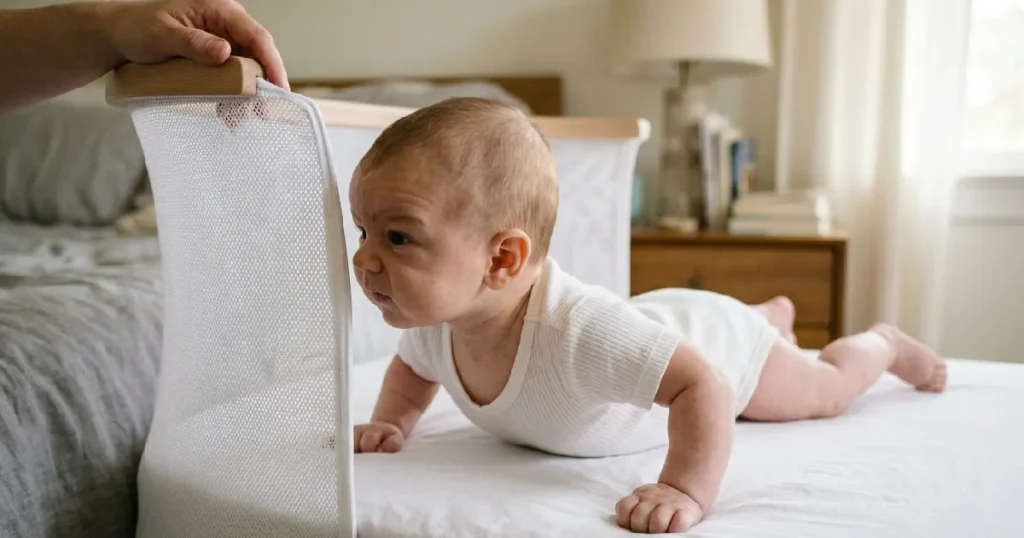
A gradual, sensory-focused transition protects your baby’s developing nervous system from shock and greatly reduces nighttime protests. I want you to treat this like a gentle marathon, not a sprint. Follow this exact seven-night plan to keep tears to an absolute minimum.
Days 1 and 2: The Scent Bridge Method
Infants rely heavily on their olfactory senses to feel safe in new environments. Placing a worn parental t-shirt securely over the outside edge of the crib brings your comforting scent into the space without creating a suffocation hazard. I want you to wear a plain cotton undershirt for two hours before the first crib night. Sweat in it a little. Then, drape it tightly over the outside of the crib’s end rail, far away from their grabbing hands.
“Sensory continuity is the primary comfort mechanism for an infant’s rapidly developing nervous system.”
This observation from pediatric sleep specialists explains exactly why the scent trick works so well. You are tricking their brain into feeling safe and surrounded by you.
Days 3 and 4: The Daylight Nap Rehearsals
Practicing daytime sleep in the new crib lowers the stakes and builds positive spatial associations. Your baby’s nervous system adapts much easier to a new mattress during daylight hours when they are less fatigued. Start with the first morning nap in the crib. Your baby is least overtired and most biologically primed for sleep at this hour. If they cry, give them a few minutes to settle. If they escalate, pick them up, soothe them, and try again tomorrow. Do not force it.
Days 5 and 6: The Bedtime Routine Dress Rehearsal
Moving the bedtime routine into the nursery builds environmental familiarity even if the baby sleeps elsewhere for the night. This strategy sends a clear neurological signal that the nursery is a safe, warm space associated with snuggles. I want you to complete the bath, feeding, and lullaby in the nursery rocking chair. Once they are drowsy, transfer your baby back to their familiar bassinet in your room.
Day 7: The Full Overnight Launch
Executing the first overnight stay requires serious patience and a deep commitment to the established sleep routine. End the familiar wind-down ritual directly inside the new crib. Position a video monitor exactly at mattress level so you can easily observe their chest rise and fall. Stay the course during transition protests. Responding to genuine distress is essential, but allowing brief, safe protest settling helps them master their new environment.
Common Mistakes And How To Avoid Them
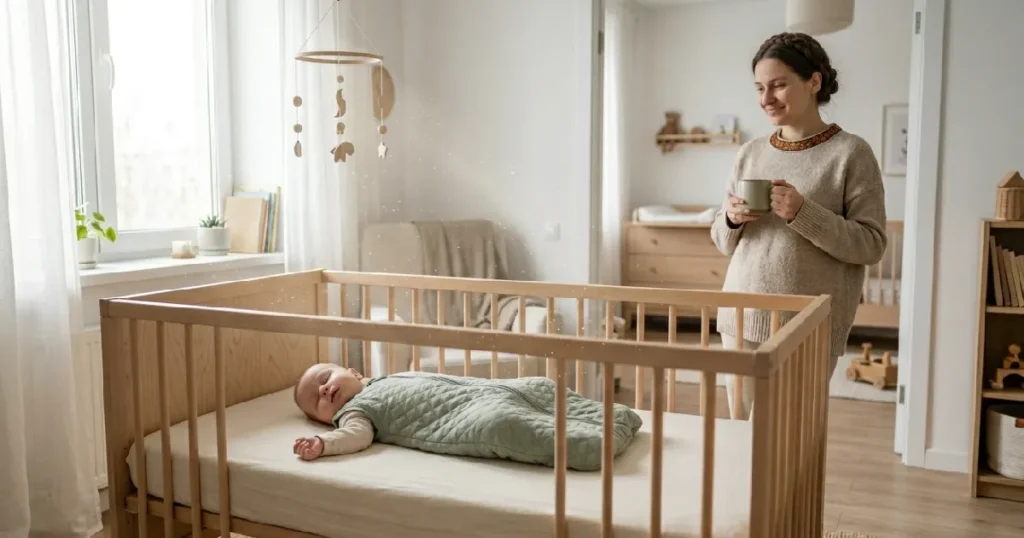
If you rush this process, you will pay for it at 4:00 AM. Avoid these four incredibly common traps that exhausted parents fall into every single week.
Mistake 1: Treating The Calendar Like A Bible
Waiting for an exact age mark before upgrading a sleep surface is dangerous. If your three-month-old is rolling, the bassinet is officially unsafe. Do not let well-meaning relatives guilt you about timing.
If your mother-in-law says, “Well, you slept in a bassinet until you were eight months old and you are totally fine,” you need a firm script.
What to say: “I know sleep rules have changed a lot since we were kids. Our pediatrician looked at his specific physical development and we are following modern safety guidelines to keep him secure. We are really confident in this choice.” Shut the conversation down with a smile.
Mistake 2: The Scentless Mattress Trap
Dropping a baby into a brand new crib that smells like factory plastic and fresh laundry detergent is a recipe for screaming. Babies are tiny bloodhounds. If it does not smell like mom or dad, it feels like a hostile environment.
What to do: Wash the new crib sheets in the exact same gentle detergent you use for the bassinet sheets. Sleep with the fitted crib sheet under your own body for one night before putting it on the baby’s mattress. Transferring your skin scent to the fabric works wonders for their anxiety.
Mistake 3: Changing The Wind-Down Routine
Many parents move the baby to the crib and suddenly decide to change the bedtime routine, too. They drop the pacifier, stop singing the song, or change the feeding time. This is way too much change for a tiny brain to process at once.
What to do: Keep everything identical. If you always sing “You Are My Sunshine” while bouncing on an exercise ball, drag that ball into the nursery and sing the song. The environment is changing, so the routine must be the anchor.
Mistake 4: The 20-Minute Rebound Rescue
This happens all the time. You put the baby in the crib. They cry for exactly twenty minutes. You panic, grab them out, and shove them back into the bassinet for the rest of the week. This teaches the baby that the crib is a terrible place, and if they cry hard enough, you will rescue them from it.
If your partner panics when the baby fusses in the new space, you need a united front.
What to say: “I know it is really hard to hear them fuss, but they are just frustrated by the new mattress. Let’s watch the monitor for exactly five more minutes to see if they settle before we intervene. We cannot confuse them by moving them back and forth tonight.”
Bassinet vs. Crib Comparison
Choosing the right sleep surface requires understanding the precise limitations and safety profiles of each piece of gear. The National Institutes of Health offers extensive documentation on safe infant environments, but here is a simple breakdown.
- Bassinet: Completely safe from birth. Highly portable. Ideal for the newborn phase and frequent middle-of-the-night feedings. However, it is quickly outgrown by four to six months. The weight limit is strictly capped around fifteen to twenty pounds.
- Full-Size Crib: Completely safe from birth. Designed for long-term safe sleep, usually lasting up to three years. Holds up to fifty pounds easily. It is bulkier and harder to fit in a master bedroom, but it is the ultimate safe sleep surface.
- Bedside Co-Sleeper: Safe from birth only if strictly CPSC-approved. Designed for room-sharing maximalists. It attaches to the adult bed securely. However, it is severely limited by size and will be outgrown just as fast as a traditional bassinet.
Frequently Asked Questions (FAQs)
Can a newborn sleep in a crib from birth?
Yes, a newborn can safely sleep in a full-size crib right from day one. Cribs are perfectly safe from birth as long as you follow strict sleep guidelines. The crib must have a firm, flat, federally compliant mattress with a fitted sheet and absolutely nothing else inside. Many families choose to skip bassinets entirely.
What is the AAP recommendation for when to move baby to their own room?
The medical community recommends sharing a bedroom with your baby (but not the exact same sleeping surface) preferably until they turn one, but at least for six months. The shocking caveat is that published research confirms room-sharing after four months can actually increase night wakings and unsafe habits. Discuss your specific timing with your doctor.
What are the signs my baby is ready to move from bassinet to crib?
There are five key physical signs to watch for tonight. Your baby is attempting to roll or push up on their hands. They are approaching the manufacturer weight or height limits of the bassinet. You are experiencing frequent mutual sleep disruptions after four months of age. Finally, your new crib is safely set up perfectly.
Does moving baby to a crib increase SIDS risk?
No, a full-size crib is consistently one of the safest sleep surfaces for your baby. SIDS risk is not increased simply by moving to a crib. The risk only increases by moving your baby to their own isolated room before six months, or by dangerous bed-sharing. Room-sharing in a separate crib is incredibly safe.
Is it safe to put baby in a crib with a sleep sack?
Yes, wearable blankets or sleep sacks are highly endorsed by pediatricians and remain the preferred alternative to loose blankets. A sleep sack functions as a wearable sleeping bag, providing a cozy feeling without the risk of loose fabric covering the face. Never use weighted sleep sacks, as they can dangerously restrict your baby’s chest breathing.
What is the difference between room-sharing and bed-sharing?
These two practices are critically different from one another. Room-sharing means your baby sleeps in your room inside their own crib or bassinet, which heavily reduces SIDS risk. Bed-sharing means sharing the exact same adult sleep surface with the infant, which medical professionals strongly advise against. Always keep your baby on a separate, firm surface.
Final Takeaway
Transitioning your child to a new sleep environment does not have to be a nightmare of guilt and confusion. Stop staring at the calendar and start looking at your baby’s actual physical development. If they are rolling, pushing up, or hitting the weight boundaries of their current setup, it is absolutely time to upgrade their mattress. Follow the gentle, week-long transition plan to protect their nervous system. Prepare their room carefully, maintain your trusted routines, and remember that protecting their physical safety is always your top priority. You have the tools, the data, and the instincts to handle this transition flawlessly.
My Closing Remarks
I might ruffle feathers saying this, but prioritizing your own sleep is not selfish. It is a biological necessity. When my daughter outgrew her bassinet at fourteen weeks, I cried. I felt like a massive failure for moving her early. But the first night we both slept five straight hours in our separate beds, I woke up feeling human again. A rested parent is a safer parent. Period. Trust your gut, read the manuals, and stop letting internet strangers dictate your family’s peace of mind.