
 Nicole Adkins
 I see you, and I understand the reality-testing crisis you are experiencing right now. Your home, which should be your safest refuge, has slowly become an invisible war zone. Residing with a toxic partner is a constant, methodical erosion of your nervous system. Listen, I get it. You are probably searching for answers about Living With a Narcissist Boyfriend because you feel completely exhausted and isolated. Most generic advice tells you to simply communicate your needs better. However, in this specific relationship dynamic, communication is just handing your abuser a map of your deepest vulnerabilities.
Living with a narcissist boyfriend requires an immediate shift from conflict resolution to operational security. To survive this challenging dynamic safely, you must implement the Grey Rock method, establish complete digital autonomy through separate accounts, and radically accept that his lack of empathy is a permanent neurological feature, not a temporary mood you can fix.
This guide is your operational security manual. It is time to stop trying to fix him and start focusing entirely on protecting your sanity, your finances, and your soul.
What Is Narcissism Really? The Core Concept Redefined
We throw the word “narcissist” around loosely today, often using it to describe someone who takes too many selfies or acts a little selfish. That definition does not even scratch the surface of the nightmare you are living.
Table of Contents
To truly understand what you are up against, we need to look at the clinical reality of Narcissistic Personality Disorder. Narcissism is a severe disorder of self-esteem regulation. The individual possesses a fragile, hollow core of shame, which they protect by projecting a grandiose “false self” to the world. To maintain this illusion, they require constant external validation. Psychologists call this validation “narcissistic supply.”
In the context of your romantic relationship, he does not view you as a separate human being with independent emotional needs. Instead, you are an extension of his ego. You are an appliance plugged into the wall, expected to dispense admiration, compliance, and emotional reactions on demand.
“The abuser enjoys employing gaslighting and projection techniques to rewrite the history of abuse and misplace all blame onto you.”
This quote from psychology expert Shahida Arabi, MA, perfectly captures the maddening reality of your daily life. It explains why every single argument somehow ends up being your fault, leaving you exhausted and confused.
The Science of Pathological Antagonism
Here is the idea we need to get clear on right now. Recent psychological research focuses heavily on a concept called pathological antagonism. This is the underlying driver that makes narcissistic individuals fundamentally hostile and entitled as a default state. They operate with a massive perception-reality gap. When you try to have a normal conversation about your feelings, his brain interprets your independent thought as a direct attack on his authority.
This triggers a narcissistic injury, leading to a sudden, terrifying threat-response cascade (which you probably recognize as screaming, name-calling, or a cold, punishing silent treatment). It is vital to understand that his rage is a reflex, not a logical response to anything you actually did wrong.
The Empathetic Story: Reclaiming Reality
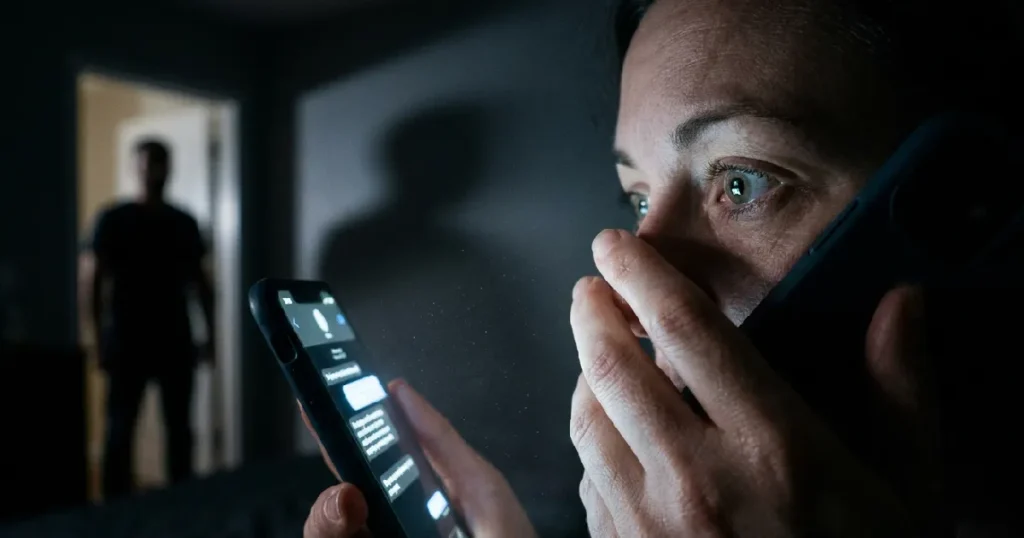
It was 11:30 PM on a Tuesday, and the blue light from David’s phone illuminated the dark bedroom. Sarah, a 36-year-old marketing director, lay perfectly still, pretending to be asleep. She noticed her heart racing, a familiar fluttering sensation in her chest that arrived every time he began to scroll. David was a covert narcissist who used subtle put-downs and weaponized silent treatments to keep Sarah in a perpetual state of anxiety. He monitored her location through a shared family plan and would interrogate her if she stayed late at the office.
Sarah realized that communicating her feelings only gave him a map to her vulnerabilities. The arguments were endless, leaving her feeling like a hollow shell. So, she stopped trying to make him understand her perspective. Instead, she quietly opened a separate bank account on her lunch break and moved her digital life to an encrypted device David did not know about. When he insulted her the following week, she used the Grey Rock method, responding with a flat, boring “Okay,” refusing to cry or defend herself.
By removing her emotional supply, David eventually lost interest in picking fights. Sarah used this newfound calm to rebuild her professional confidence. Three months later, while David was on a business trip, she calmly packed her bags and moved out, having already secured her important documents. She finally took her reality back.
7 Actionable Steps for Living With a Narcissist Boyfriend
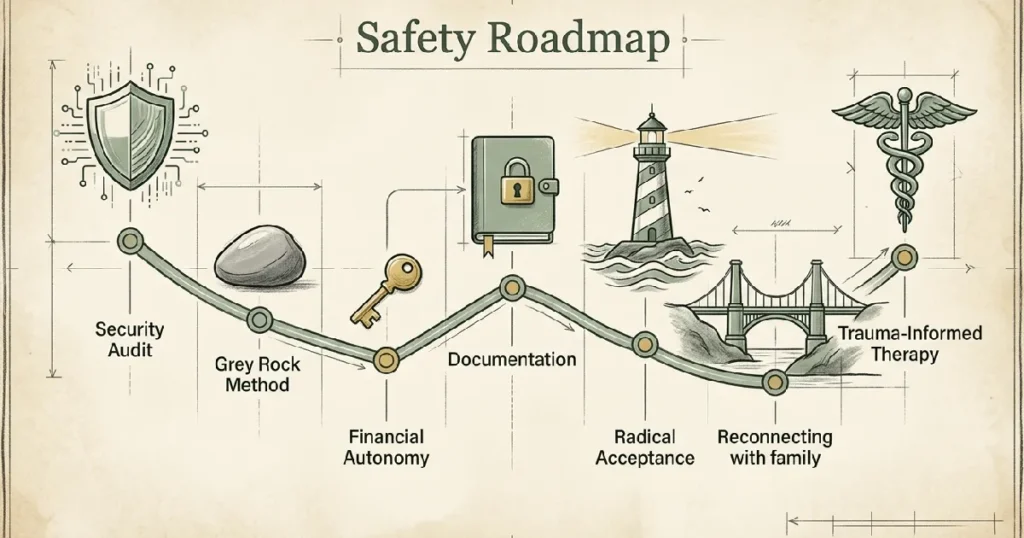
If you cannot leave today, you need a tactical plan to survive tomorrow. Transitioning out of this dynamic requires cold, calculated steps. Here is your modern survival matrix.
- Step 1: Perform a Digital and Security Audit
Do This: Change the passwords for your primary email accounts immediately. Set up two-factor authentication using a secure app or a completely separate device that he never touches. Review your phone settings to disable location sharing.
Not That: Do not announce that you are changing your passwords. Do not confront him about his tracking habits.
Why: We live in an era of digital gaslighting. He relies on his ability to monitor your movements, read your texts, and edit your reality in real time. Securing your devices shuts down his primary surveillance network. - Step 2: Implement the “Grey Rock” Method
Do This: Respond to his provocations, insults, and dramatic texts with one-word, incredibly boring answers. Use phrases like, “Okay,” “I see,” or “Perhaps.” Keep your face completely neutral.
Not That: Do not defend your character, explain your logic, or display emotional distress. Do not cry in front of him if you can help it.
Why: Narcissists feed on your emotional reactions (both positive and negative). By becoming as uninteresting and unresponsive as a grey rock, you starve him of his narcissistic supply. He will eventually seek a reaction elsewhere. - Step 3: Establish a Parallel Financial Identity
Do This: Open a completely new checking account at a bank you have never used before. Opt strictly for digital statements, and have them sent to a secret email address you created just for this purpose.
Not That: Do not use a shared home computer or an iPad linked to his accounts to access this new banking information.
Why: Financial control is a core pillar of entrapment. Establishing financial autonomy gives you the practical freedom to make choices when you are finally ready to leave. - Step 4: Practice Radical Acceptance of the Empathy Gap
Do This: Internalize the absolute fact that he is neurologically incapable of feeling your pain. Stop trying to find the perfect combination of words to make him understand how deeply he has hurt you.
Not That: Stop waiting for the magical “Aha!” moment where he suddenly develops a conscience and apologizes sincerely.
Why: Expecting compassion from a source that lacks the hardware for it will only lead to your further exhaustion. Accepting this harsh reality frees up massive amounts of your mental energy. - Step 5: Document the “Glitch in the Matrix”
Do This: Maintain a password-protected digital journal (like the Day One app) or use an obscure email address to send yourself daily descriptions of his abusive actions. Write down exactly what was said and done to lock in an accurate timeline.
Not That: Do not keep a physical diary in your bedside table or purse where he can find it and use it to mock you or accuse you of being crazy.
Why: A recognized cycle of manipulation involves severe memory distortion. Documenting the truth is your anchor to reality when he tries to convince you that an event never happened. - Step 6: Reconnect with “Mirroring” Sources
Do This: Quietly reach out to old friends, trusted colleagues, or family members whom he previously forced you to cut off. Tell them the honest truth about your home life.
Not That: Do not ask his permission to see people, and do not let him dictate who is “safe” for you to socialize with.
Why: Abusers isolate you so they can become your sole source of truth. Reclaiming outside perspectives shatters his monopoly on your reality and reminds you of who you truly are. - Step 7: Seek Individual Trauma-Informed Support
Do This: Find a licensed therapist who specifically understands narcissistic abuse and trauma bonding.
Not That: Absolutely never attend couples counseling with a narcissistic abuser.
Why: They will use joint therapy as a weapon. They will charm the therapist, learn your newly exposed soft spots, and use the psychological terminology to further gaslight you at home.
Comparative Analysis: Grandiose vs. Covert Dynamics
Understanding the specific type of partner you are dealing with is vital because their tactics vary wildly.
The Grandiose Boyfriend
This type is much easier to spot. He is arrogant, loud, openly entitled, and constantly seeks the spotlight. He likely brags about his money, his physical appearance, or his professional success. He dominates conversations and treats waitstaff terribly. The strategy for surviving a grandiose partner involves ignoring the massive theatrical show he puts on and setting firm, unyielding boundaries. You have to recognize that his bluster is just noise.
The Covert (Vulnerable) Boyfriend
This type is incredibly dangerous because he operates in the shadows. The covert partner presents himself as sensitive, misunderstood, or a tragic victim of his past (like crazy ex-girlfriends or unappreciative bosses). He uses weaponized incompetence, passive-aggressive comments, and heavy guilt trips. It is interesting how he makes you feel sorry for him right after he insults you. The survival strategy here involves recognizing that his “sensitivity” is actually just high-alert paranoia regarding his own fragile ego. You must stop trying to heal his imaginary wounds.
Common Mistakes and How to Avoid Them

When you are deeply trauma-bonded, your brain operates in survival mode, making it easy to fall into predictable traps. Let’s look at four modern mistakes you might be making right now and how to correct them.
Explaining the “Why” of Your Pain
Most empathetic women believe that if they just explain their pain clearly enough, their partner will stop hurting them. You sit him down, cry, and say, “When you do this, it makes me feel worthless.”
The reality is that he does not lack information. He lacks the emotional apparatus to value your pain over his own convenience.
How to avoid this: Stop explaining yourself immediately. Implement the “24-Hour Rule.” When he says something designed to provoke you, wait a full 24 hours before responding. Most of the time, you will realize his provocation does not deserve a response at all. Use texts like, “I hear your perspective, but I am not discussing this right now.”
“Victims of narcissistic abuse feel frozen in their dysfunctional relationships for fear of upsetting or disappointing friends and family.”
This quote from expert Ross Rosenberg highlights exactly why we over-explain. We are conditioned to keep the peace and fix things, which keeps us totally frozen in the abuse cycle.
Relying on Shared Digital Spaces
We live in a highly connected world. You probably share an iCloud account, a Spotify family plan, Google Photos, or a Ring doorbell system. In a healthy relationship, this is convenient. In a relationship with a toxic partner, these are sophisticated surveillance tools. He checks your location, sees who you are texting via synced iPads, and monitors exactly when you arrive home.
How to avoid this: You must actively disconnect your digital life. Create a brand new Apple ID or Google account. Do not sync your personal phone to the family computer. If you live in a smart home controlled by his phone, start putting your personal laptop and phone on a separate “Guest” Wi-Fi network that he does not monitor.
Attempting to Fix His Childhood Trauma
Empathetic women are natural healers. You likely know about his difficult childhood, his emotionally distant mother, or his past traumas. Because you have a big heart, you tolerate his terrible behavior, telling yourself, “He is just acting out because he is wounded.”
The reality is that millions of people survive terrible childhoods without growing up to mentally torture their partners. His trauma explains his pathology, but it absolutely does not excuse his abuse. You cannot love someone into wholeness if they are committed to misunderstanding you.
How to avoid this: Keep a very firm internal boundary. Remind yourself daily: “I am his partner, not his licensed therapist.” When he tries to play the victim to excuse his screaming fit, respond with a text like, “I am sorry you are struggling with those memories, but you cannot speak to me that way. I am going for a walk.”
Threatening to Leave as a Negotiation Tactic
During a massive argument, when you are pushed to the absolute brink, you might yell, “I cannot take this anymore! I am leaving you!” You hope this threat will finally wake him up and make him realize what he is losing.
The reality is that threatening to leave without having your bags packed is just bluffing. Because of the psychological phenomenon known as intermittent reinforcement, he knows exactly how to reel you back in with a sudden burst of fake apologies. Once he realizes you are not actually leaving, he learns that your boundaries carry zero consequences.
How to avoid this: Do not ever announce your departure until you are actually walking out the door for good. The safest and most successful exit from a highly volatile relationship is a completely quiet one.
Frequently Asked Questions
Can a narcissist boyfriend truly love you?
Narcissists have a very limited capacity for genuine unconditional love. They experience love as a form of possession or idealization when you are actively meeting their needs. Because they lack true empathy, they cannot see you as a separate person to be cherished. You are valued only for the emotional supply you continuously provide to them.
What is narcissistic rage and how should I respond?
Narcissistic rage is a disproportionate outburst of anger triggered by a perceived slight to their ego, known as a narcissistic injury. The best response is immediate physical disengagement. Do not argue or try to calm him down. Quietly exit the room or the house until his intense threat-response cascade has fully subsided and stabilized safely.
Is it possible for a narcissist to change?
Research indicates that very few people with this personality structure achieve significant, lasting change. While some might adjust their behavior slightly under the threat of losing a valuable partner, their core lack of empathy and entitlement usually remains. Genuine change requires a level of deep self-awareness that the disorder itself is structurally designed to prevent.
Why does my partner hoover me when I try to leave?
Hoovering is a calculated manipulation tactic designed to suck you back into the relationship when the narcissist senses they are losing control. They will use future faking or intense love bombing to lure you back in. However, once their control over you is re-established, the exhausting cycle of emotional abuse inevitably resumes its normal predictable course.
How do I handle his flying monkeys?
Flying monkeys are third parties the narcissist actively uses to triangulate, discredit, or monitor your movements. The safest approach is to block them entirely or remain strictly neutral with them. Do not try to convince them of the truth. The narcissist has already spent years systematically grooming these individuals to doubt your character and sanity.
What is digital gaslighting in a modern relationship?
Digital gaslighting involves using modern technology, such as deleting text messages, altering photos, or exploiting location tracking, to make you doubt your own memory and reality. It is a highly invasive, high-tech version of psychological manipulation that is increasingly common today. Securing your personal devices is the first step to stopping this specific coercive control.
Final Takeaway
Living in this kind of environment is not truly living; it is just surviving on a battlefield you never asked to be placed on. The behaviors you are experiencing are not a result of your failure to be a “good enough” girlfriend. They are the calculated symptoms of his narcissistic behavior profile. You have spent months, maybe years, walking on eggshells, trying desperately to manage his moods and prevent the next explosion.
Your path forward requires accepting that his reality is permanently distorted. You must pivot your energy away from fixing the relationship and direct it entirely toward fortifying your own boundaries. By securing your finances, locking down your digital footprint, and learning to give him the absolute minimum emotional reaction possible, you can slowly begin to reclaim the fragments of your identity. Remember, protecting your peace is not an act of malice; it is the ultimate act of self-preservation.
My Closing Remarks
Here is the absolute truth, friend. You cannot love a person into treating you with basic human decency. I have sat with countless women who sacrificed their youth, their brilliant minds, and their sanity waiting for a man to grow a conscience. Stop waiting. Your empathy is a beautiful gift, but right now, it is the exact weapon he is using to destroy you. Pack your bags quietly, secure your bank accounts, and walk out the door. You deserve a life completely free from this madness.
More Related Stories for You
- If you are trying to make sense of what you are seeing, start by learning more about general personality traits.
- You also need to verify the specific signs of a narcissist boyfriend to validate your experience.
- Finally, reading about personality traits examples in real life can help you clearly separate normal human flaws from toxic, abusive behavior patterns.
About The Author