


Most baby sleep advice is garbage. Well, maybe not garbage, but it is entirely unhelpful when you are panicking at 2 AM.
You check the baby monitor. Your heart skips a beat. Your four-month-old, who you safely swaddled and placed on their back an hour ago, is now entirely face-down in the crib. This cold surge of fear is something millions of exhausted parents know intimately. You might be feeling a heavy mix of guilt and sheer panic right now. That emotion is completely valid. But we need to move past the panic and get into the action.
Every single article you have read probably told you the exact same thing to always place your baby on their back. That is true. But here is what none of them told you. What you actually do in the moment your infant rolls over in sleep changes depending on one specific developmental factor most parents never hear about.
When an infant rolls over in sleep, immediate danger depends on whether they can roll back independently. Always place babies on their back to start. If they roll both ways freely, repositioning is unnecessary. Ensure the crib remains completely clear.
In this guide, you will get:
- The exact decision tree for what to do when you see your baby rolled over tonight.
- A step-by-step swaddle exit protocol that most blogs completely skip.
- The honest truth about which safety products actually help versus which are pure fear marketing.
What “Infant Rolls Over In Sleep” Really Means And Why It Changes Everything
Let us clear something up right away. Finding your baby on their stomach is not a parenting failure. It is a biological inevitability.
Table of Contents
The Developmental Truth: Rolling Is A Milestone, Not A Mistake
Rolling over is a normal, vital neuromuscular milestone. Babies may start rolling over on their own as early as two months of age. But the sequence of this development matters immensely for safety. Babies typically progress from back-to-side, then back-to-stomach, and finally stomach-to-back.
This introduces a concept I call Bilateral Rolling Competency. A baby who can only roll one way is in a completely different risk category than a baby who can roll both ways. This is the nuanced pivot point that determines if you need to intervene.
The Real Risk: Why Prone Position During Sleep Triggers Danger
Why is stomach sleeping so scary? It comes down to the prone position rebreathing mechanism. When a baby rolls onto their stomach on a soft surface, they might re-inhale their own exhaled carbon dioxide instead of fresh oxygen. Back sleeping remains the safest position for infants, particularly in those early months, because it keeps the airway clear.
Researchers also point to the Autonomic Arousal Deficiency Hypothesis. This is the current leading theory suggesting some babies cannot naturally wake themselves up if they experience oxygen deprivation. This is exactly why the physical sleep environment matters so much.
“An Empty Crib Is Not A Cold Space. It Is The Ultimate Expression Of Parental Protection.”
When you strip away the blankets and bumpers, you are not depriving your baby of comfort. You are actively building a physiological safety net.
The Statistical Reality: If a baby who usually sleeps on their back is put on their stomach or side to sleep, even for a short nap, the risk of SIDS increases by up to 45 times.
The Science
Parents know the rules, but they struggle to implement them. A 2024 study published in Pediatrics explored this exact tension between AAP safe sleep guidelines and real parent behavior. The researchers found that 80% of new mothers reported holding or rocking their infant to sleep. Almost all parents were aware of the safe sleep rules, yet many felt those rules were unrealistic. They placed their infants in non-recommended locations because they perceived them as more comfortable.
I see this constantly when parents ask for advice for new moms. You are exhausted. You want your baby to sleep. But compromising on sleep surface firmness is never the answer. Recent updates from the American Academy of Pediatrics have strictly doubled down on firm sleep surfaces and completely banned inclined sleepers.
5 Actionable Steps To Build A Safe Sleep System For Your Rolling Baby
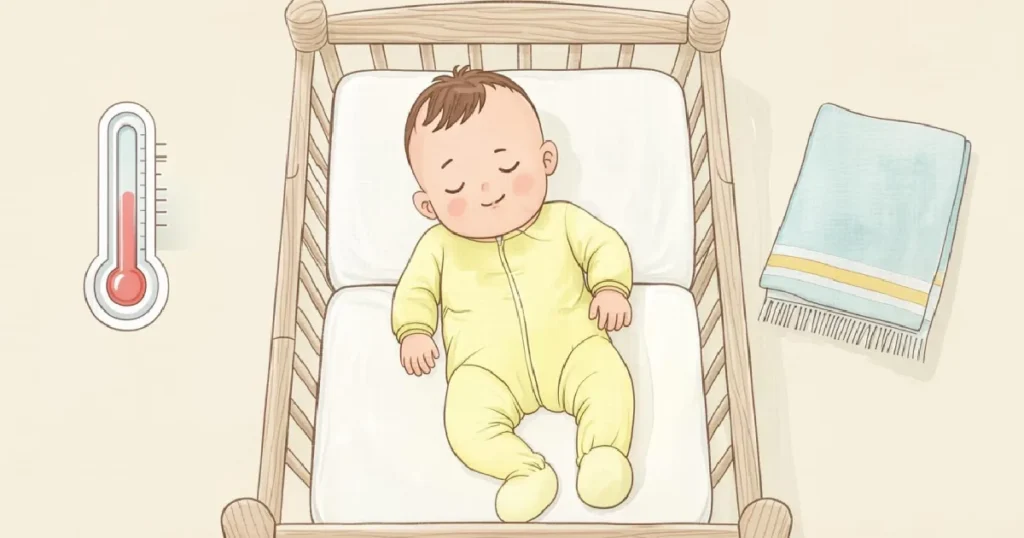
You need a plan. When it happens tonight, I want you to operate on autopilot.
Quick Reference Table
| Step | The Action | Do This | NOT That |
| 1 | Respond in the Moment | Use the two-question rule | Do not automatically flip every time |
| 2 | End Swaddling | Transition to a sleep sack | Do not go cold turkey without prep |
| 3 | Strip the Crib | Remove everything but the sheet | Do not keep bumpers or thin blankets |
| 4 | Optimize Temperature | Use a firm, CPSC-compliant mattress | Do not use memory foam |
| 5 | Educate Caregivers | Create a safe sleep card | Do not assume everyone knows the rules |
Step 1: Use The Two-Question Rule Framework The Moment Your Baby Rolls
This is the exact framework you need to memorize. When you see your baby on their stomach, ask two questions before you touch them.
Question 1: Can your baby roll from stomach to back completely on their own?
- Yes, independently: Once babies can roll both ways freely, you can leave them in the position they choose after starting sleep on their back. Your job is to ensure the crib is clear and go back to bed.
- No, only one way: If they can only roll one way, you must reposition them to their back if they roll onto their stomach. Gently flip them over.
Question 2: Are they still swaddled?
- Yes: This is an immediate danger. The risk of suffocation skyrockets if your baby rolls while swaddled. Get the swaddle off immediately.
Step 2: Execute The Swaddle Exit Protocol
Competitors tell you to stop swaddling. None of them tell you how to survive the awful transition. Here is the three-night graduated protocol.
- Night 1 to 2: Leave one arm out of the swaddle. The baby still feels tight containment around their chest, but they have one arm free to push up if they roll.
- Night 3 to 4: Leave both arms out. Fasten the swaddle loosely around their torso for sensory comfort.
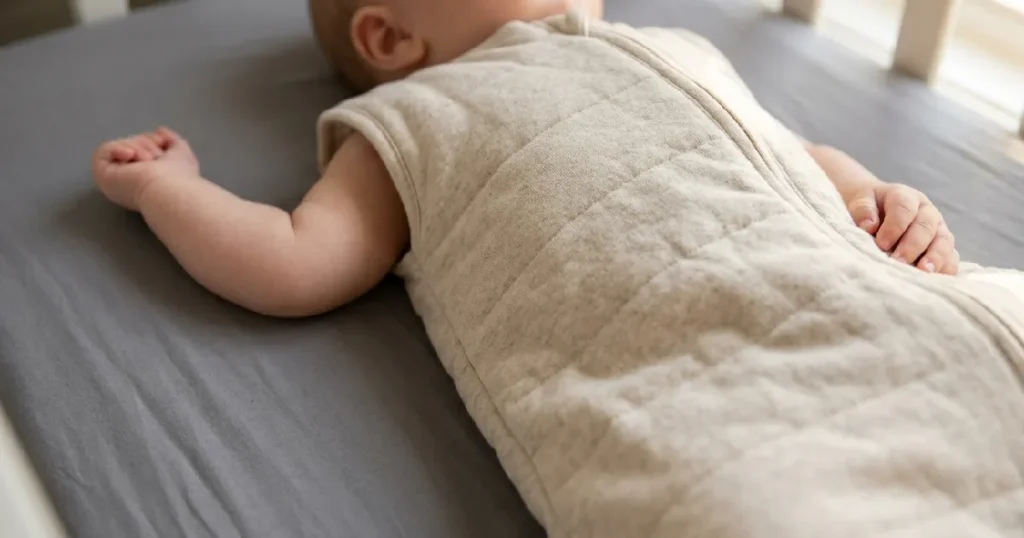
- Night 5: Transition fully to a properly sized wearable blanket.
Choose a TOG-rated sleep sack that matches your room temperature. Introduce it during daytime naps first so they get used to the fabric.
Step 3: Perform A Full Crib Safety Audit
I call this The Bare Crib Protocol. Avoid the use of all soft bedding. This includes crib bumpers, heavy blankets, pillows, and soft toys.
Soft mattresses, especially those made from memory foam, can create a dangerous pocket. A firm surface means it should not indent when your baby lies on it. Any surface that inclines more than ten degrees is not safe for sleep. Always verify that your crib conforms to CPSC safety standards.
Step 4: Optimize Room Temperature And Overheating Balance
Overheating is an independent risk factor for SIDS. Keep the room at a comfortable temperature between 68 and 72 degrees Fahrenheit. Dress your baby in a light sleeper or a wearable blanket. Use a cheap room thermometer and dress your baby in one single more layer than you would wear. Do not add extra blankets just in case.
Step 5: The Caregiver Briefing Protecting Your Baby When You’re Not There
It is essential for all caregivers to learn about safe infant sleep. Parents, grandparents, and babysitters all need to be on the same page.
Advice from twenty years ago claiming tummy sleeping is fine has been completely debunked. Address the myth that babies will choke on their back. HealthyChildren clearly states babies will not choke if they spit up while sleeping on their backs. It is a natural reflex to keep the airway clear.
Meet Sarah: From Midnight Panic To Confident Parent
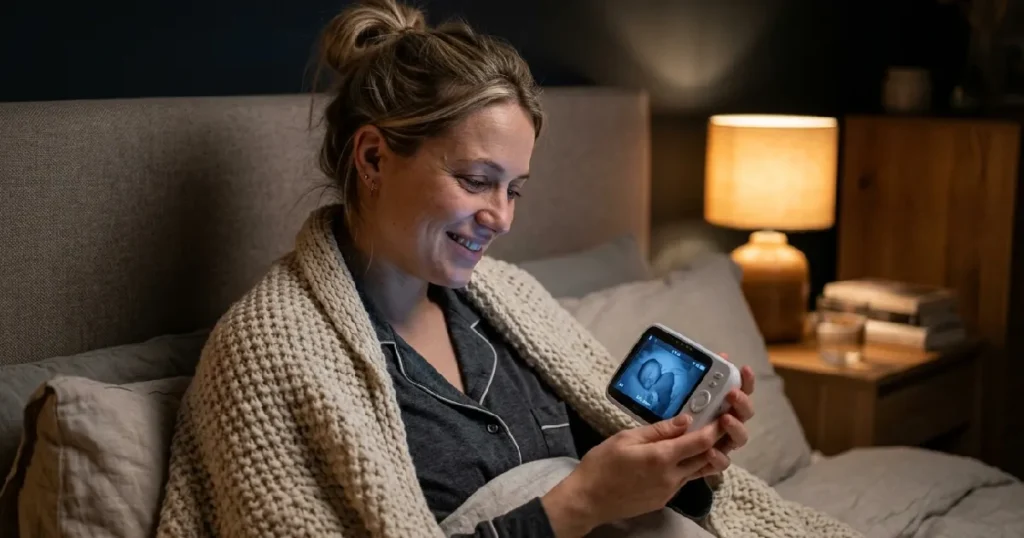
Meet Sarah, a twenty-nine-year-old first-time mom from Ohio. It was 3:14 AM on a Tuesday. The only sound in the nursery was the low, steady hum of the cool mist humidifier. Sarah stared at the glowing video monitor, her eyes burning from exhaustion. Her four-month-old daughter, Leo, had done it again. Leo was completely face-down.
Sarah felt that familiar knot tighten in her chest. For two straight weeks, she had been waking up every forty-five minutes to gently flip Leo back over. She was surviving on three hours of broken sleep a night, utterly consumed by guilt. She thought she was failing. She had read dozens of blogs that all repeated the exact same generic advice to stop swaddling and use the back sleeping position. But absolutely no one told her what to actually do when the baby had already flipped in the dark.
Actually, let me back up. Sarah finally stumbled upon the concept of bilateral rolling competency. The next morning, during floor time, she watched Leo closely. Leo rolled from her back to her stomach, paused, and then effortlessly rolled back onto her back. She could go both ways.
That night, Sarah applied the decision framework we discuss here. She stripped the crib of everything except the tight fitted sheet. When Leo rolled onto her stomach at midnight, Sarah gripped the monitor but did not go in. She did not flip her. She just watched. Leo slept comfortably. Sarah finally slept four consecutive hours for the first time in fourteen days. She wasn’t a neglectful parent. She was simply a parent who finally had the right data.
Safe Sleep Products What Actually Works Vs. Fear-Marketing Traps
The baby product industry generates billions of dollars by marketing directly to your deepest fears. Before you buy a gadget to fix the rolling problem, you need the truth.
The Safety Product Reality Check
Here is what is actually backed by evidence:
- Sleep sacks and wearable blankets: The absolute best swaddle alternative.
- CPSC-compliant firm mattresses: The non-negotiable foundation of safety.
- Basic video monitors: Excellent for your peace of mind, though not a medical device.
- Pacifiers: Offering a pacifier at sleep times has been shown by the NIH Safe to Sleep campaign to actively reduce risks.
Here is what has no evidence or is actively dangerous:
- Positioners and wedges: Do not use these. They do not prevent infant death and have caused fatalities.
- Consumer cardiorespiratory monitors: There is zero evidence that consumer-grade vital monitors decrease risks.
- Weighted swaddles: These are not considered safe by major pediatric organizations.
- Inclined loungers: Multiple infant deaths are associated with these specific products.
“Milestones Should Bring Joy, Not Midnight Panic. Knowledge Is The Switch That Flips Fear Back To Celebration.”
Stop buying products built on fear. Spend your energy optimizing the free physical environment instead.
Common Mistakes And How To Avoid Them
Even the most vigilant parents make mistakes when sleep deprivation hits. Here are three common traps and how to fix them today.
1. Relying on breathable crib bumpers.
Many parents think mesh bumpers are safe because they allow air to flow. Actually, they still pose a strangulation and entrapment hazard.
Practical Step: Walk into the nursery right now, untie the bumpers, and throw them in the trash. Your baby might bump their head on the wooden slats occasionally, but a small bruise is infinitely safer than an entrapment risk.
2. Letting grandparents use outdated sleep rules.
Grandparents mean well, but they parented in an era where tummy sleeping was the norm.
Practical Step: Send a polite, firm text message before they babysit. Say, “Hey Mom, our pediatrician gave us strict new rules for Leo’s sleep. He has to stay on his back with absolutely nothing in the crib. I left his sleep sack on the glider for you!”
3. Ignoring the transition out of the swaddle.
Parents delay dropping the swaddle because they fear losing the long stretches of sleep they finally achieved.
Practical Step: Start the transition during the first morning nap. Babies have the highest sleep pressure in the morning, making them more forgiving of new sensations. Use the three-night protocol detailed above. If you want a good laugh about parental exhaustion during these phases, I highly recommend checking out some funny parenting advice to keep your sanity intact.
Frequently Asked Questions
What should I do if my baby rolls over and cannot roll back?
If your baby rolls to their stomach but cannot yet roll back independently, you must gently reposition them onto their back every single time you notice. This strict rule applies until they achieve bilateral rolling capability. Always ensure their sleep surface is completely firm and clear of soft objects before placing them down tonight.
At what age do babies normally start rolling over at night?
Rolling over usually happens around three to four months of age, but it can absolutely happen earlier. Some babies begin showing rolling attempts at just eight weeks old. Every single baby develops at a different pace. What matters most is how you respond by stopping the swaddle immediately upon seeing those very first attempts.
Is it safe to let my baby sleep on their stomach?
Once your baby can roll from back to stomach and from stomach back to back completely independently, it is generally considered safe to let them stay in that position. However, you must always place them on their back initially. The mattress must remain completely firm and totally free of all extra bedding materials.
When exactly should I stop swaddling my baby at night?
When an infant exhibits the very first signs of attempting to roll, swaddling is no longer safe. This usually occurs between three and four months but can happen much sooner. Do not wait until a full roll actually occurs. Those early twisting and turning movements are your immediate signal to begin the sleep sack transition.
Can my baby choke if they roll onto their back?
No, this is one of the most persistent parenting myths out there. Healthy babies will not choke on their saliva or spit-up while lying on their backs. The anatomy of an infant airway actually makes back sleeping safer for airway clearance. The natural swallowing reflex keeps the airway completely protected during the entire night.
Your Tonight Action Plan
You have absorbed a massive amount of information today. It is perfectly normal to feel a bit overwhelmed. But here is the only thing you need to focus on for the next sixty minutes.
Perform the Bare Crib Check tonight.
Walk to your baby’s sleep space right now. Remove anything that isn’t the baby and the fitted sheet. Press your palm firmly into the mattress to ensure it springs back immediately. Verify the room temperature. If your baby is showing signs of rolling and is still swaddled, begin the sleep sack transition tonight.
That is it. One single action. That is where safe sleep is truly won. Not in theory, but in those quiet moments before you lay your baby down. When an infant rolls over in sleep, your preparation dictates the outcome.
I want you to think about this question tonight: Are you buying safety products to actually protect your baby, or are you buying them to soothe your own anxiety?
Final Takeaway
You have the power to create an impenetrable safe sleep environment. You do not need expensive gadgets, and you do not need to sit awake staring at the monitor all night. Master the two-question framework, clear the crib, and trust the developmental process.
My Closing Remarks
I am going to be entirely blunt with you. Stop scrolling late-night forums searching for the one miracle product that will freeze your baby on their back. It does not exist, and chasing it is driving you crazy. I spent weeks waking up in cold sweats checking my firstborn’s chest. I get it. But the magic bullet isn’t a weighted sack or a fancy monitor. It is a firm, boring, completely empty mattress. Period. Take a deep breath, trust the basic science, and give yourself permission to close your eyes tonight. You are doing a phenomenal job.
More Related Stories For You
If you found this guide helpful, you might be looking for more ways to navigate the chaos of early parenthood.
- Beyond mastering sleep safety, it is easy to get caught up in the comparison trap online. Reading about social media effects on relationships can be an eye-opener for new parents.
- We also have a fantastic hub of advice for new moms dealing with postpartum anxiety.
- And when it all gets too heavy, take a breather and read some genuinely funny parenting advice because sometimes, laughing is the only way to survive the 4-month sleep regression.