
 Sara Carmen
The person may feel unforgettable, but the real story is what your nervous system is trying to repeat, repair, and finally release.
Key Points
- Unrequited Love often feels like romance because your brain confuses uncertainty with emotional intensity.
- Emotional unavailability can become addictive through dopamine, intermittent reinforcement, and old attachment wounds.
- Breaking the pattern means cutting digital access, facing reality, and choosing reciprocity over fantasy.
Contents
Table of Contents
Unrequited Love Is Not Proof That You Love More Deeply
Unrequited love is not proof that your heart is bigger than everyone else’s. It is often your nervous system mistaking distance for destiny. You may call it devotion, patience, or loyalty. But underneath that longing, something much older may be asking to be healed.
You check their stories. You reread the one warm message they sent three weeks ago. You tell yourself they are just busy, confused, hurt, guarded, or afraid of love. Someone might think you are simply a hopeless romantic. But what they do not see is the way your mood rises and falls based on one tiny sign of attention.
Someone might think you are waiting for the right timing. But what they do not see is how much of your life has been placed on pause for someone who has not made a clear choice. Someone might think your love is noble. But what they do not see is that your body is living in withdrawal.
This is where the truth gets uncomfortable.
Unrequited love can become an addiction to possibility.
That does not mean you are weak. It means your brain is doing what brains do when reward, rejection, memory, and longing get tangled together. In a well-known study by Helen Fisher and colleagues, people who had been rejected in love still showed activity in reward and motivation areas of the brain when looking at the person who rejected them. That study of people recently rejected in love helps explain why the person can feel even more magnetic after they pull away.
The pain is real. The pattern is also real.
And once you see the pattern, you can stop calling it fate.
The Unrequited Love Pattern Starts in the Brain and Lives in the Body
A helpful word here is limerence. Psychologist Dorothy Tennov used this term to describe an intense state of romantic fixation marked by craving, fantasy, emotional dependence, and fear of rejection. In plain language, limerence is when your mind turns a person into a source of emotional oxygen.
It feels like love because it uses love’s language. You imagine a future. You feel tenderness. You notice tiny details. But limerence has a desperate edge. It is not only, “I care about you.” It becomes, “I cannot feel settled unless you choose me.”
Your brain’s reward system also gets involved. The reward system is the set of brain pathways that push you toward things that feel important for survival, pleasure, and connection. Research on the brain reward system involved in romantic love shows that early romantic attraction can activate areas linked with drive and focused attention.
Now add inconsistency.
A warm text on Monday. Silence on Tuesday. A like on your photo. A vague promise to meet. A late-night message that feels intimate but leads nowhere. This is called intermittent reinforcement, which means rewards arrive unpredictably. Your brain pays more attention because it cannot predict when the next reward will come.
That is why hot and cold behavior can feel more exciting than steady love. Stability gives your nervous system rest. Inconsistency gives your nervous system a chase.
Left unexamined, this pattern does not just break your heart. It can train you to confuse anxiety with chemistry.
1. Unrequited Love Turns Hot and Cold Attention Into a Dopamine Trap
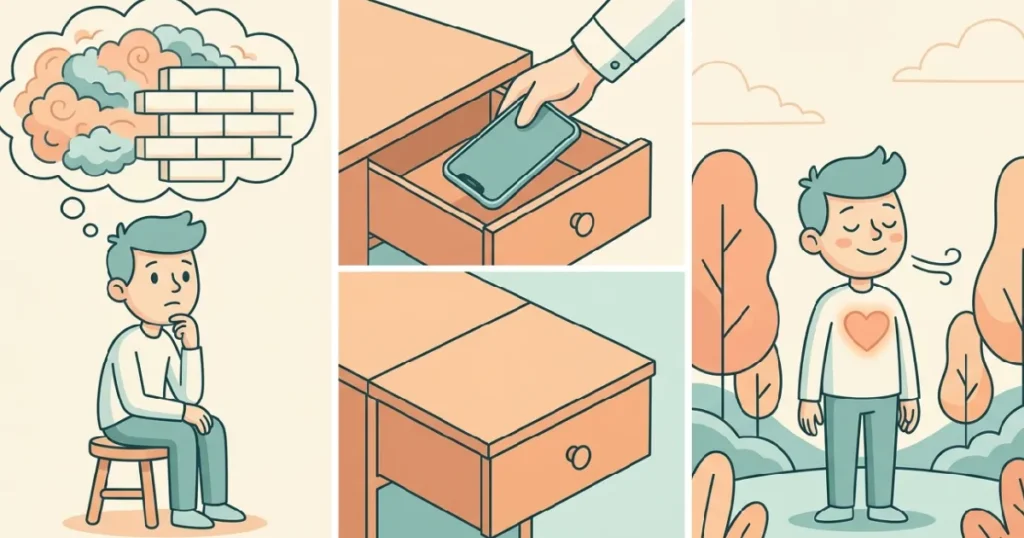
The first force behind unrequited love is not poetry. It is dopamine. Dopamine is a brain chemical tied to wanting, seeking, and motivation. It does not simply make you feel pleasure. It makes you pursue what you believe might bring pleasure.
This is why one small sign from the unavailable person can feel huge. A heart reaction. A casual “miss you.” A message after midnight. Your brain treats that tiny reward like proof that the larger dream is still alive.
This does not happen because you are foolish. It happens because uncertainty intensifies wanting. If someone is consistently loving, your body can relax. If someone is unpredictable, your body stays alert. Alert can feel like passion when you have not known enough emotional safety.
Think of it like a slot machine. You do not keep pulling the handle because you win every time. You keep pulling because you might win. The occasional payoff keeps the whole system alive.
So what does this mean for you? It means the intensity you feel may not be evidence that this person is special. It may be evidence that the pattern is powerful.
A useful reframe is this: “My craving is not a command. It is a conditioned response.” A conditioned response is a learned reaction. Your body learned to chase the next signal. It can learn something else.
2. Unrequited Love Makes Rejection Feel Like Proof of Value
The second force is rejection-enhanced attraction. This means the more someone denies you full access, the more your brain may assign them higher value. Their lack of availability starts to look like depth, mystery, or rare worth.
You may tell yourself, “I would not feel this strongly unless it meant something.” But feelings are not always accurate measurements. Sometimes feelings are smoke alarms. They tell you something is activated, not that something is good for you.
Rejection can also hurt in a bodily way. A study by Ethan Kross and colleagues found that intense social rejection can activate brain areas connected with physical pain. Their work on how social rejection can activate pain-related brain regions helps explain why being ignored by one person can feel like an injury rather than a disappointment.
When pain and reward overlap, your mind can make a dangerous bargain: “If I can get them to choose me, the pain will stop.” That turns the person into both the wound and the imagined cure.
This is the trap. You are not only wanting love. You are wanting relief.
So what can you do with that truth? Start separating value from availability. Someone being hard to reach does not make them emotionally rare. It may simply make them unavailable.
You do not have to earn love from a locked door.
3. Unrequited Love Survives Through Digital Micro-Relationship Access
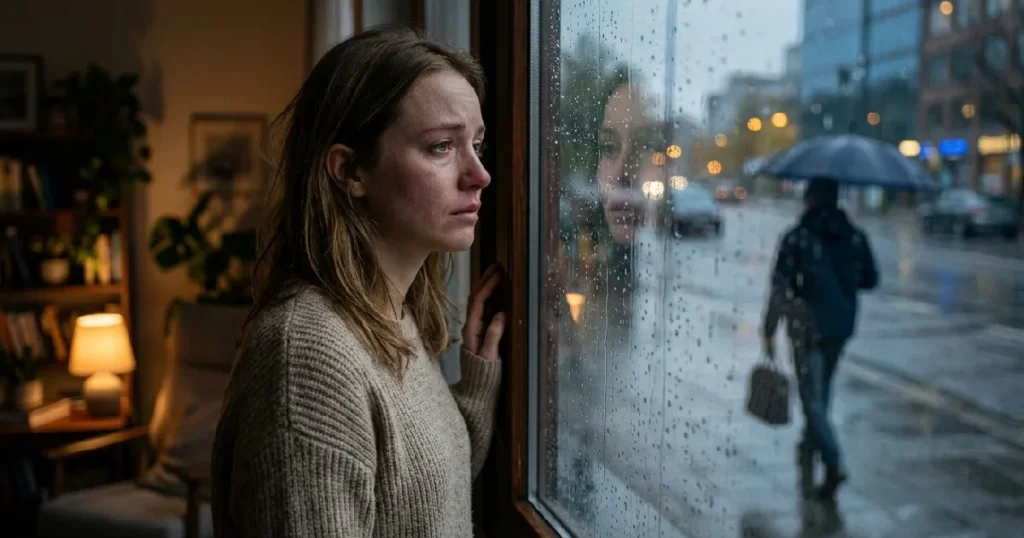
Modern unrequited love has a new fuel source: micro-relationship access. This means you receive tiny digital signals that feel intimate but do not create real commitment. A view on your story. A like from an old crush. A vague reply with a smiling face. A sudden follow after months of silence.
These signals are small enough to deny and powerful enough to hook you.
Before social media, distance often created healing. You could stop seeing the person. Your nervous system had a chance to settle. Now the person can be absent from your life and still present in your hand.
This is especially hard when you feel anxious attachment. Anxious attachment means your nervous system tends to fear abandonment and seek reassurance when connection feels uncertain. If you have this pattern, a small digital sign can feel like water in the desert.
You may not even be talking to them. You may be building an entire emotional relationship with their online presence. You notice who they follow. You decode captions. You track the time they viewed your story. You call it curiosity, but your body experiences it as contact.
This can create intrusive thoughts. Intrusive thoughts are unwanted thoughts that keep returning even when you want them to stop. The National Institute of Mental Health describes intrusive thoughts in the context of obsessive-compulsive disorder, but you do not need to have that diagnosis to understand the sticky nature of mental loops.
Digital access keeps the loop alive. It gives you just enough closeness to avoid grieving and just enough distance to keep wanting.
So what does this mean for you? If you are trying to heal while watching their life online, you are asking your brain to detox while taking tiny doses of the drug.
4. Unrequited Love Can Be an Attachment Wound Repeating an Old Story
The third layer is deeper. Sometimes unrequited love is not about the person in front of you. It is about an old emotional equation: “If I can finally get the unavailable one to love me, then I will prove I was always worth loving.”
This is often tied to attachment wounds. Attachment wounds are early emotional injuries that happen when love felt inconsistent, unsafe, distant, or dependent on performance. The APA Dictionary of Psychology’s definition of attachment theory describes attachment as the emotional bond that shapes how you seek closeness and safety.
If love was unpredictable in your early life, emotional unavailability may feel familiar. Not good. Familiar. Your nervous system may confuse familiarity with home.
This is where repetition compulsion can appear. Repetition compulsion means you unconsciously repeat painful relational patterns in an attempt to master them. In plain language, you keep choosing a similar wound and hoping for a different ending.
In my practice, I have seen this pattern appear in people who are bright, successful, caring, and deeply self-aware. They are not confused about what hurts them. They are confused about why hurt still feels like a bond.
Consider Maya, a composite example. Maya spent eight months hoping a coworker named Daniel would become more serious after his divorce. He texted her during stressful nights and disappeared when life got calm. Maya told herself he was healing and needed patience. In therapy, she realized her father had also been warm in brief flashes and emotionally gone the rest of the time. Her longing for Daniel was not only about Daniel. It was her younger self still waiting at the window for someone inconsistent to become steady. When she stopped framing the chase as romance, she finally felt grief. Then she felt choice.
That is the turning point. You stop asking, “How do I make them love me?” and start asking, “Why does this kind of distance feel so familiar to my body?”
5. Unrequited Love Can Protect You From Real Intimacy
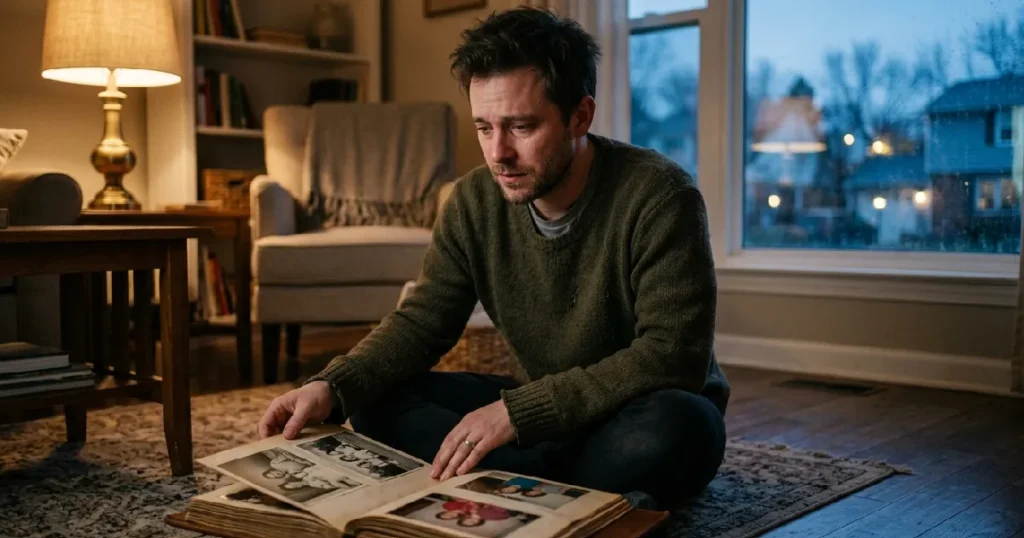
Here is the part most people miss: unrequited love can be a defense against real love.
Longing can become a hiding place.
A fantasy relationship gives you intensity without the demands of mutual intimacy. You do not have to negotiate needs. You do not have to be seen on an ordinary Tuesday. You do not have to risk the disappointment of a real partner who is human, imperfect, and present.
The unavailable person becomes a screen onto which you project every missing thing. They are deep because you imagine their depth. They are safe because they are not close enough to disappoint you every day. They are perfect because reality has not been allowed to interrupt the story.
Unrequited love is like standing outside a closed restaurant, starving while reading the menu in the window. The menu proves food exists. It does not feed you.
That metaphor matters because fantasy can feel nourishing while quietly depriving you. You spend emotional energy on someone who does not return it. You miss available people because they do not give you the same nervous-system spike. Real love may feel boring at first if your body is used to chasing.
But boring may be peace in unfamiliar clothing.
So what does this mean for you? The goal is not to shame the part of you that longs. The goal is to stop letting longing make decisions for your future.
You can honor the feeling without obeying it.
How to Break the Unrequited Love Pattern Starting Today
One place to start is The Cold Turkey Digital Cut. For 30 days, remove the person’s digital footprint from your nervous system. Mute stories. Stop checking their profile. Delete the message thread if you keep rereading it. If that feels extreme, notice that your resistance may be withdrawal speaking. Example: instead of checking whether they viewed your post, place your phone in another room for the first hour after you share anything.
Consider The Reality Pairing Practice. Each time your mind plays the fantasy, pair it with the full truth. Not “They are scared of love.” Try, “They have not chosen me with consistent action.” Not “The chemistry is rare.” Try, “The uncertainty is activating my reward system.” This is not cruelty. It is emotional sobriety.
Try The Somatic Boundary Check. Somatic means body-based. When you want to text them, pause and ask, “Where do I feel this in my body?” You may notice a tight chest, buzzing hands, a dropped stomach, or heat in your face. Place one hand there and say, “This is longing. It is not an emergency.” Then wait 20 minutes before acting.
A fourth step is The Available Love Repetition. Give small attention to people who show clear interest, emotional steadiness, and follow-through. This does not mean forcing attraction. It means retraining your body to notice reciprocity. Example: when a friend responds warmly and consistently, let that register instead of dismissing it as less exciting.
A useful question for this week is simple: “Am I choosing this person, or am I choosing the old hope that someone unavailable will finally change for me?”
Your answer may sting. It may also set you free.
The Emotional Landing: You Are Not Losing Love, You Are Leaving the Window
If you have been standing outside the closed restaurant reading the menu, this is your invitation to notice your hunger. Not with shame. With honesty. The menu may be beautiful. The fantasy may be tender. But your life needs more than signs of what could be.
You are allowed to stop auditioning for someone who is not offering a real part in their life. You are allowed to grieve the fantasy and still choose yourself. You are allowed to want love that arrives in daylight, not only in hints, delays, and almosts.
This week, take one small step away from the window. Mute the account. Tell the truth in your notes app. Call someone who actually knows how to show up.
Love that cannot choose you cannot heal you.
My Closing Remarks
I will be blunt because tenderness without truth can keep you trapped: some people are not confused, wounded, or secretly in love with you. They are unavailable, and your hope has been doing all the work. I have sat with enough hearts in this pattern to know that the breaking point often becomes the beginning. The moment you stop romanticizing crumbs is the moment your nervous system starts recognizing bread. You are not too much. You are underfed.
More Related Stories for You
- If you are learning how healthy reassurance works in mutual love, read how to reassure your boyfriend.
About The Author