
 Sara Carmen
Most people think reassurance is just saying “I love you” louder, sweeter, and more often. That’s the popular myth, and it’s why you’re exhausted. If you’re trying to learn How to Reassure Your Boyfriend and it feels like nothing “sticks,” you’re not failing. You’re just using the wrong tool for the job.
Here’s the blunt truth: repeating “I love you” can sometimes make his anxiety worse. Not because love is bad, but because generic affection doesn’t answer the question his nervous system is actually asking: “Am I safe with you right now?” If his brain is stuck in a doubt-loop, a vague “babe we’re fine” can feel like a band-aid on a broken bone—nice, but not stabilizing.
So let’s use a better method: Hook & Hold.
- Hook: you “catch” the emotion underneath his words (fear, stress, insecurity).
- Hold: you give structure, clear context, a timeline, and a next touchpoint, so the silence stops feeling like rejection.
And yes, if you’re feeling drained, annoyed, or like a 24/7 customer support line for someone else’s feelings… that makes total sense. You can care about him and want your life back. In this guide, you’ll get practical scripts you can copy/paste, the psychology behind why reassurance fails, and a simple plan to turn doubt into steadier trust, without turning texting into a second job.
The Core Concept: Reassurance Redefined
Quick Answer :
To reassure your boyfriend through text, shift from reactive comfort (“Nothing’s wrong”) to proactive co-regulation (“Here’s what’s happening and when we’ll talk”). That means validating his emotion, giving a concrete reason for the silence, and anchoring to a specific next connection. Specificity calms faster than sweetness.
Table of Contents
Reassurance isn’t just “being nice.” It’s building emotional permanence, the ability to feel secure in love even when you’re not physically together, not actively chatting, or life is loud. When emotional permanence is shaky, silence doesn’t feel neutral. It feels like danger.
What “Emotional Permanence” Really Means
Most people assume reassurance problems come from low self-esteem. Sometimes, sure. But often it’s closer to an “object constancy” glitch: when you’re not right there, his brain struggles to “hold” the relationship as stable.
If he leans anxious, he may constantly scan for signs you’re pulling away. That pattern shows up in anxious attachment, a well-researched style where people fear abandonment and seek frequent closeness signals (the American Psychological Association’s overview of attachment is a solid starting point).
Also: anxiety isn’t just “overthinking.” It’s physical. When someone’s nervous system is activated, they interpret uncertainty as threat, especially in relationships (see basics on anxiety symptoms and arousal at the National Institute of Mental Health).
Why Text Works (When You Use It Right)
Good texting creates “felt safety” by reducing uncertainty. Research on social regulation shows that supportive connection can dampen threat responses in the brain (for a classic example, see Coan et al.’s study on social support and threat response: “Lending a Hand” (Psychological Science)). A text isn’t hand-holding, but the mechanism is similar: steady signals lower alarm.
And relationships don’t thrive on grand gestures. They thrive on small “turning toward” moments—responding to bids for connection, something the Gottman Institute writes about often.
How To Reassure Your Boyfriend With Proactive Co-Regulation

Here’s the model I want you to use because it’s simple, fast, and it works even when you’re busy:
The S.A.F.E. Text Model (Your New Autopilot)
S — See it: name what you notice (emotion or situation).
A — Affirm: confirm you care and you’re not disappearing.
F — Future-anchor: give a specific next touchpoint (time/event).
E — Exit clean: end warmly so you’re not trapped in a loop.
Example scripts (copy/paste):
- “I can tell today feels heavy. I’m here. I’m in meetings until 3, then I’m calling you at 3:15.”
- “I see you’re anxious about us. I love you, and nothing’s ‘wrong.’ I’m offline for 90 minutes—text you right after.”
- “I’m quiet because I’m overwhelmed, not because I’m mad. Can we do a 10-minute check-in at 8?”
Why this works: you’re not arguing with his feelings. You’re giving his brain structure.
One More Thing: couples do use digital communication to stay connected in real ways, Pew Research has found texting is a common tool for connection and coordination in modern relationships (Pew’s research on couples and digital life). The difference is whether your texting creates clarity… or confusion.
5 Actionable Steps To Build Unshakeable Security
Step 1: The “Validation Sandwich” Technique
Do this:
“Hey, I hear you. It makes sense you’d feel anxious, we haven’t talked much today. I love you, and I’m not going anywhere.”
Not that:
“OMG stop worrying, everything is fine!”
Try these validating texts for your partner:
- “That sounds stressful. I’d probably feel the same.”
- “I get why your brain went there. I’m with you.”
Step 2: Use “Future-Pacing” Texts
Future pacing is a fancy name for a simple move: name the next guaranteed connection.
Examples (relationship anxiety text scripts):
- “Busy afternoon, but I’m excited to see you tonight. Dinner at 7 still on.”
- “I’m slammed today, can’t wait for our Friday date. I already miss you.”
This is one of the best ways to build trust via text because it replaces uncertainty with a plan.
Step 3: Send “Evidence Of Us”
Security grows when love has receipts (not a courtroom vibe, just real reminders).
Examples (reassurance texts for him):
- Send a photo of your coffee + “This place reminded me of you.”
- Send an old picture: “Found this and smiled. We were so happy here.”
This strengthens emotional permanence in relationships, his brain can “hold” the bond longer.
Step 4: The “Micro-Update” Rule
If you know you’ll be unreachable, pre-empt the spiral.
Scripts:
- “Going into a 2-hour meeting. Phone off. I’ll text when I’m out.”
- “Driving for an hour, talk soon.”
This one rule can change everything for an anxious attachment style boyfriend (and it protects your peace, too).
Step 5: Ask The “Calibration Question”
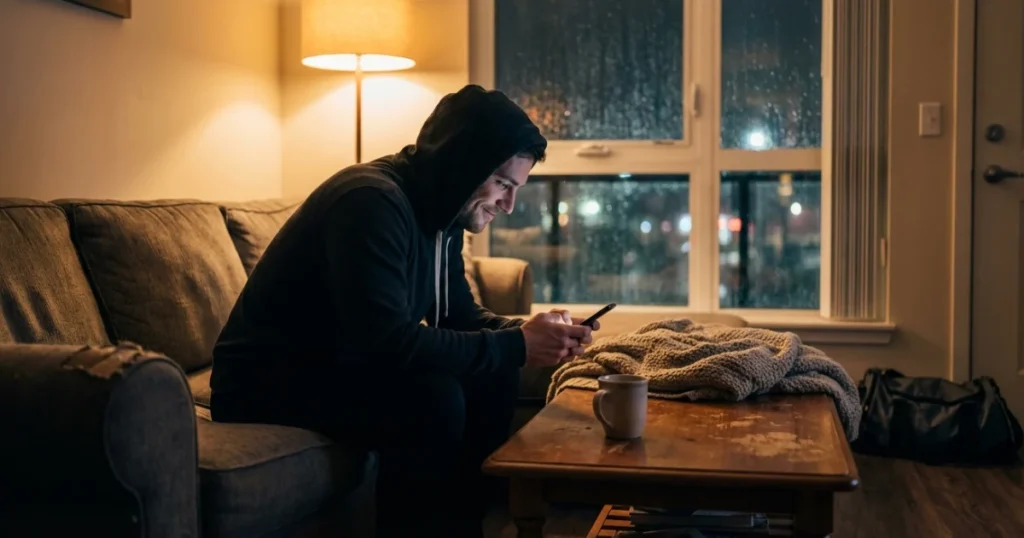
Stop guessing. Ask once, clearly, like an adult who wants solutions.
Script:
- “Quick question: what’s one specific text I can send today that helps you feel most loved?”
That’s secure attachment communication in real life: direct, kind, specific.
Reactive Comfort Vs. Proactive Co-Regulation
| Feature | Reactive Comfort (Old Way) | Proactive Co-Regulation (Better Way) |
|---|---|---|
| Trigger | You text after “Are you mad?” | You text before the silence gets long |
| Tone | Defensive/exhausted | Calm, steady, anticipatory |
| Message | “Nothing is wrong.” | “Here’s what’s happening + when I’ll be back.” |
| Result | Temporary relief | Long-term nervous system safety |
“A calm text with a plan beats a sweet text with no details.”
It matters because anxiety feeds on ambiguity. A plan is emotional oxygen.
The Simplified True Story: The Turnaround
Maya and “Jordan” (names changed) hit the same fight every Tuesday.
It was always late afternoon, around 4:40 p.m. when Maya’s office got loud and frantic. She’d tuck a strand of hair behind her ear, open her laptop, and fall into deep work. Phone face-down. Notifications off. She wasn’t ignoring Jordan. She was surviving.
Jordan, meanwhile, worked from home. Quiet apartment. Too much time to think. If Maya took more than an hour to reply, he’d start “checking the temperature.”
“Are we okay?”
“Did I do something?”
“You seem off.”
Maya tried the standard reassurance: “Babe I love you.” “Nothing’s wrong.” “Stop overthinking.” And somehow, Jordan got worse. He’d apologize, then ask again. Maya started feeling trapped, like one missed text meant a relationship emergency. (Her exact words: “I feel like I can’t blink without a status update.”)
That’s when she changed one thing: she stopped waiting for the spiral.
Every Tuesday at 4:35, before the chaos, she sent a micro-update:
“Going into deep work for 2 hours. Phone off. I’m good and I love you. Calling you at 6:45.”
The first week, Jordan still felt twitchy… but he didn’t blow up her phone. By week two, his “Are we okay?” texts dropped dramatically. Not because Maya became a better performer of love, because she became clearer. Jordan didn’t need more affection. He needed more certainty.
“Validation says: I believe you. Reassurance says: I’m still here.”
Both matter. One calms shame; the other calms fear.
Comparative Analysis: Toxic Positivity Vs Emotional Validation
Toxic positivity sounds like comfort, but it lands like dismissal. It tells him his feelings are inconvenient. Emotional validation tells him his feelings are understandable, and that you can handle them.
| Feature | Toxic Positivity (Avoid) | Emotional Validation (Do This) |
|---|---|---|
| Core Message | “Your feelings are unnecessary.” | “Your feelings make sense.” |
| Effect | He feels judged, escalates or shuts down | He feels seen, calms down |
| Example | “You’re overthinking—relax.” | “I get why you’d worry; we haven’t talked much today.” |
This is especially important when you’re dealing with avoidant vs anxious text styles: avoidant partners go quiet to self-regulate; anxious partners seek contact to regulate. Neither is “bad.” But the mismatch can be brutal without good scripts.
Common Mistakes And How To Avoid Them

- You defend yourself instead of grounding him.
Step-by-step:
- Take one breath before replying.
- Name the emotion first.
- Then give the plan.
Text: “I get why you’re worried. I’m not upset. I’m in work mode until 2, then I’m yours.”
- You over-explain (and accidentally sound guilty).
Step-by-step:
- Keep it to one sentence of context.
- One sentence of connection.
- One clear next touchpoint.
Text: “Long day. I care about you. I’ll call at 8.”
- You become his only coping skill.
Step-by-step:
- Offer support and a boundary.
- Suggest one offline reset (walk, shower, gym).
- Reconnect at a set time.
Text: “Yes, I love you, and I need an hour to focus. Can you take a quick walk? I’ll text at 6.”
That’s how you handle texting boundaries without being cold.
Frequently Asked Questions (FAQs)
Why does my boyfriend need constant reassurance?
Often it’s anxiety plus attachment fear. Silence can feel like rejection, so he seeks quick proof that the relationship is safe. This can show up as repeated check-ins, “Are you mad?” texts, or reading into tone. Clear timelines and validation help his nervous system stop treating quiet as danger.
Is it healthy to reassure him every day?
It can be, if you’re building stability instead of feeding panic. Proactive check-ins (micro-updates, future plans, affectionate specifics) usually reduce insecurity over time. If reassurance becomes endless and you feel trapped, add boundaries and encourage coping skills outside the relationship so you don’t become the only solution.
What if reassurance texts don’t work?
If he’s too activated, words may not land. Switch to action-based reassurance: send a quick voice note, share one concrete detail about where you are, or schedule a short call at a specific time. If the pattern stays intense, consider couples counseling to build better co-regulation skills together.
How do I reassure him without losing myself?
Use the “Yes, And” approach: validate and stay connected, and protect your time. Example: “Yes, I love you and I get why you’re anxious—and I’m going offline for 90 minutes.” Healthy reassurance includes structure. If you’re constantly rescuing, resentment builds and intimacy drops.
Conclusion
If you want real security, stop trying to “win” against his insecurity and start creating emotional structure. The fastest shift is simple: be warm, be specific, and be time-bound. Love without clarity feels like fog. Clarity turns love into something his nervous system can actually trust.
Tonight, don’t wait for him to spiral. Send a future-paced text out of the blue:
“I was just thinking about you. I’m really excited for [specific plan]. I’m glad we’re doing this together.”
That’s not cheesy. That’s leadership.
And if you’re thinking, “But why do I have to do all this?”—fair question. You shouldn’t have to carry the whole relationship. But in healthy couples, someone goes first. Your job isn’t to be his therapist. Your job is to communicate in a way that gives the relationship a chance to breathe.
Reflection question (be honest): Are you using reassurance to build closeness… or to avoid a harder conversation about needs, boundaries, or trust?
When you practice How to Reassure Your Boyfriend with proactive co-regulation, you’re not just calming a moment. You’re teaching your relationship a new default: steadier, safer, and a lot less exhausting.
My Closing Remarks :
I’m going to say the quiet part out loud: endless reassurance can become a slow relationship killer, because it turns love into a hostage negotiation. I’ve been on both sides of this. When I was the anxious one, I didn’t need prettier words; I needed predictability. When I was the overwhelmed one, I didn’t need more “communication,” I needed breathing room. Your goal is not constant texting. Your goal is emotional safety, with a life.
More Related Stories For You
- If commitment anxiety is part of your dynamic, read he wants to marry you but is scared to understand what fear looks like when love is real.
- If you suspect a true phobia of commitment is in play, start with gamophobia meaning so you’re not mislabeling normal nerves.
- If you’re trying to read the relationship honestly, these signs a man is ready for marriage can help you reality-check actions over words.
About The Author