
 Sara Carmen
The people who hurt you are not better at love. They are just faster at skipping the parts of love that actually matter.
Key Points
- If you keep asking “Why am I single” while unkind people pair off in months, the answer is not your worth. It is your threshold.
- Toxic relationships form quickly because they require almost no emotional screening, not because they contain more love.
- Your singlehood is often the receipt for something they never paid for: the time it takes to grieve, repair, and choose well.
Contents
Table of Contents
We all have someone we quietly track from a distance. The ex who made you feel like a burden, now posting a ring. The coworker who cheats on everyone she dates, somehow planning a wedding in Tuscany. And you, the woman who did the therapy and the reading and the hard apologies, sitting on the couch on a Tuesday night wondering what everyone else seems to know.
That comparison stings in a specific way. It is not just loneliness. It feels like a verdict.
Someone looking at your life might think you are too picky. What they do not see is that you have already sat across from three men who could not name a single feeling and chose to leave rather than translate for them.
Someone might think your standards are unrealistic. What they do not see is the year you spent untangling yourself from a person who could apologize beautifully and change nothing.
Someone might think your ex “grew up” for his new fiancée. What they do not see is that growth takes longer than eleven months, and nobody skips it by changing addresses.
There is a real psychological reason fast love looks like good love from the outside. Once you understand it, the question changes shape entirely.
Why Am I Single: The Question Is Measuring the Wrong Thing
Here is the first correction, and it matters. Speed of coupling has almost nothing to do with capacity for love.
When you ask “why am I single,” your brain treats relationship status as a scoreboard. It assumes the people who get chosen quickly were evaluated more favorably. But that is not how partner selection works, and the research does not support it either.
In one of the largest studies of its kind, researchers led by Samantha Joel analyzed data from more than 11,000 couples across 43 longitudinal studies using machine learning. Their findings in PNAS were humbling. The traits people list on dating apps, physical attractiveness, income, even personality, predicted almost nothing about relationship satisfaction. What predicted happiness was the dynamic built between two people over time. Perceived commitment. Appreciation. Sexual satisfaction. Low conflict.
Read that again. The things that make a relationship good are not visible at the beginning.
Which means the people entering relationships fastest are not selecting for quality. They cannot be. Quality is not observable in week three.
They are selecting for availability.
The Dopamine Trap: Why Toxic Relationships Feel Like Destiny
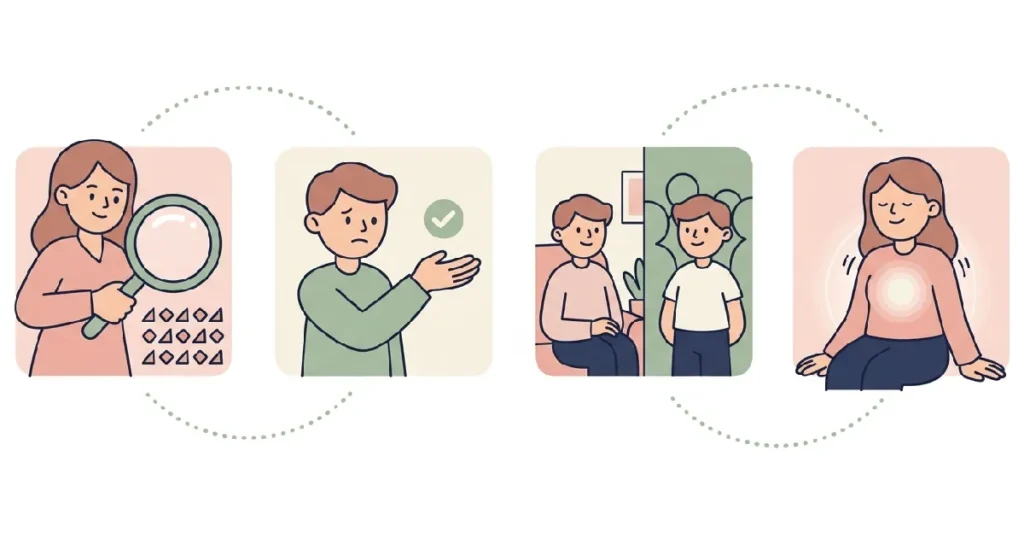
You have watched it happen. Two people meet, and within six weeks they are inseparable, matching tattoos, “I have never felt this way about anyone.” It looks like a love story. It reads like proof that you are doing something wrong.
What is actually happening is neurological, and it is closer to gambling than to intimacy.
Your brain runs on something called reward prediction error. In plain terms, dopamine does not spike when you get what you expect. It spikes when you get something better than expected, or when the reward is unpredictable. Neuroscientist Wolfram Schultz has spent decades mapping this, and his work on dopamine reward prediction error coding shows the strongest neural response happens under uncertainty, not consistency.
Now apply that to dating. A partner who is warm on Monday, cold on Wednesday, and worshipful again on Friday creates an unpredictable reward schedule. Psychologists call this intermittent reinforcement, the same mechanism that makes slot machines addictive. Each unexpected moment of affection lands harder than steady affection ever could.
So the couple that looks consumed by passion may simply be two nervous systems in a dopamine loop.
Speed is not a skill.
Meanwhile, a healthy connection with a kind, consistent person produces a lower, steadier signal. Less spike. More safety. And if you were raised in chaos, safety can genuinely feel like boredom at first. That is not a character flaw. That is conditioning, and it is reversible.
Love Bombing Lowers the Barrier to Entry
There is a reason certain people can go from stranger to soulmate in a month. They are not moving fast because they feel more. They are moving fast because intensity is a strategy.
Researchers at the University of Arkansas examined this pattern directly in a study on love bombing and narcissistic relationship formation. Love bombing is the flood of attention, gifts, constant texting, and premature declarations of forever that arrives before either person actually knows the other. The study connected this behavior to narcissistic traits and to a need for control rather than connection.
Think about what love bombing accomplishes. It compresses the timeline. It locks in commitment before the behavioral evidence arrives. Nobody love bombs because they are certain. They do it because certainty has not been earned yet and they need it anyway.
You, on the other hand, ask questions. You notice the inconsistency in week two. You watch how he speaks to waitstaff. You wait for a pattern rather than a promise.
That is not slowness. That is due diligence.
Insecure Attachment Styles Find Each Other Fast

Attachment describes the internal blueprint you formed early in life about whether closeness is safe. Roughly speaking, people land in one of four zones: secure, anxious, avoidant, or disorganized. You can read a clear breakdown of attachment styles here.
Here is the part that explains a lot of what you are watching.
Anxious and avoidant people pair up with striking speed. The anxious partner pursues, which feels like passion. The avoidant partner withdraws, which creates urgency. Each one activates the other’s deepest fear and deepest hope at the same time. The bond forms in weeks and feels enormous.
That combination is often what people mean when they say trauma bonding, an attachment strengthened by cycles of distress and relief rather than by genuine safety.
Secure attachment moves differently. Secure people are not indifferent. They are simply not desperate. They can leave a promising situation that reveals a real problem. They can tolerate the discomfort of no.
If you have done the internal work, you may have moved toward the secure end without realizing it. And securely attached people take longer to couple, because they are no longer willing to trade peace for the relief of being chosen.
The Grief Gap: The Real Reason You Are Single and Your Ex Is Not
This is the piece almost nobody names, and it is the one that changed how I explain this to clients.
Your ex is not engaged because he healed. He is engaged because he never stopped being available.
Every relationship that ends leaves behind a task: metabolizing the loss. Feeling it. Understanding your part. Adjusting the story you tell about yourself. That process takes months, sometimes years, and while it happens you are genuinely not ready to bond with someone new. Your emotional bandwidth is spoken for.
People who cause harm in relationships rarely do this task. Not because they are stronger, but because self examination is the exact thing they avoid. There is no grief to process when there was no real attachment to lose. There is only vacancy, and vacancy gets filled fast.
Call it the grief gap. The distance between the two of you is not desirability. It is processing time.
You are single because you are digesting. He is coupled because he swallowed nothing.
Picture two doors. His is a revolving door, always spinning, always someone entering as someone else leaves, no lock, no key, nobody staying long enough to be known. Yours is a front door with a real lock. It takes longer to open. What comes through it stays.
Your Standards Are a Filter, and the Filter Is Working

Consider Nadia, a composite of several women I have worked with over the years. Thirty six, a hospital administrator, four years with a man who criticized her clothes and called it honesty. She left. Eleven months later he was engaged to a woman ten years younger, and Nadia called it the worst week of her adult life.
She was convinced she had failed some test everyone else passed.
Over the next year she noticed something. She had gone on nine dates and ended seven of them by choice. One man went quiet for four days after an argument. One made a joke about her age. One asked her to cancel plans with her sister on their third date. A version of Nadia from five years earlier would have rationalized all three.
Her being single was not a malfunction. It was her immune system, finally working.
Two years later she met someone steady. She told me the strangest part was how unremarkable it felt at first. No fireworks. Just calm, and then, slowly, joy.
Every early exit you make is a relationship you will not have to escape from later. Rejecting a red flag in month one is not losing a partner. It is refusing a future.
Healthy Singlehood vs. Fast Toxic Coupling
| Dynamic | A Healthy Single Woman | A Fast Toxic Relationship |
|---|---|---|
| Dating objective | Long term safety and real peace | Immediate validation and control |
| Pace of connection | Slow, intentional, tested against boundaries | Accelerated, rushed, intense love bombing |
| Emotional state | Comfortable with solitude over chaos | High anxiety mislabeled as chemistry |
| Conflict resolution | Mutual accountability and active repair | Blame, silent treatment, or avoidance |
| What ends it | A clear boundary violation | Boredom, a new supply, or exposure |
There is also solid evidence that being single is not inherently a deficit. A study by Yuthika Girme and colleagues, published in Social Psychological and Personality Science, found that single people who are not driven by fear of conflict or rejection report well-being comparable to partnered people. Motivation matters more than status. Choosing solitude feels entirely different from enduring it.
What to Do Now: Three Practices That Change Your Dating Pace
1. Run the PACE check on every new person.
Four letters, easy to recall. Pattern over promise. Accountability without prompting. Consistency across contexts. Ease in your body. Before month three, you are not evaluating chemistry. You are collecting data. If he apologizes only after you complain, that is not accountability. If he is warm alone and dismissive around friends, that is not consistency.
2. Do a nervous system audit after every date.
Sit in the car for two minutes before driving home and ask one question: did my body relax or brace? Anxiety and attraction produce similar physical sensations, which is why so many women misread dread as desire. The next time you feel that electric, unsettled buzz, name it accurately. Then decide whether you want a relationship that feels like that at 3 a.m. in year six.
3. Track your grief ledger instead of your relationship status.
One place to start is a simple weekly note. What did I understand this month that I did not understand last year? A useful question to sit with: what am I no longer willing to explain away? Progress in singlehood is invisible on Instagram and enormous in real life.
What You Now Have
The next time you see the engagement photo and feel that drop in your chest, you will still feel it. That is human. But you will also know what you are actually looking at.
You are not looking at a woman who won. You are looking at a revolving door with a new person in it.
You have something quieter and far more durable. You have a threshold. You have a nervous system that finally objects to being mistreated. You have the ability to walk out of a room in week two instead of year five, and that ability cost you something to build.
An empty chair is not a punishment. It is a seat you refused to fill badly.
My Closing Remarks
I will be honest with you, because you deserve honesty more than comfort. Years ago I watched a woman I loved go back to a man who humiliated her, purely because being chosen felt better than being alone. She is still there. And I have watched women wait, ache, and doubt themselves for years before meeting someone genuinely good. The waiting looked like failure from the outside. It never was. Your loneliness is not evidence against you. It is the price of refusing to lie about what you need.
More Related Stories for You
- If you are learning how to build steady, secure connection instead of chaotic intensity, this guide on how to reassure your boyfriend shows what emotional consistency looks like in practice.
About The Author