


Let us be brutally honest for a minute. Most relationship advice online is terrible. You read list after list trying to find the perfect spark, but nothing changes. I know exactly how you feel right now. You are not lacking conversation starters. You are lacking conversations that actually go somewhere. You might have tried random prompts before and felt incredibly awkward. The mood went flat. It felt forced, performative, and emotionally hollow.
More inquiries do not automatically create more intimacy. Most advice fails completely because it treats romance like a pop quiz instead of a natural relationship rhythm.
He overwhelms you with hundreds of questions. They rarely teach timing, sequencing, emotional safety, or follow up. That is why users end up thinking they asked the right questions to ask your boyfriend, but it did not bring them closer.
The best relationship prompts are not random icebreakers. They are well timed invitations that spark self disclosure, reveal needs, and create safety. Ask them in stages, light to deeper to future to repair, so intimacy grows without pressure.
This guide gives you exactly what you need. You will get 48 romantic prompts, a proven four step sequence, practical guidance on what to avoid, a comparison table, a true story, and real answers for everyday situations.
The Core Concept: Questions To Ask Your Boyfriend Redefined
Relationship inquiries are not tests to measure his love for you. They are tools for building emotional intimacy. They reveal core values, help you understand his needs, and create a safer space for honest connection. The goal is never a perfect answer. The goal is better responsiveness, closeness, and relationship insight.
Table of Contents
What Is This Topic Really?
Actually, let me back up. These prompts are a form of guided self disclosure. Their real purpose is to uncover emotional needs, stress patterns, affection preferences, future aspirations, and repair habits. Romantic inquiries work best when they invite vulnerability without cornering your partner. You want to open a door, not shine a spotlight in his face. Which, if you have ever dealt with a partner shutting down, you know is maddening.
The Science And Data
This is not just my opinion. The Gottman Institute studies bids for connection and repair attempts. They found that couples who stay together respond positively to each others emotional bids most of the time. Additionally, psychologist Arthur Aron conducted famous self disclosure research on closeness. He proved that reciprocal, escalating inquiries create fast psychological intimacy. You can read about his methodology through the American Psychological Association. A recent clinical report on perceived partner responsiveness shows that feeling understood is the primary driver of long term satisfaction, as noted by the National Institutes of Health. You have to build emotional safety first.
4 Actionable Steps To Turn 48 Questions Into More Love
I use a specific model with my clients. I call it The 4 Step Vulnerability Ladder. You cannot jump straight to childhood trauma. You have to climb the ladder safely. Instead of dumping random thoughts on him, organize your approach by emotional sequence.
Step 1: Start With Low Pressure Romantic Questions That Feel Easy To Answer
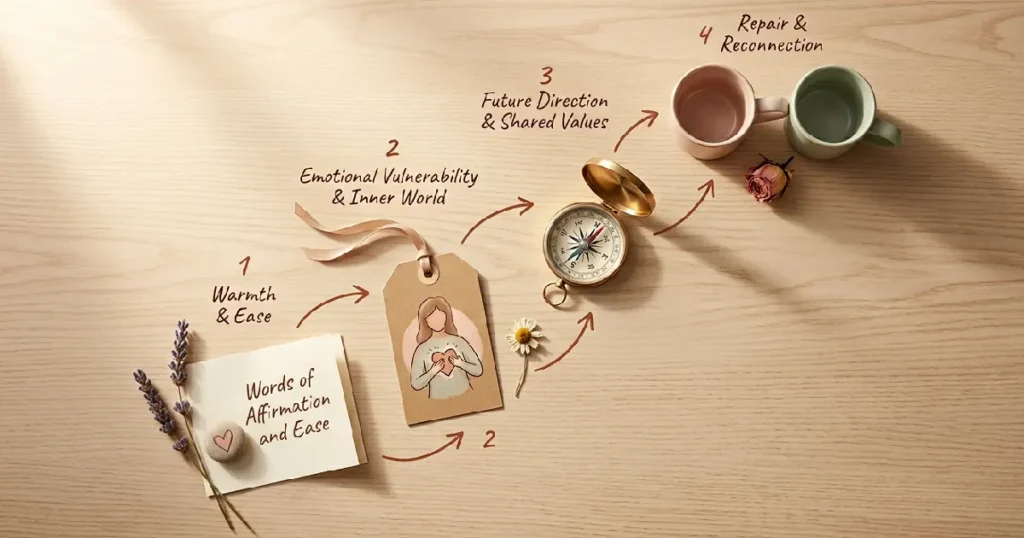
Your primary goal here is to create comfort before depth. This stage relies on active constructive responding, meaning you react enthusiastically to his positive memories. When you initiate with warmth, you are telling his nervous system that conversation does not equal conflict. Too many people make the mistake of only initiating deep talks when they are upset. You have to train his brain to associate your curiosity with pleasure, not criticism. These act as perfect conversation starters for couples who just want to relax together.
Do this: Ask during a relaxed, shared moment like a walk, car ride, or cuddle time.
Not that: Spring three deep inquiries on him right after work or during an argument.
- When in the day do you feel closest to me?
- What small thing I do makes you feel instantly wanted?
- What memory of us still makes you smile out of nowhere?
- What kind of date feels most like us lately?
- When do you feel most relaxed around me?
- What compliment from me has stayed with you the longest?
- What song, place, or smell reminds you of us?
- What tiny ritual do you wish we did more often?
- What makes flirting fun for you instead of awkward?
- What do you love about how we talk when things are good?
- What kind of physical affection feels most meaningful to you right now?
- What ordinary moment with me secretly means a lot to you?
Step 2: Move Into Deeper Emotional Intimacy Questions
Your goal now is to uncover his inner world, stress triggers, and vulnerability. This requires self disclosure reciprocity. You must share your thoughts too. Understanding his attachment style helps you navigate his answers without judgment. The Psychology Today resource on attachment styles explains why some partners pull away when you press too hard. By sharing your own fears first, you remove the spotlight from him and create a shared burden of vulnerability.
Do this: Answer your own prompt too, so the conversation feels mutual.
Not that: Act like a therapist while revealing absolutely nothing about yourself.
- What helps you open up when something is bothering you?
- When do you feel safest being vulnerable with me?
- What kind of response from me makes you shut down?
- What did love look like in your home growing up?
- What fear do you rarely say out loud in relationships?
- What do you wish I understood faster about your stress?
- When you are hurt, do you want comfort, space, or problem solving first?
- What does feeling emotionally supported look like to you?
- What is something you have changed your mind about since being with me?
- What does loyalty mean to you in everyday life?
- What kind of reassurance feels genuine instead of forced?
- What emotional bid from you do I sometimes miss?
“Intimacy Is Not Something You Find. It Is Something You Constantly Build Through Shared Vulnerability.”
This highlights that closeness requires active, daily effort. You cannot passively wait for romance to magically appear. You have to build it intentionally through your habits.
Step 3: Ask Questions About Values, Future, And Long Term Fit
The goal here is to learn how love translates into direction. You are looking for shared core values and future aspirations. Couples who survive decades together do not just coast on chemistry. They build a shared vision. When you ask about his ideal home environment or his financial goals, you are looking to see if your compasses point in the same direction. The longest running adult development study by Harvard University proves that relationship quality dictates long term happiness.
Do this: Ask one future focused thought at a time and stay highly curious.
Not that: Turn future focused topics into massive pressure about marriage, timelines, or proof of commitment.
- What do you want our relationship to feel like a year from now?
- What kind of home environment helps you thrive?
- Which shared goal would make you feel like we are a real team?
- What tradition would you love for us to create?
- How do you picture balancing independence and togetherness?
- What role do family, faith, or culture play in your ideal future?
- What does financial partnership mean to you?
- What lifestyle matters more to you right now: stability, adventure, or flexibility?
- What kind of support helps you chase big goals?
- What boundaries protect a healthy relationship for you?
- What does commitment look like beyond words?
- What is one dream you would love us to build toward together?
Step 4: Use Repair And Appreciation Questions To Make Intimacy Stick

Your final goal is to turn love into an ongoing rhythm. You use repair attempts to fix small ruptures. A weekly check in prevents resentment from building up in the dark. Asking about how to celebrate his wins or how to handle misunderstandings acts as a buffer against future stress. You are essentially writing a custom user manual for each others hearts.
Do this: Use these after calm has returned or during a regular check in routine.
Not that: Weaponize them as hidden tests, gotchas, or scorekeeping.
- What is something I do that makes hard days easier for you?
- When we argue, what helps you feel we are on the same side again?
- What is the best apology you have ever received, and why did it work?
- What would help our weekly check ins feel natural instead of forced?
- What do you need more of from me in this season of life?
- What should I keep doing because it makes you feel valued?
- When do you feel most seen by me?
- What misunderstanding do we keep repeating that we should retire?
- If we had 15 uninterrupted minutes tonight, what would you want to talk about?
- What does romance mean to you now, not five years ago?
- How can I better celebrate your wins in a way that feels real?
- What prompt do you wish I asked you more often?
“The Quality Of Your Relationship Depends Entirely On The Quality Of Your Conversations.”
When you improve how you talk to each other, you naturally improve how you love each other. Words build the foundation of trust.
Comparison Table: Conversation Building Inquiries Vs. Conversation Killers
| Goal | Not That | Ask This Instead | Why It Works |
|---|---|---|---|
| Need reassurance | “Do you even love me?” | “What helps you feel loved by me lately?” | Invites specifics instead of defensiveness |
| Want future clarity | “So where is this going?” | “What does commitment look like beyond words to you?” | Opens values, not pressure |
| After conflict | “Why do you always shut down?” | “When you are hurt, do you want comfort, space, or problem solving first?” | Names regulation needs |
| Want more romance | “Why are you not more romantic?” | “What kind of affection feels most meaningful to you right now?” | Creates actionable awareness |
| Build consistency | “We need to talk.” | “What would help our weekly check ins feel natural?” | Frames connection as teamwork |
The best romantic prompts are specific, open ended, and emotionally safe.
The Simplified True Story: The Turnaround
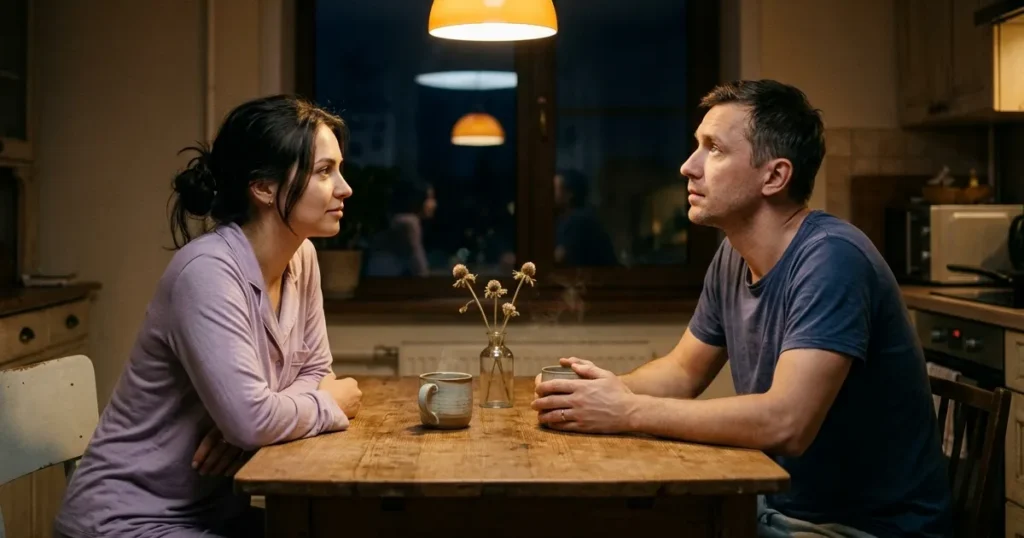
Meet Maya. She had been with her partner for almost three years. Their conversations were strictly functional. They talked about bills, dinner plans, daily schedules, and weekend errands. Every single time she tried reading from a random online list of conversation starters, he joked that he felt like a suspect in a police interrogation.
Maya felt completely defeated. The romantic spark was suffocating under a pile of laundry and grocery lists. Which, if you have ever lived with a partner for years, you know is a very real frustration.
Then she changed her approach completely. She used one specific piece of advice from this method. She decided to start with a low pressure, positive prompt during a calm, shared moment.
It was a rainy Sunday morning. The smell of dark roast coffee filled their tiny kitchen. He was standing by the sink, looking out the window while holding his favorite chipped ceramic mug. The apartment was completely quiet.
Maya simply leaned against the counter and asked him what tiny ritual he wished they did more often.
He did not laugh or make a joke. He paused, looked down at his coffee, and quietly said he missed how she used to reach for his hand first when they watched movies on the couch.
That single, honest answer led to a small daily habit. It was not a dramatic, tearful relationship overhaul. Within a few weeks, their apartment felt warmer. He started initiating physical affection much more frequently. Their hard conversations suddenly became less defensive.
The emotional lesson here is simple. Small, well timed curiosities often unlock far bigger closeness than forced, heavy talks. You just have to know how to ask, and you have to create a safe environment for the answer.
Comparative Analysis: Romantic Prompts Vs. Couples Card Games And Quizzes
You might be wondering what tool actually fits your situation. Let me break it down for you so you stop wasting money on things that do not work.
Romantic question lists are best when:
You want flexible, personalized conversations. You know his personality and can adapt timing based on his mood. You want deeper follow ups, not pre scripted answers printed on cardboard.
Couples card games are best when:
One or both partners feel incredibly awkward initiating deep talks. You want a playful frame to reduce tension. You need external structure because your normal routine usually stalls out.
Love language quizzes are best when:
You want quick vocabulary for affection preferences. You need a simple starting point. You understand that quiz results are only a beginning, not the full conversation.
If your goal is emotional intimacy, verbal inquiries win every time when paired with timing, follow up, and emotional safety.
Common Mistakes And How To Avoid Them
Listen, I have watched countless people mess this up. You have good intentions, but your execution ruins the moment. Here are three mistakes you must avoid, and exactly what to do instead to get the results you want.
1. Treating The Conversation Like An Interrogation
Nobody wants a flashlight shined in their face after a long day at work. If you rapid fire serious topics at your boyfriend, his nervous system will instantly trigger a defensive response. He will feel like he is failing a test he did not study for.
Step by step guidance: Space things out. Ask one thing. Stop. Let him answer. Then, share your own answer. For example, if you ask him what he wants your relationship to feel like in a year, follow up with, “I love that. For me, I really want us to feel more connected in the evenings.” Make it a comfortable two way street.
2. Getting Defensive When His Answer Surprises You
I see this constantly. You ask him to be vulnerable, he tells you a hard truth, and you immediately get mad at him. You just taught him that honesty is dangerous, and he will remember that next time.
Step by step guidance: Bite your tongue. When he shares something that stings slightly, take a deep breath. Use this exact message to keep the peace: “I really appreciate you telling me that. I need a minute to process it, but I am glad you were honest.” You can revisit your feelings later, but protect his vulnerability in the moment.
3. Asking Deep Things At The Absolute Worst Times
You cannot demand psychological intimacy when he is stressed, distracted, or holding a video game controller. Timing is absolutely everything.
Step by step guidance: Read the room. Look for transitional moments. Car rides are phenomenal for this because you do not have to hold direct eye contact, which lowers the pressure significantly. Say something casual like, “Hey, I was thinking about us earlier. What is a memory of us that still makes you smile?” Keep your tone light and breezy.
Frequently Asked Questions (FAQs)
1) When is the best time to ask romantic questions?
The best time is when you both feel calm, unhurried, and emotionally available, like during a walk, after dinner, or on a relaxed drive. Avoid deep subjects right after conflict, late at night when one of you is exhausted, or while multitasking. Timing matters just as much as the words themselves for real connection to grow naturally.
2) Can I ask these questions over text?
Yes, but texting works best for lighter or affectionate inquiries, not highly sensitive ones. Tone gets lost easily, and delayed replies create unnecessary anxiety. If a topic touches commitment, insecurity, family wounds, or conflict, use text as a gentle opener. Then continue the conversation in person or on a call for actual warmth and clarity.
3) How do I ask deep questions without making it feel like an interview?
Ask one thing, then respond to his answer before bringing up another. Share your own answer too, so the exchange feels mutual instead of investigative. Use natural transitions like, That makes sense, can I ask something a little deeper? Curiosity, eye contact, and thoughtful follow up matter more than reading ten prompts from a screen.
4) What if my boyfriend gives short answers or shuts down?
Do not assume he does not care. Some people need more time, privacy, or emotional safety before opening up. Try simpler, concrete topics first, reflect back what he says, and avoid pouncing on short answers. If he withdraws often, talk directly about what helps conversations feel safer, easier, and much more honest for him next time.
5) How often should couples use relationship questions?
You do not need a massive marathon session. For most couples, one to three thoughtful prompts a few times a week create steady momentum without pressure. A short weekly check in works especially well because it normalizes emotional conversation over time. Consistency beats intensity, and small daily rituals usually build far more trust than occasional dramatic talks.
Final Takeaway
It is incredibly frustrating when you feel like you are doing all the heavy lifting in your relationship. I know it hurts when you crave deep connection and feel like you are hitting a brick wall. You just want him to open up.
But reading this guide is only half the battle. Now you actually have to put it into practice.
Do not just summarize what you read today. Take action. I want you to do one specific task tonight. When you are both sitting on the couch or winding down for bed, ask him this exact sentence:
“What tiny ritual do you wish we did more often?”
Here are your instructions for when he answers. Do not rush to respond. Just listen to him. Let there be a few seconds of silence. Then ask one simple follow up: “What would that look like for you?”
These are the moments where real trust is built. Questions to ask your boyfriend are simply tools. You are the one who builds the house. Love usually grows through repeated moments of being understood, not through one perfect conversation.
So, ask yourself this: Are you willing to stop treating your relationship like a test he has to pass, and start treating it like a garden you have to water?
If you want a stronger, healthier bond, stop focusing on quantity. Focus on the quality of your timing and your emotional safety. Be brave enough to ask the things that matter, but be patient enough to let him answer at his own pace.
My Closing Remarks:
Let me be blunt. Most relationships fail because people are terrified of hearing the truth. They prefer the comfortable silence over the uncomfortable reality. I used to do this in my own life. I avoided asking hard things because I was scared he would pull away. But you cannot build a lasting partnership on assumptions. You have to risk the awkwardness. Stop waiting for the perfect moment. Send the text. Start the conversation. Your relationship will either grow from the truth or break from the silence. Choose growth.
More Related Stories For You
- If you are struggling with communication after the sun goes down, learning how to send the right goodnight text messages can completely change your evening routine.
- Sometimes, we all just need a little direction to keep the spark alive, which is why finding solid good advice for a relationship is so incredibly helpful.
- And if your conversations start getting tense because you have kids, understanding how to navigate different parenting styles can save your partnership from constant resentment.