


Key Points
- Narcissistic behavior traits are not about ego or vanity; they are repeated patterns of control, emotional exploitation, and resistance to accountability that damage the people closest to the narcissist.
- The most dangerous narcissistic behavior traits often hide behind charm, tears, and therapy language, making you question your own perception rather than theirs.
- Recognizing a pattern is not the same as diagnosing a person; you do not need a clinical label to protect yourself from behavior that is harming you.
Contents
Table of Contents
You are standing in the kitchen, replaying an argument that ended twenty minutes ago. You said something reasonable. You know you did. But somehow, by the end, you were the one apologizing. You are not sure what just happened. You just know that your chest feels tight and your thoughts are scrambled.
If this sounds familiar, you are not losing your mind.
You are likely recognizing something your body understood long before your mind caught up: a pattern. Not a bad day. Not a personality quirk. A pattern of behavior designed, consciously or not, to keep you off-balance and someone else in control.
Most articles on narcissistic behavior traits hand you a checklist and send you on your way. They tell you to look for arrogance, need for admiration, or lack of empathy, as if identifying a narcissist were as simple as spotting a red flag on a map. But real life does not work that way. The person showing these traits might also be funny. Generous with friends. Tender after a blowup. That is exactly what makes these patterns so confusing and so hard to leave behind.
Narcissistic behavior traits are recurring interpersonal patterns where a person protects their self-image, status, or control at the direct expense of another person’s emotional safety, boundaries, or sense of reality. These are not single incidents. They are repeated cycles of manipulation, entitlement, low empathy, and resistance to genuine repair.
Here is what this article will give you: a clear, honest look at the 10 traits that matter most, what they actually look like in real relationships, how to separate them from ordinary selfishness, and one safe, specific step you can take within 24 hours.
What Narcissistic Behavior Traits Really Are
The word “narcissist” has become cultural shorthand for anyone who is selfish or vain. That oversimplification is part of the problem. It makes you dismiss the term when it actually applies, and over-apply it when it does not.
In clinical psychology, narcissistic behavior traits fall along a spectrum. Narcissistic personality disorder (NPD) is estimated to affect approximately 0.5% to 6.2% of the general population, with higher prevalence reported in clinical settings. NPD is significantly more common in men. Between 50% and 75% of all NPD diagnoses are in men. A national survey found a lifetime prevalence of 7.7% in men compared to 4.8% in women. But here is what those numbers miss: a person does not need a formal diagnosis to cause real psychological harm.
What makes these traits so damaging is their dual nature. Research increasingly distinguishes between two expressions of narcissism. Narcissistic grandiosity is characterized by overt expressions of feelings of superiority and entitlement, while narcissistic vulnerability reflects hypersensitivity and introversive self-absorbedness. A 2025 study published in the Journal of Research in Personality by Maples and colleagues found evidence for multiple narcissistic profiles, including patterns that blend both grandiose and vulnerable features. The researchers observed oscillation between grandiose and vulnerable presentations, using latent variable and person-centered modeling to identify distinct narcissistic profiles.
This matters because the person harming you may not look like the loud, arrogant stereotype. They might look wounded. Quiet. Perpetually victimized. They might even sound like they have done a lot of personal growth work.
The question is never: “Are they a narcissist?” The question is: What happens when you say no?
Think of narcissistic behavior traits like an undertow at the beach. The surface looks calm, even inviting. But underneath, a current is pulling you somewhere you did not agree to go. The harder you try to swim toward them, to reason with them, to explain your feelings one more time, the more exhausted you become. You are not failing at communication. You are caught in something designed to pull you under.
10 Narcissistic Behavior Traits You Cannot Afford to Ignore
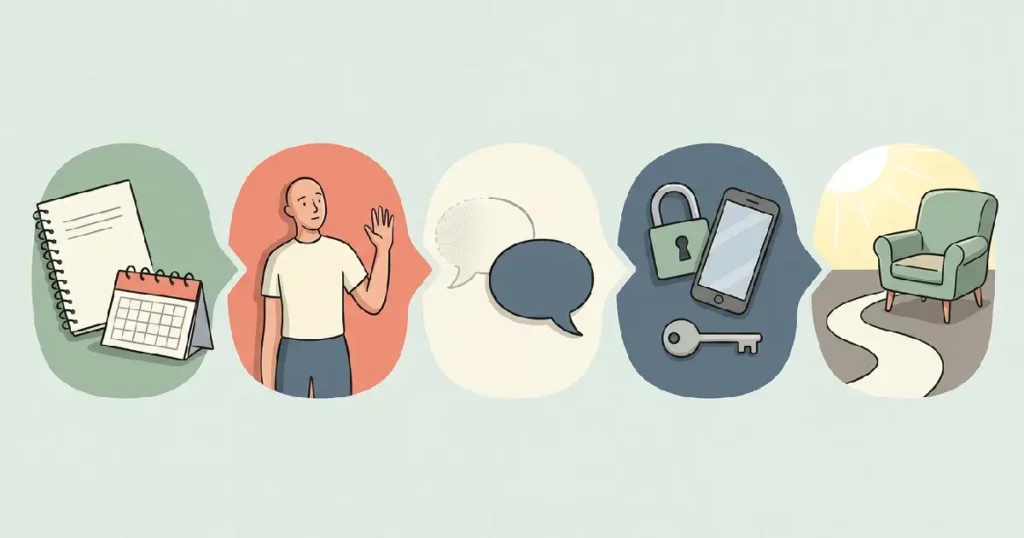
1. Entitlement That Disguises Itself as Confidence
Rules exist for everyone else. They expect special treatment at restaurants, in relationships, at work, and in your emotional bandwidth. When you set a limit, they act as though you have violated an unspoken contract that only they wrote.
2. A Hunger for Admiration That Never Fills
Compliments, attention, reassurance: they absorb it all and still come back empty. You might find yourself performing emotional labor that feels bottomless, praising, affirming, and soothing, yet they rarely offer the same in return with any consistency.
3. Empathy That Flickers On and Off
This is the trait that confuses people most. They can appear empathetic, especially in public. But in private, when your pain is inconvenient or when it implies they caused harm, empathy vanishes. Neuroscientific findings reveal structural and functional abnormalities in the anterior insula and prefrontal cortex, linked to deficits in empathy, self-awareness, and social cognition in individuals with pathological narcissism. Their empathy may be cognitive, meaning they can read your emotions, but they choose not to respond to them.
4. Gaslighting: The Slow Erasure of Your Reality
They say things that make you doubt what you saw, heard, or felt. “That never happened.” “You are being dramatic.” “I never said that.” Gaslighting as a psychological manipulation tactic defines how the victim doubts their thoughts, memory, and identity, which is designed to disorient and decrease the victim’s self-confidence. Over weeks and months, this does not just confuse you. It teaches you to stop trusting yourself.
5. Blame-Shifting That Turns Every Conflict Into Your Fault
You raise a concern. Within minutes, the conversation has pivoted. Now you are defending your tone, your timing, your “sensitivity.” The original issue evaporates. You leave the room wondering what you did wrong, when all you did was express a need.
6. Boundary Violations Wrapped in Love Language
When you say “I need space,” they hear “You are abandoning me.” When you set a limit, they either ignore it, test it, punish you for it, or treat it as evidence that you do not care. The relationship usually begins gloriously, with grand gestures and love bombing. But experts say it can quickly turn from romantic and flattering to critical and invalidating. Those on the receiving end can experience fear, confusion, anxiety, gaslighting, blame-shifting and manipulation.
7. Public Charm, Private Cruelty
This is the trait that makes you feel the most alone. Other people see warmth, humor, and generosity. You see contempt, sarcasm, and emotional withdrawal behind closed doors. When you try to explain, nobody believes you. Narcissistic abuse frequently occurs beneath the surface of overt violence, hidden behind charm, success, or authority.
But here is what no one tells you.
The charm is not separate from the cruelty. The charm is part of the strategy. It creates the very isolation that keeps you doubting yourself.
8. Rage That Erupts After the Smallest Criticism
You mention something small. A forgotten errand. A hurtful comment. The response is volcanic: insults, threats, cold silence, or a dramatic exit. This is what psychologists call narcissistic injury, a wound to their self-image so fragile that even minor feedback feels like an existential attack.
9. Weaponized Vulnerability
This is the trait most articles overlook entirely. In relationships and workplaces today, many people with narcissistic behavior traits have learned the vocabulary of therapy. They say “triggered.” They mention “boundaries.” They cry on cue. But watch what happens after the tears dry. Does behavior actually change? Or do the tears function as a shield that deflects accountability while making you feel guilty for having raised the issue in the first place?
10. Image Repair Instead of Real Repair
They apologize. Sometimes beautifully. But the apology is aimed at their reputation, not your pain. “I am sorry you feel that way” is not an apology. “I understand what I did, and here is what I will do differently” is. The difference between the two is the difference between performance and genuine accountability.
The Undertow in Action: A Story

Meet David, 38 (name changed for privacy). He came to therapy confused. His partner was warm, loving, and attentive, except when she was not. Every time he expressed discomfort about something she said, the conversation flipped. She would cry, accuse him of being “just like her ex,” and remind him of the one time he forgot their anniversary. By the end, David was always comforting her. His original feeling? Gone.
He started keeping a simple log. Date. What happened. What was said. Whether real repair followed. Within three weeks, the pattern was undeniable: every time he raised a concern, the same sequence played out. Tears. Deflection. Guilt. Silence. No change.
David did not diagnose her. He did not need to. The pattern gave him clarity that arguing never could. He brought his notes to a therapist and began building a safety-focused plan for himself.
Narcissistic Behavior Traits vs. Ordinary Selfishness: How to Tell the Difference
Not every selfish act is narcissistic. Here is a practical comparison:
| Situation | Ordinary Selfishness | Narcissistic Behavior Trait |
|---|---|---|
| After a conflict | Feels embarrassed, attempts repair | Deflects, attacks, or punishes you |
| When you set a boundary | May resist but respects it | Treats it as betrayal or abandonment |
| Apology style | Specific and behavior-focused | Vague, self-pitying, or performative |
| Empathy after calming down | Returns with genuine care | Remains conditional or disappears |
| Overall pattern | Occasional, contextual | Repeated and escalating over time |
The key diagnostic question for yourself is not “Are they a narcissist?” It is: “When I express a need, does this person respond with curiosity or with control?”
4 Mistakes That Keep You Trapped (And How to Avoid Them)
Mistake 1: Confronting Them With the Label
Telling someone “You are a narcissist” almost never produces insight. It produces war. Instead, focus on one specific behavior. “When you mock me during disagreements, I will leave the conversation.” That is a boundary, not a diagnosis.
Mistake 2: Storing Evidence on Shared Devices
If you are tracking patterns, protect your documentation. Shared cloud accounts, shared tablets, and synced photo libraries are not safe places for your notes. Use a private device, a password-protected app, or the voice of a trusted friend. According to the Centers for Disease Control and Prevention’s National Intimate Partner and Sexual Violence Survey (2022), approximately 36% of women and 34% of men in the United States have experienced psychological aggression by an intimate partner. Protecting yourself digitally is not paranoia. It is practical.
Mistake 3: Accepting Therapy Language as Evidence of Change
Someone can quote Brene Brown and still gaslight you at dinner. The vocabulary of healing has become widely accessible, which is largely a good thing, except when it is used as a costume. Pay attention to behavior over time, not words in the moment. The question is never what someone says about growth. It is whether the pattern shifts.
Mistake 4: Waiting for a Diagnosis Before Protecting Yourself
You do not need a clinician to confirm that someone’s behavior is harming you. The DSM-5-TR has a list of nine criteria, and you must have at least five of them to receive a diagnosis of NPD. But waiting for a professional label before setting a boundary is like waiting for a fire department to confirm a fire before leaving the building.
What You Can Do Right Now: Three Practical Strategies

The Pattern Log
Start a simple, private record. Date. What happened. Exact words. Your emotional response. Whether genuine repair followed. Do this for two weeks. Not to build a case against someone, but to build clarity for yourself. Patterns become visible only when you write them down.
The Boundary Test
Choose one small, clear boundary. Something specific: “I will not continue a conversation where I am being insulted.” Then observe the response. Not the words. The behavior. A healthy person may push back, but they will ultimately respect it. A narcissistic pattern responds with escalation, punishment, or guilt.
Frequently Asked Questions
What are the most common narcissistic behavior traits? The most common narcissistic behavior traits include entitlement, constant admiration-seeking, low empathy, gaslighting, blame-shifting, boundary violations, public charm paired with private cruelty, narcissistic rage, weaponized vulnerability, and image repair instead of genuine accountability. One trait alone may not be cause for alarm. A repeated cluster across multiple situations is what signals a true pattern worth taking seriously.
How can I tell narcissistic traits apart from normal selfish behavior? Normal selfishness usually softens when someone sees they have hurt you. Narcissistic traits tend to harden into defensiveness, contempt, or punishment. Compare the frequency of the behavior, the quality of remorse, whether genuine repair follows, and whether boundaries are ultimately respected. A healthy person may make mistakes, but they can listen, apologize with specifics, and change behavior without requiring you to erase your experience.
Is gaslighting always a narcissistic behavior trait? Gaslighting can appear alongside narcissistic patterns, but it is also a broader manipulation tactic used by people who may not meet any clinical threshold. The key sign is not disagreement. It is a repeated, deliberate effort to make you doubt your own memory, perception, or sanity so the other person avoids responsibility. Track exact words, dates, and outcomes before reacting or making major relationship decisions.
What should I do if these traits feel emotionally abusive? If you recognize these narcissistic behavior traits and they feel abusive, prioritize your safety over proving the label. Tell one trusted person. Record incidents privately and securely. Secure your passwords and finances. Speak with a therapist or domestic violence advocate. If there is immediate danger, contact emergency services. You do not need a diagnosis to deserve protection.
Final Takeaway
Remember that moment at the beginning? Standing there, chest tight, thoughts scrambled, replaying an argument you somehow lost even though you were the one who was hurt?
You were not confused because you are weak. You were confused because the undertow was doing exactly what it was designed to do.
Now you have something you did not have before. A map. Not a map to diagnose someone else, but a map to trust what you already feel.
Within the next 24 hours, try this: write down three specific incidents that led you to search for narcissistic behavior traits. For each, note what happened, what was said, how you felt, and whether real repair followed. Do not confront anyone yet. Just get clear.
Clarity is not revenge. It is not cruelty. It is the thing that lets you stop swimming against the current and start walking toward solid ground.
You were never the problem. You were just the one willing to look.
My Closing Remarks
I have sat across from hundreds of people who told me some version of the same story: “I keep thinking maybe I am the problem.” They were not the problem. They were the person in the room willing to question themselves, which is the very quality narcissistic patterns exploit. If you are reading this, you have already done the hardest part. You stopped explaining it away. You searched for the truth. I do not say this lightly: that courage matters more than any label. Now do something with it.