
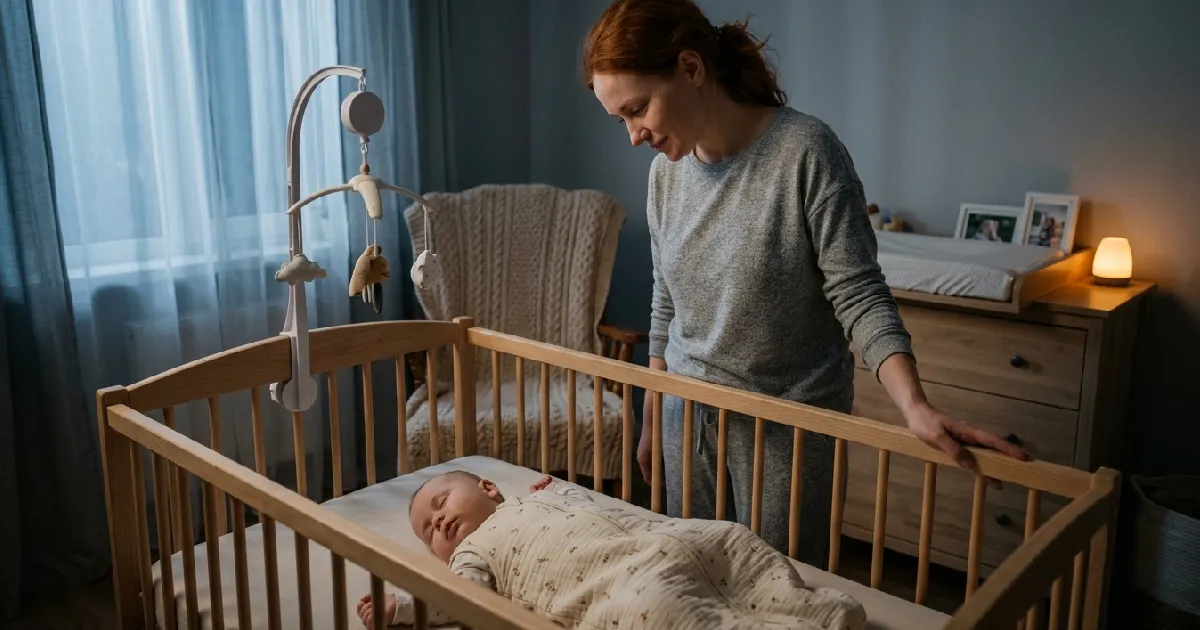

It is 2:47 AM. You are standing over a wooden crib, swaying like a zombie, praying your baby does not wake up the second their back hits the mattress. Let me give you some tough love. Most online advice claiming to teach you how to sleep train infants is making your life harder because it treats a family system problem as a baby problem. Actually, let me back up, it is not your fault that you are failing at this. You are operating on fragmented 90 minute sleep cycles, reading conflicting blogs, and drowning in parent guilt.
If you have ever dealt with this, you know it is maddening to hear people say to just let them cry or never let them cry. Neither approach feels right when you are in the thick of it. Let us set the record straight right now.
Sleep training infants means teaching your baby to fall asleep independently by gradually reducing parental sleep associations. Most experts recommend starting between four and six months of age. Evidence confirms it does not damage attachment or emotional development. Several methods exist, but the right one depends heavily on your baby’s temperament and your own tolerance.
In this guide, you will find:
- The one hidden shift that makes every single training method work faster.
- A step-by-step protocol built around your baby’s unique personality.
- The secret to surviving the dreaded night three breakdown that causes most parents to quit.
- Factual, science-backed answers to your biggest fears about crying and attachment.
Why Your Baby Wakes Up Six Times A Night
Let us look deeply at what is actually happening in that nursery. Many parents think sleep training is about forcing a baby to sleep straight through the night without moving. I might be wrong about this, but I bet you believe that too. The truth is, no human sleeps straight through the night. Not even you. We all wake up briefly as we cycle between light and deep sleep phases.
Table of Contents
As adults, we simply adjust our pillow, roll over, and fall back asleep without even remembering the waking. Your baby cannot do that yet. When an infant can only fall asleep while being rocked, fed, or held, they develop what psychologists call a sleep-onset association disorder. It sounds scary, but it just means they have linked falling asleep to a specific external prop.
When your baby transitions into light sleep at midnight and realizes the rocking motion or the warm body is gone, they panic. They do not know how to recreate that environment on their own. So, they cry out for you to come back and do the heavy lifting. Our goal here is not to stop them from waking up. Our goal is to give them the tools to put themselves back to sleep when they do wake up.
The Science That Should Erase Your Guilt Forever
I know what is holding you back. It is the heavy, suffocating guilt that you are damaging your child’s brain or ruining your bond. Let us look at the real data to quiet that inner critic.
The American Academy of Pediatrics backed studies showing that behavioral sleep techniques provide significant benefits to both babies and parents. In one major study, researchers measured stress hormones in infants during the training process. They found that babies in the sleep training group actually had decreased cortisol levels by the end of the week. Even better, there was no difference found in attachment styles or behavioral outcomes when the children were evaluated years later.
Babies who were sleep trained grew up to be just as emotionally healthy, securely attached, and well adjusted as babies who were not. You can read more about early childhood emotional development on trusted platforms like Psychology Today.
I want to share exactly what experts say about this. Dr. Richard Ferber, a pioneer in pediatric sleep, stated: “The problem is not that the child cannot fall asleep, but that he has learned the wrong associations.” This matters immensely because it shifts the blame away from your baby’s personality and puts the focus squarely on habits we can change.
Another expert, Dr. Marc Weissbluth, noted: “Sleep problems not only do not resolve themselves, but they also get worse.” This is your wake up call to take action today rather than waiting for a magical fix that might never come on its own.
The Tale Of Maya And Lily
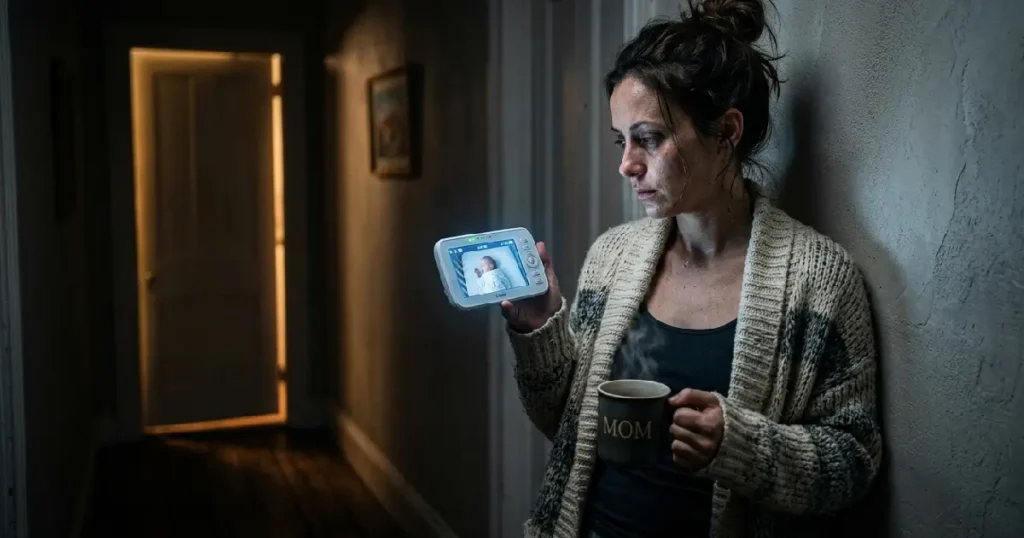
Let us look at a realistic example of how this plays out in the real world. Meet Maya, a 27 year old working mother. Her seven month old daughter, Lily, had never fallen asleep without forty-five minutes of active nursing. Every single night at around 2:15 AM, Maya would find herself sitting in a dark corner, rubbing her eyes, while Lily twisted a small lock of Maya’s hair, a specific sensory habit the baby needed to drift off.
Lily woke up four or five times every single night. Maya was due to return to her stressful job as a hospital nurse in exactly ten days. She was functioning on less than four hours of broken sleep and was terrified she would make a medical error at work.
Maya read endless articles but was paralyzed by the fear that Lily would feel abandoned. After finally looking at the actual data regarding cortisol and attachment, Maya decided to try a graduated extinction method.
On night one, Lily cried for forty-seven minutes before falling asleep. It was hard, but Maya and her partner held hands and stayed strong. On night two, the crying dropped to thirty-nine minutes. By night four, Maya placed Lily in the crib awake, and the baby drifted off in under eight minutes without a single tear. Maya cried tears of pure relief that night because she realized she had given her daughter a lifelong skill.
Are You And Your Baby Actually Ready
Before you jump into any method, we need to make sure the timing is right. I see too many parents fail because they start on a random Tuesday when the baby is teething or a grandparent is visiting. Let us use these lists to check your readiness.
Your baby is likely ready if they meet these criteria:
- They are at least four months old, as babies rarely develop their own melatonin or regulated circadian rhythms before this point.
- They have reached a healthy minimum weight determined by your pediatrician.
- They do not have unresolved medical issues like severe acid reflux or active ear infections.
- They are taking in adequate calories during the day.
Now, let us talk about you. You need to be ready too. Ask yourself these questions:
- Can you commit to the exact same method for at least five consecutive nights without cheating?
- Are you and your partner fully aligned on which method to use so nobody breaks the rules at 3:00 AM?
- Is your calendar clear of vacations, houseguests, or big work deadlines for the next two weeks?
- Are you emotionally prepared to hear some crying without rushing in to fix it immediately?
Practical Steps On How To Sleep Train Infants Starting Tonight
Let us throw out the formal, academic language and talk like friends. If you want to start changing things tonight, you do not need a degree in behavioral science. You just need a clear plan. Here is a step-by-step guide you can apply immediately in your own home.
Step 1: Find Your Baby’s True Personality
Every baby is different. What worked for your sister’s baby might fail miserably for yours. Spend the next forty-eight hours watching how your baby reacts to stress. Are they sensitive and easily overwhelmed by too much noise or light? Are they flexible and able to go with the flow when schedules change? Or are they spirited, with high energy and loud, intense protests?
If you have a sensitive baby, a very gentle method where you stay in the room will work best. If you have a spirited baby, checking in on them repeatedly might just make them angrier, meaning a faster approach might actually be kinder in the long run.
Step 2: Build A Solid Bedtime Routine
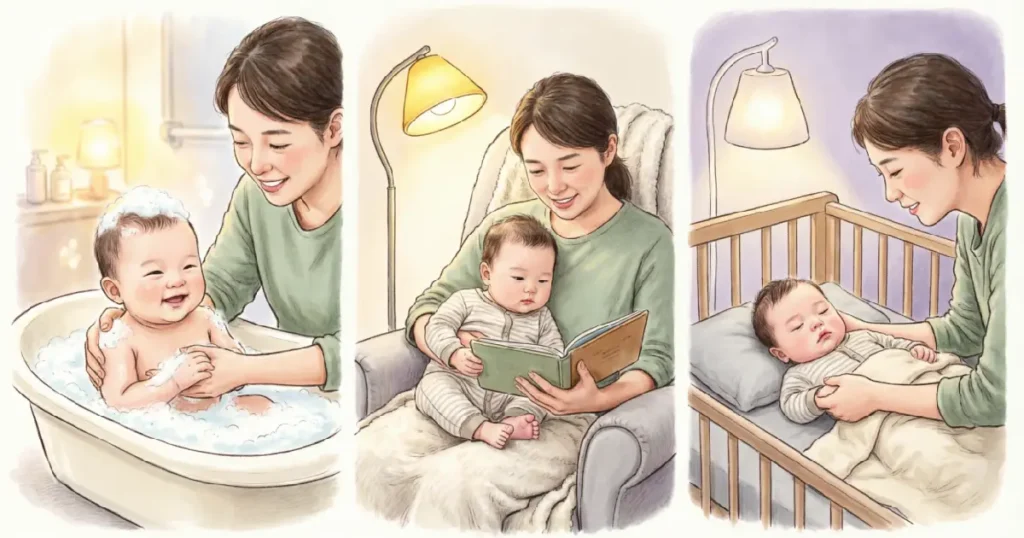
You cannot expect a baby to go from playing with blocks to sleeping in five minutes. You need a bridge. Create a twenty to thirty minute routine that you repeat in the exact same order every single night.
Try this sequence tonight:
- Give them a warm bath to relax their muscles.
- Put on a fresh diaper and comfortable pajamas.
- Dim the lights and turn on a continuous white noise machine.
- Offer a final feeding, making sure they do not fall asleep while eating.
- Sing a quiet song or read a short book.
The golden rule is to place your baby in the crib drowsy but still awake. If they are already asleep when you put them down, you have missed the window to teach them self soothing. They need to recognize the environment as they drift off.
Step 3: Pick Your Method And Stick To It
You have to choose one path and stay on it. Mixing methods creates massive confusion for your infant.
Here are the three main options to choose from:
- The Fading Method: You sit in a chair next to the crib until they fall asleep. Every couple of nights, you move the chair further away toward the door until you are out of the room entirely. This takes a few weeks but involves very little crying.
- The Graduated Extinction Method (Ferber): You put them down awake and leave the room. If they cry, you go back in to reassure them at set intervals, like five minutes, then ten minutes, then fifteen minutes. You do not pick them up, you just use your voice to let them know you are there.
- The Full Extinction Method: You put them down awake, say goodnight, and do not go back in until morning unless there is a safety issue. It sounds harsh, but it is often the fastest method, usually working in just two or three nights.
Step 4: Survive The Night Three Breakdown
I need to warn you about something. Night one will be hard. Night two might be just as hard. But night three is where most parents quit because of something called an extinction burst.
This is the point where your baby realizes the old rules are really gone, and they make one final, loud protest to get you to go back to the old way. They might cry louder or longer than they did on night one. Do not take this as a sign of failure! It is actually a sign that the training is working and you are right on the edge of a breakthrough. Keep your partner on standby as a support buddy and remind yourself that consistency is the only way through.
Common Mistakes And How To Avoid Them

Even with the best intentions, it is easy to make mistakes when you are exhausted. Let us look at the four most common traps parents fall into and exactly how you can avoid them.
Mistake 1: Responding Too Quickly To Night Waking
When your baby makes a noise at 2:00 AM, our parental instinct is to rush in immediately. But sometimes, babies just grunt or cry out briefly in their sleep without actually being awake. If you rush in, you might accidentally wake up a baby who was about to settle themselves back down.
How to avoid it: Use the “pause” method. When you hear your baby cry at night, set a timer on your phone for three minutes. Watch them on the video monitor but do not enter the room. You will be shocked by how often they simply roll over and fall back asleep before the three minutes are up.
Mistake 2: Using Feeding As The Only Soothing Tool
It is incredibly easy to just offer the breast or a bottle every time your baby cries because it works so fast. But if your baby is over four months old and healthy, they likely do not need to eat every two hours at night. You are accidentally teaching them that eating is the only way to fall asleep.
How to avoid it: Separate eating from sleeping by at least fifteen minutes. Move the feeding to the very beginning of your bedtime routine. If they wake up later and it has not been at least five hours since the last feed, use a script with your partner like: “We know they are not hungry right now. Let us give them ten minutes to practice falling back asleep on their own.”
Mistake 3: Inconsistent Rules Between Parents
If you are doing the Ferber method but your partner gets stressed at 1:00 AM and rocks the baby to sleep, you have just undone all your hard work. Inconsistency stretches the process out for weeks and causes massive confusion for the baby.
How to avoid it: Write your plan down on a piece of paper and tape it to the nursery door. Include exact steps. For example: “If baby wakes up before midnight, Parent A goes in for a two minute check without picking up. If baby wakes up after 3:00 AM, Parent B handles it.” Having a written agreement stops middle of the night arguments.
Mistake 4: Letting Naps Fall Apart
Many parents focus so hard on nighttime sleep training that they forget about daytime naps. If your baby is overtired by 7:00 PM because they did not nap well, their bodies produce extra cortisol and adrenaline. This makes falling asleep at night ten times harder.
How to avoid it: Protect daytime naps fiercely. Even if you have to use a stroller or a carrier to get them to sleep during the day while you are training at night, do it. Keep them on a consistent age appropriate schedule so they hit bedtime in that perfect window of being tired but not exhausted.
Sleep Training vs. Co-Sleeping: Making The Right Choice
I am not here to tell you that sleep training is the only valid way to raise a child. Every family values different things. Let us look at an honest comparison without any judgment.
Sleep training focuses heavily on independent sleep skills and usually results in better, more consolidated rest for the parents within a couple of weeks. It aligns perfectly with safe sleep guidelines that recommend infants sleep on a flat, separate surface.
Responsive co-sleeping, on the other hand, maximizes physical closeness and can make nighttime breastfeeding much easier for some mothers. However, it often results in more frequent waking for both the parent and the baby as they disturb each other’s sleep cycles.
There is no wrong answer here. If co-sleeping is working for your family and everyone is safely getting enough rest, you do not need to change a thing. But if you are crying at your kitchen table because you are dangerously exhausted, sleep training is a valid, loving choice that will not harm your child.
Frequently Asked Questions (FAQs)
When should I start sleep training my infant?
Most pediatric experts recommend starting sleep training between four and six months of age. Babies generally do not develop their own melatonin or true circadian rhythms until after the third month. Always consult your pediatrician first to ensure your baby has reached the appropriate weight and has no medical issues before you begin a formal program.
Will sleep training damage my baby’s attachment to me?
No, multiple peer reviewed studies confirm that behavioral sleep training does not damage the parent child bond. Long term research has found no differences in attachment security or emotional health between sleep trained and non sleep trained children. Crying during the process is typically a sign of frustration at a change in routine rather than a sign of deep emotional distress.
How long does sleep training typically take?
The timeline varies depending on the method you choose and your baby’s temperament, but most families see significant progress within three to seven nights. Faster methods like full extinction often work in just a few days. Gentler methods where you remain in the room may take two to three weeks to show the same level of consolidated nighttime sleep.
Is the cry it out method safe for babies?
Yes, when used with healthy infants aged four months or older, the extinction method has been heavily studied and found to be entirely safe. Research shows no negative long term effects on a child’s stress levels or psychological development. However, many experts suggest using gentler, graduated check in methods for highly sensitive or anxious infants who become overly agitated.
What if sleep training stops working or my baby regresses?
Sleep regressions are completely normal and are usually triggered by big developmental leaps, illness, or travel. What people call a regression is often just a progression of new physical skills like rolling or crawling. When this happens, simply return to your original training method for two or three nights. Retraining always goes much faster than the initial training did.
Final Takeaway
You have all the information you need to stop dreading bedtime. Sleep training is not an act of neglect, it is an act of love that gives your child the ability to rest deeply and gives you the energy to be the present, loving parent they deserve during the day. Take a deep breath, pick a method that fits your family, and commit to it. You can do this, and peaceful nights are much closer than you think.
My Closing Remarks:
To be completely honest with you, my own breaking point came when I found myself crying in a dark hallway holding a cold cup of coffee at 4:00 AM. I felt like a massive failure because I could not make my own child sleep. But realizing that my baby deserved a rested, functional mother changed everything for me. It is a shocking truth, but sometimes the most loving thing you can do is to close the nursery door and let your baby figure it out.
More Related Stories for You
- If you are nursing and need help with positioning, read our guide on Breastfeeding Positions For Newborns.
- Are you worried about odd sounds at night? Check out Newborn Grunting And Squirming While Sleeping.
- If your infant is constantly waking, read about Newborn Waking Up Every Hour.