
 Nicole Adkins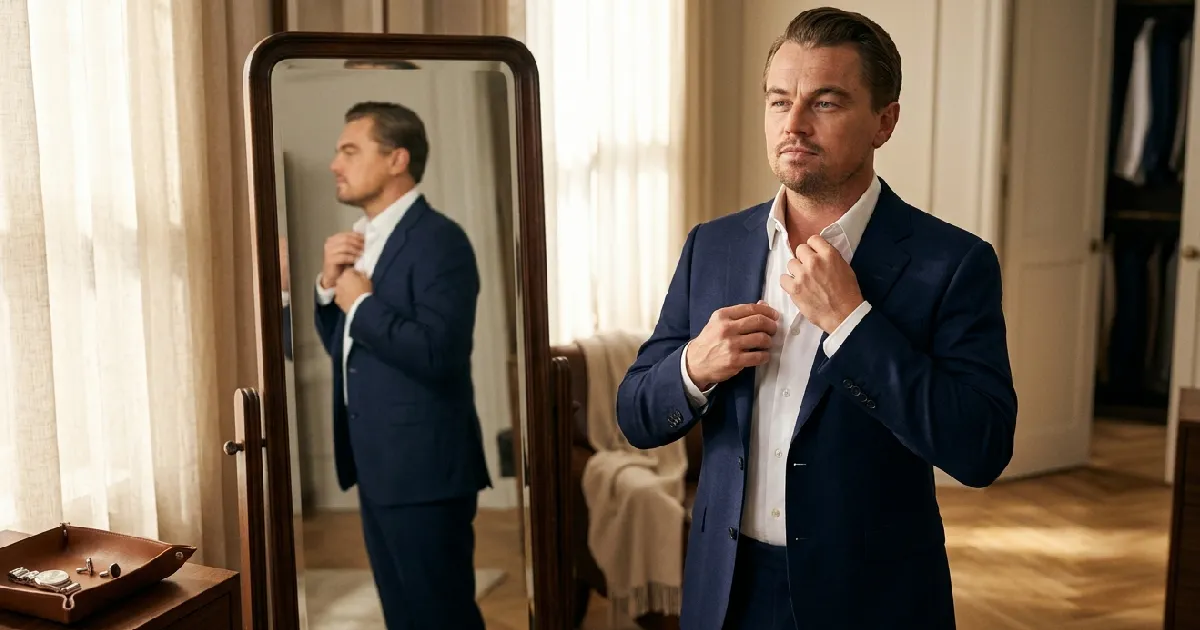
The shirt under your suit is not an afterthought, it is the silent signal that tells the room exactly who you are before you say a word.
Key Points:
- What shirts look best with suits depends not on color alone, but on the psychological impact of contrast, fit, and collar architecture working together.
- Most men unknowingly undermine an expensive suit by pairing it with the wrong shirt fabric or shade, a mistake that a few deliberate choices can permanently fix.
Contents
Table of Contents
You are standing in front of the mirror, suit jacket on, and something feels off. The suit is quality. The shoes are shined. But the whole thing looks… flat. Almost costume-like. You adjust your collar. You try a different tie. Still off. And you cannot figure out why.
Here is what no one told you.
The suit is not the problem. The shirt is. And not in an obvious way, either. Most men know to avoid wearing a neon green shirt under a charcoal suit. But the mistakes that actually cost you your sharpest look are far more subtle. They live in collar style, fabric weight, button placement, and tone-on-tone contrast, the quiet details that separate a man who looks dressed from a man who looks commanding.
Why the Shirt Does More Psychological Work Than the Suit
Research in social perception consistently finds that people form lasting impressions within the first seven seconds of meeting someone. A 2018 study published in Psychological Science by Nalini Ambady and colleagues confirmed that thin-slice judgments, which are rapid assessments based on minimal information, are remarkably accurate predictors of how others will evaluate your competence and social status.
Your suit is the frame. But the shirt is the face of that frame. It sits closest to your skin, it frames your actual face, and it is the first thing someone sees when you remove your jacket in a meeting room or at a dinner. The shirt communicates refinement in a way the suit alone simply cannot.
Thin-slice judgment is a term that sounds clinical, but it means something very human: people are reading your shirt before they are reading your handshake. Understanding what shirts look best with suits is not about vanity. It is about controlling the story you tell before you speak.
The 5 Elite Shirt Choices That Transform Any Suit

1. The White Dress Shirt: The Non-Negotiable Foundation of Power Dressing
The white dress shirt is not boring. That is a myth told by men who wore one badly.
A crisp white dress shirt paired with a dark suit, whether charcoal, navy, or black, creates the single most powerful contrast ratio available in menswear. Contrast is everything. When your shirt and suit differ dramatically in tone, your face becomes the focal point. That is not accidental. It is visual psychology in action.
Consider Marcus, a 38-year-old attorney who came to a consultation looking polished but somehow forgettable. He wore a light grey shirt under a medium grey suit, blending every element together. When he switched to a white poplin dress shirt with the same suit, the transformation was immediate. His jaw looked stronger. His presence read as more authoritative. Nothing else changed.
The white shirt works because it reflects light upward toward your face. Choose a poplin or broadcloth weave for business formal settings, and a fine twill for evenings or client dinners. The collar must be firm, the fit across the shoulders must be exact, and there should be no billowing at the waist.
One place to start: visit a reputable men’s dress shirt guide to understand collar styles before committing to a shirt style for your face shape.
2. The Light Blue Shirt: The Confidence Signal You Are Not Using
Light blue is the world’s most underrated suit shirt. It reads as approachable, calm, and subtly confident — three things a white shirt cannot do simultaneously.
The psychological reasoning here is grounded in color theory as applied to social behavior. Blue tones are associated with trustworthiness and competence according to research published in the Journal of Experimental Psychology. Unlike white, light blue does not demand attention. It invites it. There is a meaningful difference.
Pair a light blue shirt with a navy suit and you create a tone-on-tone look that requires precision: the shirt must be noticeably lighter than the jacket for the pairing to read as intentional rather than accidental. Pair it with charcoal or mid-grey, and you have one of the most versatile suit and shirt combinations in classic menswear.
The fabric choice matters enormously here. A light blue Oxford cloth shirt reads as relaxed and creative. A light blue spread-collar dress shirt in fine cotton reads as boardroom-ready. Same color. Entirely different message.
3. The Subtle Stripe Shirt: The Elite Signal Most Men Miss Entirely
But here is what almost no one talks about.
The Bengal stripe, a vertical stripe pattern alternating a white base with a colored stripe, is one of the oldest markers of sartorial sophistication in British and American professional dressing. Worn correctly, it signals that you understand the grammar of formal dress, not just the vocabulary.
Most men avoid stripes because they fear looking too casual or busy. The opposite is true when the stripe is subtle and the colors are classic: white and pale blue, white and soft pink, white and light grey. These combinations add visual texture and individuality to a navy or charcoal suit without competing with it.
The critical rule is collar discipline. A stripe shirt demands a clean, structured collar with proper collar stays. Without them, the shirt looks like it belongs at a backyard barbecue rather than a boardroom. With them, it belongs on the cover of a style publication.
Explore authoritative guidance on dress shirt collar types to match your collar architecture to your face shape and the formality of your occasion.
4. The Pale Pink Shirt: The Counterintuitive Choice That Reads as Pure Alpha Confidence
Pink intimidates men who are unsure of themselves. It delights men who are not.
The pale pink dress shirt, specifically a dusty rose or blush tone rather than a vibrant or saturated pink, is one of the most sophisticated choices available for pairing with grey or navy suits. It introduces warmth into an outfit without compromising authority. It is the equivalent of a firm handshake delivered with genuine eye contact: both strength and humanity in a single gesture.
Think of it this way. Your suit is armor. The shirt is the layer that shows the world there is an actual person inside that armor. A pale pink shirt does that better than almost any other color because it carries warmth without looking soft in a way that undermines authority.
According to color psychology research from the American Psychological Association, warm tones increase perceptions of approachability and social confidence, which matters enormously in negotiations, client meetings, and first impressions.
Pair pale pink with a charcoal suit for maximum contrast and sophistication. Pair it with a navy suit for a warmer, more social-occasion-appropriate combination. Always keep the shirt plain or with a very fine herringbone texture. Avoid patterns when working with pink, because the color itself is doing enough work.
5. The White Shirt with a Hidden Detail: The Texture Play That Separates Advanced Dressers
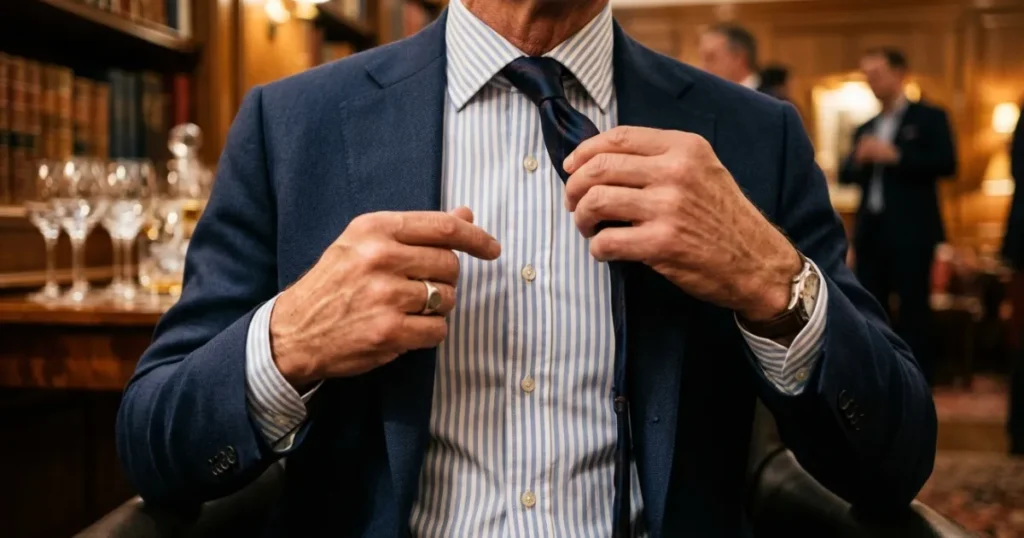
This is the choice that separates men who dress well from men who dress with genuine intention.
A white shirt with a subtle texture, whether a fine herringbone weave, a raised twill pattern, or a tonal dobby fabric, looks identical to a standard white shirt from across a room. But up close, the effect is extraordinary. The texture catches light differently across the day. It gives your shirt a dimensionality that plain poplin simply cannot replicate.
This is the insider’s choice. It is what style directors and fashion editors wear when they want to look impeccably classic while still wearing something no one else in the room can quite identify or replicate. The suit remains the headline. But the shirt becomes the unexpected punctuation that makes the whole sentence unforgettable.
Pair this shirt with any well-fitted suit in charcoal, navy, or mid-grey. The contrast principle still applies: keep your suit darker than your shirt. But now you are adding a private layer of craft that rewards anyone who gets close enough to notice.
For guidance on suit-shirt pairing principles from a classic menswear perspective, The Sartorialist’s archived coverage offers invaluable visual context.
Practical Application: Building Your Shirt Strategy
- The Contrast Rule: Before buying any shirt to wear with a suit, hold it against the jacket in natural light. Your shirt should always be lighter than your suit fabric. If they are the same value of light or dark, the look will read as flat and underpowered. Contrast creates visual clarity. Clarity creates presence.
- The Collar-Face Audit: Consider your face shape before choosing a collar style. Spread collars widen narrow faces. Point collars elongate rounder faces. A useful question to ask yourself is this: does my collar frame my face the way a picture frame enhances a painting, or does it fight with it?
- The Fabric Season Rotation: Wear lighter fabrics in warmer months, fine cotton, chambray, lightweight broadcloth, and heavier weaves in cooler seasons, twill, Oxford cloth, herringbone. Matching fabric weight to the season prevents that deflated, limp-shirt look that undermines even the best suit.
- The Fit-First Framework: No color combination, no matter how expert, will save a poorly fitted shirt. The shoulder seam must sit exactly at the edge of your shoulder. The chest should have room to move without billowing. The cuff should extend roughly half an inch below your jacket sleeve. Fit is not one of the variables. It is the variable.
You Already Had More Than You Realized
You started in front of that mirror, suit on, something feeling wrong and you not knowing why. Now you know why. And more importantly, you know exactly what to do about it.
The right shirt is not simply a piece of fabric. It is a decision about how you present yourself to the world. It is the difference between wearing a suit and owning one. Between looking dressed and looking intentional.
Start with one change this week. Pull out your best suit and hold every shirt you own against it in good light. You will immediately feel which ones create real contrast and which ones disappear. That feeling is your new compass.
The suit gets you in the room. The shirt is what they remember.
My Closing Remarks
I want to be completely honest with you, the way I would be with a close friend over coffee: most men spend hundreds on a suit and then ruin it with a shirt they grabbed without thinking. I have seen it happen again and again, and the frustration is real because the fix is genuinely simple. You do not need a larger wardrobe. You need a more deliberate one. The five shirt choices I walked you through above are not fashion opinions. They are tools. Use them like tools, not like rules, and you will feel the difference before anyone else even says a word.
More Related Stories for You
- Wondering how color choices affect the way people perceive you in other social contexts? Read our piece on whether you should wear black on Valentine’s Day the psychology behind that choice might genuinely surprise you.
About The Author