
 Elena Garcia
You’ve seen her at the farmer’s market or scrolling past you on Instagram. No visible logos, nothing flashy, yet something about her reads “money” from a mile away. If you’ve ever wondered what makes a woman look wealthy without a single designer monogram in sight, you’re not imagining things. There’s a real formula behind it, and it has almost nothing to do with your bank account.
Here’s the plot twist: the old “buy loud, buy branded” playbook is dead. What’s replaced it is a quieter, more deliberate approach to dressing, one rooted in fabric, fit, and a kind of calm confidence that can’t be faked with a price tag alone. This is the quiet luxury aesthetic everyone keeps talking about, and it’s less about spending more and more about spending smart.
I’ve spent years picking apart why certain outfits feel expensive even when I know for a fact the wearer got them on sale. I’ve experimented with my own closet, swapping distressed denim for tailored trousers and cheap knits for a couple of investment pieces, and I’ve watched the compliments (and the assumptions people made about me) shift almost overnight.
In this guide, I’m walking you through seven casual outfit formulas that consistently read as high-status, plus the underlying styling principles that make them work. By the end, you’ll understand exactly how to look expensive on a budget, no trust fund required.
Contents
Table of Contents
1. The Monochrome Linen Ensemble
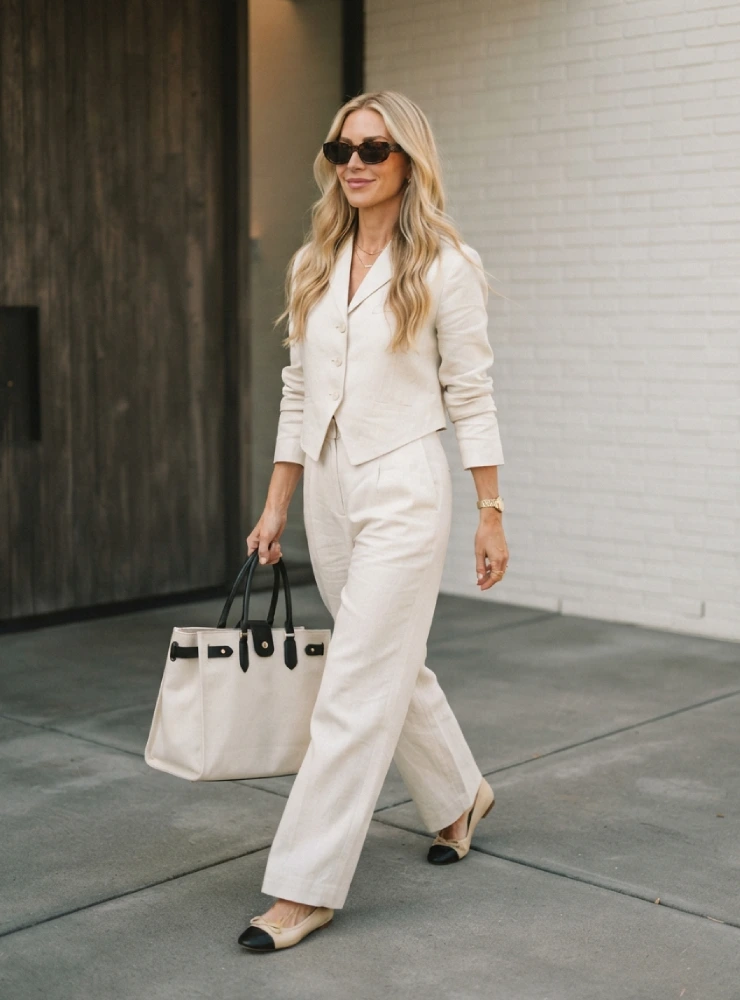
Nothing says “leisure” quite like head-to-toe linen in a single soft tone. Think ivory pants with a matching ivory linen shirt, slightly oversized, slightly wrinkled in that intentional, expensive way.
This look works because monochrome elongates your silhouette while linen signals breathability and natural fiber quality, two things fast fashion struggles to replicate convincingly. I like pairing mine with tan leather sandals and gold hoops, nothing more. It’s proof that how to look expensive on a budget often just means choosing one good fabric and letting it do the talking.
Keep the palette tight (cream, oat, or sand) and resist the urge to add a bold accessory.
2. The Tailored Trousers & Crisp Button-Down
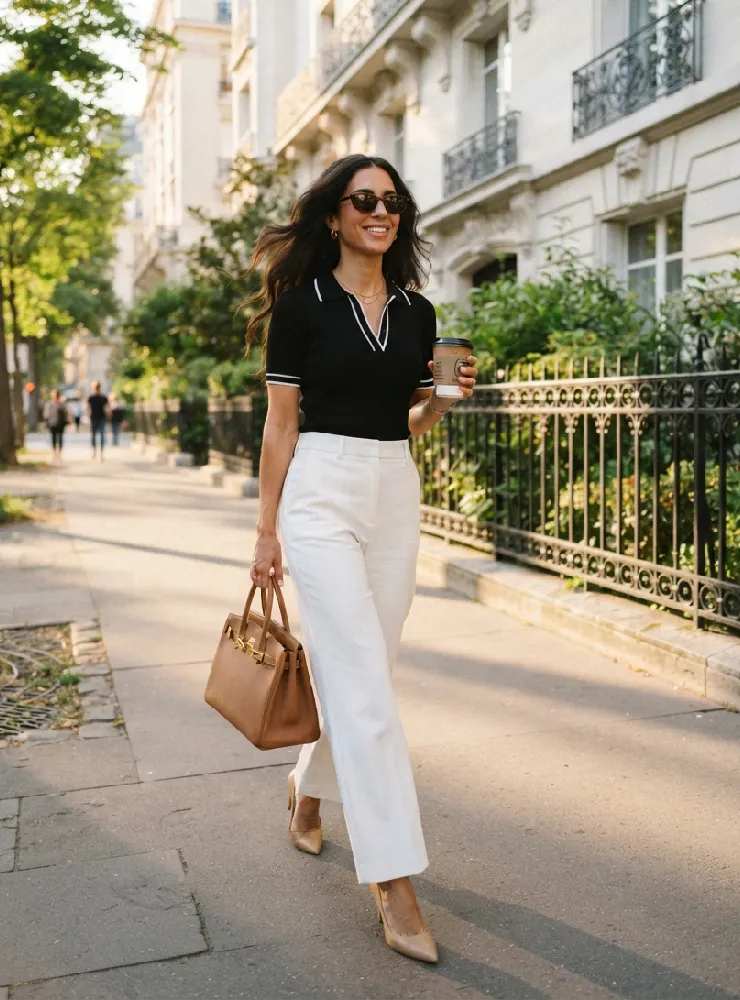
Swap your everyday jeans for perfectly draped trousers and watch a basic outfit transform completely. A relaxed white button-down, tucked in smoothly rather than shoved in haphazardly, is the backbone of classic old money style.
I’ve found that trouser fit matters more than fabric here. A slightly wide leg that skims rather than clings looks infinitely more polished than skinny-fit slacks. Finish with a slim leather belt and loafers, and you’ve built a look that feels intentional without trying too hard.
This combination is my go-to when I need to run errands but still want to look like I have my life together.
3. The Drape-Shoulder Knit & Smart Chinos
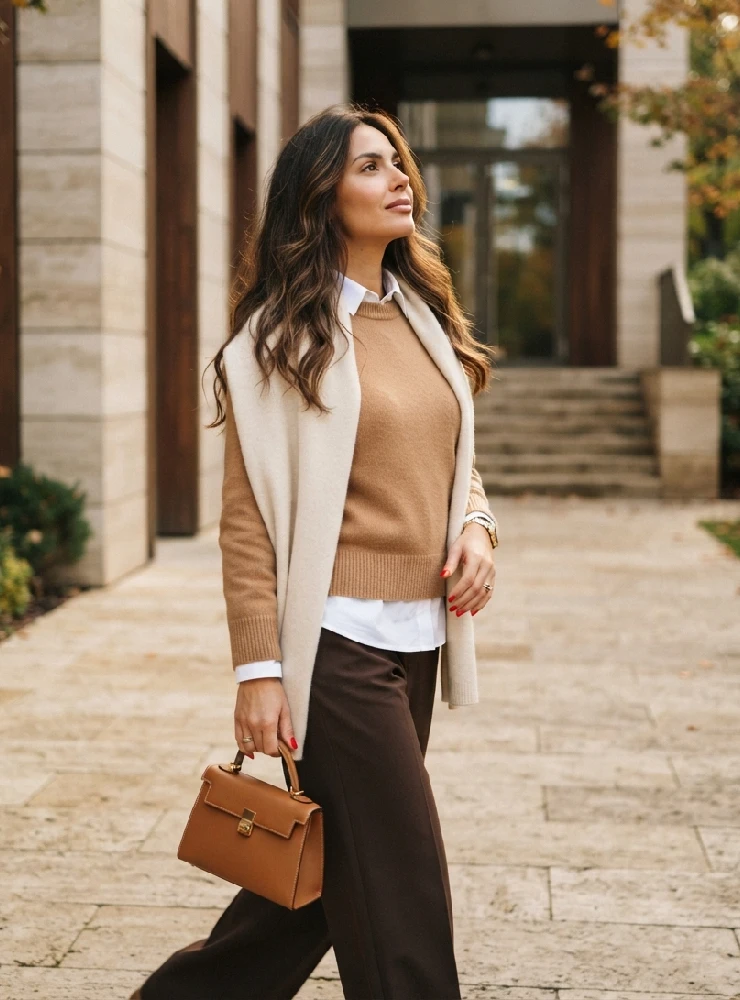
Draping a fine-knit sweater over your shoulders instead of wearing it does more heavy lifting than people realize. It’s a small, nautical-inspired gesture that instantly reads “vacation home in Nantucket.”
Pair it with tailored chinos in a neutral shade like camel or navy, and a simple crewneck tee underneath. The trick is choosing a knit with real weight and texture, cashmere or a merino blend, rather than something thin and synthetic. This is where building out a minimalist capsule wardrobe pays off, because these pieces mix and match endlessly.
Keep the sweater loosely tied, never knotted too tight, for that effortless, unbothered finish.
4. The Structured Blazer & Dark Wash Denim
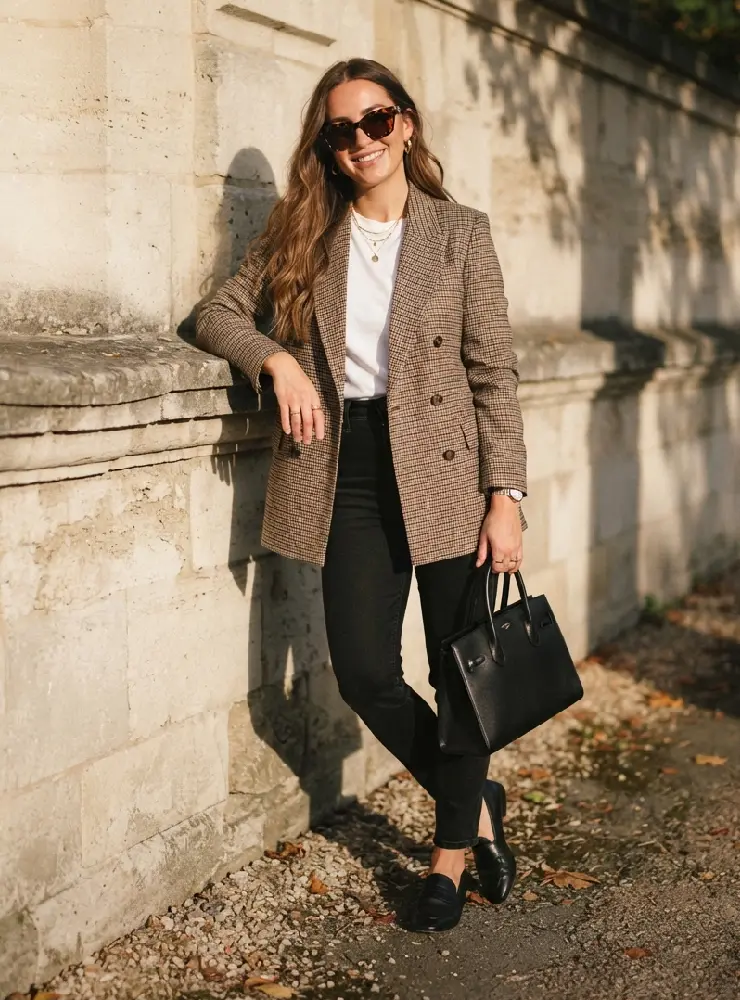
Denim isn’t off-limits, but wealthy dressing has rules. Dark, clean washes only, no rips, no distressing, no fading.
Pair those dark jeans with a structured blazer in black, navy, or camel, and suddenly your “jeans and a top” outfit has architecture. The blazer’s shoulder line and lapel add a formality that balances denim’s inherent casualness, which is exactly why this combination shows up so often when people ask what makes a woman look wealthy in everyday situations. Add pointed flats or a low heel to keep the proportions sharp.
This is effortless casual elegance at its most wearable, office to dinner in under sixty seconds.
5. The Breton Stripe Knit & Tapered Slacks
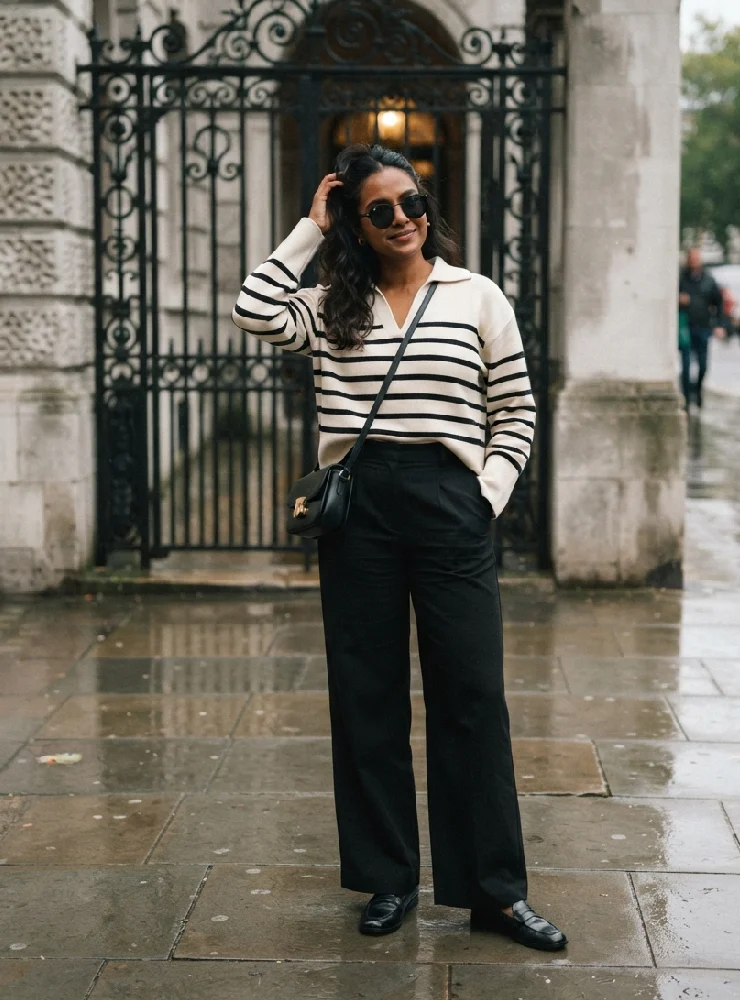
The Breton stripe has been quietly signaling heritage and taste since Coco Chanel first borrowed it from French sailors. A heavy cotton or cashmere striped top, paired with sleek dark tapered slacks, projects old-money confidence without saying a single word.
I always tell people to check the stripe width and fabric weight before buying. Thin, flimsy stripes look like a costume; thick, substantial knit stripes look like heritage. Add ballet flats and a structured tote, and this outfit works beautifully for lunch dates, gallery visits, or just feeling put-together on a Tuesday.
It’s a formula the French have relied on for decades, and honestly, it’s never once looked outdated.
6. The Minimalist Knit Midi Dress
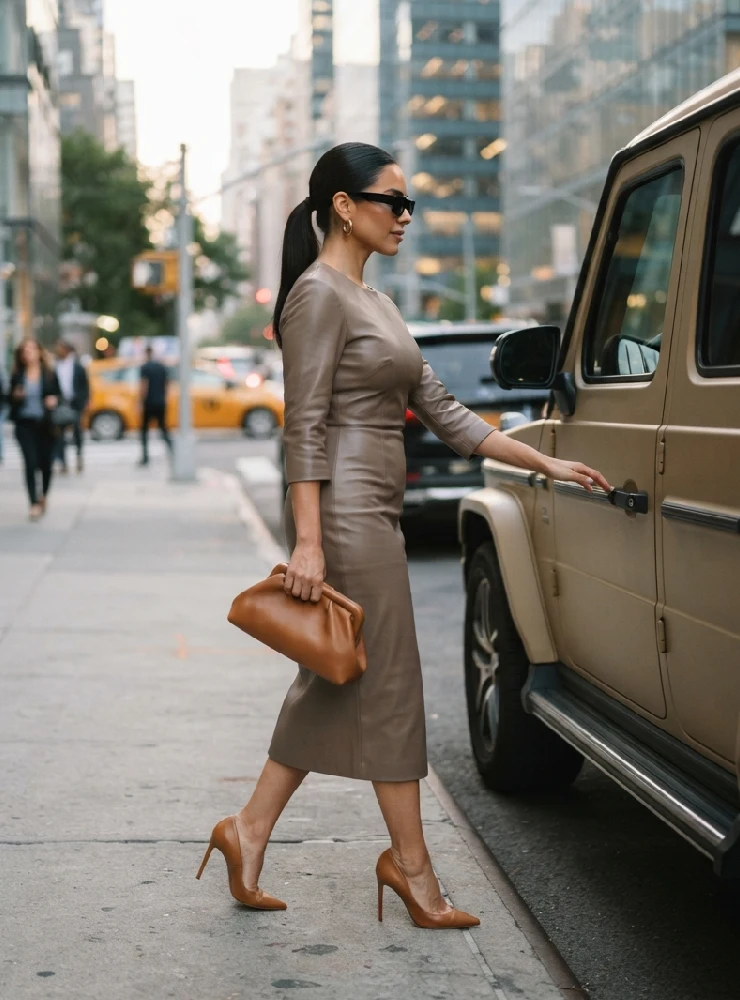
A finely ribbed knit midi dress in a single neutral color does something most trendy pieces can’t: it contours the body elegantly without trying to reveal or restrict anything. That balance is the entire secret.
I reach for this look constantly because it requires almost zero decision-making. One dress, one pair of low-profile leather flats or slide sandals, maybe a delicate chain necklace, and you’re finished. The serenity of the silhouette is what reads as wealthy here, not embellishment or logos.
If you only invest in one piece from this list, this dress might give you the best return per wear.
7. The Fluid Wide-Leg Trousers & Silk Camisole
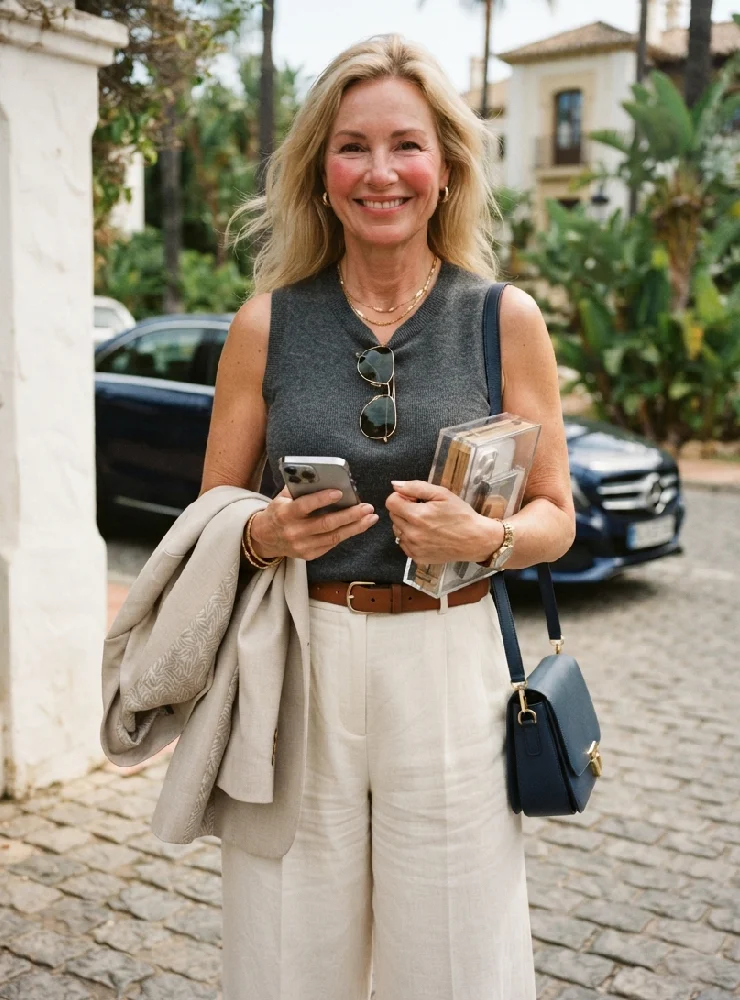
Warm-weather dressing separates the truly polished from everyone else, mostly because heat tempts people into shortcuts. Fluid wide-leg trousers, ideally in a breathable linen-cotton blend, paired with a clean silk camisole, solve that problem beautifully.
The movement of the fabric does a lot of the work. As you walk, the trousers sway rather than cling, which reads as composed rather than rushed. I love this combination for summer evenings, worn with slide sandals and sunglasses pushed up into my hair. It’s proof that effortless casual elegance doesn’t disappear just because the temperature climbs.
Keep jewelry minimal here too; let the silk’s natural sheen be the only shine in the outfit.
Key Styling Principles: The “Why” Behind the Look
Once you notice the pattern across these seven outfits, it becomes obvious that fabric does more heavy lifting than trend ever could. Natural fibers, silk, wool, linen, and organic cotton, drape differently than synthetics. They move with the body instead of against it, and they age gracefully instead of pilling after three washes.
There’s also what I call the zero-logo policy. Genuinely wealthy dressing tends to hide its craftsmanship in the details, a clean seam, a substantial button, a lining that matches the shell fabric, rather than shouting a brand name across the chest. This isn’t just my opinion either; it’s a topic that comes up constantly in style discussions, including a fairly candid Reddit thread on r/AskWomenOver30 where women swap real-world advice on looking high-end without flaunting labels. The consensus lines up with what stylists have said for years: subtlety photographs as confidence, and confidence photographs as money.
Final Thoughts: The Power of Grooming
Here’s the part people skip because it’s less fun than shopping: clothing is only half the equation. Pristine grooming, healthy skin, neat brows, clean nails, well-maintained hair, does more to signal status than any single garment ever could. Posture matters too. Standing tall with relaxed shoulders changes how even a plain white tee reads on your body.
I’ve watched women wear genuinely inexpensive outfits and still command a room, simply because everything was clean, pressed, and cared for. That’s really what makes a woman look wealthy at the end of the day: intention. Not the price tag, not the label, just the visible evidence that you took a few extra minutes to put yourself together with purpose.
Wealth, it turns out, was never really about money. It’s about the quiet confidence of a woman who knows exactly who she is, dressed or not.
With warmth and good style,
More Related Stories for You
- If outfit formulas like this excite you, you’ll probably enjoy learning about the 7 rule in fashion, a simple styling principle that makes getting dressed dramatically easier.
About The Author