
 Sara Carmen
Let’s be brutally honest for a second. You are lying in bed, staring at the ceiling, feeling miles away from the person sleeping just inches from you. Life gets unbelievably hectic. You are juggling demanding work, bills, maybe kids, and endless piles of laundry. The guilt creeps in quietly. You wonder how to keep romance alive when you barely have the energy to keep your eyes open at 8:00 PM. I hear this exact fear in my office every single week. Couples sit on my couch, completely drained, terrified that the spark is permanently dead.
Listen, you are not failing. You are just exhausted. And the standard advice you read online (planning expensive date nights, buying lingerie, booking weekend getaways) is frankly irritating when you are running on empty. You do not need grand gestures right now. You need practical survival tactics that actually rebuild your connection.
To maintain a strong romantic connection when you are exhausted, stop forcing grand gestures and focus on daily micro-connections instead. Practice sharing the mental load, responding to emotional bids, and implementing ten-minute transition rituals after work. Consistent, low-energy habits build deeper intimacy, emotional safety, and trust than occasional, expensive date nights that often just add more pressure to your busy schedule.
We need to completely redefine what it means to be romantic in a modern, stressful world.
What Is Romance, Really? (Beyond the Movies)
We have been sold a massive lie about what romance looks like in a long-term relationship. Movies tell us it is standing in the rain holding a boombox or surprising your partner with a diamond necklace. As a clinical social worker, let me tell you the truth. Romance is not a luxury vacation. Romance is emotional attunement. It is feeling safe, seen, and supported by the person you chose to do life with.
Table of Contents
“Happily married couples behave like good friends, and they handle their conflicts in gentle, positive ways.”
This quote from relationship researcher Dr. John Gottman changes everything. It reminds us that friendship and gentleness, not fireworks, are the actual foundation of lasting desire.
When you are stressed out, your body is physically incapable of feeling romantic. Nervous system regulation is the missing piece of the puzzle that nobody talks about. When your brain is flooded with cortisol from a long day at the office or managing screaming toddlers, your body enters survival mode. You cannot easily transition from survival mode into “passionate lover” mode without an intentional bridge.
Furthermore, we need to talk about emotional bids. An emotional bid is any attempt from your partner to connect with you. It might be as simple as them saying, “Wow, look at that weird bird outside.” If you ignore them or grunt while looking at your phone, you just rejected their bid for connection. If you look up and say, “Oh wow, what kind of bird is that?”, you just deposited money into your relationship bank account. Romance is built on thousands of these tiny, seemingly insignificant interactions.
5 Actionable Steps on How to Keep Romance Alive
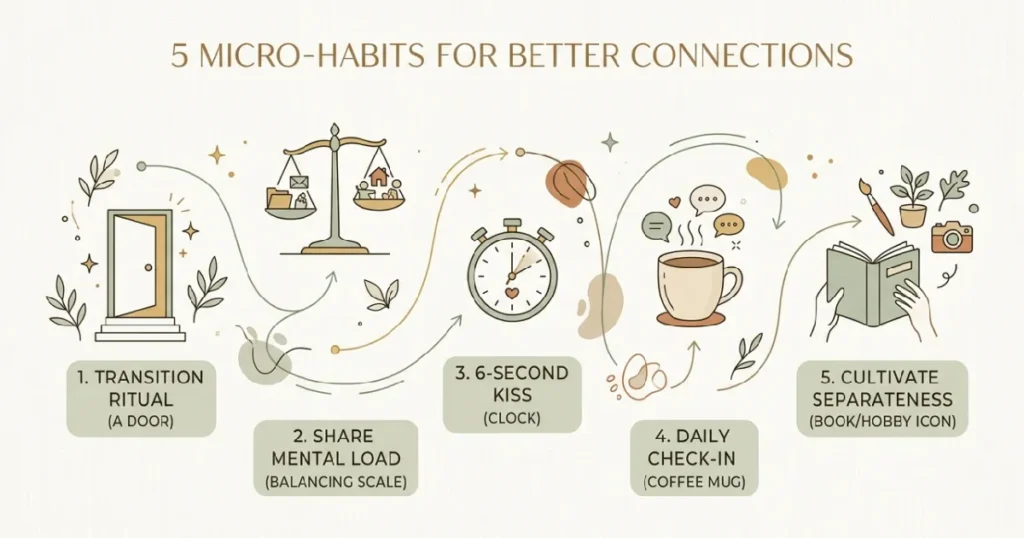
Here is the idea. We are going to pivot from energy-draining grand gestures to “energy-neutral” habits. These are things you can do even when you are totally burnt out.
Step 1: Implement the Ten-Minute Transition Ritual
When you walk through the door after work (or log off from your home office), do not immediately start complaining about your boss. Do not immediately ask your partner what is for dinner. You need a buffer.
- Do This: Take ten minutes of complete alone time to decompress. Change your clothes, wash your face, or just sit in a quiet room. Tell your partner, “I am so happy to see you. I need ten minutes to wash the day off, and then I am all yours.”
- Not That: Do not dump your daily stress onto your partner the second you see them. This instantly kills any potential for a peaceful evening.
Step 2: Balance the Mental Load
This is a hard truth, but chores are foreplay. If one partner is managing the entire of the household (knowing when the kids need doctor appointments, knowing we are out of paper towels, planning dinner), they will harbor resentment. Resentment is the ultimate romance killer.
- Do This: Anticipate household needs and execute them without being asked. If you see the trash is full, take it out. If you notice the dog needs walking, walk the dog.
- Not That: Do not ask, “What can I help you with?” Asking that question forces your partner to remain the manager of the house, which keeps them stuck in an unsexy, administrative role.
Step 3: Master the Six-Second Kiss
Physical touch often becomes a loaded weapon in struggling relationships. If you only touch your partner when you want sex, they will start avoiding your touch entirely because it feels like a demand. We need to decouple physical affection from sexual expectation.
- Do This: Kiss your partner for six full seconds every single day. A six-second kiss is long enough to feel intentional and trigger a natural oxytocin release in the brain, but short enough that it does not demand further physical escalation.
- Not That: Do not give a quick, obligatory peck on the cheek while rushing out the door and call it intimacy.
Step 4: Use Habit Stacking for Emotional Check-Ins
You are busy. I get it. You do not have an hour to sit down and talk about your feelings. Instead, we use a psychological trick called habit stacking. You attach a new relationship habit to an existing daily routine.
Here are a few examples of habit stacking for couples:
- While brewing morning coffee, ask one question: “What is your biggest goal for today?”
- While folding laundry together, share one thing you appreciated about the other person this week.
- While brushing your teeth at night, establish physical contact (like a hand on their waist) just to be close.
- Do This: Keep these check-ins light, positive, and strictly under ten minutes.
- Not That: Do not use this time to bring up heavy relationship issues or financial problems.
Step 5: Cultivate Erotic Friction (Maintain Separateness)
It is interesting, but too much closeness can actually destroy romance. If you do everything together and share every single thought, there is no mystery left. You need a little bit of distance to create erotic friction. You need to see your partner in their own element, separate from you.
- Do This: Pursue independent hobbies. Go out with your own friends. Let your partner see you dressed up and laughing from across a crowded room.
- Not That: Do not merge identities completely. You are two separate people who choose to be together, not one blob of a couple.
The Simplified True Story: A Turnaround

Meet Sarah and Mark (names changed for privacy). They had been married for seven years, juggling two toddlers and demanding full-time jobs. By the time 8:30 PM rolled around, their living room felt like a waiting room. They sat on opposite ends of the couch, scrolling through their phones, barely speaking. The silence was loud. Sarah felt like a nagging roommate, constantly reminding Mark to load the dishwasher. Mark felt criticized and withdrew further. They had not been on a real date in eight months. The distance between them felt impossible to cross.
Then, they decided to stop trying to force expensive, three-hour date nights. Instead, they applied one simple rule from my office: the ten-minute morning coffee check-in. Every day at 6:45 AM, before the kids woke up, they sat at the kitchen island. No phones. No talk about bills or chore charts. Just ten minutes of drinking coffee and asking one question: “What is on your mind today?”
The first few days were awkward. But by week three, the tension broke. Mark started rubbing Sarah’s shoulders while she poured the coffee. Sarah stopped snapping about the dishes. They felt seen again. This tiny pocket of time rebuilt their emotional safety. That organic connection naturally led to their first spontaneous romantic evening at home in over a year, proving that small moments matter most.
Common Mistakes and How To Avoid Them
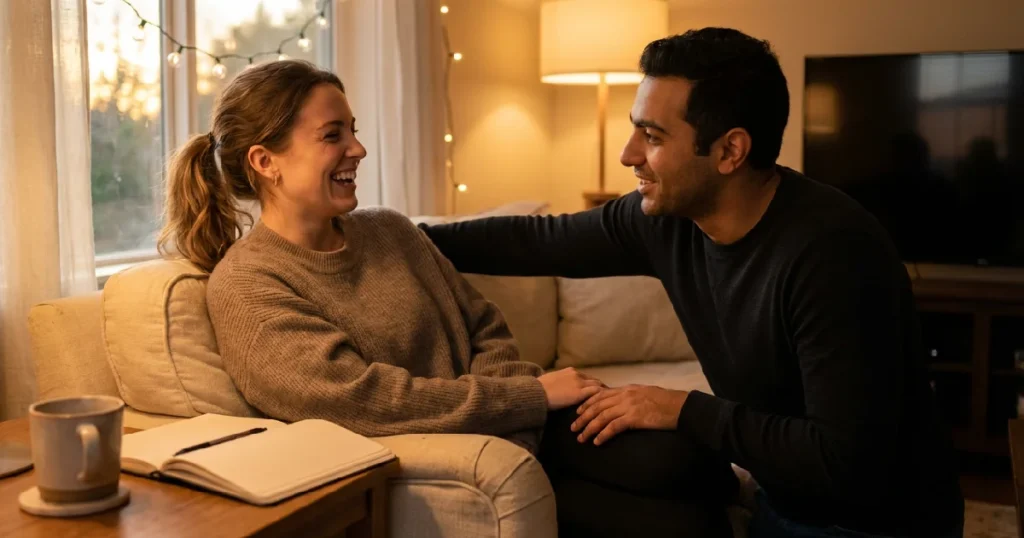
When couples try to fix a fading connection, they often panic and make things worse. Here are the most frequent mistakes I see, and the exact steps you can take to avoid them.
Mistake 1: Confusing Maintenance with Romance
Couples fatally confuse relationship maintenance with actual romance. You cannot have a romantic connection while simultaneously doing household logistics. It simply does not work.
- Maintenance Items: Paying the electric bill, discussing the kids’ soccer schedule, fixing the leaky sink, buying groceries.
- Romance Items: Curiosity, playfulness, sharing dreams, physical touch, asking open-ended questions.
The Fix: Separate the two completely. Schedule a “business meeting” once a week for 30 minutes to discuss all maintenance items. If a logistical issue pops up during a romantic moment, say: “I really want to focus entirely on you right now. Can we put the mortgage discussion on the agenda for our Sunday meeting?”
Mistake 2: Forcing Heavy Talks at Bedtime
Why do we always decide to have the most emotionally draining conversations at 11:00 PM when we are already exhausted? When you are tired, your emotional regulation is compromised. You are more likely to snap, misinterpret tone, and start a fight.
The Fix: Implement a strict “no heavy talks after 9:00 PM” rule. If your partner brings up a stressful topic late at night, use this exact script: “I love you, and this topic is incredibly important to me, but my brain is completely fried right now. I want to give you my full attention. Can we talk about this over coffee tomorrow morning?”
Mistake 3: Scorekeeping and Resentment
“I did the dishes three times this week, so you owe me.” Does that sound familiar? Scorekeeping turns your marriage into a competitive sport where someone always has to lose. It destroys goodwill.
The Fix: Shift from a transactional mindset to a team mindset. Stop counting favors. Instead of keeping a mental tally of everything you do, focus on verbalizing appreciation for what they do. Script to use: “I noticed you handled the bedtime routine tonight so I could rest. I really appreciate you taking that off my plate.”
Mistake 4: Only Touching When You Want Intimacy
As mentioned earlier, if every hug or kiss is just a prelude to sex, your partner will start pulling away from your touch entirely.
“Love rests on two pillars: surrender and autonomy. Our need for togetherness exists alongside our need for separateness.”
This quote from psychotherapist Esther Perel highlights why we cannot demand intimacy. We have to invite it.
The Fix: Give your partner three acts of non-demand physical touch every single day. Touch their arm when you walk past them in the kitchen. Kiss their forehead while they are reading. Give them a 20-second hug without grabbing them inappropriately. Let them know they are physically loved without any strings attached.
Frequently Asked Questions
Why does romance fade in a relationship?
Romance fades primarily due to chronic stress, unshared cognitive labor, and the transition from active pursuit to passive comfort. When couples stop responding to each other’s emotional bids and allow routine to overshadow novelty, the brain stops producing the dopamine associated with romantic excitement. You literally get too comfortable and forget to keep trying every single day.
How do you fix a relationship that feels like roommates?
Break the roommate dynamic by introducing non-demand physical touch and micro-dates into your daily routine. Stop discussing household logistics in the bedroom. Instead, implement a daily ten-minute check-in focused solely on your inner lives, dreams, and feelings. This helps to quickly rebuild emotional intimacy and curiosity without it feeling like a massive, overwhelming daily chore for you both.
Is it normal to lose the spark in a long-term relationship?
Yes, it is biologically and psychologically normal to lose the initial honeymoon spark. Long-term relationships transition from dopamine-driven infatuation to oxytocin-driven attachment over time. However, the spark can be intentionally reignited through shared novel experiences and consistent, small emotional connections. You just need to accept that long-term love requires active, daily maintenance and dedicated personal attention.
How can I be romantic with no money or time?
Romance is about focused attention, not currency. You can easily be romantic by leaving a short note on the bathroom mirror, giving a six-second kiss before work, or actively listening without looking at your phone. Consistency in these tiny micro-habits builds deeper, more lasting intimacy than expensive, stressful dates ever could. Try them starting right today.
What is the five to one ratio in relationships?
The five to one ratio, discovered by Dr. John Gottman, states that for a relationship to thrive, there must be five positive interactions for every one negative interaction during conflict. These positive interactions include smiling, expressing genuine appreciation, validating your partner’s feelings, or simply sharing a quick, lighthearted joke together. It is essential for relationship survival.
Final Takeaway
You do not have to settle for a passionless, roommate-style marriage just because you are busy. It is entirely possible to learn how to keep romance alive without sacrificing your sleep or your sanity. It all comes down to intentional, tiny shifts in your daily behavior. You do not need to rewrite your entire life. You just need to look up from your phone, share the heavy lifting of daily life, and remember that the person sitting across from you is your teammate, not your enemy.
My Closing Remarks
Stop treating your marriage like a delicate flower that needs perfect conditions to grow. It is a weed. It can survive the cracks in the concrete if you just stop stepping on it. My boldest advice as a therapist? Stop trying so desperately to be “in love” every single second. It is exhausting and fake. Choose to be good, reliable friends first. Let the boredom happen. Romance does not die from boredom; it dies from resentment. Take a breath, drop the fairy tale, and go hug your partner right now.
More Related Stories for You
If you found this helpful, you might also want to read about how household dynamics impact the whole family. Check out our guide on screen time limits for preschoolers to reduce evening stress, or learn about AI tutors and child cognitive development to help manage homework struggles. You can also review our earlier piece on how to communicate emotional needs without fighting.
About The Author