
 Nicole Adkins
Your brain isn’t broken this winter. It’s running on the wrong clock, and you can reset it for free.
Key Points
- Learning how to beat seasonal depression starts with resetting your internal clock, not fighting your own body into submission.
- The most effective fixes cost nothing: a streamed sunrise video, five minutes of cold air, and a five-dollar pair of tinted glasses can outperform an expensive light box.
- Feeling slower in January than you did in July isn’t a personality flaw. It’s an outdated survival signal your brain never stopped sending.
Contents
Table of Contents
We all know that particular kind of tired. It’s not the tired that a good night’s sleep fixes. It’s the tired that shows up at seven in the morning, settles into your shoulders, and refuses to lift until well past lunch.
Something shifts in your body every winter, whether you live in Manchester or Minneapolis, and it has almost nothing to do with willpower.
You tell yourself you should be able to push through it the same way you did in July. You can’t understand why a to-do list that felt manageable in summer now feels like climbing a hill in wet socks. That gap between who you were six months ago and who you are right now isn’t a character flaw.
It’s chemistry.
Understanding the Winter Brain Drain Behind Seasonal Depression
Every autumn, your eyes register something specific: less light hitting the retina, especially in the morning hours. That single shift sets off a chain reaction most people never learn about, and it explains almost everything about why winter feels heavier.
The Neurobiology of the Dark Slump (Melatonin and Serotonin Disruption)
Here’s the mechanism, in plain terms. Reduced morning light delays your body’s shutdown of melatonin, the hormone that makes you feel sleepy. That means you’re waking up while your brain is still producing a chemical designed to keep you asleep, which is why mornings feel like wading through fog.
At the same time, less daylight lowers serotonin, a neurotransmitter (a chemical messenger between brain cells) closely tied to mood, appetite, and motivation. Lower serotonin combined with delayed melatonin creates the exact pattern people describe every winter: low mood, heavy limbs, and cravings for bread, pasta, and sugar.
According to the American Psychiatric Association, seasonal affective disorder is formally recognized as major depressive disorder with a seasonal pattern, not simply a bad mood that passes on its own.
Left unexamined, this pattern doesn’t just cost you a few slow mornings. For a smaller but real percentage of adults, it can deepen into a depressive episode that lingers well past the season that triggered it.
Clinical SAD vs. The Winter Blues: Recognizing the Threshold
Not every winter dip needs a clinical label. The winter blues usually look like lower energy and a stronger pull toward the couch, but you can still function, show up, and get through your week.
Clinical seasonal affective disorder is heavier. Think persistent low mood most days, oversleeping, intense carbohydrate cravings, and a noticeable drop in work or relationship functioning that lasts for weeks, not days, and tends to return winter after winter.
If that second description sounds like you, the strategies below can still help, but they work best alongside a conversation with a licensed provider. Now, here’s where most winter wellness advice gets it wrong.
5 Zero-Cost Hacks to Beat Seasonal Depression This Winter
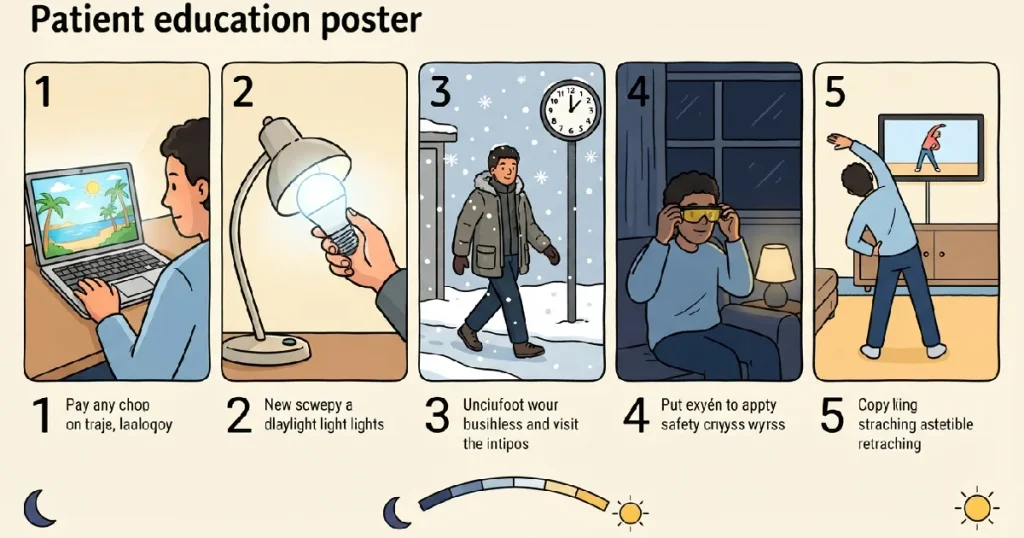
Most articles on this topic point you toward a two-hundred-dollar light box or a plane ticket somewhere sunny. Neither is realistic if you’re a student, a remote worker on a tight budget, or a household already stretched thin by winter heating bills. The good news is that the research behind light therapy and circadian rhythm regulation doesn’t actually require expensive gear. It requires timing.
Hack 1: Stream a Sunrise You Didn’t Get
The claim: Your brain doesn’t fully distinguish between a real sunrise and a convincing digital one, at least not in the first groggy minutes of the day.
Why it works: Certain cells in your retina signal your brain’s internal clock, known as the suprachiasmatic nucleus, based on brightness and color temperature. A bright, warm-toned video can offer a partial version of that morning cue, even through a screen.
How to apply it: The moment you wake up, put on a free, high-definition “sunrise walk” or “beach POV” video on your TV or laptop. Sit within a few feet of the screen for fifteen to twenty minutes while you get ready. It costs nothing, and it beats lying in a dark room scrolling your phone.
Hack 2: Swap the Tiny SAD Lamp for a Full-Spectrum Bulb
The claim: Cheap portable light therapy lamps often disappoint because their small screens concentrate brightness into a narrow beam, which causes glare and eye strain rather than a comfortable, even glow.
Why it works: What actually helps is surface area and duration, not intensity crammed into a tiny panel.
How to apply it: Skip the returnable gadget. Buy an inexpensive 5,000K full-spectrum daylight bulb from a hardware or big-box store and screw it into your existing desk lamp or ceiling fixture. Use it during breakfast and your first hour of work to flood your visual field the way a real bright morning would.
But here’s what almost no one tells you about winter fatigue.
Most advice pushes you to fight the slowdown and chase your summer-level output in the dead of January. Reddit threads on seasonal depression tell a different story. People describe genuine relief the moment they stop treating low winter output as laziness and start treating it as biology asking for less.
Fighting your winter slump is a bit like swimming against a riptide. The harder you fight the pull, the faster you burn the exact energy you need to get back to shore. Floating with the current, adjusting your expectations instead of resisting them, is often what actually gets you home safely.
Most people in this situation don’t realize that a seasonal dip in output isn’t a personal failure. It’s a predictable pattern your body has likely carried for generations, and naming it that way removes a layer of guilt that was never yours to carry.
Hack 3: Take a Short Outdoor Thermal Shock
The claim: Stepping outside on a grey, freezing day for ten to fifteen minutes does more for your circadian rhythm than sitting by an indoor window all afternoon.
Why it works: Outdoor light, even under thick cloud cover, is dramatically brighter than any indoor lighting setup. Community forums also point to a second benefit: a brief cold shock on bare skin triggers a small burst of norepinephrine, a chemical linked to alertness and mood.
How to apply it: During a lunch break, step outside and leave your coat unbuttoned for the first sixty seconds. Let the cold hit your skin before bundling up fully. It sounds uncomfortable. It works.
Hack 4: Block Blue Light Instead of Buying Morning Light
The claim: The cheapest fix for winter brain fog might happen the night before, not the morning of.
Why it works: According to the Sleep Foundation, evening exposure to blue light from phones and laptops delays the body’s natural release of melatonin, pushing your entire sleep cycle later and making winter mornings even harder to face.
How to apply it: Buy a pair of inexpensive yellow or orange-tinted glasses and wear them for the two hours before bed. Blocking that blue wavelength lets melatonin rise on schedule, which means deeper sleep and noticeably less fog when your alarm goes off.
Hack 5: Copy a Movement Video Instead of Planning a Workout
The claim: Seasonal depression quietly drains your executive function, the mental system responsible for planning, sequencing, and decision-making, which is exactly why “just work out” feels impossible in January.
Why it works: Behavioral activation, a technique used in cognitive behavioral therapy, relies on action creating motivation rather than waiting for motivation to show up first. Copying a video move by move removes the decision-making step entirely.
How to apply it: Turn on a free ten-minute stretching or mobility video before breakfast and mimic it without thinking. You’re not planning a workout. You’re just following along, and that’s the entire point.
Ben’s Ten Minutes
Ben, a composite of dozens of clients I’ve worked with over the years, used to skip his morning routine entirely once daylight saving time hit. He told himself he’d “start fresh” once he felt more motivated. That day never came.
We didn’t overhaul his life. He agreed to one small change: play a stretching video for ten minutes before his first coffee, no planning required. Three weeks later, he wasn’t cured of his winter fatigue, but he was upright, moving, and out the door twenty minutes earlier than before. Small, no-decision actions did what a full gym plan never could.
Tailoring the Protocol: How Seasonal Depression Shows Up by Gender

Seasonal affective disorder doesn’t hit everyone the same way, and the fixes work best when you know which version you’re dealing with.
Hypersomnia and Nutrient Cravings in Women
Women are diagnosed with seasonal affective disorder more often than men, frequently with what’s called an atypical pattern: oversleeping, intense carbohydrate cravings, and weight gain rather than classic insomnia. That craving for pasta and bread at 4 p.m. isn’t a lack of discipline. It’s your brain chasing a quick serotonin boost through simple sugar.
A cheaper, steadier fix is pairing carbohydrates with protein at breakfast, think eggs with toast rather than toast alone, which blunts the blood sugar spike and crash that worsens afternoon fatigue.
Emotional Isolation and Low Executive Function in Men
Men are more likely to underreport seasonal depression, often presenting as irritability, withdrawal, or a sudden drop in work performance rather than visible sadness. Stigma around naming low mood keeps many men from mentioning it at all, even to a partner.
One workaround Reddit users describe often: scheduling one recurring, low-pressure check-in with a friend each week, rather than waiting for motivation to reach out spontaneously. A standing coffee or phone call removes the decision fatigue that isolation feeds on.
The Zero-Cost Weekly Rhythm for Beating Seasonal Depression
You don’t need to overhaul your entire schedule to see a difference. Think of it as three checkpoints a day, and I like to call it the S.A.D. Reset Rhythm, since it turns the very acronym that names the problem into the plan that fixes it.
S, for Sunlight Substitute: the moment you wake up, stream a bright outdoor video or sit near your full-spectrum bulb for fifteen minutes.
A, for Activate: somewhere in your day, take a short outdoor cold exposure and follow along with a movement video.
D, for Dim Down: two hours before bed, put on the tinted glasses and lower your screen use.
One place to start is picking just one letter of S.A.D. to practice this week rather than trying all three at once. A useful question to ask yourself each evening: which one checkpoint did I actually manage today, and can I repeat just that one tomorrow?
Conclusion: The Power of Radical Hibernation Acceptance
Winter fatigue doesn’t need to be a fight you lose every year. It needs a different relationship, one where you stop treating rest as failure and start treating it as information.
You now have five ways to work with your biology instead of against it, and none of them require a credit card.
The riptide doesn’t disappear because you understand it. But now you know to float instead of fight, and that changes everything about how tired this winter actually has to leave you feeling.
You already have what you need. Winter just asked you to use it differently.
My Closing Remarks
January used to greet me like a verdict. I woke already disappointed in myself, then used that disappointment as fuel, which is a terrible kind of fuel. What finally helped was smaller and kinder than I expected. I stopped treating rest like a moral error. I put light in front of my eyes before I asked my mind for excellence. If your mornings feel heavy, you are not failing a test. You are living in a dim season. Meet it with biology and softness, not shame.
More Related Stories for You
- If the slump still feels heavy after these hacks, read more about how to deal with seasonal depression as a daily companion to this winter reset.
About The Author