
 David Wall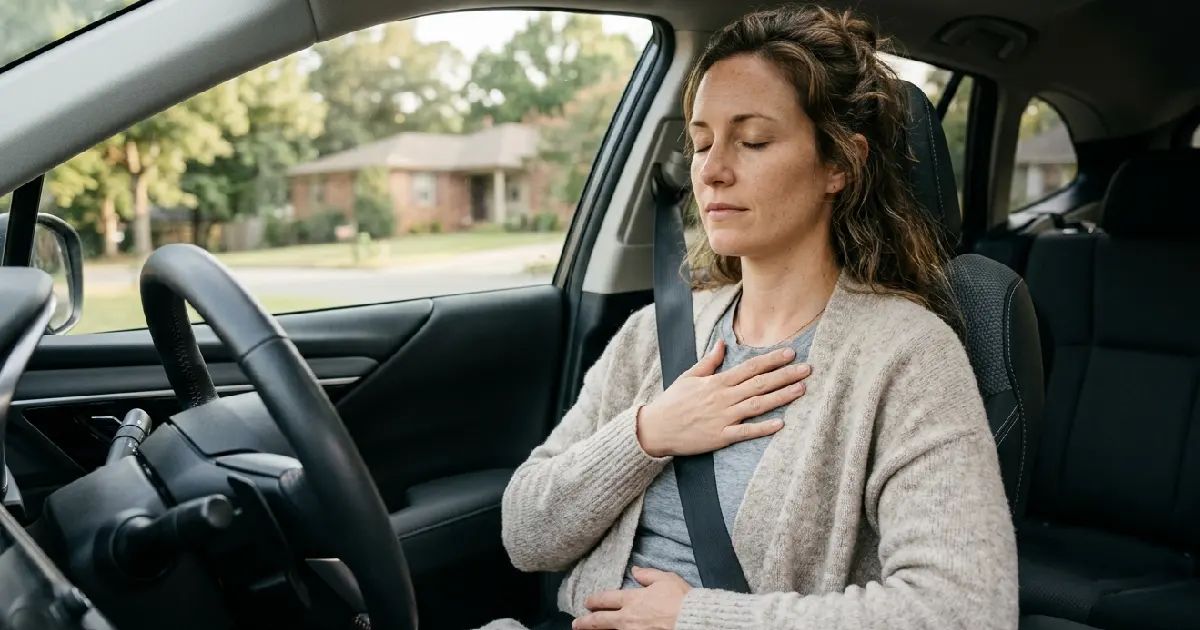
You might feel incredibly embarrassed that an activity most people do without thinking feels entirely terrifying to you. You probably turn down social invitations, depend heavily on friends for rides, avoid highways completely, or spend hours planning your life around safe local routes. You might even have a valid license in your wallet but still feel trapped, deeply ashamed, or frustrated with yourself every time you look at your car keys.
Actually, let me back up. Waiting to feel confident before you start your car again is often the very thing keeping your panic alive. Standard advice has not worked for you because you have been trying to calm down enough before pulling out of the driveway. But learning how to get over fear of driving is rarely solved by finding confidence first. It is solved by retraining your internal alarm system through the right kind of physical practice.
Fear of driving improves when you stop waiting to feel calm and retrain your brain through gradual exposure, nervous system regulation, and realistic thinking. The goal is not instant confidence. It is repeated practice that teaches driving is tolerable again.
In this guide, we are going to break down exactly why driving anxiety happens and why generic advice usually fails. You will get a practical step by step recovery plan, learn how to tell the difference between raw anxiety and a real skill gap, and figure out exactly when it is time to seek outside support.
The Core Concept: How To Get Over Fear Of Driving Redefined
To get over fear of driving, you need far more than basic calming tips. The most effective approach combines structured gradual exposure, nervous system regulation, realistic self-talk, and drastically reduced avoidance. This combination teaches your brain that driving discomfort is survivable, temporary, and manageable.
Table of Contents
What Is Fear Of Driving Really?
This is not just a simple case of the jitters. Fear of driving is often one of four distinct psychological patterns.
- First, there is trauma-linked fear. This spikes after a physical accident, a violent road rage incident, a severe weather storm, or a terrifying near miss.
- Second, there is panic-linked fear. This is the persistent thought of “What if I panic, pass out, lose control, or cannot escape this traffic jam?”
- Third, we see scenario-specific phobia. This includes intense dread of highways, tall bridges, unprotected left turns, dark tunnels, or driving completely alone.
Finally, there is skill erosion and confidence loss, which typically happens after taking a very long break from being behind the wheel.
Clinically, professionals might call this vehophobia or amaxophobia. The condition often overlaps with specific phobia, post-traumatic stress, panic attack triggers, and occasionally OCD-related hit-and-run fears where a driver constantly worries they hit a pedestrian without noticing.
All of these patterns share the same brutal fear loop. A trigger causes a catastrophic thought. That thought sounds the body alarm. You then use an avoidance tactic or safety behavior. You feel temporary relief. But that relief guarantees the fear will be even stronger the next time you hold the keys.
“Action is the antidote to despair.”
This simple truth from Joan Baez perfectly explains the mechanics of recovery. You cannot think your way out of a fear that your body has learned; you have to physically show your body a new reality.
Generic Advice Readers are Tired of Hearing
Most articles repeat the same useless platitudes. They tell you to start small, take deep breaths, think positive thoughts, bring a friend, or just practice more.
What you still do not know is that the missing piece is not more encouragement. It is mechanism.
Most resources entirely fail to explain that avoidance trains the brain to keep fearing driving. They do not tell you that safety behaviors can secretly maintain your anxiety, even when they feel incredibly helpful in the moment. For example, only driving with one safe person, only driving at one exact time of day, over-checking your maps, white-knuckling the steering wheel, or staying in the slow lane forever.
The goal is not to feel fully calm before driving. The goal is to teach your nervous system that you can drive while anxious, and the fear will eventually fall on its own. Many people are not just afraid of driving itself. They actually fear their own panic symptoms, being trapped in a metal box, making a fatal mistake, losing physical control, or repeating a vivid traumatic memory. Furthermore, some people need clinical therapy, some just need a refresher driving lesson, and some absolutely need both. Online articles rarely help you determine exactly what you need.
The Science/Data: Why Avoidance Makes It Worse
The ADAA and NIMH both note that anxiety problems stick around when avoidance keeps teaching the brain, “Good thing we escaped, that must have been dangerous.” Your amygdala threat response can start treating normal driving like a real emergency.
That is why cognitive behavioral therapy (CBT) and exposure therapy are so often recommended for phobias, freeway phobia, and fear after a panic attack. A review of CBT for anxiety disorders found strong support for CBT across fear-based conditions. If your fear includes a panic attack while driving, the body sensations are real, but they are not always a sign of actual danger. The Mayo Clinic’s explanation of panic attacks helps make that difference clear.
7 Actionable Steps To Rebuild Calm And Confidence Behind The Wheel
1. Identify your exact driving fear, not just the label
What specific situation actually triggers your fear? Is it the highway, merging into traffic, being completely alone, waiting at red traffic lights, crossing bridges, parking garages, driving in the rain, or speed itself? You need to know what your brain thinks will happen. Do you fear having a panic attack, crashing, embarrassing yourself, getting physically trapped, or accidentally harming someone else?
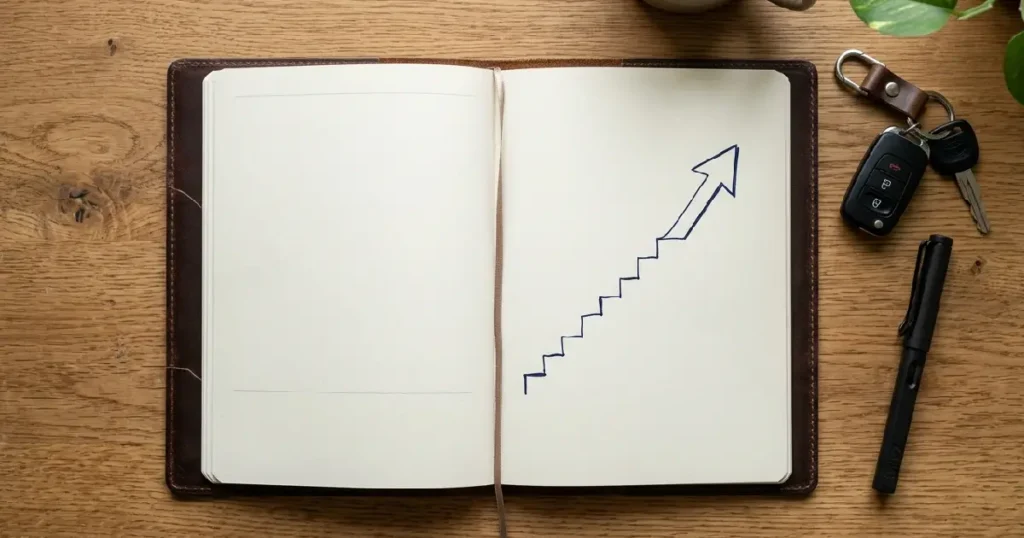
Do this: Write one sentence. “I am afraid that if I drive on the interstate, then I will pass out and cause a pileup.”
Not that: Say “I am just bad at driving” and keep the fear completely vague.
This turns a fuzzy, overwhelming fear into a highly treatable pattern.
2. Build an exposure hierarchy that starts below your panic ceiling
An exposure hierarchy is a ranked list of your fears from easiest to hardest.
- Sit in a parked car with the engine off
- Start the engine and let it idle
- Drive around one residential block
- Drive local roads for 10 minutes
- Drive alone to a familiar grocery store
- Enter a quiet highway and take the very first exit
- Drive during moderate afternoon traffic
- Tackle the highest-feared commuting route
Do this: Choose a step that feels uncomfortable but entirely doable.
Not that: Jump straight into your hardest route or stay forever at the easiest level.
The best exposure is not the scariest one. It is the one you can repeat.
3. Regulate your body without making calm a prerequisite
You need to understand your window of tolerance. Anxiety can rise in your body and still be manageable. The goal is not zero activation or perfect zen. The goal is staying present in the driver’s seat without escaping the situation.
Try longer exhales than inhales. Unclench your jaw and open your hands. Drop your shoulders away from your ears. Soften your tunnel vision by noticing the periphery of the road. Name your physical sensations without panic by saying, “This is just adrenaline, not actual danger.” Watch your caffeine intake or blood sugar spikes if they predictably worsen your physical symptoms.
Do this: Use breathing exercises and mindfulness as a support tool while driving.
Not that: Refuse to touch a car until breathing removes all of your fear.
Relaxation techniques are helpful only if they support exposure, not replace it.
4. Replace catastrophic thoughts with realistic CBT coaching
Cognitive restructuring is how you rewrite the terrible script in your head. Common catastrophic thoughts include “I will lose control,” “I will have a panic attack and crash,” or “One bad drive means I am back to square one.”
Replace those with grounded, realistic alternatives. “Anxiety feels dangerous, but feelings are not facts.” “I can be highly uncomfortable and still drive perfectly safely.” “Panic rises, peaks, and falls naturally.”
Do this: Use realistic coping statements based on actual evidence.
Not that: Use fake, toxic positive self-talk that your brain immediately rejects.
5. Spot the safety behaviors that secretly keep fear alive
Safety behaviors are actions that reduce anxiety in the exact moment but teach your brain you are only safe because of the ritual.
Examples include only driving with one trusted friend, gripping the wheel too tightly, constantly checking mirrors for reassurance, overusing GPS navigation on familiar routes, avoiding left lanes forever, or escaping the route the exact second your anxiety spikes.
Do this: Reduce one safety behavior gradually this week.
Not that: Strip away every single support at once or cling to them for the rest of your life. Support should act like a temporary bridge, not a permanent crutch.
6. Practice short, frequent drives instead of rare heroic ones
Infrequent “big bravery” drives often backfire spectacularly. Repetition teaches the brain much faster than intensity. I recommend a simple strategy called The 3-Step Autopilot Loop. Step one: Notice the physical spike in fear. Step two: Anchor your body by softening your grip. Step three: Continue the physical driving task without altering your route.
Aim for 10 to 20 minutes, three to five times per week. Drive the exact same short familiar routes until the distress becomes boring. Then level up gradually. If you have a difficult drive, reset quickly. Get back in the car the next day for a five-minute drive so avoidance does not set in.
Do this: Take small drives very often.
Not that: Do one huge, terrifying drive, then avoid your car for two weeks. Frequency beats intensity when rebuilding driving confidence.
7. Get the right kind of help if fear is bigger than self-practice
Sometimes self-help is not enough. You should consider professional support if you experience freezing or dissociation, if you have severe hit and run ocd, or if your avoidance affects your career and parenting.
A CBT therapist helps with catastrophic thoughts and phobias. An exposure therapist provides structured fear reduction. A trauma therapist handles crash-related trauma. A driving instructor handles lane position, highway driving anxiety, and mechanical confidence.
Do this: Match the exact help to your specific problem.
Not that: Shame yourself for needing support or assume sitting on a therapy couch and taking a driving lesson are the same thing.
Trigger-Specific Response Table
| Fear pattern | Better first exposure | Common mistake | Why the better move works |
| Fear of driving alone | Drive a familiar route first with support, then repeat it solo | Always needing a passenger | Builds independence gradually |
| Highway/freeway phobia | One quiet exit at off-peak hours | Jumping straight into heavy traffic | Keeps exposure challenging but manageable |
| Panic symptoms at stoplights | Stay through one light cycle while breathing slowly | Escaping immediately every time | Teaches the body that sensations pass |
| Post-accident route fear | Revisit the route in daylight at low traffic | Avoiding the route for months | Prevents the memory from becoming bigger |
| General driving anxiety | Repeat one 10-minute route 4 times weekly | Random, inconsistent practice | Repetition builds tolerance faster |
The “Simplified True Story”: The Turnaround
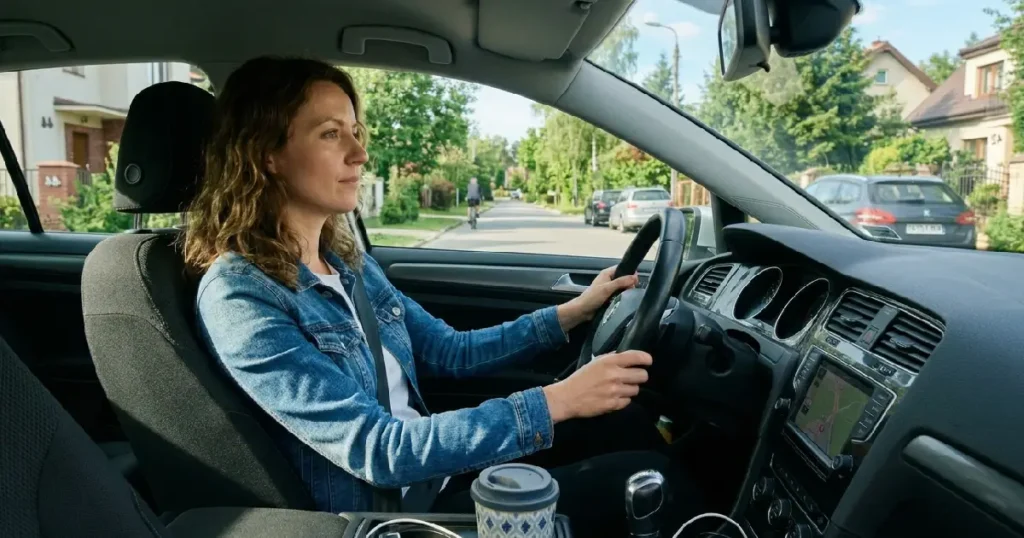
Meet Maya. She is 32 years old, licensed for a decade, and completely terrified. It started after a massive panic episode stuck in gridlock traffic on a Tuesday evening. Her heart hammered, her vision narrowed, and she felt entirely trapped. After that day, she quietly stopped driving alone. She told her friends she just preferred walking or riding the train. Privately, she felt entirely dependent and ashamed.
She kept waiting for the morning she would wake up and feel ready to drive again. That morning never came. The longer she avoided her car, the more impossible the idea of starting the engine became. She decided to use one specific tactic from this framework. She chose short, frequent repetition instead of rare heroic drives. Her plan was incredibly boring, which was exactly the point.
She picked a 12 minute loop through her neighborhood. She drove it four mornings a week at 7:15 AM, holding a lukewarm cup of coffee. She rated her fear on a scale of one to ten before and after every single loop. By week two, the dread she felt before turning the key was noticeably lower. By week three, she drove to the local pharmacy alone and bought a pack of gum just to prove she could. By week six, she could handle picking up her nephew from school without calling her sister in tears first.
She did not magically stop feeling anxious overnight. The physical sensations of panic still showed up sometimes. What changed was that the anxiety stopped deciding for her.
“Anxiety is a thin stream of fear trickling through the mind. If encouraged, it cuts a channel into which all other thoughts are drained.”
Arthur Somers Roche wrote this decades ago, but it perfectly describes the danger of avoidance. The longer you avoid the road, the deeper the channel of fear becomes.
Comparative Analysis: Fear Of Driving Vs. Lack Of Driving Skill
Many people think they have a severe driving phobia when part of the problem is actually just skill rust. Conversely, many people think they just need more driving lessons when the real issue is pure anxiety conditioning. Often, it is a complicated mix of both.
| Sign | Usually points to | Best next step |
| You know the rules but avoid specific situations because of dread | Driving anxiety / specific fear | Exposure plan, CBT tools |
| You struggle with parking, merging, lane positioning, or scanning | Skill deficit | Refresher lessons with a calm instructor |
| You had a crash or panic attack and now avoid driving | Trauma/panic-based fear | CBT or trauma support plus gentle driving practice |
| You only drive with a “safe person” or on one route | Safety behavior pattern | Gradual independence plan |
| You feel both rusty and terrified | Mixed fear + skill issue | Combine instructor support with therapy-based tools |
Do not mislabel a mechanical skill problem as a personal character flaw, and do not mislabel a deeply wired fear loop as a simple confidence issue.
Common Mistakes And How To Avoid Them
- The “All or Nothing” Weekend Drive
People often decide they are going to conquer their fear in one massive Saturday afternoon session. They force themselves onto the busiest highway, grip the wheel until their knuckles turn white, survive the drive, and then feel so completely exhausted that they refuse to drive for another month.
Practical step: Tell yourself, “I am only driving for ten minutes today.” Stop setting the bar at absolute mastery. Set the bar at brief, tolerable exposure. - Relying Completely on the ‘Safe Person’
You might find that you can drive perfectly well if your spouse or best friend is in the passenger seat. This feels like progress, but your brain is actually learning, “I only survived because David was here.”
Practical step: Have your safe person sit in the back seat for two drives. Then have them follow you in a separate car. Then drive around the block while they wait on the porch. Fade the support out slowly. - Fighting the Adrenaline
When your heart starts racing at a red light, your instinct is probably to tense every muscle and think, “Make it stop, make it stop.” Fighting the physical sensation of adrenaline actually pumps more adrenaline into your system.
Practical step: Try the paradox technique. When your heart races, actively tell your body, “Give me more. Make my heart beat faster.” When you stop treating the adrenaline as an enemy, your nervous system naturally begins to stand down.
Frequently Asked Questions (FAQs)
- Can driving anxiety go away on its own?
Sometimes mild driving nerves fade with regular practice, but persistent fear usually sticks around because avoidance teaches your brain that driving is dangerous. If you’ve been limiting routes, relying on a “safe person,” or dreading necessary trips for weeks, a structured exposure plan works faster and more reliably than waiting for confidence to appear first. - How long does it take to get over fear of driving?
It depends on how intense the fear is, how long you’ve been avoiding driving, and whether trauma is involved. Some people feel better after two to four weeks of consistent short drives. Others need several months, especially if highways, bridges, or panic attacks are part of the pattern. Progress is measured by avoidance shrinking, not anxiety disappearing overnight. - Should I force myself onto the highway if that’s what scares me most?
Not first. Start with the easiest meaningful step beneath highway driving, such as sitting in the car at the on-ramp, driving one exit on a quiet route, or riding with a trusted person. Flooding yourself with the hardest scenario can backfire. A graded exposure ladder builds confidence because it’s challenging, repeatable, and specific over time. - Is fear of driving after an accident normal?
Yes. After a crash or near-miss, your brain may start treating driving like a threat, even when the road is objectively safe. That reaction is common. What matters is what happens next: if you avoid driving entirely, replay the event constantly, or panic on similar roads, early support can prevent the fear from hardening into a long-term pattern. - When should I get professional help for driving fear?
Consider professional help if your fear is stopping you from work, school, errands, or relationships; if you’ve had a panic attack while driving; or if the fear began after an accident, assault, or severe storm. A CBT therapist, trauma therapist, or calm driving instructor can help you practice safely and stop avoidance from taking over.
Final Takeaway
You have been fighting an invisible battle inside a two-ton metal box, and I know exactly how exhausting that is. I also know that you are entirely capable of changing the narrative. Figuring out how to get over fear of driving does not require you to suddenly become fearless. It requires you to be willing to be slightly uncomfortable for ten minutes at a time.
Before tomorrow morning, write down three driving situations from easiest to hardest. Complete the easiest one within 24 hours, even if your anxiety is sitting right there in the passenger seat. Afterward, write down two lines: “What I predicted” and “What actually happened.” That is how you begin retraining your fear.
What would your daily life look like next month if you stopped waiting for the anxiety to disappear and started driving anyway?
My closing remarks
I might be wrong about this, but I think the worst part of driving anxiety is the intense, burning shame. I remember pulling my own car over on a busy highway shoulder years ago, hands shaking so hard I could not hold the gearshift, terrified someone would see me weeping behind the wheel. We treat driving like breathing, something everyone should just naturally do. But it is actually a highly complex, fast-moving task. Please stop beating yourself up for having a nervous system that is trying to protect you. You are not broken. Your brain is just confused. Start the engine today.
More Related Stories For You
- If travel anxiety shows up beyond the car, this guide on how to cure fear of flying follows a similar fear-and-avoidance pattern.
- If avoidance shows up in relationships too, these fear of commitment signs may feel oddly familiar.
- If you are helping a teen build confidence without overprotecting them, this piece on different parenting styles is worth your time.
About The Author