
 Sara Carmen
Chemistry can hide the money habits, conflict patterns, and daily living standards that actually decide whether a relationship lasts.
Key Points
- The things you should know about your partner have almost nothing to do with favorite songs and everything to do with how they live when no one is watching.
- Quiet gaps in money, conflict, cleanliness, and family plans end more relationships than dramatic betrayals.
- You can test real-life fit before you sign a lease, combine finances, or promise a future.
Contents
Table of Contents
Falling in love is a terrible way to decide if someone is safe to build a life with. It feels like the most honest signal you will ever get. That feeling is the trap. We treat butterflies as evidence. We treat late-night talks as proof. Then you wake up sharing rent with a person you never actually inspected.
Before you commit, you need operational compatibility: a clear view of money habits, conflict style, daily living standards, family plans, and how your partner treats people when no one is scoring points. Chemistry starts the relationship. These ten realities decide whether it survives.
Someone might think they know their partner because they have talked for hours on the couch. But what they don’t see is how that same person acts when a credit card statement arrives or a sink fills with dishes.
Someone might think a calm relationship is a healthy one because they never fight. But what they don’t see is silent resentment stacking up like unpaid bills.
Someone might think moving in will “make things clearer.” But what they don’t see is that dating compatibility and roommate compatibility are two different skills.
According to Pew Research Center data on romance and dating, more adults now live together before marriage or instead of it. That means the cost of skipping a real screening process is no longer just a hard breakup. It can be a broken lease, a damaged credit file, and months of grief inside a shared apartment.
This happens because of limerence. Limerence is the intense, involuntary infatuation of early love. During that phase, your brain’s reward system lights up while the parts that handle judgment get quieter. You are not foolish for missing things. You are chemically biased toward hope.
Left unexamined, that bias does not just create awkward talks later. It becomes the quiet reason the relationship ends.
The things you should know about your partner are not trivia. They are the foundation of the house you are about to buy.
10 Realistic Things You Should Know About Your Partner Before You Commit
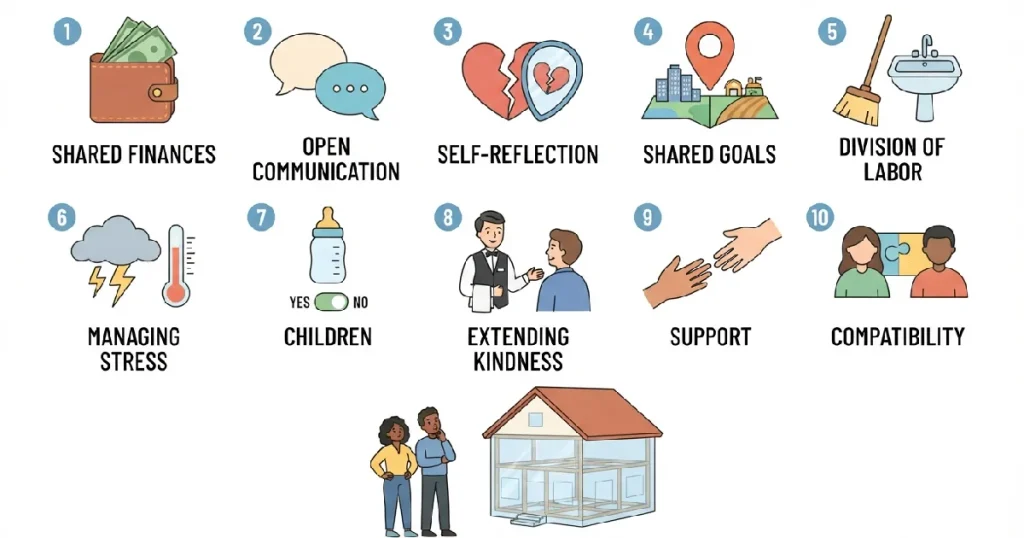
1. Financial Transparency and Your Partner’s Debt Reality
You need an unvarnished view of their savings, spending, credit habits, and debt. Not a vibe. Not “I’m bad with money, haha.” Actual numbers.
You might not legally inherit their $30,000 in credit card debt. You will still live inside the consequences. They may not qualify for a mortgage. They may freeze when a bill is due. They may need you to carry more of the rent than you agreed to.
Most people in this situation don’t realize that the conversation itself is the test. Their numbers are only half the data. Watch whether they get defensive, vague, or punishing when money comes up. A partner who cannot tolerate financial honesty will not become honest after you commit.
2. Conflict Avoidance, Stonewalling, and Silent Resentment
You need to know how they handle disagreement when they are tired, embarrassed, or wrong. Peace is not the same as repair.
Stonewalling is a shutdown response. The person goes quiet, leaves the room, or offers a tight smile while the real conversation dies. Researcher John Gottman found that this pattern is one of the strongest predictors of relationship failure, because problems never get solved. They just go underground.
A partner who “hates drama” can look mature in month three. By month nine, you may notice you are the only one bringing things up. That is not harmony. That is a ticking storage unit of resentment.
3. What Past Breakups Reveal About Your Partner
Listen to how they tell the story of their exes. You are not hunting gossip. You are measuring accountability.
If every former partner was “crazy,” “toxic,” or “the problem,” you are looking at a person with a thin self-reflection muscle. People who cannot see their own part in old pain will repeat it with new packaging.
A useful sign is mixed ownership. “We were a bad fit, and I also shut down when I felt criticized.” That sentence tells you more than a year of compliments.
4. Their Five-Year Blueprint for Location and Lifestyle
You need a hard, specific picture of where they want to live and how they want ordinary days to feel. City or rural. Near family or far from it. High-travel career or rooted home base.
Irreconcilable lifestyle goals have expiration dates. If they are quietly planning a move across the country while you are building a life in one city, love will not dissolve the geography. It will only delay the fight.
Ask where they see a Tuesday in five years. Not a vacation. A Tuesday.
5. Everyday Living Habits and Cleanliness Standards
You cannot know a person until you see them with their guard down. Hygiene, clutter, dishes, laundry, and the five-day couch stretch matter more than anniversary plans.
A wide gap in household standards is one of the top reasons early cohabitation fails. It feels petty until you live inside it. Then it feels like disrespect.
This is the room most couples refuse to walk through. They assume love will make the mess charming. It does not.
When Chemistry Outran Compatibility
Maya, 31, had been with Jordan for 14 months. Friends called them solid. They had a trip language, a Sunday ritual, and the kind of chemistry that makes other people stare. When the lease on her place came up, moving in felt like the obvious next step.
The first week was sweet. The third week was a different movie. Jordan’s “I’ll handle it later” applied to dishes, mail, and a credit card balance he had never mentioned. After a small comment about the sink, he went pleasant and distant for two days. Maya found herself cleaning around a person she still loved and no longer recognized.
She had not been careless. She had been in limerence. She had screened for romance and skipped the foundation inspection. The relationship did not explode. It eroded, which is often worse, because you keep hoping the brochure version will come back.
6. How Your Partner Handles Stress, Anxiety, and Illness
You need their stress cues and their care style. Some people need isolation. Some people want you to take over logistics. Neither is wrong. Mismatch is.
Watch a work deadline, a flu, or a family snag. Do they snap, disappear, drink more, or ask for help in a way you can actually give?
If you are a reacher and they are a hider, you will feel abandoned at the exact moment you are trying to be kind. Name this before you are the one holding the thermometer and the resentment.
7. Parenting Beliefs and Family Planning Dealbreakers
This is not a “we’ll see” topic. You need an explicit yes, no, or not yet, plus a real sense of their parenting philosophy if children are on the table.
Do not bet on someone changing their mind because the relationship is good. People do update their views. They rarely reverse a core life structure to keep a partner comfortable.
If one of you wants children and the other does not, that is not a communication problem. That is a fork in the road.
8. How They Treat Service Workers and Strangers
Watch waitstaff, retail workers, rideshare drivers, and anyone who can do nothing for their status. This is one of the cleanest reads you will get.
Baseline empathy predicts how they will treat you when the honeymoon ends. The charm they use on you is a performance with a prize attached. The way they speak to a tired server is closer to their default setting.
If they are rude when they are hungry, late, or unnoticed, believe that data.
9. Sexual Compatibility and Intimacy Expectations
You need alignment on desire, pacing, boundaries, and what makes them feel close. Sexual mismatch is one of the most common hidden fractures in long-term relationships.
This is not only about frequency. It is about whether affection is a daily language or a rare event. It is about whether “not tonight” is received as information or as rejection.
Talk while things are good. Silence around sex does not protect the relationship. It just postpones the loneliness.
10. Whether They Fight With You or Fight the Problem
In the first real disagreement, watch the frame. Is it “me versus you,” or “us versus the problem”?
A partner who needs to win will use humiliation, scorekeeping, or courtroom logic. A partner who can stay on your team will still get heated. They will not turn you into the enemy.
Healthy longevity depends on collaborative repair, not on never clashing. You are not looking for a person with no temper. You are looking for a person who can come back.
But here’s what no one tells you.
You are not collecting a perfect scorecard. You are watching whether this person can stand in reality with you. Facts matter. Their nervous system’s reaction to facts matters more.
Real-World Strategies to Uncover the Truth Before You Commit

Use the 3-6-9 Window, Not the Honeymoon Highlight Reel
One place to start is time. The popular 3-6-9 framework is blunt and useful. Months 1 to 3 are idealization. Months 4 to 6 reveal patterns: how they treat workers, keep plans, and recover from stress. By around month 9, you have a fairer read on whether you could live together.
The 7-7-7 rhythm can help too: a proper date every 7 days, a small overnight every 7 weeks, a longer trip every 7 months. You are not being extra. You are creating conditions where the brochure lighting cannot hide the foundation.
Run a Stress Test Before You Sign Anything
Consider a “test drive” that is not legally binding. A long trip. A week of house-sitting. Caring for a pet together. A stretch of ordinary days with no restaurant buffer.
Travel is useful because it compresses friction. Delayed flights, bad sleep, and unfamiliar bathrooms show regulation in real time. Pre-cohabitation trials show roommate fit before a lease does.
A useful question to ask yourself after the test is simple: Did I feel like a teammate, a parent, or a roommate they resented?
Have the Hard Conversations as Mutual Safety, Not Interrogation
Deep questions can feel controlling if you aim them like a spotlight. Frame them as two people comparing maps.
The Gottman Institute’s marriage preparation questions exist for a reason. They cover chores, money, family, and conflict because those topics predict daily life better than chemistry does.
Try: “I want us to be safe with each other. Can we swap a full picture of debts, savings, and how we each handle money under stress?” Then offer your numbers first. Disclosure that goes only one way is not intimacy. It is an audit.
Learn to separate solvable friction from core red flags. Different dishwasher styles can be negotiated. Hidden debt, contempt, family-plan denial, and “every ex was crazy” are not cute quirks. If those show up, de-escalate the timeline. Slowing down is not a lack of love. It is respect for your future.
You Are Allowed to Inspect the House
Go back to that first feeling. The late-night certainty. The sense that talking was the same as knowing. You were not naive. You were in a brain state designed to bond first and evaluate later.
You now have a different job. Walk through every room. Money. Conflict. Mess. Stress. Children. Desire. The way they treat people with no power. The way they fight when they are losing.
Chemistry got you to the front door.
Compatibility decides whether you should move in.
My Closing Remarks
I have sat with people who loved their partners and still could not share a life with them. The pain was not that the love was fake. The pain was that nobody taught them to trust the ordinary. If this leaves a knot in your stomach, that knot is information, not a character flaw. Slow the timeline. Ask the unglamorous questions. Watch what happens after you ask. You are not being cold. You are being kind to the person you will be in three years.
More Related Stories for You
- If you are still sorting charm from character, it also helps to decode what it might mean when a guy calls you beautiful.
About The Author