 Elena Garcia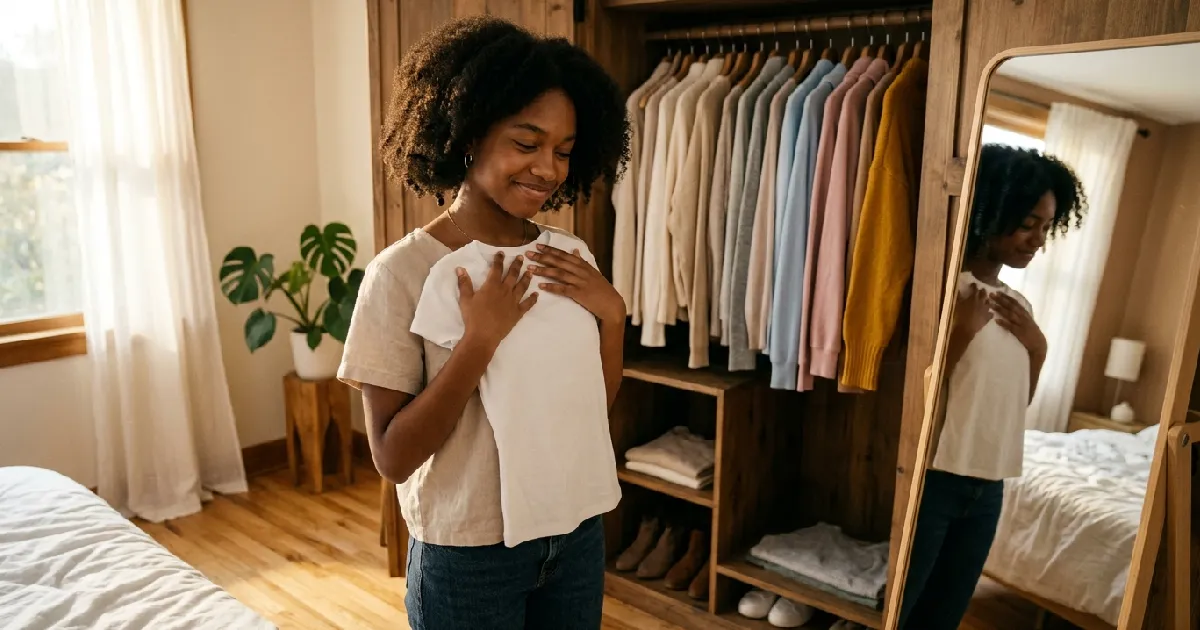
Your wardrobe is not the problem. Your relationship with it might be.
Key Points
- Learning how to dress better as a teen girl starts not with buying new clothes, but with understanding what you actually want your clothes to say about you.
- How to dress better as a teen girl is less about following trends and more about building a small, intentional wardrobe that makes getting dressed feel easy.
- How to dress better as a teen girl is deeply connected to self-confidence, and the two actually feed each other in ways most style guides never mention.
Contents
Table of Contents
The Closet Problem Nobody Talks About
You open your closet. You stare at it for a full three minutes. You own maybe 40 things. And yet, somehow, you have nothing to wear.
You pull something out. It doesn’t look right. You try another. It feels off. By the time you leave the house, you’re wearing the same jeans and the same hoodie you wore two days ago, and you feel vaguely invisible.
It’s not dramatic. It’s just quiet frustration. And it’s way more common than anyone tells you.
Here is the thing no style article will say: that feeling is not about your wardrobe. It’s about a disconnect between who you are right now and what your clothes are reflecting back at you. The good news is, once you understand that gap, it’s actually pretty easy to close it, without spending a lot of money.
Why Getting Dressed Feels So Hard (It’s Not Just You)
Adolescence is a critical stage of self-exploration, and the way you dress often becomes a direct reflection of how you see yourself, or how you want to be seen. That’s a lot of pressure to put on a T-shirt. Clothing preferences play a big role in shaping self-perception and influencing interactions with the world. This is called “enclothed cognition,” a psychological phenomenon that describes how clothing can actually influence the wearer’s psychological processes. In plain terms: what you wear changes how you think and feel about yourself throughout the day. According to Kwon (1994), teenagers with a strong and positive self-concept are more likely to experiment with their clothing, opting for styles that may deviate from the norm but better represent their personality. These adolescents see clothing as a creative outlet, a means of self-expression that affirms their individuality. Translation? Style confidence and personal confidence grow together. One feeds the other.
And then there’s social media. Findings suggest that adolescents with higher self-confidence tend to dress more independently, while those with lower self-image often conform to trends or group norms to avoid judgment. Social media platforms like Instagram and TikTok amplify style awareness but also lead to self-comparison.
In other words, if you’re scrolling TikTok and constantly feeling like your style is “wrong,” that’s not a fashion problem. That’s a self-comparison loop, and it’s worth naming it so you can step out of it.
9 Powerful Ways to Dress Better as a Teen Girl
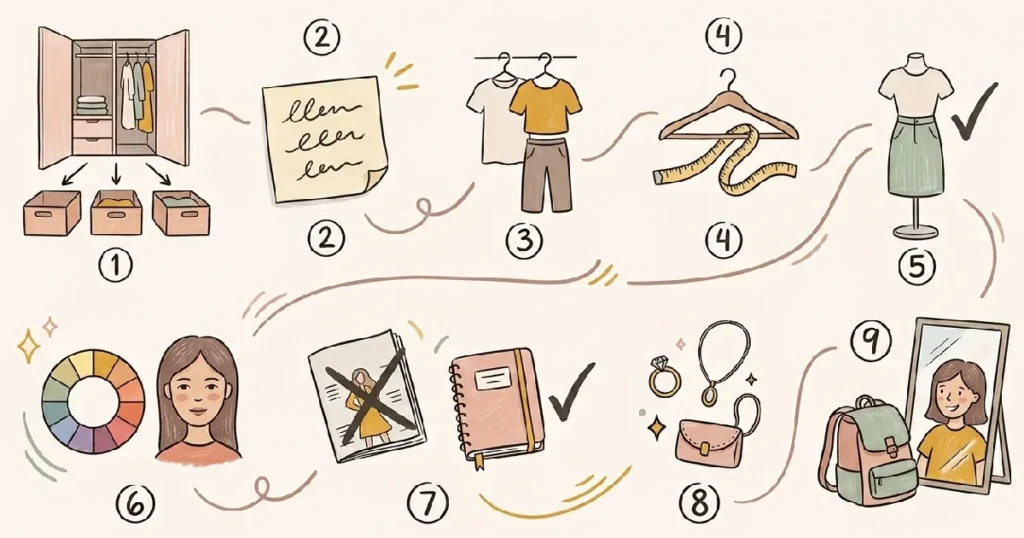
1. Do a “Keep, Donate, Question” Closet Edit First
Before you buy a single thing, look at what you already own.
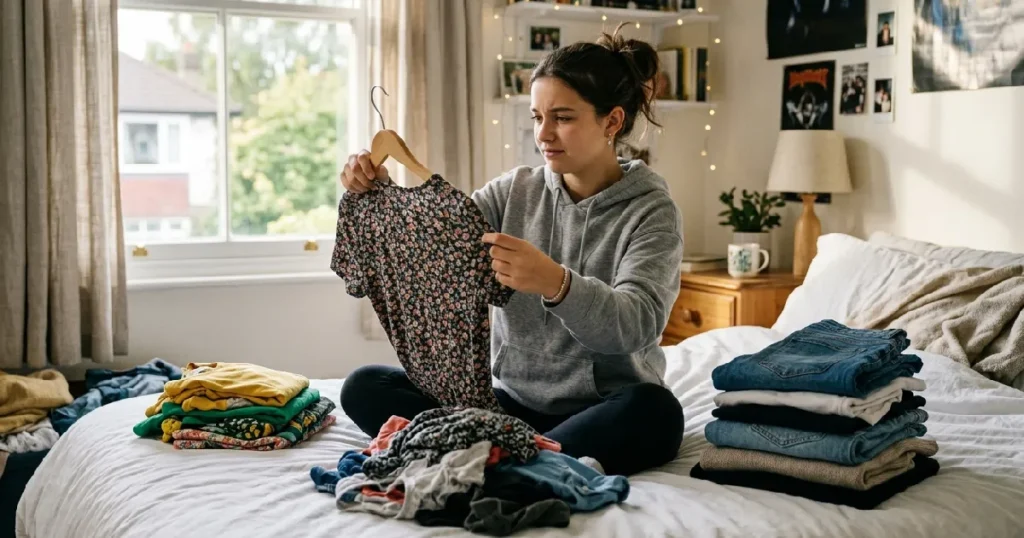
Pull everything out and sort it into three piles: things you genuinely love and reach for; things that no longer fit, feel right, or suit who you are now; and things you’re not sure about. The “question” pile is actually the most useful one. Those are your clues. They’ll show you what you’re drawn to but haven’t fully committed to yet.
This is your starting map. You cannot build a style on a cluttered foundation. Most teen girls skip this step and jump straight to buying, which is why the “nothing to wear” cycle never ends.
2. Find Your Three-Word Style Identity
Here’s something most style articles skip completely: before you can dress better, you need to put words to how you want to feel.
Not what you want to look like. How you want to feel.
Try to think of three adjectives that describe the version of yourself you want to walk into a room as. Maybe it’s “calm, creative, and put-together.” Maybe it’s “bold, free, and a little edgy.” Maybe it’s “soft, feminine, and comfortable.” There are no wrong answers.
Once you have your three words, they become your filter. Every time you consider buying or wearing something, ask: does this fit my three words? If it doesn’t, it doesn’t belong in your wardrobe, no matter how much it was on sale.
3. Master the Art of “One Statement, Everything Else Simple”
This is the single biggest style shift that can change your entire look overnight, and it costs nothing.
Pick one element of your outfit to be the “statement,” meaning the thing that draws the eye. A colorful cardigan. A cool bag. A bold shoe. Bold earrings. Then let everything else in the outfit be simple, neutral, and clean. Jeans and a white tee with one great item will almost always look more intentional and stylish than five items all competing for attention.
Think of it like a conversation. If everyone is talking at once, no one is heard. Your outfit works the same way. Let one voice carry the room.
4. Fit Is Everything (and No One Tells You This Enough)
Here is something I have observed across many years of writing about fashion: the most stylish-looking person in any room is rarely wearing the most expensive clothes. They are wearing clothes that fit their body correctly. When we wear clothing that fits well and feels comfortable, it can significantly boost our self-esteem and self-expression. Clothes that are too tight make you constantly aware of your body. Clothes that are too large make you want to disappear into them. Neither is helping you. The sweet spot is clothing that skims your body and lets you move easily.
You do not need to spend money to fix fit. Learning to roll cuffs, tuck in a front hem, or belt a loose layer can completely change how an outfit looks. These are simple adjustments, not fashion magic, and they work every single time.
5. Build a “Uniform” for Busy Days
Meet Zara. She’s 16, a full-time student, a part-time worrier, and someone who used to spend 20 minutes every morning in front of her closet, panicking. She wasn’t disorganized. She was just overwhelmed by choices. Sound familiar?
What changed everything for Zara was creating what she called her “no-think outfit,” a simple formula she could grab on autopilot. For her it was: well-fitting jeans, a clean fitted top in a neutral color, white sneakers, and small gold hoops. Done. Five minutes. Every time she wore it, people told her she looked “so put together.” Research on decision fatigue suggests that fewer, better choices lead to more confidence. Having a reliable “uniform,” a go-to formula that always works for you, is not lazy. It’s smart. It frees up your mental energy for everything else that actually matters in your day.
6. Learn the Power of Color Without Overthinking It
You don’t need to study color theory. You just need to know two things about color that will serve you well.
First: there are warm and cool undertones in skin, and certain colors will make your face look brighter and more alive while others can wash you out. A quick way to figure out which colors work for you is to hold different clothes up to your face in natural daylight and notice which ones make you look more awake and vibrant. Your eyes will tell you immediately.
Second: you don’t have to wear bright colors to have a strong style. Some of the most striking outfits are entirely neutral, built on blacks, creams, taupes, and whites. Knowing which color “temperature” works for your skin is genuinely life-changing information that most style guides gloss over.
7. Understand the Difference Between Trend-Dressing and Authentic Dressing
But here’s what no one tells you.
Trends are designed to be replaced. If you build your entire wardrobe around what’s popular on social media right now, you’ll be perpetually starting over, perpetually spending, and perpetually feeling behind. That’s not a style problem. That’s a business model working exactly as intended. Teenagers with a strong and positive self-concept are more likely to experiment with their clothing, opting for styles that deviate from the norm but better represent their personality. These adolescents see clothing as a creative outlet, a means of self-expression that affirms their individuality.
Authentic dressing means picking up one or two elements of a trend that genuinely feel like you, and leaving the rest. A great way to test this: if you’d still wear something two years from now, it belongs in your wardrobe. If the only reason you want it is because you saw it on someone else’s feed, pause.
8. Accessories Are the Fastest, Cheapest Style Upgrade
Most teen girls underestimate accessories. This is worth fixing immediately.
A simple ring, a small necklace, a headband, a belt, a tote bag, or even the way you tie your hair are all part of how your outfit reads to the world, and to you. Wearing clothes that reflect your personality and tastes can have a dramatic effect on how you feel about yourself. When teenagers feel good about what they wear, they are more likely to carry themselves with assurance and pride.
The key with accessories is restraint. Pick two or three that feel intentional rather than loading everything on at once. Less is always more legible. One good bag or one great pair of earrings can do more for an outfit than three impulse purchases ever will.
9. Dress for the Life You’re Actually Living, Not an Instagram Life
This is the insight differentiator most style content is missing entirely, and it matters more than any other tip on this list.
Your clothes need to work for your actual day. If you’re at school, carrying a backpack, walking between buildings, sitting in class for six hours, and then maybe going somewhere after: your clothes need to serve all of that. Outfits that look incredible in photos but make you uncomfortable in real life are not good outfits for you. Comfort and style are not opposites. Some teens use their fashion choices as a way to blend in or hide their insecurities, often choosing comfort over style to cover up. The goal is neither extreme. The goal is clothing that feels like you on a great day, and makes you forget you’re wearing it because it just fits your life so naturally.
When your wardrobe serves your real daily life, you stop thinking about clothes all the time. And ironically, that’s when you start looking the most effortlessly stylish.
The “Now What?” Putting This Into Practice Today
Here are four ways to start right now, with zero budget required.
The Three-Word Filter. Write down your three style words and stick them somewhere you’ll see them when you get dressed. Use them to evaluate every item you wear for the next week. You’ll notice patterns fast.
The Fit Check. Try on five items you own that you never reach for. Ask yourself honestly: is it the style you dislike, or does it simply not fit right? If it’s fit, consider whether a simple alteration or styling trick (tucking, rolling, belting) could change it.
The Uniform Blueprint. Spend 10 minutes building one go-to outfit formula from what you already own. It should be comfortable, simple, and reliable. Wear it when you don’t want to think about clothes. See how you feel.
The One-Statement Rule. Before you leave the house tomorrow, identify the one statement piece in your outfit and make sure everything else is neutral and clean. Try it for one week and notice whether you get more compliments, or simply feel more confident.
A useful question to ask yourself: “Does what I’m wearing today reflect how I actually want to feel?” Not how someone else wants you to look. How you want to feel. That’s the only opinion that gets the final vote.
You Already Have Everything You Need to Start
Remember that closet moment at the beginning? You, staring at 40 things, feeling like you own nothing?
Here’s what you have now that you didn’t have before: a map. You know what “enclothed cognition” means and why it matters. You know that fit beats price every single time. You know that trends are rented but personal style is yours to keep. You have a three-word filter, a uniform blueprint, and the one-statement rule.
Your wardrobe doesn’t need to be bigger. It needs to be more intentional. Fashion serves as a visual language through which teens can communicate their identities to the world. The right outfit can be a source of encouragement, helping teenagers navigate the challenges of adolescence with a heightened sense of self-assurance.
You’re not starting from scratch. You’re starting from awareness.
And that changes everything.
My Closing Remarks
I’ve spent over 15 years writing about fashion for teen girls, and the thing that breaks my heart the most is how many of you believe you simply “can’t dress well.” You can. You’ve just been handed someone else’s rulebook. I remember sitting with a 14-year-old reader once, going through her closet over video call, and within 20 minutes she was crying, not because anything was wrong, but because she finally saw herself in her clothes. That moment lives with me. Your clothes are not a barrier to confidence. They are a door. You just needed the key. You have it now.
More Related Stories for You
- Wondering what actually makes a girl look effortlessly cool without trying too hard? Read this next: What Do Cool Girls Wear? it might be the most honest style breakdown you’ll find.
About The Author