Sara Carmen

Most people can name ten red flags in seconds. Can you spot the quiet signs that someone is safe to love?
Key Takeaways
- The strongest green flags in early dating look almost boring: kept plans, a warm response to your no, and fast repair after small friction.
- Intensity can impersonate intimacy, so read patterns across three ordinary weeks before you trust the spark.
- Every green flag has a counterfeit, and each sign below comes with a practical way to tell them apart.
Quick answer: Green flags in early dating are repeatable behaviors that signal emotional safety: kept plans, respect for your no, steady pacing, genuine curiosity, and quick repair after friction. They predict how someone will treat you long after the first-impression performance ends, which makes them stronger evidence than chemistry or grand gestures.
Contents
Table of Contents
It’s 10:40 on a Tuesday night, and you’re scrolling a text thread like a detective. They said they’d call Sunday. They called Monday. Red flag, yellow flag, or just a person with a busy weekend?
You’ve trained yourself to hunt for danger. Nobody taught you how to recognize safety.
That gap has a cost. When your only rubric is avoiding pain, a decent person reads as suspicious and a charming one reads as exciting. Here’s the other rubric: 11 observable green flags, the counterfeits that mimic them, and four low-drama ways to see the truth early.
Why your brain skips past early dating green flags
Psychologists call it negativity bias: bad information grabs more attention and carries more weight than good information of equal size. In a sweeping review, Baumeister and colleagues (2001) found that bad events outweigh good ones across nearly every domain of life. Your dating brain inherited that tilt.
One delayed reply can outweigh three kept promises. A rough ending sharpens the tilt: if you’re still stung because your ex deleted you without a conversation, your scanner is running old code.
The reframe worth testing: calm is data. A steady person can feel flat at first because your nervous system is used to scanning. Flat and calm differ. Flat means no curiosity about each other; calm means interest without threat.
The 11 green flags in early dating, and what each predicts
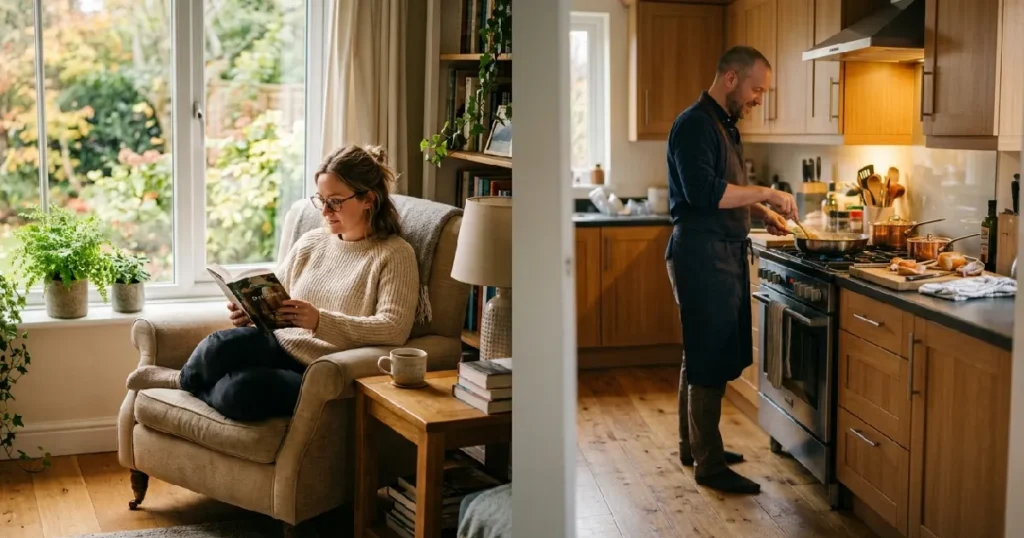
Read these as patterns over time. One good dinner proves little; three ordinary weeks prove a lot.
1. Their plans survive contact with real life
They suggest a specific day, confirm without prompting, and show up when they said they would. Follow-through is the least glamorous, most predictive sign here: it quietly measures honesty, planning, and respect at once. Count it simply: over three weeks, how many small promises landed? A person who keeps four minor commitments tells you more than one who plans a spectacular fifth.
2. Your no costs you nothing
Decline something small: a second drink, a weeknight date, a topic you’re not ready to discuss. Then watch the temperature. A green flag response stays warm and curious (“Totally fine, Sunday then?”).
A counterfeit accepts your no out loud and punishes you quietly with sulking, guilt, or distance. Boundaries are the cheapest stress test in dating, and most people skip them for fear of seeming difficult.
3. They repair small friction quickly
A joke lands wrong. They catch your face, stop, and say, “That came out badly, I’m sorry.” Researcher John Gottman calls these repair attempts, and his lab treats them as the secret weapon of couples who stay connected.
In early dating, the size of the rupture barely matters. The speed and sincerity of the repair tells you how conflict will feel at month six.
4. Their pace matches their words
Interest without acceleration is a green flag people misread as lukewarm. Someone secure plans next Saturday without narrating your shared future at year five. Watch the ratio between talk and time: if soulmate language arrives before they know your middle name, you’re seeing future faking, a speed trick that mimics depth. Genuine pacing feels slower than the movies and steadier than your anxiety expects.
5. They’re curious about your ordinary life
Anyone can be fascinated by your highlights. Attunement shows up in the follow-up question about your Tuesday: the difficult coworker, the physio appointment, the sister’s job interview they remembered from last week. Being known in the boring parts is the raw material of intimacy. Curiosity about your inner world is rarer than chemistry and worth more.
6. They can be apart without punishing you
A slow reply day doesn’t trigger a cold snap. No score-keeping on response times, no jealousy traps. Researchers call this secure attachment: the relationship works as a secure base, so separateness doesn’t feel like abandonment. Emotional availability includes letting you have a separate life.
Score-keeping and manufactured jealousy are protest behavior, the anxious cousin of passion. Edge case: one busy week is life. Vanishing for days, then flooding you with affection, is a cycle worth stepping off.
7. Their stories about other people include their own part
Listen to how they describe an ex, a former boss, a falling-out with a friend. Accountability sounds like “I avoided hard conversations and it got worse,” rather than a cast of villains. Someone who can own a share of past messes can usually own a share of future ones.
One fair caveat: survivors of abuse owe their abusers no balanced retelling. Judge the pattern across ordinary relationships, not the worst thing they lived through.
8. Their apologies have three working parts
A real apology names the act, names the impact, and names the change: “I was 40 minutes late, you sat alone, next time I’ll text before you leave.” “Sorry you feel that way” names nothing and repairs less. One small, well-built apology shows they can hold your experience in mind while staying steady themselves. That skill scales.
9. Small disappointments don’t detonate them
The restaurant lost the booking. It rains on the beach plan. Watch the next sixty seconds.
Emotional regulation in tiny moments predicts the big ones better than any “I’m very chill” self-description. Sighing and pivoting to plan B is a green flag. Sarcasm at the host, silent brooding, or a ruined evening over a wet picnic tells you how they’ll handle a lost job or a sick kid.
10. You feel more like yourself around them
Check your own behavior as data. Around them, do you say the odd thing you’d usually edit? Do you stop rehearsing texts?
People pleasers often mistake self-monitoring for chemistry. The nervous system keeps a ledger: after time with a safe person, most people feel settled rather than buzzy. If you’re performing a cooler, chattier version of yourself to keep the vibe, the vibe is costing you.
11. Their kindness runs where there’s no payoff
The waitstaff test is famous, so refine it: watch kindness that cannot possibly benefit them. The patient tone with a lost delivery driver. The friend they help move on a Saturday.
Warmth aimed only at you (and at people with status) is a spotlight, not a character trait. Compare date one to date five; performance kindness fades as the show relaxes, and the baseline appears.
Green flags vs love bombing: how to spot the counterfeit
Love bombing rarely announces itself as pressure. It arrives as fluency: the right attachment vocabulary, instant vulnerability, a playlist made for you by day three. The tell is what happens when conditions change.
| What you’re watching | Genuine green flag | Convincing counterfeit |
|---|---|---|
| Pace | Interest builds as knowledge builds | Intensity arrives before knowledge exists |
| Your no | Accepted warmly, remembered next time | Accepted verbally, punished emotionally |
| Bad-day behavior | Same person, lower energy | Cold, critical, or suddenly unreachable |
| Focus | Curious about your real, messy life | Mirrors your tastes back at you |
Mixed signals count as an answer. Steady inconsistency is itself a pattern.
Unpredictable affection is sticky for a mechanical reason: intermittent reinforcement, the same variable-reward schedule that keeps people feeding slot machines. The high after a low feels like passion. Often it’s relief.
If the warmth collapses when you slow the pace, believe the collapse. The acceleration was the product.
When the green flag checklist becomes a trap
Two failure modes appear once people learn this vocabulary. Auditing turns every date into an inspection, and inspection feels like distance on both sides. Inflation is subtler: someone fluent in therapy language can perform all eleven signs for a month.
Weight two flags above the rest: how they handle your no, and how fast they repair. Those are hardest to fake under real conditions.
Early relationship green flags also arrive on different schedules. Shy people and many neurodivergent daters show care through reliability and shared interests before smooth conversation.
A 2020 analysis of 43 studies that followed couples over time found that felt experiences inside the relationship, like appreciation and perceived commitment, predicted relationship quality far better than anyone’s on-paper traits (Joel et al., 2020). Healthy dating signs beat a perfect resume.
Safety can’t decide fit. A wonderfully steady person who wants three kids is a poor match for someone who wants none.
Four gentle ways to surface green flags early
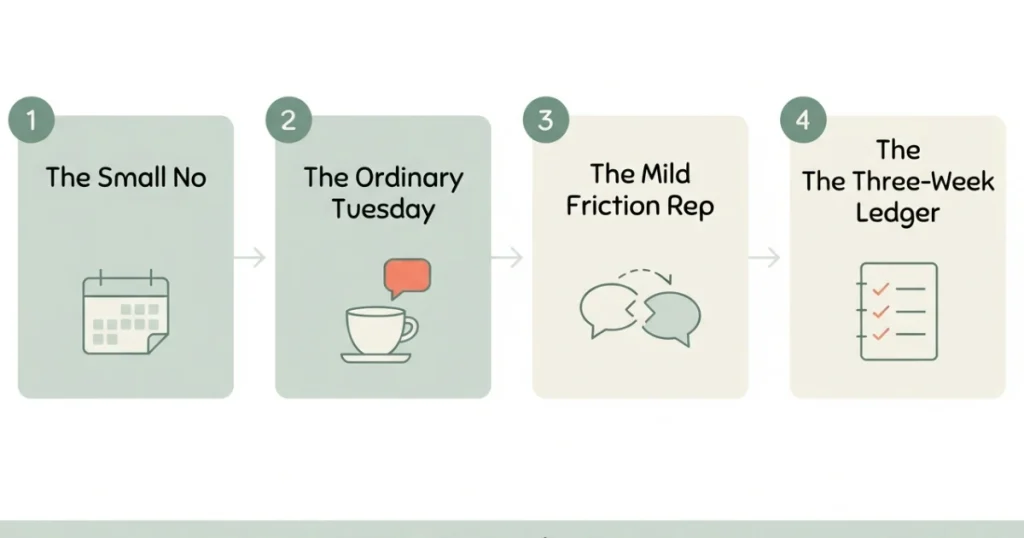
None of these are games. Each creates an honest moment where character can show itself.
The Small No. Offer one honest, low-stakes decline this week: “Friday’s packed, but I’d love Sunday afternoon.” Then notice the warmth of the reply. You’re learning whether your limits cost you affection.
The Ordinary Tuesday. Share one unglamorous detail: “My week is spreadsheets and a sourdough starter that refuses to rise.” If they ask about the starter on Saturday, you’ve seen attunement in the wild.
The Mild Friction Rep. Name one small miss early, kindly: “Hey, we said seven and you landed at 7:40. Punctuality matters to me.” A repair tells you more than ten flawless dates. Frame it as useful data, gathered gently.
The Three-Week Ledger. Keep a private note: promises made, promises kept, and one line on how you felt afterward (settled or performing). Watch reciprocity: does interest flow both ways without prompting? After three weeks, choose consistency over intensity. Two repeating misses mean slow down; a steady pattern means invest.
Frequently Asked Questions
Can someone show green flags and still be wrong for me?
Yes. Green flags measure safety and skill, and compatibility is a separate question. A kind, consistent person with different goals for kids or location can still be a poor match. Walking away is allowed.
How early should these signs show up?
Some appear on date one: curiosity, kindness to strangers, easy pacing. Repair and consistency need a few weeks of real life. Expecting all eleven by date three turns dating into an audit.
Why do I only feel sparks with people who show red flags?
Familiarity often registers as chemistry. If chaos was your childhood baseline, calm can feel like absence at first. Give steady people three dates before ruling them out; your alarm system can recalibrate.
Back to that 10:40 p.m. thread. The question was never whether Monday’s call doomed anything. It’s whether calls, plans, and repairs land in a pattern you can rely on, week after ordinary week.
You now have the map: eleven green flags in early dating, their counterfeits, and four small ways to check.
The best sign of a good future is a present you never have to decode.
My Closing Remarks
If I could spare you one thing, it would be the months spent decoding someone who could have simply been clear. Safety felt suspicious to me once too. Give the calm ones a real look, keep your standards warm and firm, and let patterns do the talking. You’re allowed to choose the person who makes your shoulders drop, because that quiet relief outlasts any fireworks.
Sara Carmen
More Related Stories for You
Before you hand anyone the job of making you feel whole, read how to be happy again on your own terms. A full life is the best green-flag detector ever built.
About The Author