
 Nicole Adkins

The real guide to breaking guilt, stopping manipulation, and finally getting your peace back.
Key Takeaways
- Learning how to cope with a toxic mother starts when you stop waiting for her approval and start protecting your personal peace.
- You do not owe anyone unlimited access to your mental health just because they gave birth to you.
- Setting firm boundaries is not about punishing your parent but about keeping your own sanity intact.
Quick Answer: To know how to cope with a toxic mother you must shift from seeking her approval to protecting your personal autonomy. Establish firm limits on conversations, step away from manufactured guilt trips, use an information diet, and practice emotional detachment. Healing starts when you stop trying to change her and choose peace.
Contents
Table of Contents
Your phone vibrates on a Sunday afternoon. Her name flashes across the screen.
Before you even touch the phone your stomach sinks. Your jaw clenches up and your heart starts racing. In an instant you feel like a nervous kid who is in trouble again, even though you are an adult with a job, bills, and maybe children of your own.
We are told by society that every mother is naturally loving and selfless. People say she did the best she could or that family always comes first. But when your mom is manipulative, critical, or cold, those easy sayings feel like a trap.
You end up carrying alot of silent shame. You wonder why a simple five minute phone call ruins your entire weekend.
That gut reaction is not your fault. It is your body telling you that your emotional boundaries have been run over for years. You are not a bad person for feeling drained by her. You are just tired of living in survival mode.
The Science of Maternal Trauma: What Clinical Studies Reveal About Enmeshment
Living with a toxic parent leaves physical marks on your nervous system. When you grow up with a parent who demands constant emotional care, it creates a pattern called enmeshment.
In healthy families parents support their children while respecting their growing independence. In an enmeshed dynamic, your independence is treated like a personal attack or a betrayal.
Clinical research highlights how damaging this really is. Peer-reviewed clinical studies on adverse childhood dynamics, parentification, and attachment trauma show that children forced into the role of emotional caretakers carry elevated stress responses well into adulthood.
When your mom gives you a cold stare or uses that specific sharp tone of voice, your brain registers it as an actual threat. Your fight-or-flight system kicks on because you learned early on that her mood swings mean danger.
Psychologists call another common pattern intermittent reinforcement. One day she showers you with praise and treats you like her best friend. The next day she gives you the silent treatment because you did not answer a text right away.
This unpredictable cycle keeps you constantly trying to appease her. Further research on family systems theory, maternal enmeshment, and adult individuation shows that breaking this loop requires stepping out of the caretaker role completely.
Consider Mark, a 34-year-old accountant. Every time Mark planned a weekend trip with his partner, his mom would call claiming she felt dizzy or lonely. If Mark stayed home, she was thrilled and made his favorite dinner. If he went on his trip, she refused to pick up his calls for two weeks.
Mark spent years feeling sick with guilt until he realized her health scares only appeared when he lived his own life.
The 5 Sovereign Boundaries: A Blueprint for How to Cope with Toxic Mother Dynamics
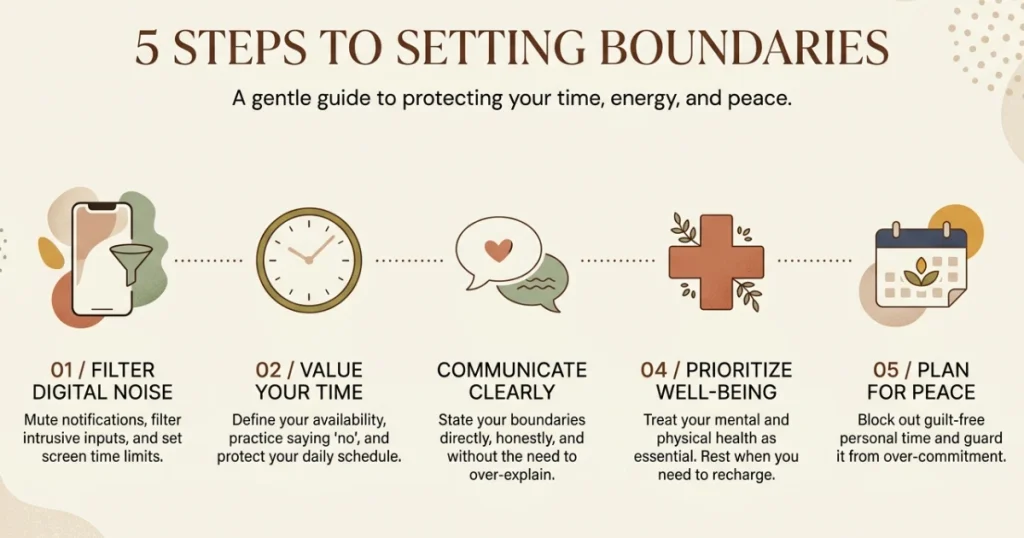
You cannot change her personality, and waiting for her to apologize will only keep you stuck. Learning how to cope with toxic mother behaviors means changing what you allow into your personal space.
Here are the 5 non-negotiable boundaries you need to put in place:
Boundary 1: The Tactical Information Diet
Stop sharing personal details about your life that she can use as weapons later. If she criticizes your spending, your career, or your relationship, stop bringing those topics up.
Stick to boring, neutral topics like the weather, yard work, or local traffic. When she asks intrusive questions, keep your answers short and bland. You do not owe her an all-access pass to your inner thoughts.
Boundary 2: Time-Capped Engagements
Never walk into an open-ended visit. An afternoon visit that stretches for six hours gives her endless opportunities to pick fights or guilt trip you.
Set a clear finish line before the meeting starts. Tell her upfront that you have exactly 45 minutes for coffee before your next appointment. When the time is up, stand up, pay the bill, and leave.
Boundary 3: Refusing Unsolicited Criticism
You are an adult and you do not have to sit quietly while someone attacks your appearance, your parenting, or your choices. The moment she starts making passive-aggressive comments, stop the interaction.
Do not yell or argue. Simply state that the topic is closed. If she keeps going, remove yourself from the room or hang up the phone.
Boundary 4: The Manufactured Crisis Filter
Many toxic parents create sudden dramas to pull their adult children back into their orbit. They report vague medical issues or sudden emergencies right when you are busy living your life.
Stop dropping everything instantly. Pause and evaluate whether this is a genuine medical emergency that requires paramedics or just a bid for attention. If it is not life-threatening, respond calmly later on your own schedule.
Boundary 5: Independent Holiday and Milestone Authority
You are allowed to spend Thanksgiving, Christmas, and birthdays where you feel safe and relaxed. Giving in to filial guilt year after year only breeds deep resentment.
Decide what you and your immediate household want to do for holidays months in advance. Announce your plans clearly without asking for permission.
To hold these boundaries, use the Broken Record Technique. When she pushes back, repeat the exact same neutral sentence without adding extra explanations.
Over-explaining sounds like negotiation to an emotionally immature parent. Here are three scripts you can use right away:
- Shutting down unsolicited criticism: “I am confident in my choices and this topic is not open for discussion. Let us talk about lunch instead.”
- Deflecting personal questions: “Everything on that side of things is handled. Tell me how your garden is doing this spring.”
- Ending an escalated phone call: “I can hear that you are angry right now. I am hanging up now and we can talk again next Sunday.”
Navigating High-Conflict Scenarios: Tactical Answers for Real-World Maternal Dilemmas

Question 1: How Do I Deal with My Toxic Mother When She Weaponizes Guilt, Illness, and Martyrdom?
If you find yourself asking how do i deal with my toxic mother when every boundary is met with tears or sudden illness, remember the difference between real emergencies and emotional manipulation.
A real emergency requires calling an ambulance or heading to a clinic. A guilt trip involves vague texts like “Nobody cares about me anymore” sent right when you assert independence.
Handle these moments with administrative empathy.
You acknowledge her feelings without taking responsibility for them. Say: “I am sorry you are not feeling well Mom. I will call urgent care right now so a doctor can look at you.”
This separates genuine medical assistance from emotional appeasement. If she is using illness as drama, offering medical help usually stops the performance.
Question 2: How to Deal with a Toxic Mother-in-Law Who Manipulates and Undermines Your Marriage?
Figuring out how to deal with a toxic mother in law can test any marriage. When a mother-in-law insults your parenting or treats you like an outsider, she is trying to keep control over her adult child.
Knowing how to deal with toxic mother in law behavior requires one golden rule: your spouse must deal with their own mother.
If your partner avoids confrontation, review strategies on how to deal with a toxic partner dynamic to get on the same page.
When searching for how to deal with manipulative mother in law tactics, you and your partner must build an unbreakable wall. She cannot be allowed to play you against each other.
If you are wondering how do i deal with a toxic mother in law who crosses lines with your kids, supervise all visits. If she ignores your rules about food, screen time, or discipline in front of your children, pause visits until she respects your authority as parents.
Question 3: How to Deal with a Toxic Mother Biblically Without Sacrificing Your Mental Health?
Many believers struggle with how to deal with a toxic mother biblically because they have been taught that the commandment to honor your father and mother means obeying them forever.
Honoring a parent does not mean submitting to emotional abuse, accepting lies, or tolerating slander.
Throughout scripture, healthy separation from destructive behavior is encouraged. In Proverbs and the New Testament, believers are told to step away from angry, deceitful, and contentious people to preserve peace.
Honoring your mother as an adult means treating her with basic human dignity while refusing to participate in her sins or dysfunction. You honor her far better by setting limits that prevent screaming matches than by letting her abuse you.
Taking Action: Three Tools for Immediate Relief
One place to begin is using The 3-Minute Pause. The next time she calls or texts, do not look at your phone right away. Set a timer on your watch for three minutes. Take slow deep breaths, drink a glass of water, and remind yourself that you are safe in your adult home. Respond only when your heart rate has settled down.
Another practical tool is The Non-Defensive Sentence Starter. Toxic parents look for hooks to start arguments.
When she throws an insult your way, try saying: “You are entitled to your opinion on that.”
This simple sentence gives her nothing to fight against. You are not agreeing with her, but you are also refusing to take the bait.
Consider testing The Exit Strategy Blueprint for your next in-person visit. Always drive your own car so you are not trapped waiting for a ride. Stay in a nearby hotel instead of sleeping in her guest room.
Agree on a secret word with your spouse so you both know when it is time to pack up and leave without creating a scene.
Conclusion
Think back to that Sunday afternoon phone call. The dread you feel is real, but you do not have to stay trapped in that old fear.
By holding these five boundaries, you step out of the child role and into your full adult authority. You cannot change who she is, but you hold complete control over what happens in your life.
You are not responsible for fixing the person who broke your peace.
My Closing Remarks
Walking this path is lonely and hard. We are conditioned from childhood to believe that being a good child means letting our parents consume our lives. It does not.
Choosing your mental health over someone else’s emotional storm takes tremendous courage. Give yourself permission to mourn the mother you deserved while accepting the reality of the mother you have.
You are breaking a generational pattern of guilt, and that is the most loving gift you can offer yourself and your family.
More Related Stories for You
To protect your home and personal relationships from wider family chaos, read our complete guide on how to deal with toxic family members today.
About The Author