
 Nicole Adkins

Seven field-tested rules to protect your paycheck, your name, and your peace at work.
Key Takeaways
- Learning how to deal with a narcissist boss at work starts with managing the paper trail, not managing the person.
- Knowing how to work with a narcissist boss means separating your identity from their mood swings, not waiting for an apology.
- Once you can spot a narcissist boss at work, the daily confusion lifts and the strategy becomes obvious.
Quick Answer: To deal with a narcissist boss at work, neutralize reactive emotions, confirm every verbal instruction in writing, and build visible, cross-team relationships. Protect your boundaries using objective company policies, deflect personal criticism to concrete tasks, and maintain a documented record of all deliverables to ensure career safety.
Contents
Table of Contents
We’ve all sat through a meeting where someone repeated our idea back to the room like it was theirs. Then gone home that night and couldn’t explain why our jaw was tight for no clear reason.
If your boss praises you behind closed doors and turns cold the second a VP walks in, your body already clocked the pattern before your brain found words for it.
Maybe nobody else on your team sees it, because your manager is warm and articulate in front of leadership and sharp edged the second the door closes. That gap between the public performance and the private behavior is a big reason good employees start doubting their own memory.
Your nervous system stays on alert for the next Slack ping or hallway ambush. That reaction isn’t a personality flaw. It’s what a brain does when safety at work feels unpredictable.
This guide isn’t about understanding your boss’s childhood or softening your expectations out of sympathy. It’s about how to deal with a narcissist boss at work using daily tactics that protect your output and your name while you’re still clocking in.
Survival at work isn’t about winning an emotional argument. It’s about making your output defensible and your peace untouchable.
How to Spot a Narcissist Boss at Work Before the Trap Closes
Micro-Behaviors in Daily Meetings: Credit Theft and Status Posturing
Narcissistic managers often run two different performances at once. One for senior leadership and a very different one for everyone below them. Clinical research on leader narcissism and workplace outcomes has found that narcissistic leaders frequently score high on perceived charisma from above while their direct reports report more stress and less trust. That contrast isn’t accidental. It’s the whole strategy.
Take Priya, a product manager outside Chicago. In sprint reviews her director repeats her roadmap points back to the room a few minutes later as his own idea, then checks his phone the second she starts explaining the data. In front of the VP though, he calls her “one of my top people.” Priya spent months thinking she was overreacting, until she started writing down dates.
A quick meeting behavior checklist helps confirm the pattern:
- Does your boss restate someone else’s idea minutes later without naming them.
- Does your boss look checked out when a direct report presents, but fully alert when a senior leader speaks.
- When a target is missed, does your boss name a specific employee in front of executives instead of describing the process gap.
- Does the warmth change noticeably depending on who else is in the room.
The Triangulation Game: Pitting Colleagues Against Each Other
Family systems researcher Murray Bowen described triangulation back in the 1960s inside households. The same mechanic plays out in office hierarchies. When two people each get a slightly different private version of the same story, they stop comparing notes and start competing for approval instead of collaborating.
Take Sarah and Mark, two engineers on the same team. Their manager tells Sarah that Mark “raised concerns” about her last release, then tells Mark separately that Sarah seemed “frustrated with his pace” on another project. Neither story was fully true. Within a month, Sarah and Mark stopped grabbing coffee and started cc’ing their manager on every message, just to be safe.
The complaint itself is rarely the point. Isolation is the point. A team that stops trusting each other can’t compare notes, verify instructions, or notice when a deadline quietly moves mid quarter.
Operational Survival: How to Work with a Narcissist Boss Day to Day
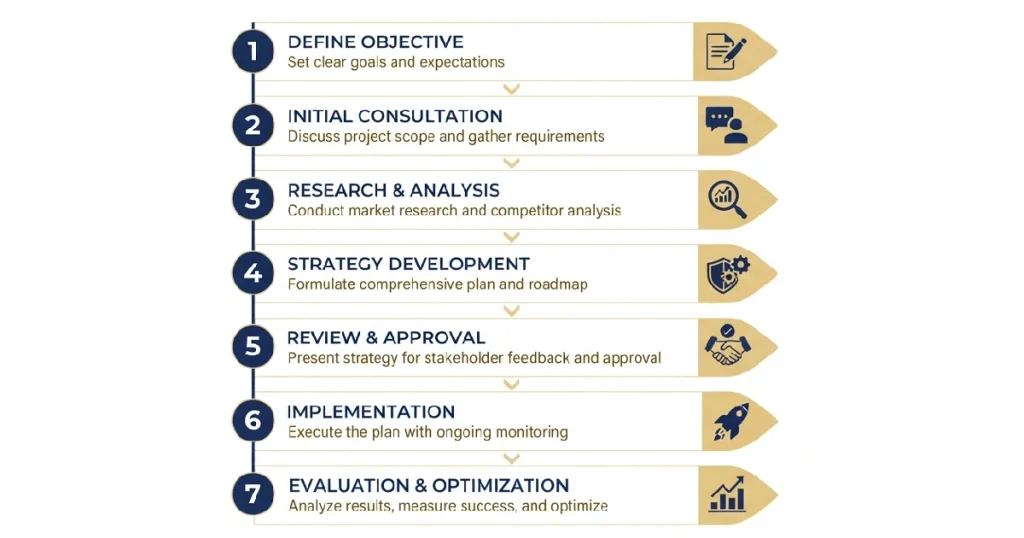
Once the pattern is visible, the next question is how to work with a narcissist boss without burning out. These six rules focus on tradecraft, not confrontation.
Rule 1: Master “Optic Inoculation” to Neutralize Smear Campaigns
When one person controls the only account of your work, they control your reputation too. Spreading visibility across multiple channels removes that monopoly.
Priya started posting sprint updates in the shared company wiki instead of only the team channel, and looped the design lead into client calls directly. Within two months, three other directors knew her work firsthand instead of through her manager’s summary of it.
This is optic inoculation. You’re not trying to expose your boss. You’re making your value visible from more than one angle so a single bad mood can’t define your reputation.
Rule 2: Execute the “Mirror and Pivot” De-escalation Strategy
Psychoanalytic literature on narcissistic injury describes how a perceived threat to status can trigger a reaction far bigger than the moment calls for. Mirroring their stated priority before pivoting to facts removes the threat before it ignites.
When Priya’s director got heated about a missed date in front of two VPs, she said: “I hear how critical this milestone is for your leadership goals with the VP, Daniel. To ensure we hit that standard, let’s lock down the three priority metrics right now.” The tension in the room dropped in one sentence.
Rule 3: Implement Closed-Loop Written Confirmations for Every Verbal Directive
Hallway directives and unscheduled calls are convenient to deny later. A quick written recap after every verbal exchange turns a vague memory into a documented record.
After a hallway comment about scope, Mark sent: “Hi Daniel, great catching up briefly earlier. To ensure I deliver precisely what you need, I will prioritize the dashboard build and hold on the integrations until Thursday’s review. Let me know if that differs from your plan.” When the plan shifted two weeks later, the paper trail already existed.
Rule 4: Decouple Identity from Output via the Feedback Deflection Matrix
Cognitive researchers like Aaron Beck described personalization as treating a vague criticism as proof of personal failure. A narcissist’s feedback is often emotional rather than specific, and separating your worth from one person’s mood is a skill, not a personality trait. It overlaps closely with recognizing corporate gaslighting signs and recovery.
When told her deck “lacked vision,” Priya didn’t defend herself. She asked: “Thanks for the feedback. Could you highlight the two specific slides or data points that need recalibration before I make the next pass?” The vague attack turned into two bullet points she could actually fix.
Rule 5: Dismantle Workplace Triangulation Through Direct Peer Alignment
Decades of social psychology research on peer support show that trusted lateral relationships buffer workplace stress even when the source of stress doesn’t change. Talking directly to a colleague instead of through the manager closes the gap triangulation depends on.
Sarah eventually asked Mark directly whether he’d raised concerns about her release. He hadn’t. They started a short weekly sync just between the two of them, no manager included, and the manufactured rivalry lost its fuel.
Rule 6: Maintain a Low-Profile, High-Impact Work Footprint
Narcissistic managers often treat open admiration as a limited resource. Drawing a lot of visible praise in meetings can read as competition rather than contribution.
Mark kept his deliverables steady and his personal disclosures minimal, answering questions directly without volunteering opinions on office politics. Over six months his manager had nothing dramatic to react to, and that quiet consistency became its own kind of protection.
Boundary Defense: How to Deal with Narcissist Boss at Work Interactions
Rule 7: Protect Your Off-Hours Boundary From the Urgent Ping Culture
False urgency sent at 9 PM on a Saturday often has more to do with your manager’s anxiety than an actual emergency. Responding instantly trains that behavior to continue.
Scheduling tools let you draft a reply Sunday night and deliver it Monday at 8 AM, keeping your weekend intact without making a public announcement about limits. Pairing this habit with clearer workplace boundary setting strategies protects your focus during actual working hours too.
A simple reply works: “Hi Daniel, saw this come through over the weekend. I’ve prioritized it first thing this morning and will have an update by 11.” Calm, on time, and zero drama.
Handling Hostile Performance Reviews Without Narcissistic Injury
Reviews with a narcissistic manager often drift from metrics into character, because vague criticism is harder to disprove than a missed KPI. Anchoring every response to written deliverables and the agreed roadmap keeps the conversation on solid ground.
When accused of “not being a team player” with no example attached, Priya replied evenly: “Can we look at the roadmap we agreed on in March? I delivered four of the five milestones on schedule.” She didn’t argue the characterization. She just redirected to the record.
The Institutional Reality: When to Involve HR vs. When to Plan Your Exit

Building a Grievance-Proof Documentation Trail
Corporate HR departments exist primarily to manage legal and financial risk for the company, not to referee personality conflicts. Groups like Acas in the UK, which publish statutory guidelines on workplace bullying and harassment, are clear that documented, specific incidents carry far more weight than general complaints about someone’s attitude.
A safer way to record incidents without breaching data policy:
- Note the date, time, and location in a personal file, not a company device.
- Quote exact words said, not a paraphrased summary.
- Record the business impact, like a missed deadline or a changed deliverable.
- Flag any clear policy violation separately from general unpleasantness.
If months of documentation show a pattern with no real path to resolution, that’s usually the quiet signal to put energy into your resume instead of another HR meeting.
Three Things To Try This Week
Knowing how to deal with a narcissist boss at work on paper is different from doing it on a stressful Tuesday. Here are three small habits worth testing.
The Morning Documentation Ritual. One place to begin is a two minute habit at the start of each day. Open a private note and jot down anything unusual from the day before, a verbal instruction, a comment that felt off, a deadline that shifted. This isn’t about building a case against anyone. It’s about making sure your memory isn’t the only record of what happened.
The Lateral Alliance Check. Consider testing a short weekly check in with one trusted peer, outside your manager’s earshot. A simple message works: “Hey, did you also hear the deadline moved to the 15th? Just want to make sure we’re both working off the same info.” This quietly defuses the triangulation described earlier.
The Non-Defensive Response Card. When criticism lands and feels more personal than useful, try a steady sentence starter instead of defending yourself on the spot: “That’s helpful, can you point me to the specific part that needs to change?” Keep a version of it saved somewhere easy to find. A ready made sentence is easier to use than one you have to invent while your heart is pounding.
None of these habits require a confrontation. They work quietly in the background, which is the point. The goal isn’t to win an argument with your boss. The goal is to make sure your work and your week aren’t dependent on their mood.
Frequently Asked Questions
Can a narcissist boss actually change if I set better boundaries?
Boundaries change your exposure, not their personality. Some managers adjust their behavior around people who document consistently and stay calm under pressure, but that’s a shift around you, not a deeper change in them.
Should I tell HR my boss is a narcissist?
Avoid clinical labels with HR and stick to specific incidents, dates, and business impact instead. HR responds to documented policy violations far more reliably than personality descriptions.
How do I know if it’s time to just quit?
If months of consistent documentation and calm tactics haven’t reduced the chaos, and your health or sleep is visibly suffering, that pattern is usually your answer. A steady job search run quietly in the background protects you either way.
Reclaiming Your Professional Autonomy at Work
You cannot reform a narcissistic manager. That was never actually your job. What you can control is your boundaries, the quality of your documented work, and your next move.
This chapter of your career is loud right now, but it’s still just one chapter. Staying calm under pressure, documenting clearly, protecting your peace, these skills travel with you long after this particular boss doesn’t.
Go back to that meeting where your idea got repeated back to the room as someone else’s. You don’t have to win that moment to know what actually happened in it. Your records know. Your peers know. And now you know exactly what to do next.
A difficult manager can shape your Tuesday, but they don’t get to shape your career.
My Closing Remarks
I’ve sat across from a lot of smart, capable people who started to wonder if they were the problem, simply because their manager was skilled at making confusion look like leadership. You’re not imagining it, and you’re not too sensitive. You’re dealing with a specific pattern, and patterns can be managed with specific tools. Keep your documentation boring and your boundaries consistent, and this chapter passes faster than it feels like it will right now.
More Related Stories for You
If this situation feels bigger than day to day tactics, our deeper breakdown on spotting the long term patterns of a narcissistic manager walks through what changes when the dynamic has gone on for years.
About The Author