
 David Wall
Your Meditation App Says You’re Doing Great. Your Nervous System Might Disagree.
Key Points
- Mindfulness meditation is not about achieving a perfect state. Many of the most common meditation mistakes come from treating the practice like a performance metric rather than an act of presence.
- Your body and nervous system need to be ready before you sit. Jumping from high-stimulation activities into silent meditation can trigger more stress, not less.
- Short, embodied micro-practices can be just as powerful as long sessions. The most effective mindfulness meditation practice fits your real life, not an idealized version of it.
Contents
Table of Contents
You Did Everything “Right” and It Still Felt Wrong
You set the alarm for 6 a.m. You found the cushion. You opened the app, pressed play on the guided session, and sat there with your eyes closed for twelve minutes.
And you felt worse.
Your mind raced harder. Your body felt stiff. A wave of anxiety crept in that wasn’t there before you started. So you told yourself what you always tell yourself: I’m just bad at this.
You’re not bad at this. You’ve likely been practicing with invisible errors baked into the process, ones that no app badge or streak counter will ever flag for you. And those errors aren’t random. They follow predictable patterns rooted in how your brain responds to modern life.
Why Good Intentions Lead to Bad Meditation Habits
Here is something worth sitting with: mindfulness meditation, as a practice, has robust scientific support. A meta-analysis published in JAMA Internal Medicine found that meditation programs can produce moderate improvements in anxiety, depression, and pain. The evidence is real.
But the evidence also shows that how you practice matters enormously. When mindfulness gets filtered through productivity culture, perfectionism, and an always-on digital environment, the practice can quietly become another source of stress rather than relief.
Psychologist Willoughby Britton at Brown University has documented what she calls “meditation-related adverse experiences,” showing that for a significant number of practitioners, certain approaches to meditation can cause distress rather than reduce it. This isn’t a failure of mindfulness itself. It’s a failure of how we sometimes apply it.
The core idea of this article is simple: the most damaging meditation mistakes are the ones you don’t realize you’re making, because they look like dedication.
Let me walk you through the ten that matter most right now.
1. Chasing Streaks Instead of Stillness: The Gamification Trap
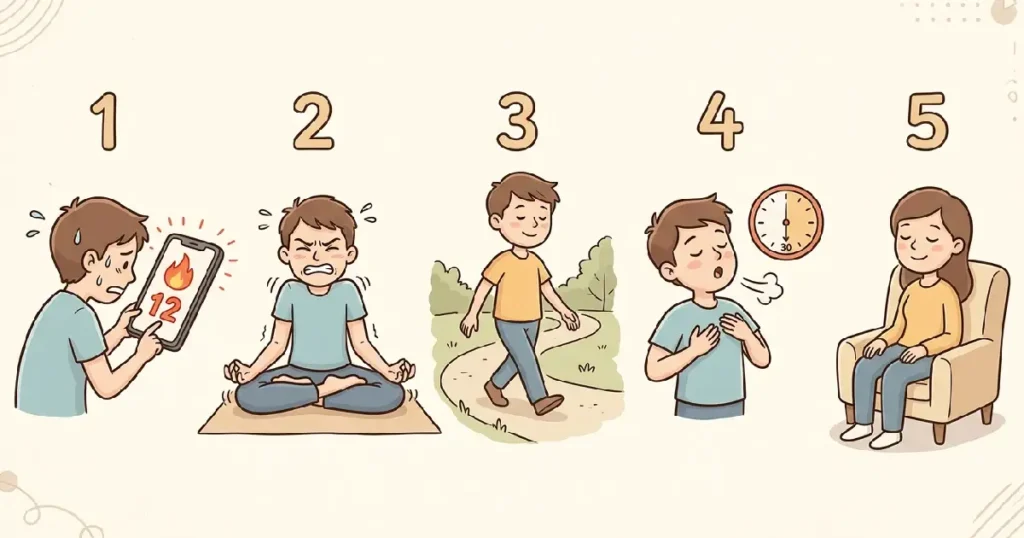
Your meditation app congratulates you on day forty-seven. You feel a tiny rush. Tomorrow, you’ll sit again, not because your mind needs it, but because breaking the streak feels like failure.
This is the gamification trap. When your meditation practice becomes about maintaining a streak or collecting digital rewards, your brain shifts into a dopamine-driven, goal-oriented mode. Neuroscientists call this the “wanting” circuit, mediated by the mesolimbic dopamine pathway. It’s the exact opposite of the non-striving, present-moment awareness that mindfulness meditation is designed to train.
What to do instead: Notice if your primary motivation is the streak or the sitting. If losing your streak would make you anxious, that’s useful information. Consider deleting the streak tracker for one month and seeing what your practice feels like when no one is counting.
2. Expecting Calm: Confusing Relaxation with Awareness
Many people start a meditation practice because they want to feel calm. That’s a reasonable wish. But mindfulness is not a relaxation technique. It’s an awareness technique.
True mindfulness means being present with whatever shows up, including anxiety, frustration, boredom, or physical discomfort. When you expect every session to feel peaceful, you unconsciously start suppressing the difficult experiences that arise. Psychologists call this experiential avoidance, and it’s one of the primary drivers of chronic stress.
The sessions that feel uncomfortable are often the ones doing the most important work.
3. Letting Your Wearable Meditate for You: Biofeedback Over-Reliance
Heart rate variability monitors. EEG headbands. Smart rings that score your “calm.” These tools can offer interesting data. But when you start needing a device to confirm that your meditation “worked,” you’ve outsourced a skill that’s supposed to be internal.
The technical term here is interoception, your ability to sense your own body’s internal states. Interoception is like a muscle. If you always rely on a screen to tell you what your body is feeling, that muscle weakens. You become a spectator of your own nervous system rather than a participant.
A useful question to ask yourself: Can you tell the difference between feeling anxious and feeling calm without checking a device? If not, spend a few sessions with no wearable at all.
4. Meditating to Be More Productive: The McMindfulness Problem

This one is subtle and deeply embedded in how meditation is marketed.
Consider Nadia. She’s a project manager who started meditating eighteen months ago after reading that CEOs credit meditation for their success. She meditates every morning at 5:45 a.m. for exactly fifteen minutes. She tracks it on a spreadsheet alongside her workout and her daily task list.
Nadia doesn’t actually enjoy meditating. But she does it because she believes it makes her sharper for her 8 a.m. standup meeting. She treats mindfulness the way she treats her protein shake: as fuel for output.
This is what critics have called “McMindfulness”, the reduction of a contemplative practice into a productivity hack. When meditation exists solely to make you a better worker, it becomes just another demand on your already overtaxed system. You lose the quality that makes mindfulness genuinely healing: the experience of being without having to produce anything.
That doesn’t mean meditation can’t improve your focus. It often does. But if performance is the only reason you sit, you’re building a house on a cracked foundation.
5. Forcing Stillness on a Dysregulated Nervous System
This is the mistake I see cause the most distress, and it’s the one fewest people talk about.
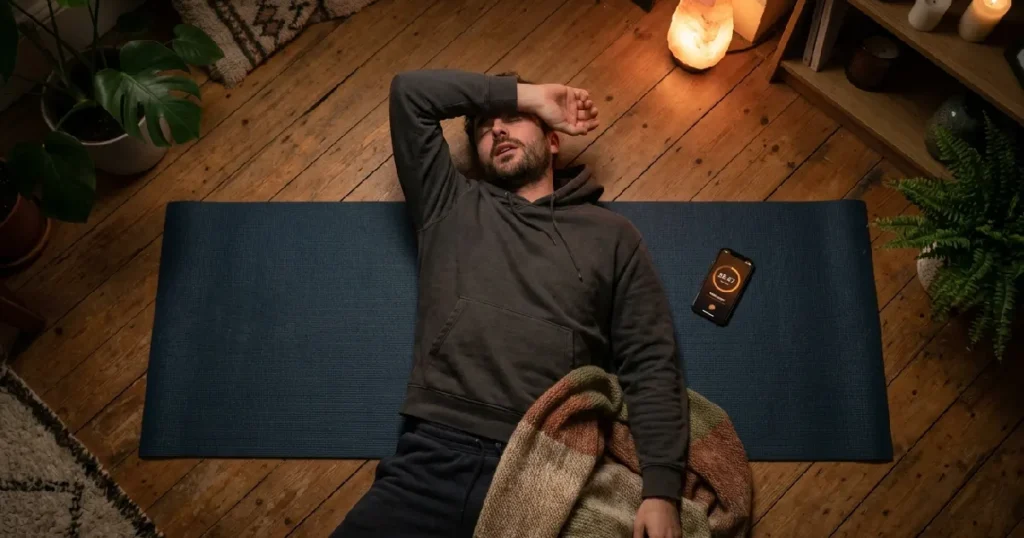
If your nervous system is already activated, if you’ve been in a sustained sympathetic “fight or flight” state from chronic digital stimulation, sleep deprivation, or unresolved stress, forcing yourself into silent, motionless meditation can feel like trapping a caged animal. For some people, especially those with a trauma history, this can trigger dissociation or emotional flooding.
Polyvagal theory, developed by Stephen Porges, describes how your autonomic nervous system moves through states of safety, mobilization, and shutdown. When you’re stuck in mobilization (hyperarousal), your body is not ready for stillness. It needs movement first.
What to try: Walking meditation, gentle stretching, or even shaking your hands for thirty seconds before sitting. These are not lesser forms of practice. They are neurobiologically informed entry points that prepare your system to actually receive stillness.
6. The Doom-Scrolling to Meditation Pipeline
You spend twenty minutes reading distressing news on your phone. Then you set the phone down, close your eyes, and try to be present.
Your brain doesn’t cooperate.
That’s not a meditation failure. That’s neurochemistry. When you switch directly from high-dopamine, high-arousal content to a low-stimulation practice, your brain experiences something similar to withdrawal. Your sympathetic nervous system is still running hot. Your prefrontal cortex, the part responsible for sustained attention, is still flooded with stimulation residue.
The fix is a buffer. Before you sit, spend two to five minutes doing something deliberately low-stimulation: looking out a window, drinking water slowly, standing barefoot on a cool floor. Think of it as a neurological airlock between digital chaos and intentional quiet.
7. Dismissing the Power of 30 Seconds
Here is the belief that holds so many people back: “If I can’t do twenty minutes, there’s no point.”
That’s not what the science says. Research on the physiological sigh, a breathing technique studied by Stanford neuroscientist Andrew Huberman and colleagues, shows that a single pattern of two short inhales followed by an extended exhale can measurably reduce autonomic arousal in under thirty seconds.
These embodied micro-practices, brief intentional moments of breath awareness, body scanning, or sensory grounding, are not consolation prizes. They are legitimate nervous system resets. In a world that demands constant context-switching, the ability to drop into thirty seconds of genuine presence is not just acceptable. It might be the most practical form of mindfulness meditation you can develop.
8. Spiritual Bypassing Disguised as Acceptance
“Just accept everything.” “Let it go.” “Don’t judge.”
These mindfulness instructions are often taught without a critical caveat: acceptance does not mean passivity.
There’s a pattern psychologists call spiritual bypassing, using spiritual concepts to avoid confronting legitimate problems. If you’re using mindfulness to tolerate a toxic work environment, suppress valid anger at being mistreated, or talk yourself out of boundaries you actually need, you’re not practicing acceptance. You’re practicing self-abandonment.
True mindfulness gives you the clarity to see a situation as it actually is. Sometimes what you see requires fierce, direct action, not more sitting.
That’s not a failure of your practice. That’s your practice working.
9. Suffering for the “Perfect” Meditation Posture
If you’ve ever forced yourself into a cross-legged position that sent shooting pain through your knees because it looked like what meditators are “supposed” to do, you’ve encountered rigid posture dogma.
In a world of chronic postural issues from prolonged screen use and desk-bound work, demanding a textbook lotus position is not discipline. It’s a setup for physical resistance that will hijack your attention away from awareness and toward pain management.
The two requirements for a meditation posture are comfort and alertness. If you can meet both while sitting in a chair with your feet flat on the ground, that’s a perfectly valid posture. Your spine doesn’t need to be a monument. It needs to be at ease.
10. Zoning Out Is Not the Same as Going Deep
This might be the most misunderstood mistake on the list.
You sit down. You close your eyes. Ten minutes later, you open them and realize you have no idea where you just went. Your mind feels foggy. Heavy. You think: That must have been deep.
It probably wasn’t. In traditional contemplative psychology, this state is called laya or dullness, a sinking of mental clarity that mimics depth but is actually closer to sleep. True meditative awareness is vivid, clear, and alert. You’re fully present, not checked out.
If you consistently feel drowsy during meditation, it may be a sign that you need more sleep, not more meditation. Or it may mean your posture needs more uprightness, or that practicing with your eyes slightly open (a technique common in Zen traditions) would help maintain conscious awareness rather than reinforcing unconsciousness.
Your Practice Starts Before You Sit Down
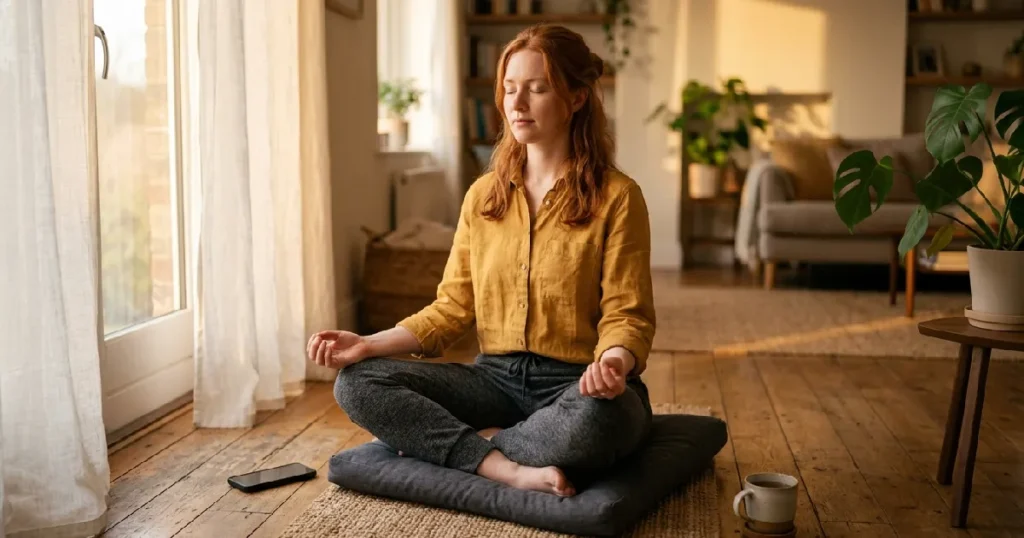
Now that you can name these patterns, here are three specific strategies to rebuild your practice from a more honest foundation.
The Pre-Sit Check-In. Before each session, pause and ask yourself one question: “What state is my nervous system in right now?” You don’t need a wearable to answer this. Notice if your heart rate feels elevated, if your jaw is clenched, if your thoughts are racing. If you’re activated, start with two minutes of gentle movement or breathing before attempting stillness. This is not a workaround. This is skillful practice.
The Intention Reset. Once a week, write down your honest reason for meditating that day. Not your aspirational reason. Your real one. “Because I want to feel less anxious” is different from “because I don’t want to lose my streak.” This simple act of honesty recalibrates your relationship with the practice and keeps it connected to genuine need rather than habit or obligation.
The 30-Second Anchor. Choose one daily activity, washing your hands, waiting for coffee to brew, standing in an elevator, and use it as a cue for thirty seconds of deliberate sensory awareness. Feel the water temperature. Notice the sound of the machine. Sense your feet on the floor. These micro-practices build the same neural pathways as formal meditation, and they train you to access presence without needing perfect conditions.
The Practice That Actually Serves You
Think of mindfulness meditation like learning to swim. If someone throws you into deep water and tells you to relax, you’re not going to learn technique. You’re going to survive. And surviving is not the same as swimming.
Most of the mistakes on this list share a single root: they treat meditation as a performance rather than a relationship. A relationship with your own attention. With the felt texture of being alive in a body. With the honest, sometimes uncomfortable experience of being present.
You don’t need a perfect streak, a perfect posture, or a perfect brain scan. You need the willingness to sit with what’s actually happening inside you, even when what’s happening is messy, boring, or hard.
The next time you close your eyes to meditate and your mind immediately wanders, don’t treat it as evidence that you’ve failed.
Treat it as the first moment of real practice.
That’s where it begins.
My Closing Remarks
I spent years believing that my inability to sit still for twenty minutes meant I lacked some essential quality that “real” meditators had. It took me longer than I’d like to admit to realize that my restlessness wasn’t a flaw. It was information. My nervous system was telling me something, and I kept overriding the message because I thought discipline meant ignoring my own body. The day I let myself walk instead of sit, breathe instead of force silence, and accept a scattered mind instead of fighting it, my practice actually started. If anything in this article felt like it was written about you, good. It was written for you. Trust what your body already knows.
More Related Stories for You
- If you’re ready to deepen your daily mindfulness practice beyond what’s covered here, start with approaches grounded in real experience rather than idealized routines.
About The Author