David Wall
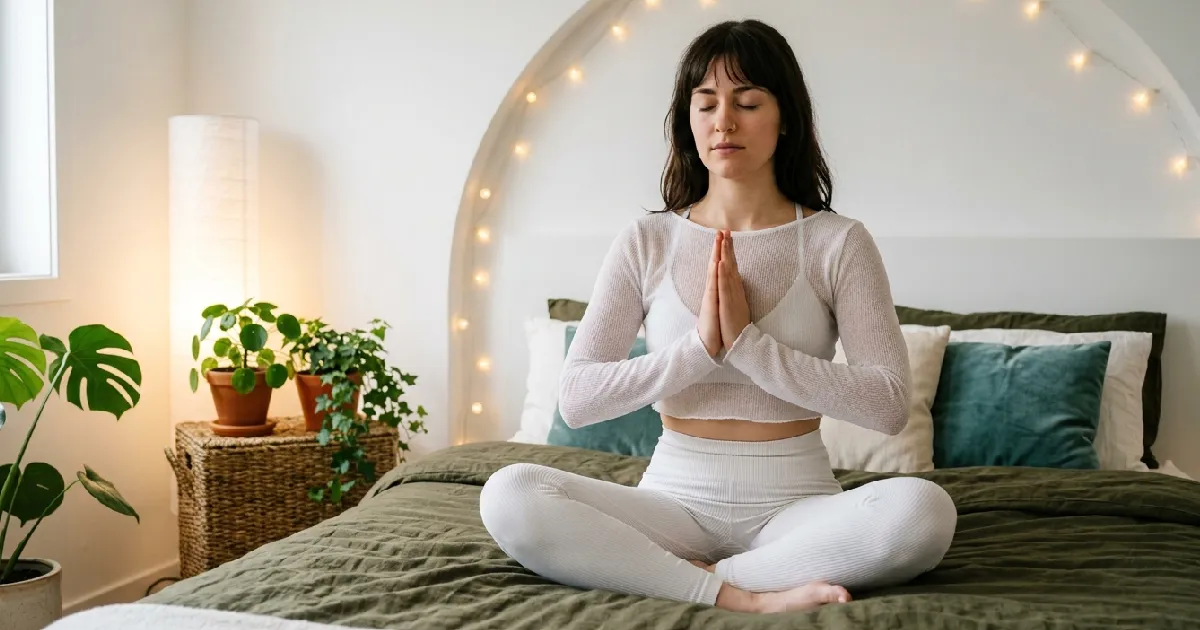
Why meditation sometimes backfires at night, and the five shifts that actually help you rest
Key Takeaways
- Meditation and sleep don’t automatically go together, and when the mismatch happens it is not a personal failure.
- The best sleep meditation for you depends on what is actually keeping you awake, not whatever technique is trending on an app.
- A simple seven day experiment can show you whether bedtime meditation is helping your sleep or quietly working against it.
Quick Answer: Meditation and sleep work together when the technique matches your nervous system, not the clock before bed. Daytime practice trains your brain to let go at night, while body scans and Yoga Nidra lower the self monitoring that breath focused meditation can trigger. Timing and technique matter more than effort or app rating.
Contents
Table of Contents
We have all done this. You lay in bed at 11pm with some meditation app playing a voice that is suppose to sound calming, and somehow you end up more awake than when you started.
Your brain starts checking itself. Am I relaxed yet. Am I present. Did I just drift into a thought. That checking is the exact thing keeping you up.
If this sounds like you, you are not doing meditation wrong. You are running into a real and documented clash between how mindfulness trains your brain and what sleep actually requires from it.
Meditation and sleep are often sold as a package deal. Close your eyes, breathe slow, drift off. For a lot of people that works fine. For a smaller but very real group, the practice that calms them during the day makes their mind louder at 11pm.
This article is not another “just breathe” list. It walks through five specific shifts, including what to do the moment you notice meditation is backfiring, based on sleep research and the actual complaints people post in meditation forums when nobody is watching.
Why Meditation and Sleep Sometimes Clash
The Relaxation Response Fighting The Monitoring Habit
Here is the part nobody explains clearly. Meditation trains two different skills, and they pull in opposite directions at bedtime.
One skill is relaxation. Sitting quietly and breathing slow does genuinely calm the nervous system. It lowers the fight or flight response and raises GABA activity, the brain chemical that puts a damper on racing thoughts.
The other skill is meta awareness. This is the habit of noticing when your mind wandered and gently pulling it back. During the day this habit is gold. At 11pm it becomes a watchdog that will not clock out, checking over and over whether you have fallen asleep yet.
Falling asleep requires the opposite of noticing. It requires losing track of yourself. A brain trained to monitor itself can struggle to let go of that job, even when you want nothing more than to stop thinking.
A 2015 randomized clinical trial published in JAMA Internal Medicine found mindfulness meditation genuinely improved sleep quality in older adults with sleep disturbances. The research is real. It just is not the whole story, because the same study population is not everyone, and plenty of people online report the opposite result.
If meditation has made your sleep worse, you are not broken. You are using the wrong technique at the wrong time for your specific nervous system.
Secret #1: Stop Meditating Right At Bedtime

Train The Skill When You Are Already Calm, Not When You Are Desperate
The mechanism here is simple once you see it. Trying to learn how to let go of your thoughts while you are lying in the dark, frustrated, and watching the clock is one of the hardest possible conditions to learn anything in.
Take Danielle. She downloaded a sleep meditation app after three bad weeks of insomnia and used it every single night right as she turned off the lights. Her mind got busier, not quieter, because she was asking her brain to perform a new skill under pressure, at the exact moment she needed it to already know how.
She moved her practice to 4pm instead. One minute, same time every day, nothing fancy. Within two weeks her nighttime mind had less to fight because the “letting go” muscle was already warmed up by the time she got in bed.
This is the shift competitors skip. Meditation for sleep works better as daytime training than as a nighttime sedative. If you miss a day, do not stack a longer session at bedtime to make up for it. The bedtime session is usually the problem, not the fix.
Secret #2: Match The Technique To Your Actual Sleep Problem
A Racing Mind, Physical Tension, And Hypervigilance Are Three Different Problems
Most sleep meditation content hands you one technique and hopes it fits. It rarely does, because insomnia does not have one cause.
If your mind races with thoughts, breath focused meditation can make it worse, because watching your breath becomes one more thing to monitor. A body scan for sleep works better here. Move attention through your right hand, arm, shoulder, torso, legs, feet, then the left side, then your back. You are pulling attention out of your head and into your body.
If your problem is physical tightness, progressive muscle relaxation is a gentler door in. Tense each muscle group for five seconds, release for ten, working from your feet up to your face. Your body learns what relaxed actually feels like by contrast.
Take Marcus, who grew up a light sleeper with a hair trigger startle response. Silent meditation felt unbearable to him, like being alone with every sound in the house. Yoga Nidra for sleep gave him a guided voice to hold onto, done lying down, with almost no self monitoring required. A randomized controlled trial protocol conducted at AIIMS Rishikesh found Yoga Nidra measurably improved sleep quality compared to sleep education alone.
One caveat worth saying out loud. If you have a trauma history or tend to dissociate, closing your eyes for a full body scan can feel destabilizing rather than calming. Keep your eyes open with a soft gaze and anchor to sound in the room first.
Secret #3: Use The Paradox Protocol When Meditation Backfires
What To Do The Moment You Notice You Are More Awake, Not Less
This is the part no competitor article touches, and it is the one most people actually need.
Step one is to stop fighting the thoughts. A work worry or a replayed conversation is not a malfunction. Label it quietly, “this is a worry,” and let it pass without chasing it. Fighting a thought gives it more energy, not less.
Step two is harder to accept. Your meditation habit trained you to check whether you are present. At night, drop that job completely. Do not watch the breath. Do not scan for distraction. Let your mind run on autopilot, because that loss of self awareness is exactly what sleep onset needs.
Take Priya, a longtime meditator who assumed more mindfulness would fix her insomnia, and instead found her chatter got louder every night, a pattern a lot of r/Meditation users describe almost word for word. She started using this protocol and the goal shifted from “do this correctly” to “stop checking at all.”
Step three matters when the first two do not work fast enough. If twenty minutes pass and you are still wired, get out of bed. Do something boring in dim light until you feel drowsy again. The goal is not to meditate harder. It is to keep your bed from becoming associated with struggle.
What To Do Next

The One Minute Anchor. Pick a daytime moment, same time each day, and spend one minute on a breath or sound anchor. This builds the letting go skill before you ever need it at night.
The Body Scan Redirect. When your mind races at bedtime, consider swapping breath focus for a slow scan from feet to head. It gives a racing brain something physical to land on instead of another thing to watch.
The Paradox Protocol. When you notice meditation making you more alert, try dropping the job of staying mindful entirely. Label the thought, let it float, and give yourself permission to stop observing.
The Three Bedtime Rules. If you still want to meditate at night, keep the session short, load the audio before you get in bed so your phone stays off, and skip it entirely if you are already frustrated and wide awake.
The Seven Day Experiment. For one week, meditate only in the morning for five minutes and skip it entirely at night. Track how calm your days feel, not how fast you fall asleep. Many people find their nights improve on their own once the nighttime pressure is gone.
When To See A Professional Instead
Meditation is a support, not a cure for everything. If insomnia has lasted more than a few weeks, if you suspect sleep apnea, or if a trauma history makes lying still with your eyes closed genuinely distressing, a sleep specialist or therapist trained in CBT-I is the better first stop. Cognitive behavioral therapy for insomnia remains the first line treatment for chronic sleep trouble, and meditation works best alongside it, not instead of it.
Frequently Asked Questions
Can meditation make insomnia worse?
Yes, for a minority of people. Mindfulness strengthens the habit of noticing your attention, which can turn into a self monitoring loop at night. Switching to a body scan or moving your practice earlier in the day often resolves it.
What is the best time of day to meditate for sleep?
Earlier in the day or early evening tends to work better than right before bed for most people struggling with insomnia. Daytime practice trains the letting go skill so it is already available by the time you want to sleep.
Is Yoga Nidra better than regular meditation for sleep?
Yoga Nidra is often easier to tolerate because it is guided and done lying down, which lowers the self monitoring that silent meditation can trigger. People with trauma histories may still prefer an eyes open version with sound as the anchor.
The Takeaway
You started this article lying awake, annoyed at an app that promised calm and delivered the opposite. Now you have an actual map for that moment, and a reason to stop blaming yourself for it.
Meditation and sleep are strong partners, but only once the timing, technique, and dosage fit your actual nervous system instead of a generic script.
Tonight is not the night to meditate harder. It is the night to put the scorecard down.
My Closing Remarks
I have sat with this exact frustration myself, wide awake and annoyed that the thing meant to calm me was doing the opposite. What changed things was dropping the idea that meditation owed me sleep on demand. It is a daytime practice with nighttime benefits, not a bedtime switch. Give yourself the same patience you would give a friend learning this.
More Related Stories For You
If this resonated, you may want to read more on building a daily mindfulness practice that actually sticks.
About The Author