 Elena Garcia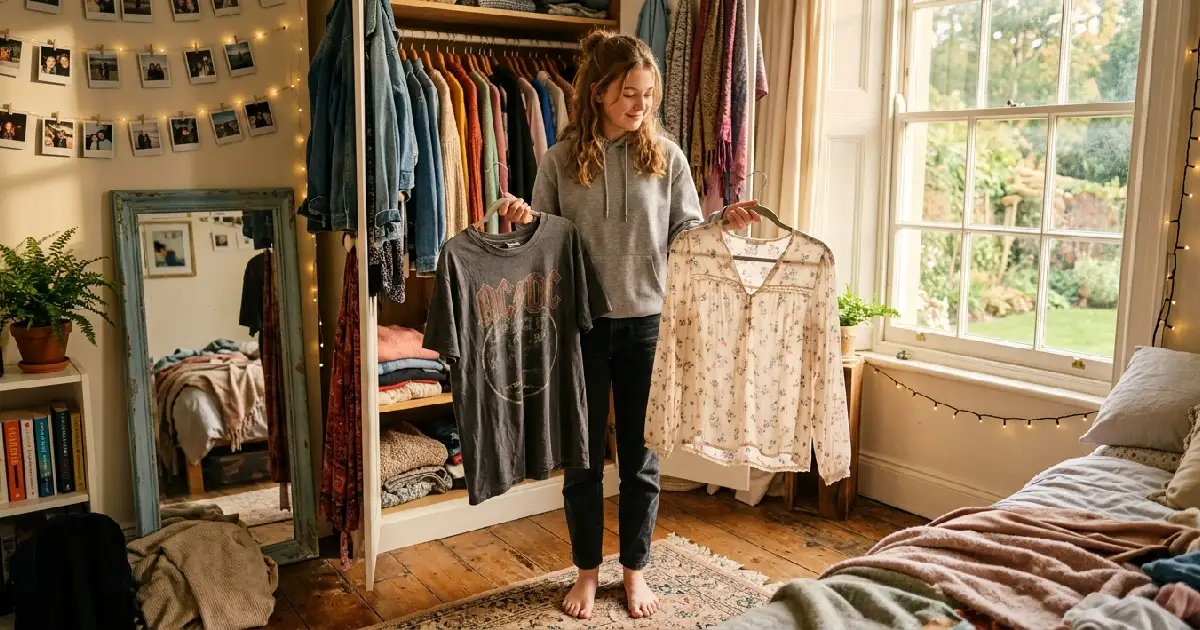
Key Points
- Most fashion tips for teenage girl overlook the real reason getting dressed feels stressful it is not about clothes at all, it is about identity.
- Fashion tips for teenage girl work best when they help you build a personal style rooted in who you already are, not who the internet says you should be.
- When you stop chasing trends and start noticing what genuinely feels like you, your confidence in getting dressed stops feeling like a performance.
Contents
Table of Contents
You Are Not Bad at Fashion. You Are in the Middle of Figuring Out Who You Are.
You open TikTok for five minutes looking for outfit ideas.
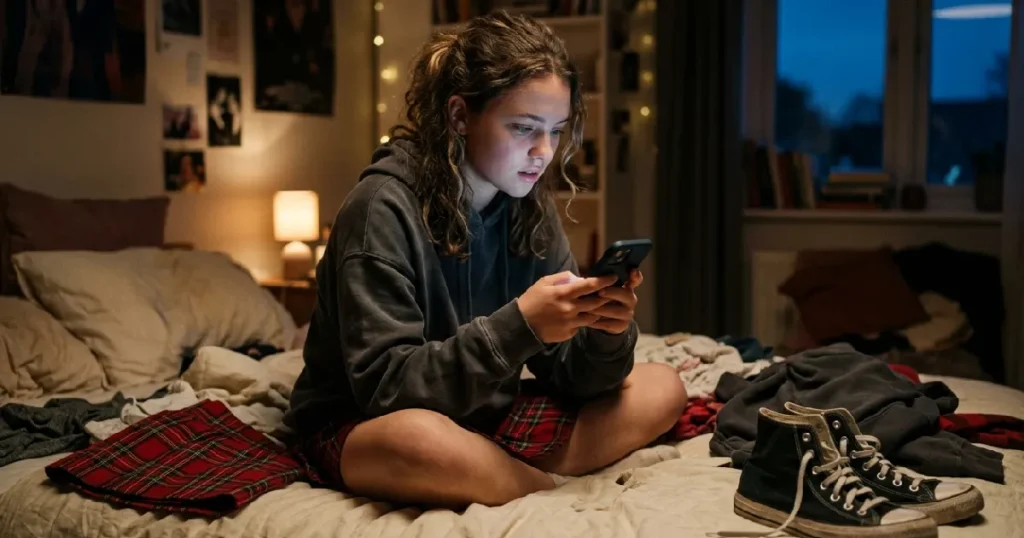
Forty minutes later, you have saved seventeen videos, pinned three conflicting aesthetics, and now feel worse than when you started. The “clean girl” look seems perfect until you see “dark academia” and think that might actually be you. Then comes “cottagecore.” And suddenly you are standing in your room with no idea what any of it has to do with you.
That is not a fashion problem. That is a completely normal identity problem wearing a fashion costume.
And here is the thing nobody tells you: the confusion itself is a sign that something healthy is happening inside you.
Why Getting Dressed Feels Like a Test You Never Studied For
Fashion in adolescence is not just about what you wear. It is a real, documented way that teenagers shape and explore their identities. According to developmental psychology, teens use fashion to express individuality, connect with peers, and assert independence from family influence.
That is a lot of pressure to put on a pair of jeans.
Think of it this way: your wardrobe right now is less like a closet and more like a question you are trying to answer. Who am I? Who do I want to be? How do I want to show up in the world? Every outfit becomes a tiny attempt to answer that question out loud without words. As adolescents undergo rapid psychological and emotional development, they begin to form a self-concept an internal picture of who they are and clothing becomes one of the first tools they use to shape and communicate that identity. In plain terms: you are not just picking an outfit. You are practicing being yourself. And practice, by nature, involves uncertainty. A 2023 study revealed that teenagers who feel good about their clothing choices have higher self-esteem and better social connections. Notice what that says. It does not say teenagers who dress the trendiest. It says teenagers who feel *good* about their choices. That distinction matters more than any aesthetic ever could.
But here is what no one tells you.
The reason fashion advice feels so confusing is not because you lack taste. It is because most advice skips straight to the what without ever touching the why. And without the why, nothing sticks.
The Real Reason Fashion Tips for Teenage Girls Fall Flat
1. You Are Being Handed a Map to Someone Else’s Destination
Most fashion tips for teenage girl content online gives you a list: “get these basics,” “try this color palette,” “follow this aesthetic.” Those tips are not wrong. They are just incomplete. For many teenagers, conforming to group norms becomes a survival strategy. Those who dress differently may be seen as outsiders or face exclusion. As a result, many teens align their fashion choices not with their personal taste, but with the preferences of their social circle.
So you follow the advice. You buy the “clean girl” staples. You post the outfit. And it still feels a little off like you are wearing a costume designed for someone who is almost you, but not quite.
That feeling is useful data, not failure.
Meet Maya. Sixteen years old, obsessed with vintage bands, biology, and making people laugh. She spent two months building a “trendy aesthetic” wardrobe she saw on Instagram. Cute clothes. But every morning getting dressed felt hollow. One day she wore her old band tee, wide-leg jeans she thrifted for four dollars, and bright yellow earrings she made herself. Three people asked where she got her outfit. She had not followed a single trend. She had just worn herself. That is when the real fashion advice finally clicked.
2. Social Media Turns Your Style Into a Performance Review
Social media amplifies these dynamics, creating platforms where clothing becomes a visible and often judged part of one’s digital identity. When you get dressed for an Instagram photo instead of for Tuesday morning, fashion stops being fun and starts being a source of anxiety. Fashion serves as a means of emotional expression, allowing teens to channel their feelings and moods into their wardrobe choices. Whether it is the bold statement of a vibrant outfit or the comfort of a cozy ensemble, fashion provides an outlet for expressing emotions that may be difficult to articulate verbally.
The moment you start dressing for the comments section, you lose access to that outlet entirely.
Here is the insight differentiator that almost no fashion article will tell you: your style confusion is not a gap in your knowledge. It is a gap between who you actually are and who you think you are supposed to look like. Those are two very different problems requiring two very different solutions.
3. Trends Change Faster Than Your Identity Can Keep Up
Teens today no longer follow one-size-fits-all fashion trends. Instead, they organize their clothing choices around specific “aesthetic categories.” And while that sounds freeing, it can actually create more pressure because now you have to *choose* an identity category like you are selecting a Netflix genre. Peer pressure and social media have a big influence on fashion choices. Fashion is considered a form of self-expression and should be fun, not stressful.
The truth is, you are allowed to borrow from multiple aesthetics. You are allowed to change your mind. You are allowed to wear the “wrong” pieces together and call it yours. Style is not a math problem with one correct answer. It is a conversation you are having with yourself and conversations evolve.
4. Confidence Does Not Come From the Right Outfit. It Comes From the Right Reason.
Girls tend to associate fashion with self-worth and emotional expression. That is not a weakness. It is actually a superpower if you know how to use it.
In my experience working with teen readers and young women navigating self-expression, the biggest shift comes not from changing what they wear, but from changing why they wear it. When you dress from a place of “I want to feel like myself today” instead of “I hope this makes people like me,” your whole relationship with your closet changes. When teenagers have the capacity to express themselves authentically through fashion, they develop confidence and self-esteem.
That word authentically is the entire point.
Your Style Toolkit: Four Practical Starting Points
The “Three-Word Method”
Before you go shopping or scroll for inspo, write down three words that describe how you want to feel in your clothes not how you want to look. Words like: comfortable, bold, soft, playful, sharp, artistic. These become your filter. If an outfit does not match those words in how it makes you feel, leave it.
The “Wear It First, Decide Later” Rule
One place to start is this: stop buying things you “might wear someday.” Only bring something home if you can picture the exact outfit, the exact Tuesday, you would wear it in. Try it on with what is already in your closet before you buy. This one rule cuts wardrobe regret in half.
The “Whose Voice Is That?” Check
A useful question to ask yourself when you pick up something: Would I want this if no one could see me wear it? If the honest answer is no, that piece is not for you it is for an imaginary audience. Your style should work just as well on a quiet Sunday alone at home as it does on a school hallway.
The “Style Evidence Board”
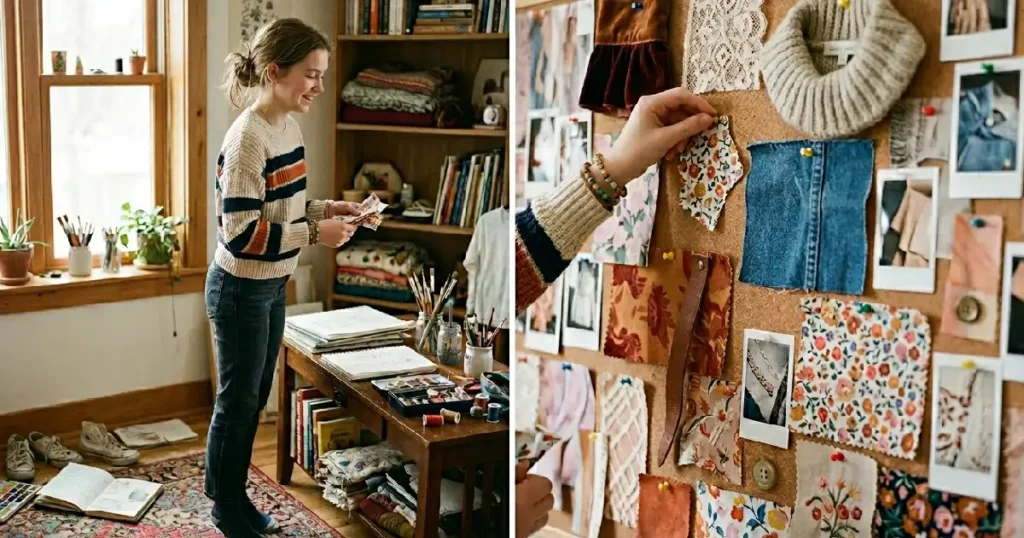
Consider saving images not of full outfits, but of individual elements that make you feel something. A texture. A silhouette. A color. Observe your saved images and look for certain similarities: color palettes, themes, or silhouettes. Writing them down can allow you to get a better idea of what to look for when going shopping or thrifting. This is not about copying a look. It is about learning your own visual language.
You Already Know More About Your Style Than You Think
Here is what the confusion has actually been teaching you: every trend that felt wrong told you something real. Every outfit that felt off was a clue. Every time you thought “this is not really me,” your self-awareness was working perfectly. Teenagers are not blindly following trends. They often weigh comfort, practicality, emotional confidence, and self-expression when making fashion decisions. Social media and peer influence do shape perceptions, but teenagers appear to filter these influences through their own values and lifestyle needs.
You have been doing that filtering all along. You just may not have had the language for it.
Think back to the beginning you, overwhelmed by TikTok aesthetics and saved pins and conflicting advice. That moment does not mean you are lost. It means you have been paying close attention. And paying attention is exactly where real style begins.
Your style is not a destination you arrive at. It is the evidence of all the days you chose yourself anyway.
My Closing Remarks:
I am going to be honest with you in a way that most fashion articles never are. The best outfit I ever wore cost almost nothing and broke every “rule” I had ever read. I wore it because it felt like me on a day I desperately needed to feel like myself. And that is the whole secret. Fashion tips for teenage girl matter most not when they make you look better but when they help you feel found. You already are. Start there.
More Related Stories for You:
- Wondering how to put these ideas into action day by day? Read more on how to look attractive as a teenage girl for real, grounded tips that meet you exactly where you are.
About The Author