Nicole Adkins

The good week felt real. Here is how to tell a turning point from a rerun, without diagnosing anyone or losing yourself.
Key Takeaways
- The honest answer to “can a narcissist change” runs through three gates: capacity, motivation, and maintenance, and most couples stall at the second.
- A flawless apology can be the weakest evidence in the room, because reading your feelings and feeling them are separate skills.
- Four quiet tests, run over 90 days, will tell you more than a year of promises.
Can a narcissist change? Yes, but lasting change is rare. It usually takes years of specialized therapy, real accountability, and steady behavior when nobody is watching. Traits soften with age on average, yet people keep their rank in the pack, so judge the 90-day pattern rather than the apology alone.
Contents
Table of Contents
We all keep a highlight reel of the good version of them: the birthday dinner planned to the last detail, the tears when you said you were done, the gentle week that followed. Then an ordinary Tuesday arrives, and the old contempt walks back in like it never left.
You’re left holding two people who share one face. Underneath the search for “can a narcissist change” sits a quieter, heavier question: was that good week a preview, or a performance?
Here is the mechanism most answers skip. Narcissistic behavior works like armor against shame, so criticism gets bounced back at whoever stands closest. Change asks a person to feel that shame without exporting it, which is the one skill the armor was built to avoid.
This article gives you a way to sort maturing from marketing, six signals worth watching, and four tests you can run without picking a single fight.
Why Narcissists Can Change, and Why So Few Do
Three different things get called narcissism online, and they change at different odds. Narcissistic traits are normal equipment; most of us carry some. Narcissistic personality disorder (NPD) is a rigid, decades-long pattern of grandiosity and entitlement that shows up everywhere: work, family, the DMV line. Abusive behavior is a third thing, a set of choices that can appear with or without a diagnosis.
Real change has to pass three gates. Capacity: can this person learn to notice feelings, theirs and yours? Motivation: do they want the work for its own sake, or only want the consequences to stop? Maintenance: does the new behavior survive boredom, stress, and a bruised ego?
Capacity is better than folklore suggests. Motivation is the gate where almost everything stalls, because it usually arrives as loss: divorce papers, a job, a health scare. A common pitfall we see is a partner trying to supply that motivation with more love, more proof, more patience. That is the one ingredient you cannot donate.
Age softens the volume, rarely the ranking
A 23-year study followed people from age 18 to age 41, and the results cut both ways (Wetzel et al., 2020). Average narcissism dropped, including entitlement. Yet rank order held firm: the most grandiose 18-year-olds tended to become the most grandiose 41-year-olds, just smoother about it.
One detail rarely quoted: people who spent midlife supervising others shed less of their narcissistic leadership style. Power preserves the posture. So when someone promises your partner will “grow out of it,” the data say expect a volume knob rather than a new instrument.
The apology that lands perfectly and changes nothing
Berlin researchers tested 47 patients diagnosed with NPD against healthy and clinical comparison groups (Ritter et al., 2011). Cognitive empathy, the ability to read what you feel, tested as largely intact. Emotional empathy, catching your feeling and caring about it, was significantly impaired.
That split explains the eerily accurate apology followed by the identical offense on Friday. They can read the blueprint without carrying the weight. So grade the rematch, and let the press conference go.
Do Narcissists Change? Six Signals That Separate Growth From a Rerun
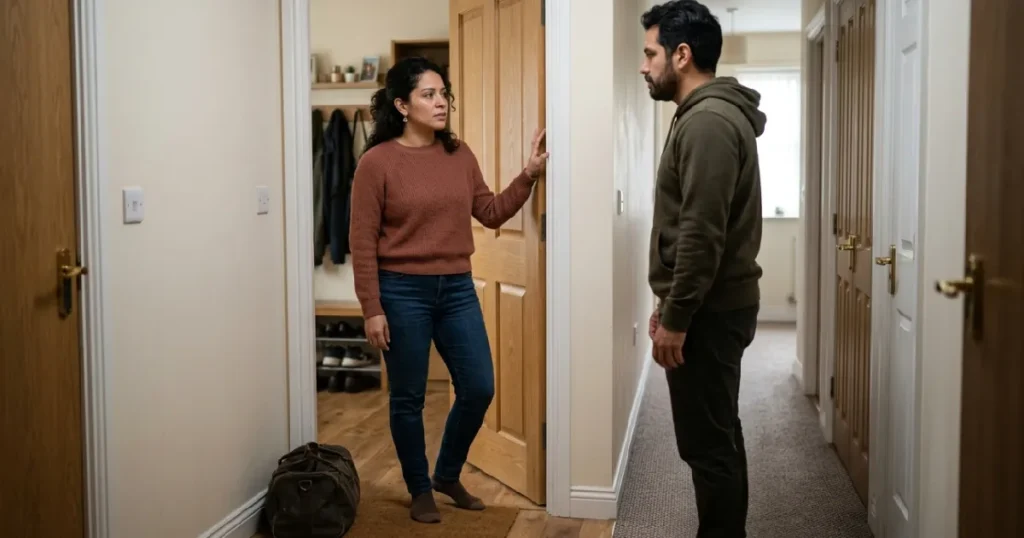
Change shows up in boring moments. Speeches are cheap; watch the small, unwitnessed minutes after a rupture.
| Moment to watch | Performance of change | Evidence of change |
|---|---|---|
| First 48 hours after a fight | Grand apology, gifts, “I’m a monster, you deserve better” | Names one specific act, no “but,” asks what repair would look like |
| Who pays for the peace | You manage moods; they collect credit | They book, pay for, and attend their own therapy |
| Audience | Warm in public, cold in the car | Same temperature with waiters, kids, and strangers |
| Your boundary | Debates it, mocks it, or obeys for a week | Adjusts behavior even while visibly annoyed |
| A setback | Resets to zero and blames your doubt | Owns the slip faster than last time |
| Therapy language | Fluent terms aimed at you: “you’re projecting” | Plain words aimed at themselves: “I got defensive” |
The collapse that looks like a breakthrough
After a real loss, the armor can crack all at once. Clinicians call it narcissistic collapse: days or weeks of tears, humility, and startling insight, often paired with frantic attempts to pull you back, the move known as hoovering. It feels like a turning point. It is a pressure drop.
Love bombing after a breakup runs on the same fuel: urgency. A practical rule from watching these cycles: count from day 45, not day one. Collapse peaks early and fades; growth starts small and compounds. If the humility evaporates the moment you reconcile, you were watching weather.
What treatment can honestly promise
The research base for NPD-specific treatment is thin, and most specialized approaches were built for borderline personality disorder and adapted from there. Schema therapy and transference-focused psychotherapy aim at the shaky self-image underneath the armor, week after week, for years.
Generic talk therapy can stall for a sneaky reason: an articulate client can mine sessions for better vocabulary. A pattern we see often is a partner who returns from counseling fluent in “boundaries” and “projection,” using each term as a fresh weapon. That is gaslighting with a certificate. If sessions leave them more armed and you more confused, treat that as data, and consider a different format or a solo therapist for yourself.
Can a Narcissist Change Their Behavior Without Changing Inside?
Yes, and this is the part most articles skip. Behavior can improve while the inner machinery stays untouched, and sometimes that is enough for the relationship you actually need.
Behavior-only change runs on scaffolding: predictable consequences, written agreements, outside accountability like a court, an employer, or a recovery program. A sober partner can lose the volatility while keeping the entitlement. An aging parent can soften once dependency flips and you hold the car keys. A skilled performer can learn therapy-speak and deploy it on schedule.
None of that is fake. It is rented. The behavior holds while the lease holds, so remove the consequences and watch how fast the old pattern reoccupies the space.
The trade-off is intimacy. Rented behavior can carry a co-parenting schedule, a business, or a polite holiday dinner. It cannot carry a marriage where you need to be emotionally safe with your guard down. Parallel parenting, shared calendars, and brief written updates outperform heart-to-hearts in exactly these setups.
If the pattern you are mapping belongs to a spouse, this walkthrough of the quiet signs of a narcissistic husband can help you separate rough patches from a fixed pattern.
Match the relationship to the ceiling you can verify. Grief usually shows up right here, when you realize the ceiling is real, and it deserves room.
Four Tests You Can Run in the Next 90 Days
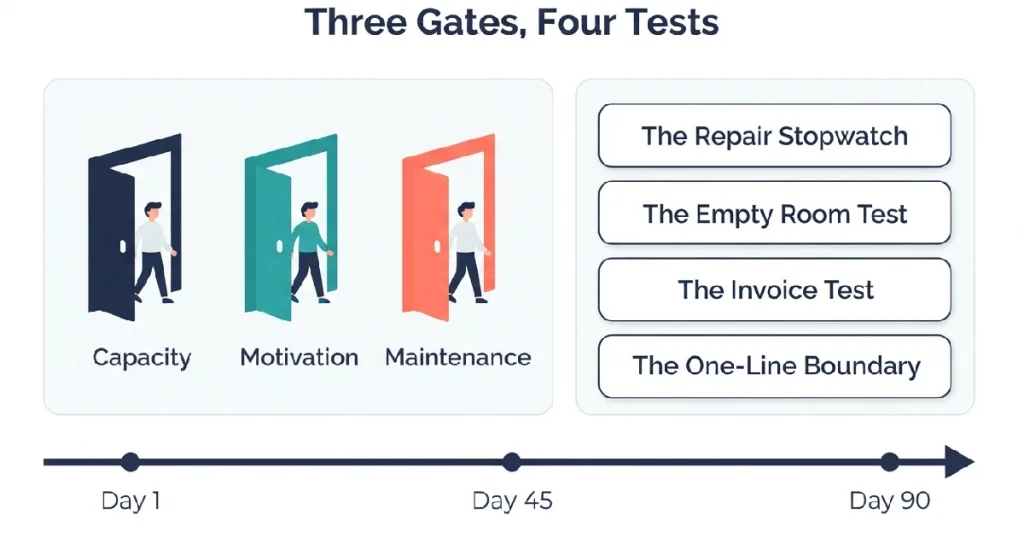
One ground rule first: if pushback has ever turned physical, or you feel afraid of what happens when you hold a line, skip the testing and talk to a domestic violence advocate (800-799-7233 in the U.S.). These tools assume you are safe.
1. The Repair Stopwatch. After the next rupture, note the time, then say: “I don’t need an apology tonight. When you’re ready, tell me in your own words what you think happened.”
Log the hours until an unprompted repair that names a specific act, with no “but” attached. Repair arriving at 72 hours, then 24, then 6 across three months is a growth curve. A monthly reset to zero is a loop.
2. The Empty Room Test. Once a week, list three things they did that nobody praised and that cost them something: status, time, convenience. Admitting a mistake to their own family counts double. If the list stays empty for four straight weeks, you are watching public relations.
3. The Invoice Test. Draw two columns and answer honestly: who pays for the peace? Their column should hold therapy fees, changed routines, admitted faults. Yours holds canceled plans, edited sentences, managed moods.
Then hand one job back: “I’m glad you’re getting support. I’m going to stop managing your stress for you, starting with the Sunday calls.” Notice what survives your resignation as manager.
4. The One-Line Boundary. Pick one behavior and attach one action you control: “If voices go up, I’ll take the car and we’ll talk tomorrow.” Say it once, calmly, then let the boundary do the talking.
Growth adapts within a few weeks, even grudgingly. Performance attacks the boundary itself, which tells you the request was heard and refused.
Read the slope, never the peaks. Two steps forward and one back is a trend; one radiant week per month is a cycle, and intermittent rewards like that are exactly how a trauma bond tightens. Sunk years are spent either way.
And you can leave before day 90. The test exists to inform your choice, and the choice stays yours.
Frequently Asked Questions
Does a narcissist change after losing someone they love?
Loss can crack the armor for a few weeks, which looks like transformation. Durable change needs sustained work after the panic fades, so watch the 90 days after reconciling rather than the reunion itself.
Can narcissists get better with age?
On average, yes: longitudinal data show narcissism easing from young adulthood into midlife. People keep their rank, though, so expect a quieter version of the same pattern rather than a new personality.
Can a narcissist change for the right person?
A new partner supplies fresh admiration, what people call narcissistic supply, which restarts the honeymoon without touching the machinery. When the novelty wears off, the original pattern returns. Nobody can love another person into empathy.
Back to that birthday dinner. You can hold both truths now: the tenderness may have been sincere, and the pattern can still be a rerun. Sincerity and structure are different things, and only one of them protects you on an ordinary Tuesday.
Tomorrow, when the next good week arrives, you will know what to write down, what to wait for, and what to stop paying for.
You can keep the door open without standing in the doorway.
My Closing Remarks
A quick honesty note: the scenes here are composites, details changed, patterns kept, drawn from the conversations that repeat across this work. The question I hear most comes wrapped in shame: “Am I foolish for hoping?” You are not. Hope is human.
My wish for you is simple: let hope sit beside evidence, and let evidence drive. You deserve a front-row seat to proof.
More Related Stories for You
- Curious how this pattern takes hold in daily life? Read what a narcissist in a relationship actually means, beyond the label.
About The Author