
 Sara Carmen
Discover the psychological shifts that turn dating exhaustion into lasting peace and help you find a partner who truly fits your life.
Key Points
- If you’re still single or dating, choosing the wrong person out of loneliness will cost you far more peace than being alone ever could.
- Learning how to spot healthy relationship green flags early protects your emotional energy from draining cycles.
- Lasting intimacy requires deep emotional safety, shared values, and mutual respect rather than endless digital validation.
Contents
Table of Contents
Everything you have been told about modern romance might be making your search harder.
You have downloaded the apps. You have dressed up for polite dinners that led nowhere. You have analyzed text messages like code, wondering why someone who seemed so attentive on Tuesday vanished by Friday. After months or years of this cycle, you begin to wonder if something is wrong with you.
There is nothing wrong with you.
If you’re still single or dating, understand this: your relationship status is not a failure of charm or timing. It is an opportunity to build a protective filter. True romantic security comes from choosing emotional safety and shared values over fleeting chemistry, ensuring you never surrender your peace just to dodge temporary solitude.
Someone might look at your life and think you are simply being too picky. But what they do not see is the silent toll of previous betrayals, the exhaustion of one-sided conversations, and the quiet courage it takes to sleep alone rather than wake up beside a stranger who makes you feel invisible.
How to Navigate Dating Burnout Without Losing Hope
Dating fatigue is real, and it is widespread. According to data from the Pew Research Center, nearly half of single adults feel that finding a partner has become noticeably more difficult in recent years. Digital matchmaking was supposed to expand our options. Instead, it created an overwhelming environment driven by two psychological traps: choice overload and intermittent reinforcement.
Choice overload happens when having too many possibilities makes making any decision stressful and unsatisfying. When an app presents hundreds of potential partners, your brain treats human beings like catalog items. You subconsciously hold out for an imaginary ideal who has no flaws.
Intermittent reinforcement is even more destructive. This is a behavioral conditioning pattern where rewards are delivered unpredictably. In dating, this looks like someone showering you with affection one day and pulling away the next. Your brain responds to this inconsistency with a surge of dopamine, the chemical responsible for craving and motivation. You mistake that spike of anxiety for passion.
In my practice as a psychologist, I often see clients mistake an activated nervous system for real chemistry. When your stomach drops because someone has not texted back, that is not romantic destiny. That is panic.
Navigating this reality requires stepping back from the roulette wheel. Real partnership is quiet, predictable, and emotionally secure. Here is what you need to keep in mind as you move forward.
11 Realities to Master If You’re Still Single or Dating

1. Emotional Safety: Healthy Relationship Green Flags Matter
With the wrong person, expressing a basic human need feels like an indictment that leads to an argument. You spend days practicing how to bring up a simple boundary, terrified that speaking your mind will push them away.
With the right person, that same conversation feels natural. They do not view your feelings as an inconvenience. They view your honesty as an invitation to understand you better.
Look for partners who view losing you as an unacceptable outcome. A healthy partner treats your presence in their life as a priority, never as a backup plan when their schedule clears up.
2. Building Emotional Connection in Relationships as Best Friends
Pop culture sells the idea that passion alone sustains long-term romance. In reality, romantic infatuation has an expiration date, usually fading within eighteen to twenty-four months.
What remains after the initial excitement settles is friendship. Can you sit across from this person at a diner on a boring Tuesday night and laugh until your ribs hurt? Can you handle a delayed flight, a flat tire, or a sudden illness together without turning on each other?
True partnership balances practical coordination with playfulness. When you combine mutual admiration with deep friendship, you build a connection that external stress cannot shake.
3. Character Outlasts Chemistry Every Single Time
Aesthetics and charm are cheap commodities. A sharp wardrobe, a quick wit, and an impressive job title can mask deep emotional immaturity for months.
When you consider a life partner, look at their emotional regulation. How do they treat a service worker who makes a mistake? How do they handle defeat, frustration, or delay?
Their psychological maturity shapes the emotional climate of your home. It dictates how your future children will learn to process conflict, stress, and self-worth. Choose character over presentation every time.
4. Private Loyalty Over Public Validation
We live in a culture obsessed with public performance. Many people want the appearance of a relationship for social media validation without doing the private work of emotional maturity.
Notice whether someone seeks continuous attention from the crowd. If a person requires constant external flattery to soothe their fragile ego, they cannot build a secure foundation with you.
Lasting commitment requires quiet fidelity. It demands honor when no one is watching, when the cameras are off, and when there is no audience to applaud.
5. Healing Old Wounds: Real Intentional Dating Advice
Many daters bounce from person to person because stillness forces them to face their own pain. Serial dating is often an emotional distraction, a way to outrun personal flaws and grief.
Entering a dynamic hoping someone will rescue you is dangerous. Staying single is like living in a home you built yourself: you know where every beam sits, and you know how to keep the roof intact. Trying to merge lives with someone when your own house has no foundation means you will constantly look to them to prop up your walls.
Take time to sit in your own presence. Face your attachment wounds, your financial habits, and your reactive triggers. When you enter dating out of genuine preference rather than desperate loneliness, your standards naturally align with your well-being.
6. Seeking Lived Wisdom and Emotional Maturity
Generational peers sometimes share the exact same blind spots. When both partners lack emotional maturity, minor disagreements turn into explosive battles because neither has learned perspective.
Look for a partner who has cultivated wisdom through real life challenges. This does not mean they must be older. It means they have processed their past failures instead of blaming everyone else for them.
A partner with emotional grounding provides stability. When life becomes chaotic, their presence calms your nervous system rather than escalating the panic.
7. The Quiet Power of True Personal Independence
A healthy dynamic is formed by two whole people, not two halves trying to make a whole. True relational strength begins when you achieve personal self-sufficiency.
Learning to live on your own, manage your finances, and navigate crises without immediate rescue builds internal resilience. It teaches you that you can survive disappointment and grief.
When you know you can take care of yourself, the fear of being single vanishes. And when the fear of being single disappears, nobody can manipulate you with the threat of leaving.
8. Why Absolute Solitude Beats Settling for Bad Matches
A quiet apartment may feel lonely on a Sunday evening, but that silence is peaceful. In contrast, being in the wrong relationship brings a hollow, suffocating isolation that drains your spirit.
Ask anyone who has been through a bitter divorce or endured a toxic domestic life. They will tell you without hesitation that their worst day alone is infinitely better than their best day with the wrong partner.
Loneliness will cost you a few quiet evenings; a bad marriage will cost you your sanity.
9. Modern Dating Red Flags Disguised as Mystery
Unclear communication is not intriguing. It is simply emotional unavailability. When someone likes you, you rarely have to spend hours analyzing their mixed signals with your friends.
Healthy adults state what they want, ask for what they need, and respond with consistency. If someone plays games with their availability, take it as an answer. Directness removes the exhaustion from courtship, and happiness should never feel like a grueling full-time job.
10. Self-Respect and the Law of Relational Attraction
The standard you set for how you treat yourself directly teaches others how to treat you. This goes beyond grooming, style, and physical health, though taking pride in your presentation certainly matters.
It centers on your personal boundaries. When you respect your own time, values, and energy, you broadcast high self-worth.
You naturally filter out individuals who look for easy targets to exploit. People of substance are attracted to those who carry themselves with quiet, unshakeable dignity.
11. Overcoming Relationship Communication Issues Early
Enduring partnerships do not survive on blind luck. They stand on clear communication, mutual respect, shared humor, and physical affection.
Yet, communication alone cannot fix deep value mismatches. Research from the University of Georgia shows that communication skills do not necessarily protect marital satisfaction if couples face overwhelming, unresolved background stress or fundamental lifestyle incompatibilities.
Skills matter, but foundational alignment matters more. When two people share the same life direction, working through everyday disagreements becomes a team effort rather than a battle of wills.
Four Daily Shifts to Protect Your Heart
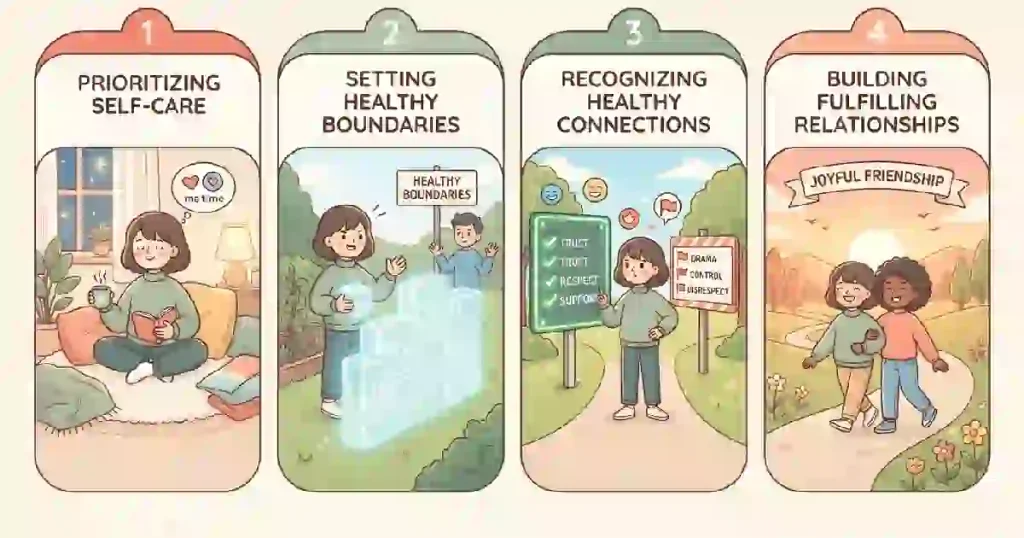
If you are currently active in the dating world, intellectual understanding is not enough. You need concrete practices to guard your mental health:
- The Friction Audit: Evaluate how much mental energy a new connection requires. If organizing a simple dinner date takes three days of ambiguous texts, step back. Early dating should have very little friction.
- The 72-Hour Boundary Rule: When someone says or does something that crosses a boundary, address it within three days. Do not bottle it up to keep the peace. How they respond to a calm, polite boundary tells you everything you need to know about their emotional maturity.
- The Solitude Baseline Test: Plan one evening every week completely alone without digital distractions. Cook, read, or take a long walk. When you genuinely love your own company, you will never accept poor treatment just to keep someone around.
Reclaiming Your Personal Power Before You Commit
Dating in our current culture can feel exhausting, but you are not powerless. You do not have to accept the frantic pace, the lack of manners, or the emotional games that dominate modern romance.
Singleness is not a waiting room where life is on hold. It is your fortress. It is the place where you decide who you are, what you stand for, and what kind of treatment you will accept.
Never compromise your baseline peace for the temporary comfort of company. The right person will add clarity to your life, not confusion.
My Closing Remarks
Navigating romance can make you feel vulnerable, especially when you see friends settling down while you are still searching. In my own life and practice, I have watched so many people rush into commitments out of fear, only to spend years untangling the pain that followed. Give yourself permission to slow down. Guard your peace with everything you have. You are not running out of time; you are protecting your future.
More related stories for you
- Take the time to examine essential topics couples must explore before commitment to protect your long-term happiness.
About The Author