
 Sara Carmen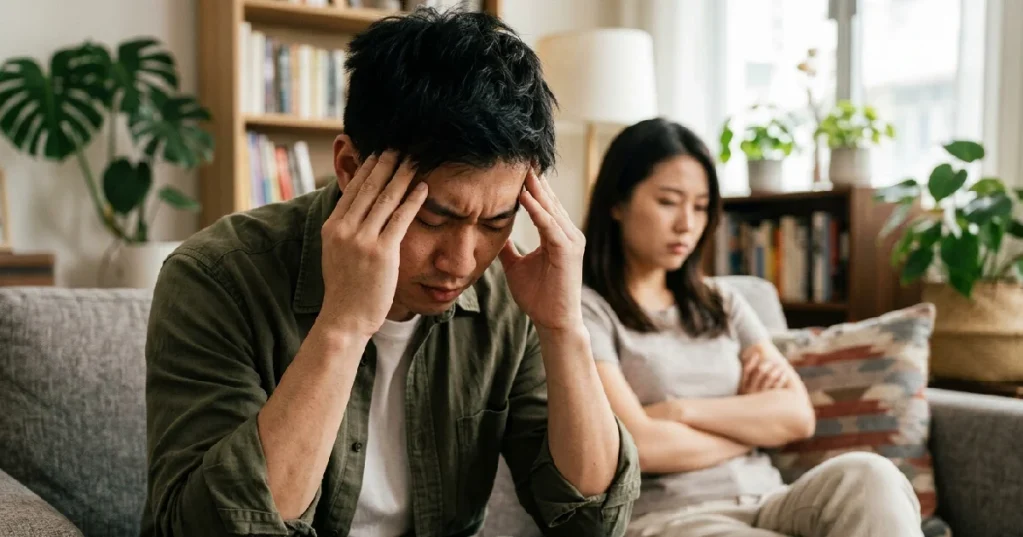
You’re not imagining the wall. Here’s what’s really behind it, and how two people can start taking it down together.
Key Points Box
- A fear of vulnerability rarely means your partner doesn’t love you. It usually means their nervous system learned that openness once led to pain.
- These five behavioral signs, from sudden withdrawal to physical tension during deep talks, reveal an old protection pattern, not a character flaw.
- Small, consistent exercises in emotional openness can retrain a guarded nervous system faster than any single big conversation ever will.
Contents
Table of Contents
We all know the specific ache of loving someone who lets you in only halfway. You get close enough to see the real person underneath, and then the door quietly closes again, no explanation offered. One night they tell you something true and tender. The next morning they act like a stranger passing you in a hallway. You replay the conversation, searching for what you did wrong.
Nothing is wrong with you.
What you’re watching has a name, and it isn’t a lack of love.
A fear of vulnerability is not coldness. It’s a nervous system that learned somewhere along the way that being open leads to pain, so it built a wall to keep the pain out. The problem is, that wall doesn’t know the difference between danger and you.
Understanding the Root: Why Does Your Partner Fear Being Open?
Most people don’t wake up one day and decide to hide their feelings. This pattern gets built early, often in childhood homes where emotions were met with dismissal, ridicule, or silence instead of comfort. A child who cries and gets told to “toughen up” learns a quiet lesson: needing comfort is dangerous. That lesson doesn’t disappear with age. It becomes what psychologists sometimes call a judgment filter, an automatic internal scan that runs before your partner speaks, checking whether it’s safe to say the true thing or the safe thing.
Past relationships can deepen this filter too. If a partner once shared a private insecurity, only to have it thrown back at them mid-argument months later, their brain files that memory under one label: openness gets you hurt. After enough of those experiences, silence starts to feel less like isolation and more like protection.
This is where attachment theory offers a useful map. People with an avoidant attachment style often developed this wiring in early relationships where closeness was unreliable or overwhelming. As adults, their brain treats emotional dependency the way it might treat a physical threat, something to manage from a safe distance rather than lean into.
In my practice, I’ve found that once couples understand this mechanism, the resentment softens almost immediately. It’s hard to stay angry at someone for running from a fire only they can see.
Here’s the reframe worth sitting with: to your partner, vulnerability doesn’t feel like intimacy. It feels like risk. And isolation, however lonely it looks from the outside, feels like safety.
5 Warning Signs Your Partner Is Terrified of Vulnerability

1. They Get a “Vulnerability Hangover” and Suddenly Pull Away
One night they open up completely. They tell you about a fear, a regret, something they’ve never said out loud before. The next day, they’re distant, short, almost cold.
This isn’t regret about you. It’s panic about exposure.
Once a guarded person realizes how much they revealed, their system treats it like a security breach. Pulling away is how they regain a sense of control after feeling, even briefly, like they had none.
If you’ve noticed this pattern, you’re not misreading the situation. You’re watching real fear in real time.
2. They Hide Behind Sarcasm, Deflection, or Humor
Bring up the future, your feelings, or where the relationship stands, and the response is a joke. Or a shrug. Or a comment so ironic you can’t tell if they mean it.
Humor works as an emotional shield here. If a comment stays a joke, it never has to be taken seriously enough to be rejected.
Watch what happens the one time you gently call it out. If they get defensive rather than curious, that reaction itself is data worth noting.
3. They Practice Preemptive Sabotage When Things Get Serious
Notice a pattern around milestones. You plan to move in together, or say “I love you” for the first time, and suddenly there’s a fight over something small and unrelated.
This is a flight response dressed up as an argument about dishes or plans.
A person terrified of eventual abandonment would often rather end things on their own terms than sit in the agony of waiting to see if they’ll be left. Breaking it first feels safer than being broken.
But here’s what no one tells you: the fight was never really about the dishes.
4. They Rely Heavily on Hyper-Independence and Hypervigilance
Some partners treat asking for help like a failure. They also might track your text response times, scan your tone for hidden meaning, or quietly test whether you’re about to leave.
Total self-reliance looks like strength from the outside. From the inside, it’s often a way to avoid the unpredictability that comes with needing another person.
If your partner insists they “don’t need anyone,” pay attention to how much energy that independence actually costs them.
5. They Show Physical Distress During Emotional Intimacy
Somatic distress simply means the body reacts physically to emotional stress, a racing heart, tight shoulders, a stomach that suddenly feels sick. Some partners experience exactly this the moment a conversation turns emotionally serious.
This connects to what the Gottman Institute calls emotional flooding, a state where the nervous system misreads emotional closeness as physical danger. Heart rate can spike, thinking narrows, and the body prepares to fight or flee from a conversation, not a threat.
That’s not weakness. That’s wiring.
The Insight Most Couples Miss About Emotional Walls
Here’s the part that rarely gets said out loud: the partner who seems the most emotionally unavailable is often the one working the hardest to protect the relationship, just backward. They’re not withholding love to punish you. They’re withholding exposure to prevent a pain they’re convinced is coming.
Think of it like holding a beach ball underwater. The harder someone pushes their real feelings down to avoid getting hurt, the more force builds beneath the surface, and eventually it slips loose sideways, as irritability, distance, or a fight that came from nowhere. Suppression doesn’t remove the feeling. It just changes where the feeling shows up.
3 Actionable Exercises to Rebuild Emotional Connection
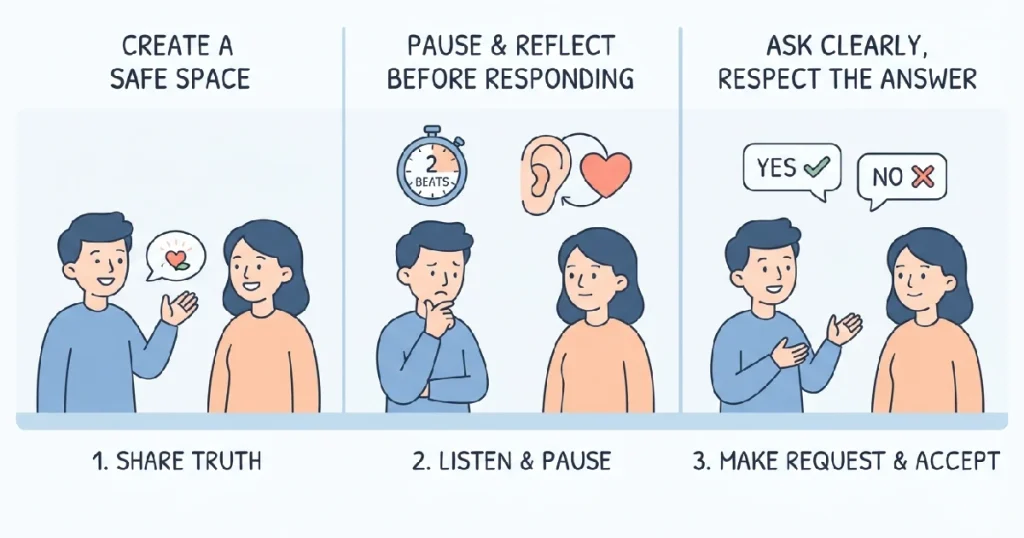
1. Micro-Dosing Vulnerability Through Low-Stakes Disclosure
Start small. Share a minor childhood memory, a harmless quirk, or a mild insecurity, something honest but not heavy.
Lead by example. If you go first with something low-stakes and nothing bad happens, your partner’s nervous system quietly registers a new piece of evidence: the sky did not fall.
Try this tonight. Share one true, small thing about yourself before you ask for anything in return.
2. The Two-Beat Pause and Non-Judgmental Validation
When your partner shares something real, count two full seconds before responding. Then validate the feeling before offering any opinion or fix.
Something like, “That makes sense you’d feel that way,” works better than advice ever will in this moment. Save the problem-solving for later. Right now, the goal is proving their feelings are safe with you, not solvable by you.
3. The “Dipping a Toe” Rejection Exposure Experiment
Practice stating a small preference out loud, choosing the restaurant, naming a need, without managing how your partner reacts to it.
The goal isn’t agreement. The goal is showing both nervous systems that mild disagreement is survivable, even normal, in a healthy connection.
A useful question to ask yourself here: what’s one small true thing I’ve been editing to keep the peace? Consider saying it this week, plainly, without apology attached.
Moving Forward as a Team
Lowering walls that took years to build isn’t a weekend project. It’s closer to physical therapy than a light switch, small consistent movement, occasional soreness, and slow, real gains.
You cannot force your partner to feel safe. But you can build an environment where safety becomes easier to choose, one honest, low-stakes moment at a time.
The wall was never built to keep you out specifically. It was built to keep pain out, and you happened to be standing nearby when it went up. Now you both get to decide, brick by brick, what stays and what finally comes down.
My Closing Remarks
I’ve sat across from couples who thought love alone should be enough to melt years of self-protection, and it never quite works that way. What works is patience paired with small, repeated proof of safety. If you’re the one who keeps trying, that effort matters more than you know. Keep going gently. Walls come down slower than they go up, but they do come down.
More Related Stories for You
- Curious what happens when a guarded partner finally feels safe enough to fully commit? Read Signs He’s Going to Propose for the hopeful next chapter.
About The Author