
 Sara Carmen
The confusion, the cravings, and the crashes make more sense once you understand what your brain and body are actually doing.
Key Points:
- The stages of a breakup rarely move in a straight line. They loop, stall, and ambush you on an ordinary Tuesday.
- Your brain reacts to losing a partner the way it reacts to withdrawal from a substance, not just situational sadness.
- Real healing starts when you stop grading yourself against a timeline and start learning to ride the waves instead.
Contents
Table of Contents
We like to believe heartbreak follows a plan. First the crying, then the anger, then one day, almost magically, acceptance settles in like weather clearing. You want that plan badly right now, because Monday you felt almost like yourself again, and by Wednesday you were on the bathroom floor rereading a two-year-old text thread. That whiplash isn’t a personal failure. It’s what the stages of a breakup actually look like once you strip away the tidy diagrams everyone keeps handing you.
Someone might think you’re “doing great” because you posted a laughing photo with friends last weekend. What they don’t see is that you spent the two hours before that photo scrolling through old messages, trying to find the exact moment things started slipping.
Someone might assume the breakup was easy because you were the one who ended it. What they don’t see is the guilt that shows up at 2 a.m., whispering that you gave up on something that was never actually broken, just tired.
Someone might tell you that checking his Instagram once won’t hurt anything. What they don’t see is that “once” turns into a nightly ritual, and each check leaves you feeling a little more hollow than before.
None of these women are weak. They’re human beings running on a nervous system that was never designed to let go quickly.
Your Brain Doesn’t Read the Breakup Books
Here’s the part almost nobody tells you up front: the stages of a breakup were never meant to be a checklist. The famous five-stage model most people quote, the Kübler-Ross model, was built to describe how dying patients process their own mortality. It was never designed as a map for romantic loss, and yet it got borrowed, flattened, and repackaged into breakup advice for decades.
Real relationship science tells a messier story. In a landmark analysis of bereavement patterns, psychologist George Bonanno at Columbia University found that people don’t move through predictable, uniform stages of loss at all. Instead, they follow distinct trajectories, some people bounce back quickly, some struggle chronically, and most fall somewhere in between, cycling unpredictably rather than climbing a ladder.
Layer onto that the neurological reality. A 2010 study led by Helen Fisher and colleagues, published in the Journal of Neurophysiology, scanned the brains of recently rejected lovers and found activation in the same reward regions associated with cocaine cravings. That’s not a metaphor. Losing a partner activates the ventral tegmental area, the same dopamine-rich region tied to addiction and motivation.
This is why the pull to text him again feels less like a choice and more like a craving. In my practice, I’ve watched intelligent, self-aware women beat themselves up for “relapsing” into checking an ex’s location, when what they were actually experiencing was a textbook withdrawal response, not a character flaw. Understanding that difference changes everything about how you treat yourself during recovery.
The Two-Year Fade: Why Your Breakup Actually Started Long Before the Split
You probably think of the breakup as the day the conversation happened. But relationship researcher Steve Duck’s classic dissolution model describes something quieter that happens first, an “intrapsychic phase,” where one or both partners privately start weighing whether the relationship is still worth the effort, long before either person says a word out loud.
That private reckoning can stretch on for months. You stop reaching for his hand in the car without noticing. You start scrolling your phone during dinner instead of talking. The actual breakup conversation is often just the final release valve on pressure that’s been building far longer than either of you admitted.
This matters because you are probably blaming yourself for “suddenly” falling apart. You didn’t fall apart suddenly. You’ve likely been processing a slow fracture for a long time, and your body is only now catching up to what your mind already knew.
The Soft Breakup Limbo: Grieving When No One Did Anything Wrong
Some of the hardest breakups involve zero villains. No affair. No blowup. Just two people who quietly drifted, exhausted by dating fatigue, misaligned on where their lives were heading, and honest enough to admit it wasn’t working.
Consider Maya, a composite of clients I’ve worked with. She ended a three-year relationship because it felt flat, not toxic. Her friends kept asking what “actually happened,” and she had no dramatic story to give them. For months she second-guessed her own intuition, wondering if she’d thrown away something good simply because she got scared of commitment. It wasn’t until she stopped searching for a villain and started naming what she’d actually lost, companionship, routine, a shared future, that her guilt started to loosen.
If your breakup looked like Maya’s, your grief is not smaller or less valid. You’re mourning a future you built in your head, and that future doesn’t need a villain to be worth grieving.
Why the Stages of a Breakup Aren’t a Ladder, They’re a Tide

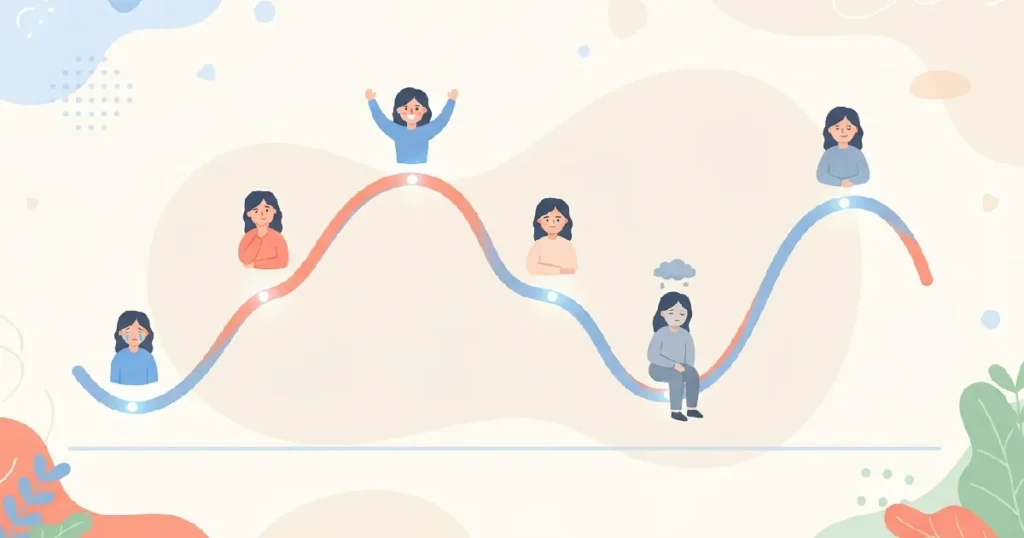
Grief is not a staircase you climb one step at a time until you reach the top. It’s closer to a tide, one that keeps rolling in and pulling back out, and every single time it pulls back you have to relearn your footing on the sand.
This is what researchers now call emotional layering. You can genuinely believe the breakup was the right decision while still crying over the vacation you’d already planned together. Both things are true at once. Acceptance and grief are not opposite ends of a line, they’re roommates sharing the same space in your chest.
Expecting a clean, forward-moving recovery is what makes an ordinary bad Wednesday feel like proof you’re failing at healing. You’re not failing. You’re just human, riding a tide instead of climbing a ladder.
Breaking the Digital Loop: How Ex-Stalking Resets Your Healing Timeline
Here’s something worth knowing about your own behavior that rarely gets explained clearly: when you suddenly find yourself checking his profile more, not less, right when you’re trying to stop, that’s not weakness winning. In behavioral psychology, this is called an extinction burst, a temporary spike in a behavior that happens right before it fades, once the usual reward stops showing up.
Your brain is essentially throwing a tantrum, testing whether the old habit still pays off before it finally lets go. Knowing that can take the shame out of a bad night of scrolling.
But here’s what actually keeps the loop alive.
Research consistently shows that women initiate the majority of heterosexual breakups and divorces, yet initiating a split doesn’t make someone immune to withdrawal. Digital tracking gives you a small dopamine hit followed by a crash, and that crash resets your recovery clock nearly every single time.
Every time you check, you’re not gathering information. You’re feeding the same neural circuitry Fisher’s research described, the one that treats him like a substance instead of a person.
Reclaiming Your Identity: Moving from We to Me in a Dating Recession
There’s a second layer of grief almost nobody names directly. You’re not just mourning your ex. You’re bracing for a dating environment that feels genuinely harder than it used to.
Data from Pew Research Center shows a growing number of single adults describe dating today as more exhausting and less rewarding than it was a decade ago. That external anxiety quietly attaches itself to your personal heartbreak, making the pain feel heavier than the relationship alone accounts for.
Separating those two threads matters. One is grief for a specific person. The other is fear of an unfamiliar market. Left unexamined, this fusion doesn’t just prolong sadness, it can convince you the wrong thing was lost, when really it’s your sense of security that needs rebuilding, not necessarily this exact relationship.
Now What? Four Ways to Work With the Waves Instead of Against Them

One place to start is naming the tide instead of resisting it. Call it out loud: “This is a wave, not a step backward.” Simply labeling it interrupts the shame spiral that usually follows an unexpected crash.
The Grief Ledger. Keep a small running list split into two columns, what you miss and what you don’t. Maya’s ledger eventually revealed that most entries under “miss” were about routine and familiarity, not the actual relationship. That clarity alone eased her guilt considerably.
The Profile Blackout. For a set window, seven days is a reasonable start, mute or unfollow your ex entirely rather than relying on willpower alone. Removing access removes the extinction burst’s fuel source.
The Identity Inventory. Write down five things that were true about you before the relationship began. A hobby, a friendship, a goal. Reclaiming those threads reminds your nervous system that “you” still exists outside of “we.”
A useful question to ask yourself this week: if a close friend described your exact breakup timeline to you, would you tell her she was healing wrong, or would you tell her she was human?
The Close: You Were Never Behind
Remember Tuesday-you and Wednesday-you from the start of this piece? They’re not two different recovery stages. They’re the same tide, coming in and pulling back out, teaching your feet a new way to stand each time.
The stages of a breakup were never a ladder you could climb wrong. They were always a tide, and tides don’t fail. They simply keep moving until the shore looks different than it did before.
You are not behind schedule. You’re exactly where a healing nervous system is supposed to be.
My Closing Remarks:
Honestly, I get frustrated every time I see breakup advice that treats heartbreak like a math problem with a clean answer. It isn’t. I’ve watched brilliant women apologize for crying over someone they swore they were “over,” as if grief needs permission to reappear. It doesn’t. Your pain isn’t a sign you’re broken. It’s proof you loved something real, and real things take real time to release.
More Related Stories For You:
If betrayal, not drift, is what ended your relationship, this piece on surviving a cheating husband walks through that specific kind of heartbreak.
About The Author