
 Nicole Adkins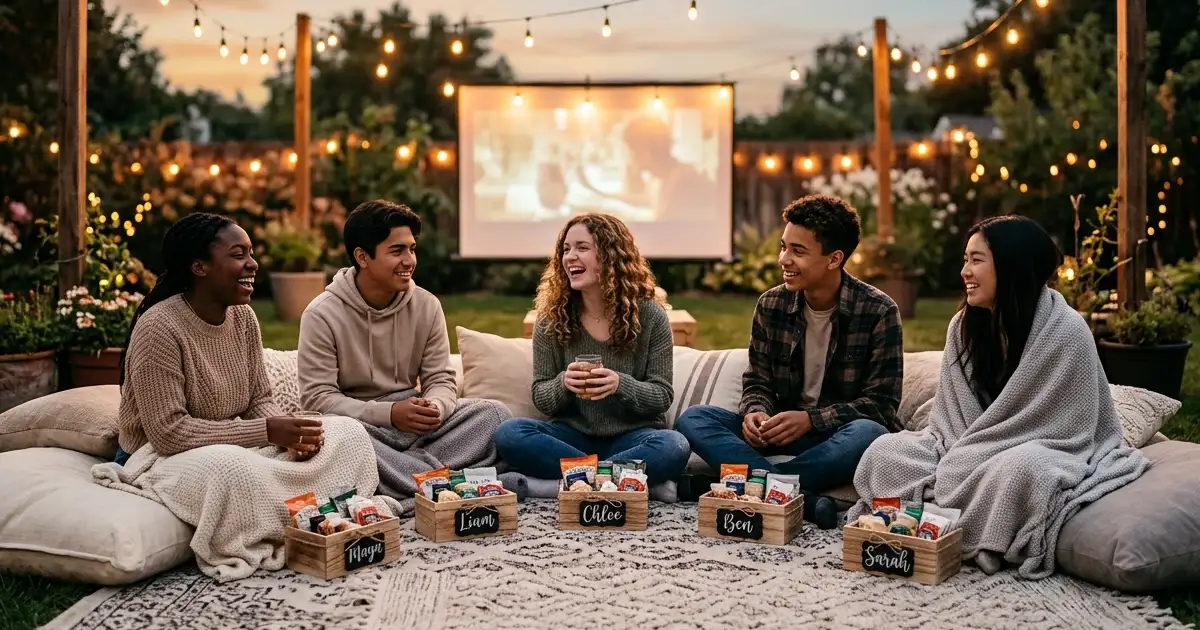
Your Teenager Doesn’t Want a Party. They Want an Experience That Feels Like Theirs.
Key Points
- The best teen birthday party ideas work because they give adolescents something they psychologically crave: autonomy, social currency, and a sense of identity ownership.
- Parents who master the “invisible host” approach create the conditions for genuine teen enjoyment without triggering the social discomfort that ruins most birthday parties.
- Curated, aesthetic, small-group experiences consistently outperform large generic gatherings because they align with how today’s teenagers actually build and maintain friendships.
Contents
Table of Contents
Every parent of a teenager has lived through this particular silence. You suggest a birthday party idea. Your teen looks at you with an expression that lands somewhere between pity and horror. They don’t say “no” outright. They just exhale. And in that single breath you hear everything they can’t quite articulate: That’s not who I am. You don’t get it. Please stop trying.
It stings. You remember when party planning meant choosing between dinosaurs and superheroes, and either answer was greeted with pure joy. But the child who once squealed at balloon animals now has an Instagram aesthetic, strong opinions about font choices, and a social radar so finely tuned it could detect an “uncool” detail from three rooms away.
Here is what most parents miss. That resistance isn’t about being difficult. It is about identity.
Why Teen Birthday Parties Feel So High-Stakes
Adolescence is a period of what developmental psychologist Erik Erikson called identity versus role confusion. This is the psychological stage where teenagers are actively constructing a sense of self that is separate from their parents. Every social event becomes a stage for that identity work. A birthday party isn’t just a party. It’s a public statement about who they are, what they value, and where they stand in their peer group.
According to a 2022 study published in the Journal of Youth and Adolescence, teens who feel a sense of autonomy in social settings report significantly higher well-being and stronger peer relationships. When you hand your teenager real creative control over their celebration, you’re not just throwing a party. You’re supporting a developmental need.
That’s why the old formula fails. A bowling alley and a sheet cake worked at ten because identity wasn’t on the table yet. At fifteen, everything is on the table. Everything is a signal.
So the question isn’t “What kind of party should I throw?” The question is “How do I create conditions where my teenager feels genuinely seen and socially safe?”
That’s exactly what these 13 ideas are designed to do.
The “Invisible Parent” Principle: Your Secret Advantage
Before we get to the specific teen birthday party ideas, you need to understand the single strategy that makes all of them work.
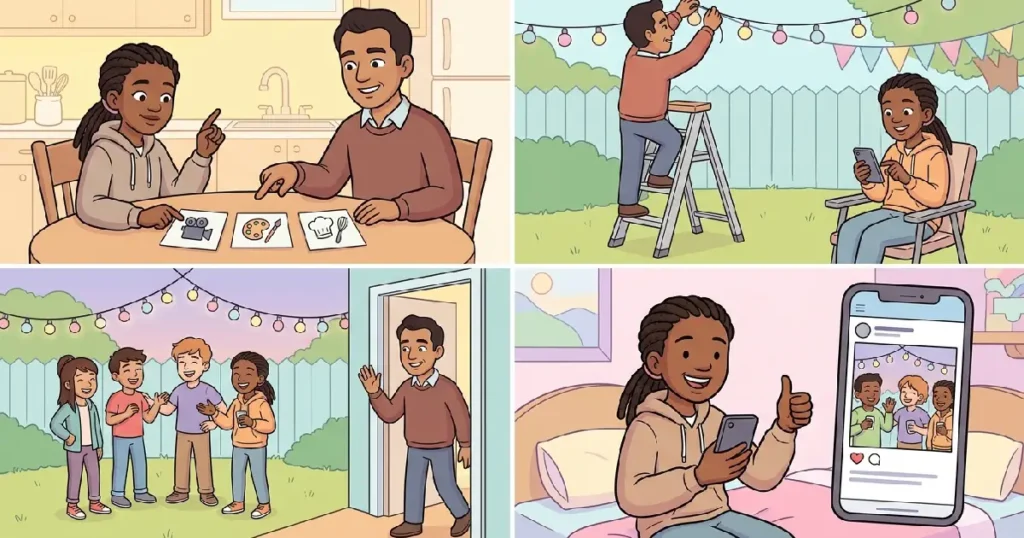
I call it the Invisible Parent Principle. You handle every detail of funding, setup, food prep, and logistics. Then when guests arrive, you disappear. Not neglectfully. Strategically. You become the backstage crew that makes the show run without ever stepping into the spotlight.
A parent named Dana once described it to me this way. She spent an entire afternoon setting up a backyard cinema for her 16-year-old’s birthday. Custom snack boxes. String lights. A curated playlist for the pre-movie window. When guests started arriving, Dana greeted them warmly at the door, pointed them toward the backyard, and then relocated to the kitchen. She could hear the laughter. She could monitor without hovering.
Her daughter texted her later that night: “Mom, that was actually perfect.”
That word “actually” tells the whole story. The teen was surprised. She had expected her parent to get it wrong. When Dana got it right, something shifted. Trust deepened.
This is the framework. Now here are the experiences.
Aesthetic Media and “Vibe” Parties
1. The TikTok and Reels Video Transition Party
Set up a dedicated filming station with professional ring lights, curated backdrops in two or three color palettes, and a simple editing station (a laptop with CapCut works perfectly). The activity is collaborative. Friends work together to choreograph and film trendy audio transition clips they can post immediately.
Why this works psychologically: it gives teens a shared creative goal with a tangible product. According to research on collaborative creativity in adolescents, working together on an artistic task strengthens social bonds more effectively than passive shared experiences like watching a movie together.
The “so what” for you: provide the tools, set up the space, maybe print a few trending audio suggestions. Then step back. They’ll direct themselves.
2. Outdoor Cinema with Personalized Concession Boxes
This is not your neighbor’s projector-and-popcorn night. This is a curated visual experience. Think neutral-toned floor seating with oversized cushions, soft string lighting, and individually designed snack boxes with each guest’s name on them. Include mocktail syrups and sparkling water for a self-serve drink station.
The secret here is in the aesthetic presentation. Teens today process social experiences visually before they process them emotionally. If the setup looks worthy of a story post, they relax. They feel like they are somewhere that reflects their taste.
Keep the movie selection collaborative. Let the birthday teen offer three choices and have guests vote on arrival.
3. Y2K and Late ’90s Retro Arcade Night
The current nostalgia cycle means today’s teens are deeply drawn to an era they never experienced. Lean into it. Thrifted vintage outfits as a soft dress code. Disposable cameras instead of phone photography. Classic arcade games you can rent or emulate on a laptop connected to a TV.
This idea taps into what psychologists call nostalgic bonding: the phenomenon where people feel closer to each other when sharing cultural references, even borrowed ones. It creates an instant “in-group” feeling that makes everyone at the party feel included.
Experiential Food and Beverage Parties
4. The Elevated Mocktail Mixology Bar
Ditch the two-liter soda bottles entirely. Set up an interactive station with high-end syrups, flavor-infused ice cubes (think lavender, cucumber-mint, strawberry-basil), fresh garnishes, and proper glassware. Print simple recipe cards or let them freestyle.
This idea works because it offers what psychologists call competence satisfaction. Teens get to learn a skill, make choices, and produce something they’re proud of. It feels grown-up without being inappropriate.
5. The Bento Cake Decorating Challenge
Instead of one traditional birthday cake, give each guest a mini Korean-style bento cake and pre-filled piping bags with different colored frostings. Let them design their own. Display the results. Let them photograph the collection before eating.
Think of this as edible autonomy. Every teen gets to express something individual while participating in something collective. Nobody is forced to eat cake they didn’t choose. Nobody has to sing if they don’t want to.
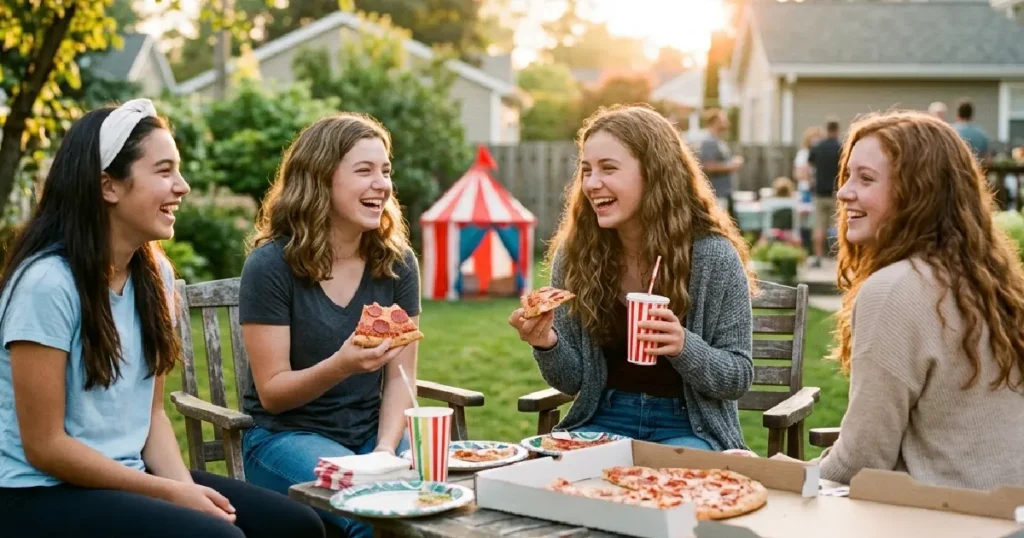
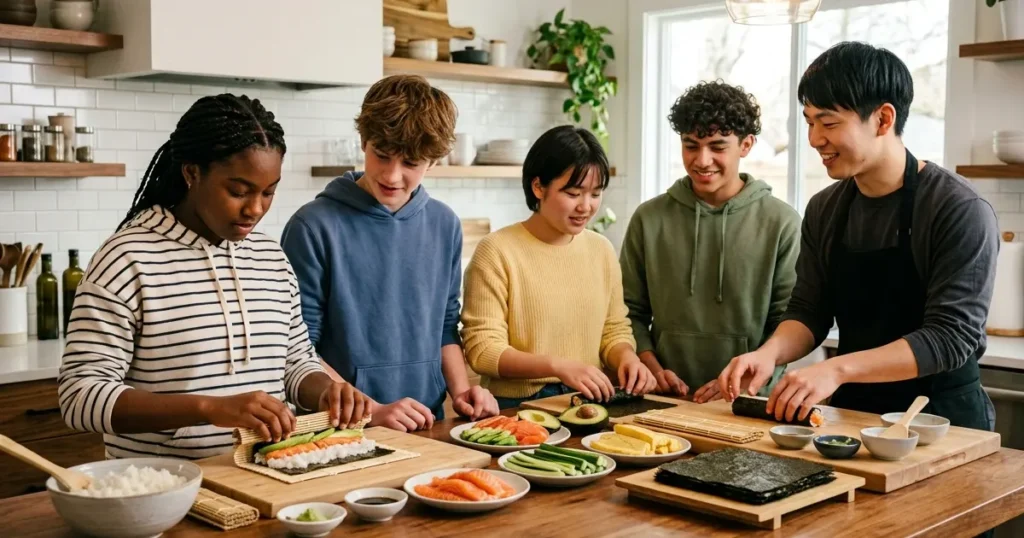
6. Gourmet DIY Sushi Rolling or Pizza Stretching
Bring in a local chef for a 45-minute hands-on session, or use a curated ingredient kit if budget is a concern. The key is teaching a real skill that produces something they eat immediately.
This transforms the party from consumption into creation. And there is something quietly powerful about a group of teenagers standing around a table, hands busy, learning together. Conversation flows more naturally when hands are occupied. Therapists have known this for decades. It’s why some of the best clinical work with teens happens during walks or art-making, not across a desk.
Immersive Challenges and Adventures
7. The Themed Murder Mystery Dinner
Send out character profiles with the invitations so every guest arrives in a specific role and costume. Choose a theme that resonates: a Coachella music festival mystery, a glamorous gala whodunit, or a vintage Hollywood crime.
This is structured social play at its finest. Teens who feel awkward at unstructured parties often thrive in a murder mystery because the role gives them permission to be someone else. It removes the self-consciousness that can make birthday parties quietly agonizing for introverted teens.
8. “Race Across the World” Backyard Challenge
Inspired by reality competition shows, create geographic or intellectual checkpoint stations around your yard or neighborhood. Teams solve puzzles, complete physical tasks, and race against each other.
The competitive structure creates natural excitement without requiring anyone to be “cool.” Everyone gets absorbed in the game. Status hierarchies temporarily dissolve. That’s developmentally valuable in ways that a passive hangout simply cannot replicate.
9. Private Venue Takeover for Older Teens
For teens aged 16 and up who want genuine independence, book a private escape room, a small bowling lounge, or even a private dining room at a local restaurant. You pay. You drop off. You pick up.
This is the ultimate expression of the Invisible Parent Principle. You’re saying to your teenager: I trust you enough to give you a real experience in the real world. That message matters more than any decoration.
Aesthetic Crafts and Active Leisure Birthday Ideas
10. The “Farmcore” Modern Pastoral Gathering
Align with the organic aesthetic trend using gingham textiles, earthy color palettes, and hands-on activities like homemade butter making, custom pottery painting, or flower arranging. Serve food on wooden boards. Use mason jars. Keep everything tactile and warm.
This party idea works especially well for teens who are overwhelmed by loud, stimulating environments. It creates a calm and intentional atmosphere that still photographs beautifully.
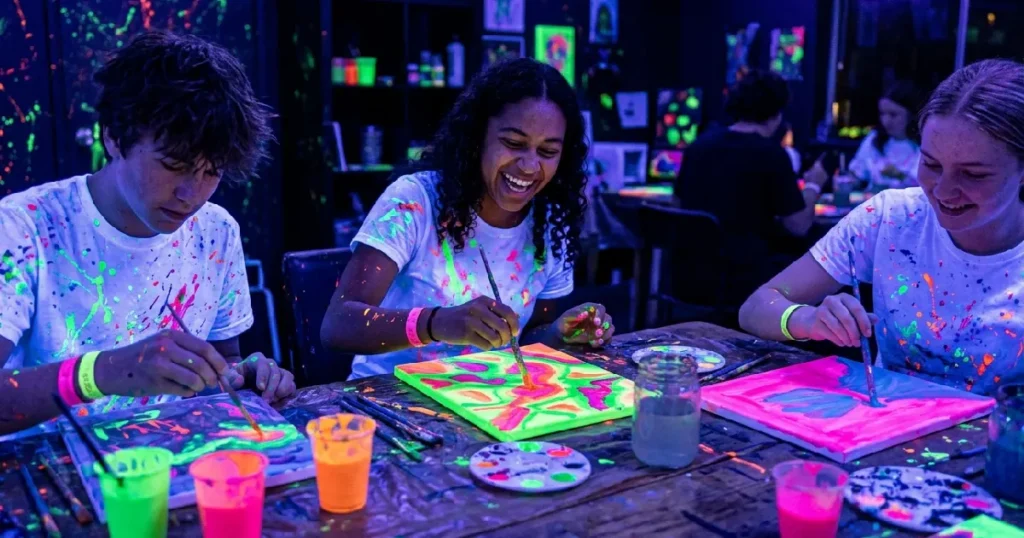
11. Glow-in-the-Dark Neon Paint Night
Install blacklights throughout the party space. Provide UV-reactive clothing markers, custom canvases, and neon body paint. Play music. Let them create.
The darkness itself is a gift. Teens who feel self-conscious in bright, exposed settings often come alive under blacklights. The visual spectacle gives everyone something to react to, reducing the social pressure to “perform” personality.
But here’s what no one tells you about this idea.
The cleanup is significant. Plan for it. Lay down tarps. Use washable everything. The experience is worth the effort, but go in with your eyes open.
12. Custom Streetwear and Tote Bag Design Station
Skip the plastic favor bags filled with candy nobody eats. Instead, provide high-quality blank canvas totes or plain white t-shirts along with fabric paints, iron-on patches, stencils, and markers. Each guest designs their own wearable takeaway.
This transforms the party favor from an afterthought into a core activity. Teens leave with something they made and something they’ll actually use. It anchors the memory of the party to a physical object they encounter in daily life.
13. The Boutique Spa and Self-Care Sanctuary
Forget the childish spa party with cucumber slices and pink robes. This version focuses on actual skincare education. Set up stations with jade rollers, botanical face masks, hand massage tutorials, and aromatherapy blending. Use minimalist decor in muted pastels. Keep the lighting soft.
This idea works for any gender. Self-care as a practice has been thoroughly de-gendered among Gen Z and Gen Alpha, and positioning it as a wellness experience rather than a “girly” activity makes it inclusive by default.
Practical Strategies: Making These Ideas Actually Happen
Now that you have the concepts, here’s how to execute without losing your mind or your teenager’s trust.
The Three-Choice Method. Don’t present all 13 ideas to your teen. Select three that align with their personality and budget. Present them casually. Let them choose or combine elements. This preserves their sense of autonomy while keeping the options manageable for you.
The Aesthetic Audit. Before the party, look at your setup through your teenager’s phone camera. Literally hold up your phone and look at the space as if you were about to post it. If it looks cheap, cluttered, or childish through that lens, simplify. Monochromatic color schemes, soft lighting, and fewer but higher-quality elements always outperform quantity.
The Intentional Guest List Conversation. Today’s teens often prefer intimate gatherings of five to ten close friends over large classroom-wide invitations. Have a gentle conversation about this. You might say: “You don’t have to invite everyone. Who would make this night actually feel like yours?” Research from the University of Virginia’s Friendship Study consistently shows that adolescents with a few deep friendships report greater happiness than those with large but shallow social networks.
The Post-Party Check-In. The day after the party, ask one simple question: “What was your favorite part?” Not “Did you like it?” or “Was it worth the money?” Just curiosity. This invites reflection without pressure and often reveals what mattered most to them, which gives you valuable data for the next celebration.
The Party That Lets Them Be Themselves
Think back to that silence. The exhale. The look that said you don’t get it.
What your teenager is really telling you in that moment is not that they don’t want to celebrate. They do. What they don’t want is to feel like a supporting character in someone else’s idea of fun. They want to feel like the celebration actually belongs to them.
The best teen birthday party ideas aren’t impressive because of budget or spectacle. They’re impressive because they communicate a message your teenager desperately needs to hear from you: I see who you are becoming, and I think that person is worth celebrating exactly as they are.
You don’t have to get every detail right. You just have to get the intention right.
And now you have the tools to do that.
My Closing Remarks
In my years of working with families, I’ve watched parents agonize over birthday parties as if the wrong choice might damage their relationship forever. It won’t. But the right choice can quietly strengthen it in ways you won’t fully appreciate for years. When I think about the parents who got it right, they all had one thing in common. They stopped trying to create the party they wished they’d had as teenagers and started paying attention to the teenager standing right in front of them. That attention is the real gift. The party is just the wrapping paper.
More Related Stories for You
- If your teen’s party vision involves a specific aesthetic or style identity, understanding how Gen Z approaches fashion can help you support their creative direction without overstepping.
About The Author