
 Nicole Adkins
The hardest narcissist to name is the one who looks wounded, not arrogant. Here is how to see the pattern before it costs you years of your life.
Key Points
- The most missed signs of a narcissistic woman live in tears, guilt, and quiet social sabotage rather than loud bragging.
- Covert narcissism hides inside a victim story so well that you start treating her pain as proof you are the problem.
- Naming the pattern is not cruelty. It is the first skill that gives you your mind back.
Contents
Table of Contents
We have all met a woman who leaves us feeling smaller after every talk. We walk away replaying the night. We hunt for the crime we cannot name. We call her sensitive. We call her complicated. We call ourselves too much.
You know this feeling in your body. She cried for forty minutes. You apologized. You still do not know what you did wrong. That confusion is not proof you are unkind. It is often the first clue.
Narcissistic Personality Disorder is a lasting pattern of needing admiration, struggling with empathy, and protecting a fragile self-image at other people’s expense. In women it often shows up as covert narcissism, also called vulnerable narcissism. That means the grandiosity hides behind hurt, martyrdom, and control that never raises its voice. The National Institute of Mental Health describes personality disorders as enduring inner patterns that drift far from what a culture expects and that cause real distress. Recognition matters because many people lose years inside the fog before they can name it.
Someone might think she is just anxious and misunderstood. But what they do not see is how every conflict ends with you comforting her for the wound you supposedly caused.
Someone might think her group chat venting is harmless friendship. But what they do not see is the whisper campaign that slowly turns your support system against you.
Someone might think the tearful posts mean she is finally opening up. But what they do not see is that the same woman who performs pain online can go ice-cold the moment you ask for accountability.
Left unnamed, this pattern does not only strain a bond. It can quietly become the reason you stop trusting your own memory.
What Makes Female Narcissism Different and Harder to Spot
Most people picture a narcissist as loud, entitled, and obviously vain. That picture is the overt or grandiose face. It is easier to catch because it brags.
A narcissistic woman is more likely to wear the other face. Covert narcissism still centers the self. It still treats other people as tools for regulation. It just disguises the hunger as fragility. Research on gender differences in narcissistic personality disorder has long shown that diagnostic checklists were built around the louder male-typical presentation. That gap is why so many readers spend years asking the wrong question. They ask “Is she too emotional?” when the better question is “Who always ends up as the hero of her own wound?”
Think of her self-image as a soap bubble. It looks delicate. It asks you to be gentle. The moment you bring a plain truth too close, it does not just pop. It sprays you with the charge that you destroyed something precious.
Covert vs. Overt: The Two Faces of a Narcissistic Woman
Overt looks like boasting, status hunger, and open contempt.
Covert looks like chronic victimhood, hypersensitivity, guilt, and quiet punishment.
Both protect the same thing: a self that cannot bear to be ordinary, wrong, or unadmired. The covert version is harder because culture often rewards the performance. Tears look like depth. Martyrdom looks like loyalty. Control dressed as hurt looks like love.
9 Behavioral Signs of a Narcissistic Woman You Should Not Ignore
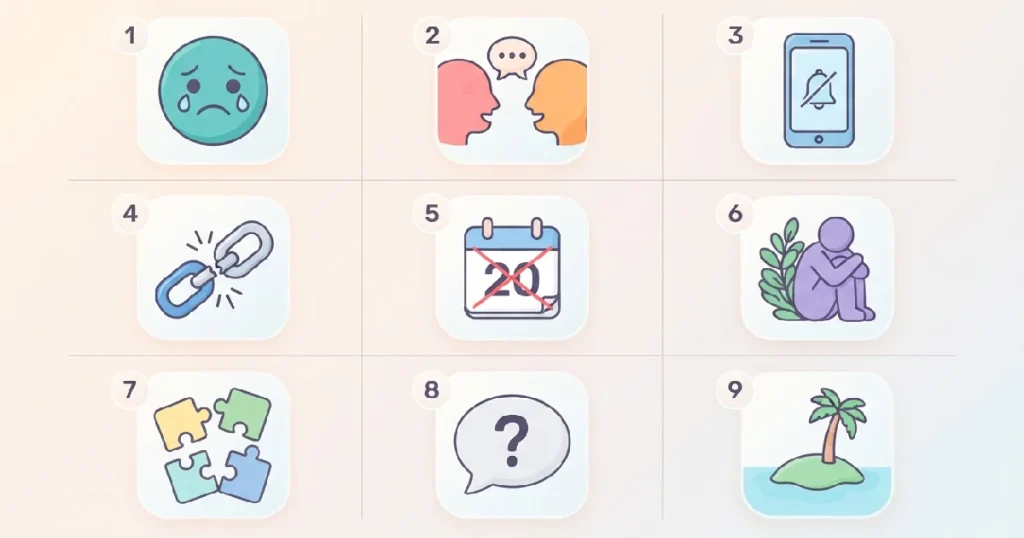
These signs of a narcissistic woman are patterns, not a one-bad-day test. Look for repetition. Look for the cost to your nervous system.
1. She claims the victim role before anyone else can speak.
The fight is not over until she is the one who suffered most. If you raise a hurt, she produces a larger one. This is not coincidence. It is identity. A self built on being the wounded party cannot survive a scene where she is simply the person who did harm.
2. Her tears arrive right when you set a boundary.
You say you need space. She folds. You feel brutal. You drop the boundary to stop the crying. That is not intimacy. That is emotional leverage. In clinical language this often follows a narcissistic injury, which means any limit that threatens her specialness gets treated like an attack on her survival.
3. She damages your name in rooms you are not in.
She rarely yells. She confides. She “worries about you” to friends, family, and coworkers until people start watching you with pity or suspicion. This is relational aggression: harm done through relationships rather than open conflict. The goal is the same as a public takedown. You just never get a fair trial.
4. She performs her pain for an audience.
Watch the gap between the feed and the kitchen. Online she is tender, brave, and misunderstood. In private she is cold, punitive, or bored by your feelings. I call this performative wounding. The wound is real enough to use. It is not real enough to make her curious about the pain she causes.
5. She edits reality until you distrust your memory.
You remember the insult. She remembers your tone. You remember the promise. She remembers that you “always twist things.” Over time you stop keeping your own score. That erosion of certainty is gaslighting: a pattern of denying or reframing events until the other person doubts their mind. The National Domestic Violence Hotline names this as a core form of emotional abuse, not a communication quirk.
6. She isolates you through concern.
Your sister is “toxic.” Your closest friend “never really liked her.” Your therapist “doesn’t get our relationship.” Each cut is framed as protection. Isolation is the control lever. Once your mirrors are gone, her version of you is the only one left.
7. Her apology always has a hook in it.
“I’m sorry you felt that way.” “I’m sorry, but you know what I’ve been through.” The words sound like repair. The function is to return the spotlight to her wound and to make your hurt look like a misunderstanding.
8. She starves you, then feeds you.
After days of ice, she becomes the woman you fell for. Warmth. Humor. Sudden devotion. That swing is intermittent reinforcement, the same learning pattern that makes gambling so sticky. Your brain starts chasing the next kind moment the way a body chases a drug. Clinicians call the resulting tie a trauma bond: attachment glued together by fear and relief, not by safety.
9. Your needs register as attacks on her character.
Hunger becomes neediness. Tiredness becomes rejection. A request for fairness becomes proof you are cruel. If every ordinary need makes you the villain, you are not in a hard relationship. You are in a system that can only stabilize when you disappear.
Daniel dated Lena for three years. Friends called her soulful. She cried at movies. She posted about healing. At home, a late text from his brother could launch a night of wounded silence. When Daniel named the pattern, Lena sobbed that he was repeating every man who had abandoned her. He spent the next morning writing an apology he did not believe. The soap bubble had sprayed him again. He was not cruel. He had touched the truth.
The Perfect Victim Playbook and Relational Aggression

Here is the four-step sequence many people never map while they are inside it.
First she collects a slight, real or invented.
Then she confides in a third person before she talks to you.
Then she recruits witnesses who now see you through her fear.
Then she returns to you already vindicated, and your defense sounds like further proof you are unsafe.
That is triangulation. It is the use of a third person to manage a two-person conflict. You keep trying to solve it in private. The case against you is already being tried in public.
Why a Narcissistic Woman Acts This Way
Understanding the root is not the same as excusing the harm.
Many women who show these traits grew up in homes where love arrived as control, appearance, or enmeshment. Enmeshment means a parent used the child to regulate their own feelings, so the child learned that a self is only allowed if it serves someone else. A daughter in that system may grow a false self that looks caring and special while the real self stays starved. The American Psychological Association notes that personality disorders form from a mix of temperament, early relationships, and lasting coping patterns, not from one bad month.
There is often a mother-wound script running in the background. Love equaled managing someone else’s weather. So now she manages yours. If you stop managing hers, her nervous system reads it as abandonment, even when you are standing three feet away being kind.
That is wiring. It is also her responsibility.
Most people in this situation do not realize how early the training started. You are not crazy for wanting a reason. You are also not required to become her therapist.
How Narcissistic Abuse Damages You
The hidden cost is not only sadness. It is self-erasure.
Gaslighting trains you to outsource reality. Trauma bonding trains you to confuse intensity with love. Over time your sleep thins, your appetite changes, and your inner voice starts sounding like her critique. You become fluent in her moods and illiterate in your own.
A useful self-check, right now:
Did you apologize for something you cannot describe?
Do you hide ordinary facts to prevent a collapse?
Do friends get a softer version of her than you do?
Do you feel relief more often than you feel peace?
Do you leave conversations less sure of what happened than when you entered them?
If several answers are yes, your confusion has a shape. Confusion is not your personality. It is an effect.
Realistic Steps to Protect Yourself From a Narcissistic Woman
You do not have to diagnose her to get free of the pattern. Diagnosis belongs to a licensed clinician. Protection belongs to you.
The Grey Rock Boundary.
Grey rock means you become uninteresting as a source of emotional fuel. Short answers. No debate. No defense of your character. One place to start is a single sentence you can repeat without adding heat: “I am not going to discuss this while voices are raised. I will come back to it when we can both speak calmly.” Then leave the room. Repeat it. Do not litigate it.
Structured contact, not heroic closure.

If you can step back, mute or block for a thirty-day nervous-system reset. If you share children or a workplace, keep contact logistical. Parallel parenting apps exist so you are not pulled into nightly courtrooms by text. Closure speeches often become fresh supply. Supply is the attention, emotion, or status a narcissistic person uses to stabilize their self.
Rebuild one mirror a week.
Reconnect with one trusted person. Isolation was the lever. Reversing it is one of the highest-impact moves you can make. A moderated support space can hold you while your own judgment comes back online.
Therapy that treats the bond, not just the story.
Schema therapy targets early maladaptive schemas, which are deep repeating beliefs such as “I am defective” or “My needs hurt people.” Those beliefs are common after this kind of relationship. EMDR, or Eye Movement Desensitization and Reprocessing, can help the brain digest the cruelty-then-warmth cycle so it stops looping as if it is still happening. CBT, or cognitive behavioral therapy, helps you catch the thoughts she installed and test them against evidence. The Mayo Clinic outlines that lasting personality patterns rarely shift without sustained professional work. Your healing does not wait on her willingness.
Boundary scripts you can copy.
“I hear that you are upset. I am still not available for name-calling.”
“We remember this differently. I am not going to argue my memory with you.”
“I will talk about logistics. I will not talk about my character.”
Say them once. Then stop stacking explanations. Over-explaining is how the soap bubble pulls you back in.
Can a Narcissistic Woman Change?
Change is possible. It is also uncommon without years of specialized treatment and a motive that does not depend on keeping you.
She would need to tolerate shame without dumping it on someone else. She would need to want truth more than image. Many do not. Holding that fact is not bitterness. It is adult grief.
You can hope for her and still leave the job of saving her.
Your Recovery Roadmap After Narcissistic Abuse
Give your body a timeline so shame cannot lecture you.
Around day 60, the emotional spikes often lose some of their voltage. You still miss the warmth. You miss it less like a command.
Around day 90, sleep and appetite frequently begin to look like yours again. The inner courtroom gets quieter.
Around day 180, identity work starts. You remember preferences she trained you to call selfish. That is not a personality transplant. That is you returning.
Healing is not a straight line. A bad weekend does not erase the map.
She cried for forty minutes. You apologized. You still did not know what you did wrong.
You know more now. The tears were data. The fog was the method. The soap bubble was never your job to keep in the air.
You are not the problem. Naming the pattern is the first act of taking your life back.
My closing remarks
In my practice I have watched good people spend years trying to earn a kind of love that was never on offer. If that is you, hear this without softness that lies: your loyalty was used against you. That does not make you foolish. It makes you human. The day you stop translating her weather into your moral failure is the day your life starts belonging to you again. Keep the name of the pattern. Keep your people. Keep walking.
More related stories for you
- If her online tenderness never matches how she treats you at home, read more about social media and how curated pain can quietly rewrite a relationship.
About The Author