
 David Wall
A clinical look at specialized therapies that help individuals move past defensive armor into genuine relational healing.
Key Points
- Narcissistic personality disorder treatment is real, but it only works through specialized modalities most general therapists never train in.
- Lasting change happens when therapy gets past the grandiose mask to treat the shame and attachment wounds hiding underneath it.
- Recovery is slow and measured in years, with success looking like functional stability, not a total personality overhaul.
Contents
Table of Contents
We’ve all absorbed the same verdict about narcissism: it doesn’t change. You’ve heard it from friends, read it in comment sections, maybe whispered it to yourself after a relationship ended in confusion and exhaustion. It feels true. It feels safe to believe, too, because it closes a door that might otherwise stay open and keep hurting you.
Here’s what the actual clinical record shows instead: that door isn’t closed. It’s just heavily guarded.
Narcissistic personality disorder treatment exists, and it works, but not through the kind of talk therapy you picture in your head. The real work happens underneath a protective shell of confidence, control, and intellectual sparring that most general therapists never learn to get past. Underneath that shell sits something far more fragile: a core wound of shame, built in childhood and papered over ever since. Reach that wound with the right method, and change becomes possible. Miss it, and you just end up negotiating with the mask.
Bypassing the Defense: The Reality of Evidence-Based Treatments for NPD
Standard talk therapy tends to crash into the same wall again and again with this population. A patient with narcissistic traits often leans on intellectualization, turning every session into a debate instead of a disclosure. It feels like progress in the room. It almost never is.
Then there’s the dropout problem. Research on personality disorder treatment consistently shows high rates of premature termination among Cluster B presentations, and narcissism is often the most volatile of the group. The reason has a name: narcissistic injury. Any perceived criticism, correction, or small misattunement can land like an attack on the patient’s entire sense of self. One wrong word from a well-meaning therapist, and the patient is gone, often for good.
But here’s what no one tells you.
There’s a piece of this that rarely gets named out loud. The therapist’s own ego is often what derails treatment first. Working with someone whose entire defense system is built around never feeling inferior tends to quietly provoke a clinician’s own need to be right, to be helpful, to be seen as competent. A patient with NPD finds that soft spot fast. The therapists who actually succeed here have usually done their own hard look in the mirror before they ever sat across from a patient.
The ones who get through aren’t the gentlest. They work inside a tight structure: an explicit treatment contract, predictable boundaries, and constant attention to countertransference, meaning the therapist’s own emotional reaction to the patient in the room. Without that frame, a well-meaning clinician can accidentally validate the grandiosity or trigger a shame spiral with one offhand comment, and the whole relationship collapses before real work begins.
4 Relational Treatments for Narcissistic Personality Disorder
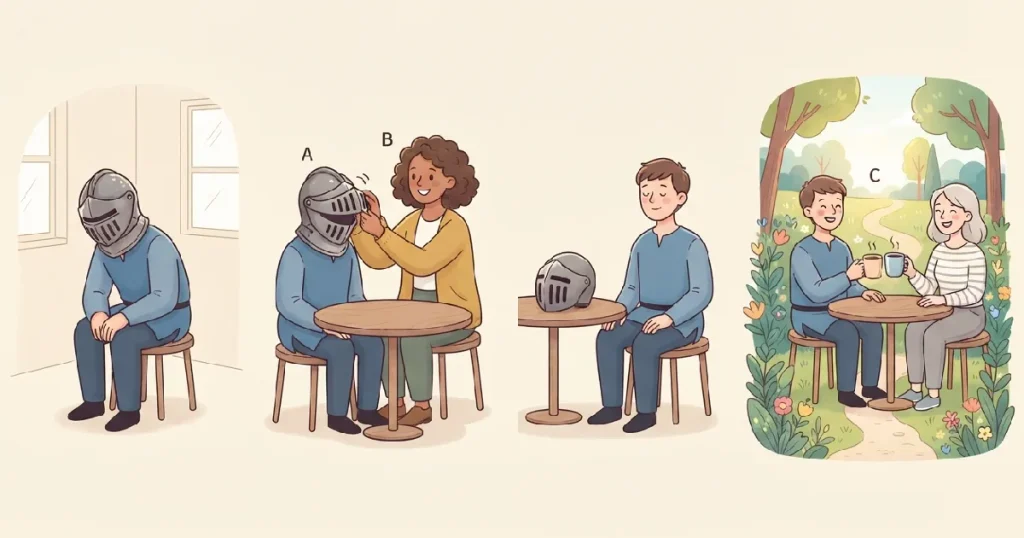
These aren’t generic therapy techniques stretched to fit. They’re personality disorder specialized modalities, built from the ground up for the exact defense structure narcissism creates.
1. Schema Therapy for Narcissistic Personality Disorder
Schema therapy traces grandiosity back to its source: maladaptive schemas, meaning deeply held, often wordless beliefs formed in early childhood. Common ones in NPD include defectiveness (I am fundamentally flawed), abandonment (I will end up alone), and entitlement (the rules don’t apply to me because no one protected me when they should have).
The clinician’s main tool is called limited reparenting. Inside clear professional boundaries, the therapist offers the steady, attuned response the patient likely never got as a child. Over time, this corrective emotional experience softens the grandiose front, because the patient finally has proof that someone can see the scared kid underneath without punishing him for it.
This isn’t a fringe idea anymore. Ongoing clinical progress in understanding and treating NPD continues to support longer-term structural approaches like this one, especially for patients who’ve already failed shorter forms of therapy.
2. Transference-Focused Psychotherapy for NPD
Transference-focused psychotherapy, or TFP, treats the relationship between patient and therapist as a live sample of the patient’s entire relational world. Rooted in object relations theory, which studies how people internalize early relationships and then project them onto everyone around them, TFP assumes whatever the patient does with the therapist, they do with everyone else too.
If a patient tries to devalue the therapist, control the pace, or quietly test a boundary, the therapist names it in the moment instead of letting it slide. That immediate interpretation catches manipulation as it happens, not weeks later in the abstract. The room becomes a rehearsal space where distorted patterns get caught and slowly rewired.
3. Mentalization-Based Treatment for NPD
Mentalization-based treatment, or MBT, targets something called epistemic trust, a person’s basic ability to believe that information coming from another person is safe and relevant to absorb. Many people with NPD lost this early, usually through chronic invalidation, and it left them treating almost all feedback as a threat.
The therapist deliberately holds a “not-knowing” stance, resisting the urge to interpret the patient’s feelings for them. Instead, the patient gets asked to slow down and guess what’s happening inside themselves, and inside the other person in the room. Done consistently, this rebuilds cognitive empathy, the ability to accurately read someone else’s internal state, which tends to be the most damaged function in narcissistic presentations.
4. Self Psychology and Narcissistic Injury Treatment Options
Heinz Kohut’s self psychology flips the usual judgment about grandiosity on its head. Rather than confronting it as arrogance, Kohut saw it as a developmental arrest, a piece of healthy self-esteem that never finished forming because a caregiver failed to mirror the child’s needs.
The treatment looks deceptively gentle. Through sustained, structured empathetic mirroring, the therapist reflects the patient’s experience back accurately, session after session, until the patient’s interior sense of worth starts to stabilize on its own. Among narcissistic injury treatment options, this one plays the longest game, but it often reaches patients who’ve bounced off every more confrontational method first.
4 Behavioral Treatments for Narcissistic Personality Disorder
Relational work heals the wound. These next four modalities manage the behavior while that slower healing happens.
5. Modified DBT for Narcissistic Personality Disorder Treatment
Dialectical behavior therapy, or DBT, wasn’t built for narcissism originally, but modified versions now serve as a real harm-reduction tool here. Rather than waiting for a shift in identity, DBT teaches concrete skills for distress tolerance, emotional regulation, and managing the flooded reaction that follows any perceived criticism.
Think of it as triage. While deeper psychodynamic work addresses the wound, DBT skills keep the patient from blowing up a marriage or a job in the meantime. For families living with someone in active crisis, this is often the fastest relief available.
6. Metacognitive Interpersonal Therapy and the Behavioral Loop
Metacognitive interpersonal therapy, or MIT, runs on a manualized structure, meaning it follows a specific step-by-step protocol rather than an open-ended conversation. The patient learns to trace a repeating loop: a trigger happens, a defensive thought kicks in, a predictable behavior follows, and a specific relationship cost shows up afterward.
Once that loop is visible, the patient and therapist build a pre-planned alternative response together, something concrete to try the next time the trigger shows up. It’s less about sudden understanding and more about interrupting a habit before it fires on autopilot.
7. Trauma-Informed EMDR for Narcissistic Injury Treatment
Eye movement desensitization and reprocessing, or EMDR, approaches NPD from a trauma-informed angle, treating the disorder as a defense built around early humiliation rather than a character flaw. Because EMDR relies on bilateral stimulation, guided eye movements or taps that help the brain reprocess stuck memories, it doesn’t depend heavily on talking at all.
That matters more here than almost anywhere else in this list. A patient who can out-argue most therapists in conversation has far less room to debate during a nonverbal process. The locked memory gets processed directly, without giving the defense system a chance to take the wheel.
8. Radically Open DBT and the Overcontrol Pattern Behind Narcissism
Radically open DBT, or RO-DBT, looks at a side of narcissism standard treatment often misses: excessive psychological overcontrol, a rigid habit of hiding real emotion behind composure, distance, or performance. Where standard DBT helps people manage too much emotional intensity, RO-DBT helps people who’ve been suppressing expression for far too long.
The work involves deliberately leaning into vulnerability, practicing authentic expression even when it feels unsafe, and rebuilding social signaling that invites connection instead of distant admiration. For quieter, more controlled presentations of narcissism, this often fits better than anything else listed here.
Practical Steps Before Narcissistic Personality Disorder Treatment

One place to start, whether you’re considering treatment yourself or loving someone who needs it, is what I’d call the Specialist Screen. Before committing to a therapist, ask directly whether they have specific training in one of the modalities above, not just general experience with narcissism. A vague answer is useful information on its own.
A second tool worth building is the Six-Month Marker. Instead of asking whether someone has fundamentally changed, ask a smaller, more honest question: has anything measurable shifted in the last six months? Fewer explosive arguments. One genuine apology. A single moment of real curiosity about someone else’s feelings. Small, trackable shifts are the actual signal, not sweeping transformation.
If you’re the partner or family member in this story, consider building a Boundary Script, a short, rehearsed line you can use when a conversation starts spiraling toward blame. Something as simple as, “I want to keep talking about this, but not while it’s turning into an argument,” protects your own regulation while the other person does the longer work.
A question worth sitting with this week: what is one specific behavior, not a feeling, not a vibe, that would actually tell you treatment is working?
Narcissistic Personality Disorder Treatment: Timeline and Expectations
If you’ve been asking whether narcissistic personality disorder can be treated at all, here’s the honest timeline. Meaningful, measurable change in personality structure typically takes one to two years of consistent, specialized work, sometimes longer. Anyone promising faster is either overselling or treating a comorbid symptom instead of the actual disorder underneath.
Speaking of which, most people with NPD don’t walk into a therapist’s office asking for help with their personality. They show up because of a comorbid condition, a second diagnosis occurring alongside the first, like depression after a divorce, crushing anxiety after a career setback, or substance use that’s quietly spiraled. The personality structure often only becomes visible once that initial crisis gets stabilized.
There’s no medication specifically approved for NPD itself. What does help, used as a supportive measure, are targeted prescriptions for the comorbid symptoms riding alongside it, like antidepressants or anti-anxiety medication during a particularly volatile stretch. For a clear breakdown of diagnostic criteria and realistic limits, Cleveland Clinic’s clinical breakdown of NPD management is a solid starting point.
Progress here doesn’t look like a total personality overhaul. It looks like smaller, trackable shifts: fewer blowups at work, a partner who finally feels heard mid-disagreement, an apology that doesn’t come with six justifications attached.
Narcissistic Personality Disorder Treatment: From Mask to Measurement
Effective treatment never starts by confronting the grandiosity head-on. It starts by walking past it, toward the shame and attachment wounds that built it in the first place. Schema therapy, TFP, MBT, self psychology, and the behavioral methods built alongside them all do the same basic job from different angles. They make it safe enough for the real person underneath to finally show up.
Change here is slow. It’s also real, and it’s measurable, when the right method meets real commitment.
Think back to that suit of armor forged in a house fire. It did its job. It kept a scared kid from burning alive in shame he had no way to process alone. But armor built for an emergency was never meant to be worn forever, and nobody ever came back to teach that kid how to take it off safely.
That’s what specialized narcissistic personality disorder treatment actually does. It doesn’t rip the armor off by force. It sits with the person long enough, carefully enough, for them to finally trust they can survive without it.
Change is slow here. But it is not a myth.
My Closing Remarks
In my practice, the moments that stay with me aren’t the dramatic breakthroughs people expect, the big apologies or tearful confessions. They’re smaller: a client pausing mid-sentence to ask how someone else might have felt, maybe for the first time in forty years. That pause is the whole treatment working. If you’re loving someone through this, or doing the work yourself, don’t measure progress by the dramatic moments. Measure it by the pauses.
More Related Stories for You
- Curious how personality takes shape in less extreme ways? This piece on the seven basic personality traits breaks down the building blocks we all carry, narcissism included.
About The Author