
 Sara Carmen
His betrayal may have changed your marriage, but it does not get to define your value, your future, or the story you tell yourself about why it happened.
Key Points
- A Cheating Husband is not evidence that you failed as a wife, lover, friend, or woman.
- Betrayal can trigger trauma-like reactions that make you search, compare, and blame yourself even when none of those actions bring relief.
- You regain power after infidelity by separating his choices from your worth and returning your attention to your safety, health, voice, and options.
Contents
Table of Contents
A cheating husband does not make you inadequate. It makes you desperate for an explanation, and self-blame can feel less frightening than accepting that another adult made a choice that wounded you.
You may have replayed every recent conversation. You may have studied your body in the mirror or compared yourself to someone you have never met. You may have wondered whether you worked too much, asked for too much, wanted too much, or somehow stopped being worth protecting.
Someone might think you are “obsessing” because you keep checking a phone, reading old messages, or revisiting the date you found out. But what they do not see is a nervous system trying to make sense of a threat that entered the place where you were supposed to feel safest.
Someone might think the affair happened because your marriage had problems. But what they do not see is that relationship pain and deception are not the same thing. A marriage can be unhappy. A husband can feel lonely, rejected, bored, entitled, or insecure. None of those feelings force him to lie.
That distinction is where your recovery begins.
Why a Cheating Husband Can Make You Blame Yourself
After infidelity, self-blame often arrives before anger. Your mind starts building a case against you because it wants a reason that feels controllable. If you caused his cheating, then maybe you can prevent it from happening again by becoming prettier, quieter, more sexual, less emotional, or easier to please.
That is not truth. It is a cognitive distortion, meaning an automatic thought pattern that feels convincing but is not fully accurate.
One common distortion is the “enoughness fallacy”: the belief that if you had been enough in the right way, your husband would have remained faithful. This idea gives you false control. It turns his character, choices, boundaries, and honesty into a scorecard for your worth.
Betrayal can also cause a trauma response. Trauma response describes the mind and body’s reaction after an event overwhelms your sense of safety. You may have intrusive images, nausea, insomnia, panic, emotional numbness, or a strong need to know every detail. The American Psychological Association’s guidance on trauma explains that trauma reactions can affect sleep, concentration, mood, and your sense of security.
You are not “crazy” for feeling unlike yourself.
Research tells a more honest story than self-blame does. In their 2005 review of infidelity research, Alan Blow and Kristen Hartnett found that cheating can involve many factors, including opportunity, individual attitudes, sexual desire, relationship dissatisfaction, and personal beliefs about commitment. That review of infidelity research does not erase marriage problems. It does make one point clear: dissatisfaction does not make deception inevitable.
A difficult marriage may be a context. It is never permission.
1. A Cheating Husband’s Choices Are Not a Measure of Your Worth
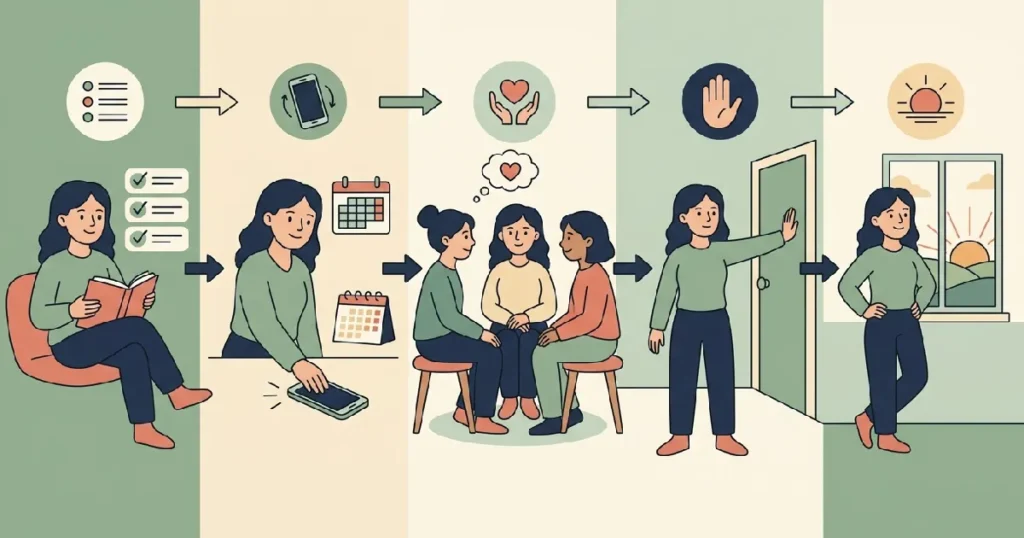
Your husband may offer explanations that sound like accountability but quietly place the burden on you.
“You were distant.”
“You stopped trying.”
“You did not understand me.”
“We had not been happy for years.”
Some of those statements may describe real pain in your marriage. Yet they do not explain why he chose secrecy over honesty. A person can ask for counseling, name unmet needs, request a separation, or end a relationship with integrity. Cheating is a separate decision.
In some cases, an affair comes from a validation deficit. This means a person has fragile self-worth and keeps seeking outside attention to feel desirable, powerful, or important. Some clinicians refer to this as a narcissistic deficit. It does not mean your husband has narcissistic personality disorder. It means his inner emptiness may have made admiration feel like a drug.
But his hunger for validation is not proof that you failed to love him well enough.
Think of his affair as a broken smoke alarm in his own emotional house. Instead of dealing with the fire inside himself, he ran outside to hear someone tell him he was fine. Your job was never to become the alarm, the firefighter, and the building inspector all at once.
A useful sentence to repeat is: “Our marriage may have had problems. His dishonesty was still his choice.”
2. A Cheating Husband Can Turn Your Phone Into an Alarm System
Digital betrayal has changed what infidelity can look like. It may involve physical sex, secret messaging, dating apps, hidden social media accounts, sexual content, money sent to another person, private conversations with an AI companion, or emotional intimacy that was deliberately concealed.
Not every private message is cheating. Boundaries differ between couples. The issue is whether an agreed boundary was crossed and hidden from you.
Once you discover betrayal, your phone can become an alarm system. Every notification, late reply, deleted message, or password change can set off a surge of panic. This is hypervigilance, which means your brain is scanning constantly for danger because it no longer trusts safety.
Most people in this position do not realize that digital surveillance can become a second relationship. Your husband may be physically present, but your attention becomes tied to his location, devices, passwords, and online activity.
That loop is exhausting.
A limited digital audit can be appropriate when you need facts to make informed decisions. Save information you already have lawful access to. Avoid installing tracking software, impersonating someone, or accessing protected accounts. If you need legal guidance, ask a qualified professional in your area about what records you may collect.
Then create an endpoint.
The goal is enough information for clarity, not endless information that keeps your body in panic. When you feel the urge to check again, try one of the grounding practices recommended by the National Center for PTSD: press both feet into the floor, name five objects you can see, and make your exhale longer than your inhale.
Your body deserves a break from being a detective.
3. A Cheating Husband Cannot Hand You His Shame

After discovery, some husbands become deeply remorseful. Others minimize, deny, blame, become angry, or accuse you of being controlling for asking questions. This is where emotional boundaries become essential.
Externalization is the psychological habit of placing uncomfortable feelings onto someone else. A person who feels guilt may try to reduce that guilt by making you the problem. If you become “too suspicious,” “too emotional,” or “impossible to talk to,” then he does not have to sit fully with what he did.
That is not accountability. It is shame transfer.
Gaslighting is repeated manipulation that causes you to doubt your memory, judgment, or reality. Not every lie is gaslighting. But if your husband insists that what you saw did not happen, claims you are imagining obvious evidence, or twists each conversation until you apologize for being hurt, take that pattern seriously.
You do not have to accept his version of reality to keep the peace.
A clear boundary can sound like this: “I am willing to discuss the marriage. I am not willing to debate whether dishonesty happened or whether I have the right to be hurt.”
That is not punishment. It is self-respect.
A Composite Story of Infidelity Recovery
Maya discovered that her husband had been messaging a former coworker for months. At first, she spent every night searching his phone records and comparing herself to photos of the other woman. When he said, “You never made me feel wanted,” Maya began dieting, buying new clothes, and apologizing for being stressed.
Nothing made her feel safer.
Maya eventually wrote two columns in a notebook. On the left, she recorded facts: secret messages, deleted conversations, lies about work trips. On the right, she recorded the stories she was telling herself: “I am boring,” “I ruined the marriage,” and “No one will ever choose me.”
The facts were painful. The stories were devastating.
Once Maya could see the difference, she stopped negotiating with the stories. She sought individual support, learned what she needed financially, and told her husband that any repair would require full accountability and consistent action. She did not decide the future of the marriage that week. She simply stopped making his betrayal into evidence against herself.
4. A Cheating Husband Does Not Get to Delay Your Agency

You may not know whether you want to stay, separate, reconcile, or leave. That uncertainty is normal. You do not have to make the biggest decision while your nervous system is in shock.
But you can begin making smaller decisions that return power to you.
Start with an agency audit. This means reviewing the parts of your life that help you make choices from strength instead of fear. Consider your financial information, access to accounts, employment options, personal documents, credit, health needs, emotional support, and legal questions.
If there has been sexual contact outside the marriage, consider CDC guidance on STI testing. This is not about shaming anyone. It is basic health care during a situation where trust has been broken.
Consider creating a private folder containing copies of essential documents, account information, insurance records, tax details, and contact information for trusted support. The Consumer Financial Protection Bureau’s consumer tools can help you organize financial questions without making a sudden decision.
If your husband has threatened you, monitored your movements, controlled money, used force, or made you afraid to disagree, put safety ahead of confrontation. Contact a local domestic violence program, emergency services, or a trusted person who can help you make a private plan.
Your future does not begin on the day you leave or reconcile. It begins when you start gathering choices.
What to Do After a Cheating Husband: The 24-Hour Agency Plan

Try the FACT Method. FACT stands for Facts, Actions, Circle, and Terms. It is a way to keep betrayal from pulling you into a fog of panic.
Facts: Write only what you know. “I found messages.” “He admitted meeting her.” “He denied it twice.” Keep assumptions in a separate space. Facts give you stable ground.
Actions: Choose one action that helps your physical or practical safety today. It might be scheduling a medical appointment, changing a password, eating a real meal, or sleeping at a trusted friend’s house for one night.
Circle: Identify two people who can hold your reality without turning it into gossip. One may be a therapist. One may be a friend who will not pressure you to leave or stay before you are ready.
Terms: Decide what you will and will not discuss today. For example: “I will talk for thirty minutes after dinner. I will end the conversation if you insult me, deny facts, or blame me for your choice.”
Another place to start is a “No-Comparison Rule.” For seven days, do not search for the other person’s photos, social media posts, or personal details. Comparison feels like preparation, but it usually keeps the wound open. The question is not whether someone else has a different body, job, age, or personality. The question is whether your husband chose honesty.
Finally, make one appointment that belongs only to your future. It could be therapy, a career meeting, a meeting with a financial professional, a medical visit, or lunch with someone who knew you before this marriage. Post-traumatic growth is the term researchers Richard Tedeschi and Lawrence Calhoun use for positive personal change that may follow trauma. It does not mean you are grateful for betrayal. It means pain does not get the last word.
A Cheating Husband Does Not Get the Final Word
You may still be sitting with the phone in your hand. You may still feel sick when he walks into the room. You may still have days when you blame yourself before you remember what is true.
That does not mean you are failing at recovery. It means your body is learning that the danger is real, but your worth is not up for debate.
You do not have to decide the marriage today. You can decide that you will no longer use his betrayal as evidence against yourself.
His betrayal is part of your story, not the measure of your worth.
My Closing Remarks
I have watched self-blame break women more deeply than the affair itself. Not because the betrayal hurt less, but because they kept adding their own punishment to an injury they did not cause. Please do not become his unpaid defense attorney. You can grieve the marriage, miss him, love him, feel furious, and still refuse to carry the shame that belongs to his choices. Start with one clean act of loyalty to yourself today. That is where your life starts turning back toward you.
More Related Stories for You
- Read these successful marriage tips if you are considering whether genuine repair is possible after betrayal.
About The Author