
 Sara Carmen
The couples who make it through their worst years aren’t the ones who love harder. They’re the ones who built a few unglamorous habits before they needed them.
Key Points
- The most successful marriage tips have nothing to do with grand romance and everything to do with small, repeatable habits practiced during your hardest seasons, not just your easiest ones.
- Decades of relationship research show that how a couple handles money, conflict, and daily repair predicts long-term survival better than how much they say they love each other.
- One piece of advice you’ve probably heard your whole life turns out to be more myth than science, and understanding why changes how you handle conflict tonight.
Contents
Table of Contents
We stand at the altar and each of us believes our love is the exception. You say your vows and you mean every word of them. You picture decades of steady partnership, not years of clenched jaws, silent car rides, and arguments about money you never saw coming.
The love doesn’t usually disappear during your worst years. It just stops being enough on its own.
Someone might look at a couple who never seems to fight and assume they’ve found the secret. But what they don’t see is two people who quietly gave up trying to be heard, because arguing felt pointless a long time ago.
Someone might look at a couple drowning in credit card debt and think their marriage problem is a money problem. But what they don’t see is that the debt is just the surface. The real wound is two people who stopped talking about money the moment it got scary.
Someone might look at a couple who’s been married thirty years, still holding hands, still laughing at each other’s old jokes, and assume they got lucky. What they don’t see are the two or three years in the middle where neither of them was sure they’d make it, and the specific, unglamorous choices they made anyway.
That’s the part nobody puts on the anniversary card.
Why Some Marriages Survive Hard Years and Others Quietly End
Here’s something that surprises most people: the strength of a marriage isn’t measured by how a couple acts on their best day. It’s measured by what they do on their worst one.
Psychologist John Gottman spent decades observing thousands of couples in what researchers call “the Love Lab,” tracking their conversations, heart rates, and conflict patterns over years. His team could predict, with over 90 percent accuracy, which couples would eventually divorce, and it wasn’t based on how much affection they showed. It was based on specific, repeatable behaviors during stress, things like contempt, defensiveness, and something Gottman calls “repair attempts,” which are small efforts one partner makes to de-escalate tension before it spirals.
This matters because most marriage advice you’ve read focuses on the good years. Date nights. Communication tips. Ways to keep the spark alive. All useful. None of it built for the years when one of you loses a job, a parent gets sick, or the resentment has been quietly compounding for so long you can’t remember what started it.
There’s a related concept called dyadic coping, developed by Swiss psychologist Guy Bodenmann. It describes how couples manage stress not as two individuals suffering alone, but as a team facing a shared external threat. Couples with strong dyadic coping skills don’t necessarily face less stress. They just stop experiencing each other as part of the problem.
Left unexamined, this pattern doesn’t just strain a marriage. It can quietly become the reason it ends, long after the original stressor has passed.
Most couples in survival mode don’t realize they’ve stopped being a team until they’re already living like roommates who split a mortgage. That realization is painful, but it’s also the beginning of the fix.
The Five Habits That Hold a Marriage Together During the Worst Years
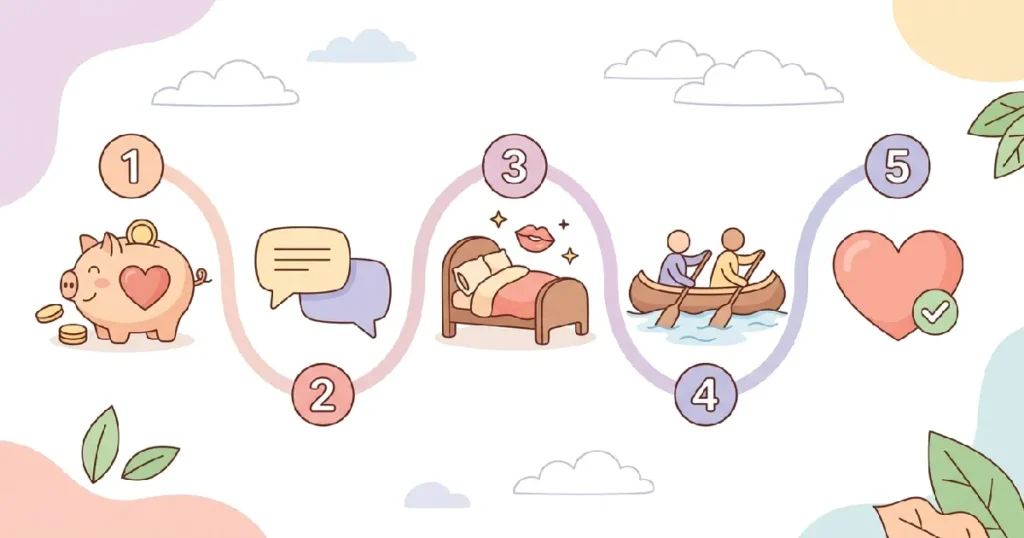
A marriage built only on romantic feeling works fine in good weather. It’s a house standing on a single support beam, holding up the whole roof, looking sturdy until the wind picks up. The couples who make it through their hardest years didn’t find one magic beam that never bends. They built several.
Here are five of them, drawn from both the research and what actually shows up, again and again, in the relationships that survive.
1. Treat Debt Like a Shared Enemy, Never a Personal Failure
Financial strain is one of the most consistent predictors of divorce, and it’s not really about the dollar amount. It’s about how couples talk, or refuse to talk, about money together.
A widely cited report from the National Marriage Project found that couples who manage money jointly and avoid consumer debt report significantly higher marital satisfaction than couples carrying heavy financial strain, regardless of income level. Debt itself doesn’t destroy marriages. Secrecy and blame around debt do.
So what does this mean for you? Try naming the debt as an outside threat you’re both fighting, not a reflection of one partner’s failure. “We need to deal with this” lands very differently than “you did this to us.”
2. Build a Nightly Repair Ritual, Not a Debate About Who Was Right
Repair attempts are the small gestures that interrupt conflict before it hardens into contempt. A goodnight kiss. A hand on the back. A quiet “I love you” even mid-disagreement. Gottman’s research found that couples who maintained physical affection and small repair gestures during conflict were far more likely to stay together long term than couples who withheld affection until an issue was fully resolved.
But here’s what no one tells you about that goodnight kiss.
The popular advice to “never go to bed angry” isn’t actually well supported by sleep science. Sleep researchers at institutions like Harvard’s Division of Sleep Medicine have found that sleep helps the brain process and reorganize emotional memories, which can actually reduce the intensity of anger by morning rather than lock it in (Harvard Medical School Division of Sleep Medicine). Forcing a resolution at midnight, exhausted and emotionally flooded, often makes conflicts worse, not better.
The real function of the goodnight kiss was never about solving the fight before sleep. It’s about protecting the attachment bond regardless of whether the fight got solved.
3. Take Your Complaint to Your Spouse Before You Take It to Your Friends
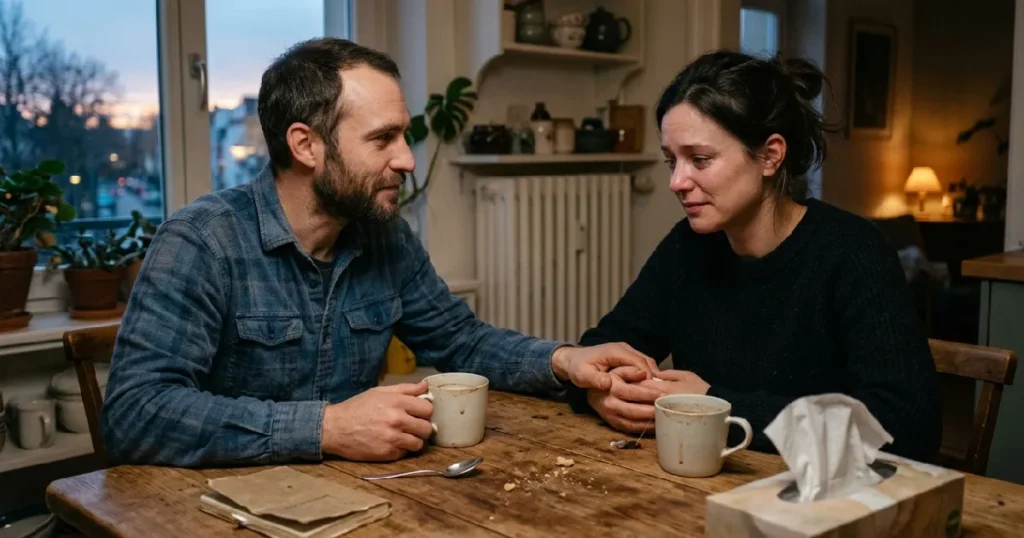
Venting to friends feels harmless. In my practice, I’ve seen this pattern more times than I can count, and it rarely stays harmless for long.
This is a version of what psychologists call triangulation, where a third party absorbs the emotional energy that should be directed toward resolving the actual issue with your partner. The friend validates you, you feel better temporarily, and the resentment toward your spouse gets rehearsed and reinforced instead of resolved.
Consider Maria, a composite of clients I’ve worked with over the years. She spent two years complaining to her sister about her husband’s lack of help around the house. Her sister agreed every time, and Maria felt understood. But her husband never once heard the actual complaint, so nothing ever changed, and Maria’s resentment calcified into what Gottman calls “negative sentiment override,” a state where you interpret almost everything your partner does through a negative lens.
The fix isn’t to stop talking to friends entirely. It’s to bring the complaint home first, in plain language, before it becomes a story you tell about your marriage rather than a conversation within it.
4. Row the Canoe in the Same Direction, Even When You Disagree on the Speed
One of the clearest markers of a healthy marriage isn’t agreement. It’s direction. Couples who frame their struggles as “us versus the problem” instead of “me versus you” report significantly higher satisfaction during high-stress periods, according to Bodenmann’s dyadic coping research.
This doesn’t mean you stop being two individuals. It means you stop trying to reshape your partner into a version of yourself. Just because you’d handle a situation differently doesn’t mean your partner is handling it wrong.
A useful shift is language. “You always do this” implies a fixed flaw. “We need to figure this out” implies a shared project. Small linguistic shift. Enormous emotional difference.
5. Forgive Daily, Including Yourself
Resentment doesn’t usually arrive as one giant betrayal. It arrives in small daily deposits, the sharp comment you didn’t apologize for, the chore you forgot, the moment you snapped when you were tired. Left uncollected, these deposits compound like interest on debt you didn’t know you were carrying.
Researcher Kristin Neff’s work on self-compassion, treating yourself with the same understanding you’d offer a friend, has found strong links between self-compassion and relationship satisfaction. People who are harsh with themselves tend to become defensive and harsh with their partners too.
A nightly practice of naming one thing you’re letting go of, out loud or just internally, prevents the daily deposits from becoming a debt neither of you can pay off.
These five habits do the heavy lifting, but they’re supported by smaller, quieter ones that reinforce them: genuine appreciation for the small things your partner does without being asked, protected time for actual eye contact and conversation, honesty even when a comfortable lie would be easier, and physical affection that isn’t always about sex but often includes it. None of these require a bigger budget or a fancier vacation. They require attention.
Now What? Turning These Habits Into Something You Actually Do

Reading about repair attempts and dyadic coping is one thing. Practicing them on a Tuesday night when you’re exhausted and irritated is another.
One place to start is what I call the State of the Union Check-In: fifteen minutes, once a week, no phones, where you cover three things only, money, logistics, and how you’re each actually feeling. This keeps small resentments from accumulating into the kind of silent debt that erodes a marriage over years.
Another is the Two-Minute Repair, a small physical or verbal gesture of affection you commit to every single night regardless of what happened that day. It doesn’t require resolving the conflict. It only requires protecting the connection underneath it.
Consider also the Complaint Filter: before venting to a friend about your partner, ask yourself one question. Have I said this directly to my spouse yet? If the answer is no, that conversation needs to happen first.
A useful question to ask yourself this week: what’s one resentment you’re currently carrying that you’ve never actually said out loud to your partner? Not to a friend. Not in your head at 2 a.m. To them.
You Don’t Need a Beam That Never Bends
Go back to that image of the altar, the vows, the belief that your love would be the exception. You weren’t wrong to believe it. You were just missing the blueprint.
A marriage that survives its worst years isn’t held up by one unbreakable feeling. It’s held up by several sturdy, unremarkable habits, practiced on the days you don’t feel like it. You don’t need a single beam strong enough to hold the whole roof anymore. You’ve got five now, and a few smaller ones besides.
That’s not a lesser kind of love. That’s the kind that lasts.
My Closing Remarks
Here’s what I’ll tell you plainly. I’ve watched couples who seemed hopeless rebuild something real, and I’ve watched couples with every advantage fall apart from neglect. The difference was never luck. It was whether they kept practicing the boring stuff when nobody was watching. Your marriage doesn’t need a miracle. It needs you to show up on the Tuesday nights, not just the anniversaries.
More Related Stories for You
- If you’re paying attention to the small signals in your relationship right now, you might also want to know the signs he is going to propose before you even get to the years covered in this article.
About The Author