
 Sara Carmen
The Tips Your Aunt Gave You At The Wedding Probably Won’t Save Your Marriage. Here’s What Actually Does.
Key Points:
- Real relationship advice for newlyweds isn’t a list of nice ideas. It’s a set of behavioral habits that research links to marital survival.
- The first year of marriage works like a psychological imprinting period, quietly setting patterns that can last decades.
- Small, repeatable habits (not grand gestures) predict long-term marital satisfaction far better than personality or compatibility ever could.
Contents
Table of Contents
You’re six months into marriage, standing in the kitchen, staring at a wet towel your spouse left on the bed for the third time this week. You snap. Your voice comes out sharper than you meant it to.
Your spouse looks at you like you’ve lost your mind over a towel. And honestly, you kind of have.
Within seconds you feel guilty. You start wondering when you became someone who keeps score over laundry. This isn’t the first small moment that’s felt strangely bigger than it should. And it won’t be the last.
Here’s the part nobody tells you at the wedding shower: that moment matters more than almost anything else happening in your marriage right now.
Why Most Newlywed Advice Doesn’t Actually Change Anything
Most relationship advice for newlyweds sounds like this: communicate more, compromise, go on date nights, remember no one’s perfect. All true. All completely useless without a mechanism behind them.
Here’s why. Telling a stressed, tired newlywed couple to “just communicate better” is like telling someone to “just be less anxious.” It names the goal without giving the tool.
In my practice, I’ve watched couples who love each other deeply repeat the same fight for years, not because they lack love, but because they lack a repair system. Psychologists call this the difference between conflict and gridlock. Conflict is normal. Gridlock happens when the same unresolved issue resurfaces again and again with no forward motion.
Ted Huston’s landmark PAIR Project, one of the longest-running studies of newlywed couples ever conducted, tracked couples for thirteen years starting from their wedding day. What Huston found was surprising. Marital decline usually wasn’t caused by some dramatic betrayal. It was caused by a slow erosion of affection and small daily gestures that started within the first two years and simply never got repaired.
That’s the piece missing from most newlywed advice. It’s not about doing more romantic things. It’s about protecting the small, ordinary exchanges that make up 90 percent of your actual marriage.
The First-Year Imprint: What’s Really Happening in Your Brain and Your Marriage
Here’s a concept that reframes everything: the first year of marriage functions a lot like a critical period in development, a window where habits form fast and harden even faster.
Think of your marriage right now as wet cement.
Right now, in these early months, everything you do together is still soft. It can be shaped, corrected, reformed. But cement doesn’t stay wet forever. Every pattern you repeat, whether it’s snapping over towels or reflexively saying “thank you,” is another layer setting into the foundation of how your marriage will function for years.
This isn’t just a metaphor. Researchers Benjamin Karney and Thomas Bradbury developed what’s known as the vulnerability-stress-adaptation model of marriage, which explains that couples don’t fail because of one big problem. They fail because ordinary daily stress interacts with unresolved vulnerabilities, and how a couple adapts to that stress early on predicts satisfaction years later.
Most people in this situation don’t realize that the habits they’re forming right now, while everything still feels new and forgivable, are the exact habits that will either buffer them through hard years or leave them defenseless against them.
That’s not meant to scare you. It’s meant to hand you the leverage you didn’t know you had.
What Real Relationship Advice for Newlyweds Actually Includes
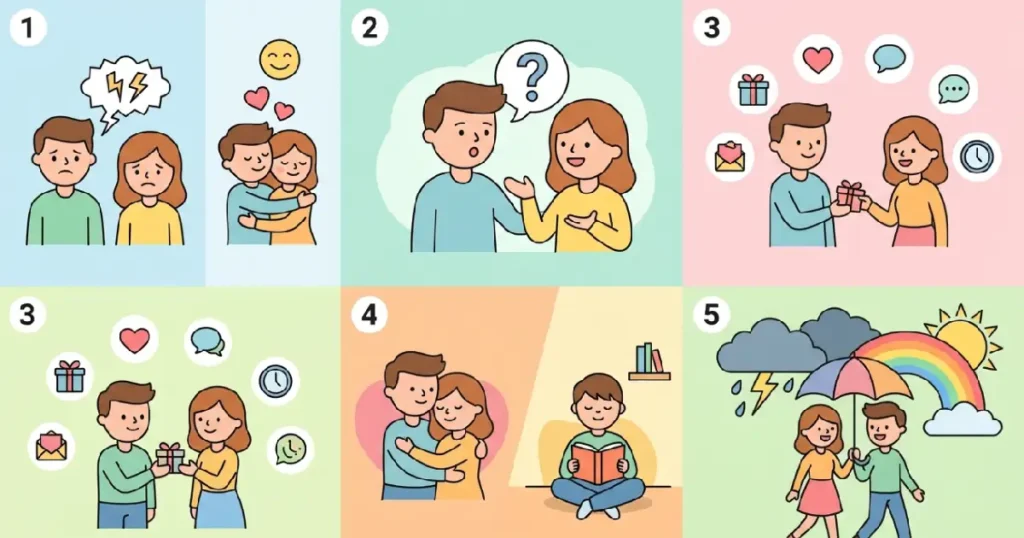
1. Build a Daily Repair Habit, Not Just a Big Apology Reflex
The claim: Couples who last aren’t the ones who never fight. They’re the ones who repair quickly and often, even over small things.
Relationship researcher John Gottman found that successful couples maintain what he calls a “magic ratio,” roughly five positive interactions for every negative one during conflict. Couples heading toward divorce averaged closer to one to one. The difference wasn’t the absence of conflict. It was the presence of repair.
Consider Maya and Daniel, a composite of many couples I’ve worked with in their first year. Every disagreement used to spiral for days because neither wanted to apologize first. Once they agreed that “first to apologize doesn’t mean most wrong, it means most brave,” their fights started resolving in hours instead of days.
So what does this mean for you? The goal isn’t zero conflict. The goal is becoming the couple that finds their way back to each other quickly, every single time.
2. Ask Each Other the Question Most Newlyweds Never Think to Ask
The claim: Most communication problems in marriage aren’t about talking too little. They’re about not knowing what’s actually going unsaid.
Try asking your spouse this once a week: “What am I not hearing right now?” It’s a strange question at first. It bypasses defensiveness because it’s not an accusation. It’s an invitation.
This single question interrupts what Gottman calls negative sentiment override, a state where you start interpreting your partner’s neutral or even kind behavior through a lens of suspicion or resentment. Once this pattern sets in, even a genuine compliment can sound like criticism. Asking “what am I not hearing” forces both partners to slow down before that override takes hold.
The practical shift here is small but real. You stop assuming you already know your partner’s inner world, and you start actually checking.
3. Learn to Speak Love in a Language Your Partner Can Actually Hear
The claim: Effort without translation gets lost. You can love someone deeply and still make them feel unloved simply because you’re expressing it in a dialect they don’t speak fluently.
The concept of love languages, popularized by Gary Chapman, isn’t a rigid science, and some researchers argue the framework oversimplifies how affection actually works. But the underlying insight holds up: people notice and receive care differently, and assuming your way of showing love is universal is one of the fastest paths to feeling unappreciated as a couple.
Here’s the part most newlywed advice skips entirely: love languages aren’t fixed. They shift with stress, with life stage, with exhaustion. What made your spouse feel loved during the engagement might not land the same way during a hard month at work.
The action here is simple and ongoing. Ask, don’t assume. Check in every few months, not just once at the wedding.
4. Protect Both Togetherness and Separateness on Purpose
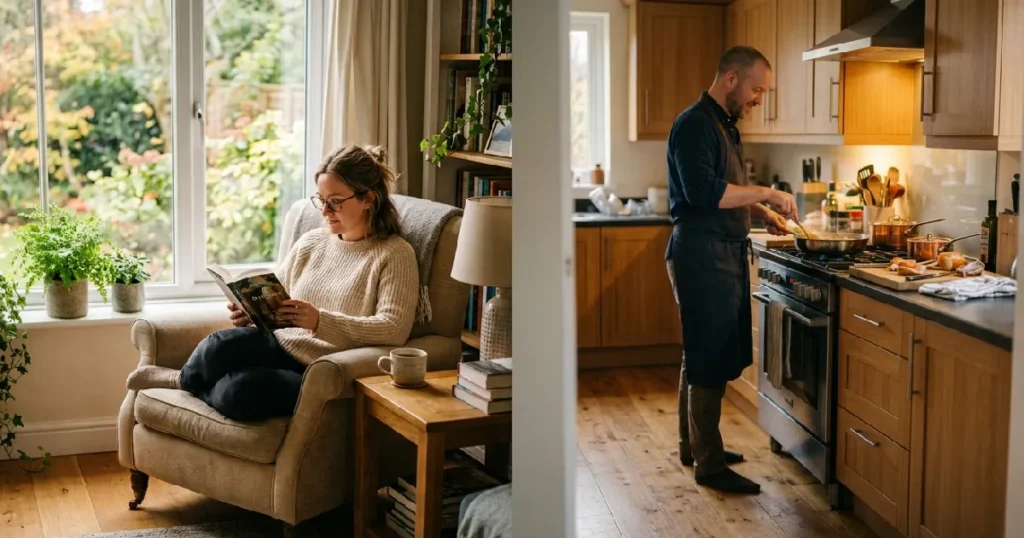
The claim: A healthy marriage requires two people who still exist as individuals, not two people who’ve dissolved into one identity.
Psychologists call this differentiation, the capacity to stay emotionally connected to your partner while still maintaining your own thoughts, interests, and sense of self. Couples with low differentiation tend to either merge completely, losing their individual identities, or disconnect entirely to protect themselves. Neither extreme sustains a marriage long term.
This is why “always make time for each other, but also make time for yourself” isn’t a throwaway line. It’s structurally necessary. A weekly date night matters. So does an hour alone with a book, a hobby, or your own friends, guilt-free.
Consider it a rhythm rather than a rule: come together, then apart, then together again. Marriages that only know togetherness eventually suffocate. Marriages that only know separateness eventually drift.
5. Expect the Bad Times, and Decide in Advance You’ll Survive Them
The claim: The good seasons of marriage are wonderful and require no advice at all. It’s the hard seasons that determine everything.
Here’s what no one tells you at the wedding.
The bad times can genuinely feel unbearable while you’re inside them. But normalization matters here. Nearly every long-married couple you admire has been through a season that felt like it might end them. The ones who made it through didn’t have an easier marriage. They had a shared belief that the hard season was temporary, not proof the marriage itself had failed.
This is where curiosity becomes protective. Couples who stay curious about each other, who keep asking questions instead of assuming they already know the answer, recover from hard seasons faster than couples who stop being interested in who their partner is becoming.
Now What? Turning This Into Something You Actually Do This Week
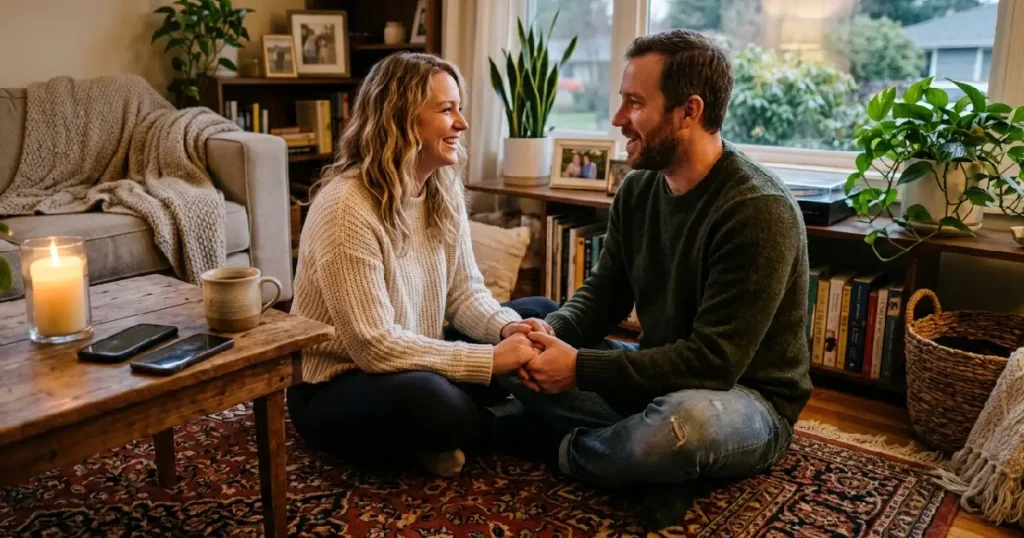
Insight without action just becomes another thing you nod along to and forget by Tuesday. Here are a few places to start.
The Sunday Reset. Set aside fifteen minutes once a week, no phones, to ask each other two questions: “What felt good this week?” and “What am I not hearing right now?” Consider it maintenance, the same way you’d check the oil in a car before it becomes a bigger problem.
The Two-Minute Repair. The next time a small disagreement happens, agree in advance that whoever notices the tension first gets to say “can we reset this” without it counting as losing the argument. Daniel and Maya still use this phrase years later.
The Love Language Check-In. Once a season, ask your spouse directly what’s currently making them feel most loved. Don’t assume this year’s answer matches last year’s.
The Solo Hour. Once a week, protect one hour that belongs only to you, no explanation required. A useful question to ask yourself: do I know who I am outside of this marriage right now?
None of these require a personality overhaul. They require repetition, which is really all healthy habits ever require.
The Marriage You’re Building Right Now
That wet towel on the bed was never really about the towel.
It was a tiny piece of cement, still soft, still shapeable, waiting to see what you’d both do with it. Snap, repair, and move on, or snap, and let it harden into resentment.
You don’t need a perfect marriage. You need a repairable one. And now you know the difference.
My Closing Remarks
Here’s the truth nobody puts on a wedding card. Marriage doesn’t get easier because you find the right person. It gets easier because you become the kind of person who repairs quickly, apologizes first, and stays curious long after the wedding photos stop being new. I’ve watched couples with wildly different personalities build extraordinary marriages, and I’ve watched compatible, “perfect on paper” couples fall apart. The difference was never who they were. It was what they practiced, on purpose, every single week.
More Related Stories for You
- Wondering where your relationship is headed before you even get to this stage? Here’s how to spot the signs he is going to propose before he says a word.
About The Author