Nicole Adkins

Why does the charm vanish right after you commit? The pattern has seven moves, and they tend to arrive in order.
Key Takeaways
- Narcissistic behaviors tend to arrive in a set order: charm first, then control, then open contempt when you push back.
- The earliest narcissistic red flags are quiet (one-sided talks, small “no”s that get ignored), and they surface months before open hostility.
- A two-week pattern log beats any armchair diagnosis, because changed behavior is harder to fake than a tearful apology.
Quick answer: Narcissistic behaviors are repeated patterns of entitlement, low empathy, and self-importance that show up as love bombing, one-upping, boundary pushing, gaslighting, and contempt. Everyone can be selfish sometimes. The warning sign is a steady pattern plus zero lasting repair after honest feedback.
Contents
Table of Contents
You rehearse a simple sentence three times before saying it at dinner. Something like, “Work was rough today.” Six months ago this person hung on your every word. Now you brace for an eye-roll, and nobody teaches you how to explain that fear to your friends.
That quiet self-editing is the tension nobody names. You keep wondering whether you became “too sensitive” or whether something real is happening to you.
Here is the engine underneath: intermittent reinforcement. Warmth and withdrawal arrive in no set order, so you keep chasing the good version of them. Psychologists have studied this reward schedule for decades. It is the same one that keeps people feeding slot machines.
Below are the seven behaviors we see most in reader letters. Each comes with a real-life example and a small test. Together they take two weeks, and none requires a fight.
The seven narcissistic behaviors at a glance:
| # | Behavior | Sounds like | Healthy version |
|---|---|---|---|
| 1 | Love bombing | “We’re soulmates” (week two) | Closeness that grows over months |
| 2 | Spotlight monopoly | “That’s nothing, hear my day” | Shared airtime, real questions |
| 3 | Entitlement | “I shouldn’t have to ask” | Your no gets respected |
| 4 | Empathy gap | “You’re too sensitive” | Comfort flows both ways |
| 5 | Gaslighting | “That never happened” | Disagreement without memory edits |
| 6 | Haughty behaviors | “Can’t you take a joke?” | Teasing that stops when asked |
| 7 | Hoovering | “I’ve changed” (after you pull away) | Change proven over months |
The Setup: Narcissistic Behaviors That Feel Like Love at First
The pattern front-loads the charm. The invoice arrives later. That ordering is what makes it so hard to name, because your mind keeps replaying the opening scene as evidence.
1. Love bombing: intimacy on fast-forward
Love bombing is affection at a speed the relationship has not earned. Think soulmate labels in week two, shared-lease talk in week three, constant contact that feels like devotion.
Maya, a composite from our reader letters, got “good morning, future wife” texts on day nine. By week six, the same man sulked every time she saw her friends. The gift and the invoice arrived in the same package.
Fast intensity alone proves little. Anxious attachment can look similar. The real test is pace: slow things down once (“let’s keep our weekends separate for now”), then watch whether they adjust or punish.
2. The spotlight monopoly: every story routes back to them
Sociologist Charles Derber called this conversational narcissism. He split replies into two types. A “shift response” moves the topic to the listener, while a “support response” keeps attention on you.
Your promotion gets one-upped by their bigger win. Your bad day gets a lecture about their worse one.
Count the follow-up questions they asked about your life in your last three talks. A healthy bond produces several. A steady zero is data.
What Are the Behaviors of a Narcissist Once You Stop Complying?

These narcissistic behaviors are built from small, deniable moments rather than movie-villain scenes. Each has a healthy look-alike, which is why targets second-guess themselves.
3. Entitlement: your “no” gets treated as a typo
Entitlement means expecting special treatment while giving little back. Your time, money, and plans become shared property. Theirs stay private.
Watch the small transactions. They change your plans without asking. They borrow and never return, order for you, schedule over you. When you object, they act mildly wounded, as if your boundary were the rude part.
4. The empathy gap: comfort runs one direction
The empathy gap shows up as a lopsided care ratio. Their bad day turns into a household crisis. Your bad day gets “you’re overreacting” or a quick topic change.
One honest caveat: depression, grief, and burnout also flatten empathy for a while. The difference is the cluster. Narcissistic empathy gaps travel with entitlement and scorekeeping. They persist after you name the gap clearly.
5. Gaslighting: your memory gets edited in real time
Gaslighting is the steady denial of things you lived through: “that never happened,” “you’re imagining it,” “everyone thinks you overreact.”
Researcher Jennifer Freyd mapped the next move as DARVO: Deny, Attack, Reverse Victim and Offender. You raise one concern. Two sentences later, you are saying sorry for raising it.
Memory studies show that confident repetition can distort recall. That is why targets end up doubting themselves. Dated notes are the antidote: write events down the same day, then compare them with the retelling later.
The Toxic Narcissist Traits That Keep the Loop Running
Two behaviors do the heavy lifting once you start resisting. They explain why leaving feels harder than the pain seems to justify.
One wrinkle the loud stereotypes hide: quiet versions exist. Clinicians call it vulnerable narcissism. The same entitlement arrives as sighing, scorekeeping, and endless victimhood instead of bragging.
6. Haughty behaviors: contempt in a joke costume
The DSM-5-TR names “arrogant, haughty behaviors or attitudes” as a formal sign of narcissistic personality disorder (American Psychiatric Association, 2022). In daily life it is the eye-roll, the mimicry, the jokes aimed at soft spots you shared in confidence.
John Gottman’s couples research found contempt to be the number one predictor of divorce (Gottman & Silver, 2015). Contempt signals disgust from a higher perch. Teasing that stops when you ask is affection. Teasing that escalates is a rank announcement.
7. Hoovering: the comeback that resets the clock
Hoovering is the warm reboot that lands right after you pull away. Sudden apologies, crisis texts, “I’ve changed” with no treatment behind it.
This is where intermittent reinforcement does its damage. Random warmth binds people to the cycle more tightly than steady kindness ever could. That bind is often called a trauma bond.
Watch for repair attempts: small moves that cool a conflict and rebuild trust. Here is the split:
| Signal | Real repair | The reset |
|---|---|---|
| Apology | Names the specific act | “Sorry you feel that way” |
| Behavior | Different for weeks | Same by next weekend |
| Your role | Heard and considered | Recast as the problem |
If you must stay in contact (co-parenting, shared work), the gray rock method helps: brief, factual, boring replies. The trade-off is real, though. Fake coldness can flatten you too. Treat it as a short-term tool with an exit plan.
Your Next Two Weeks: Four Tests That Turn Fog Into Data
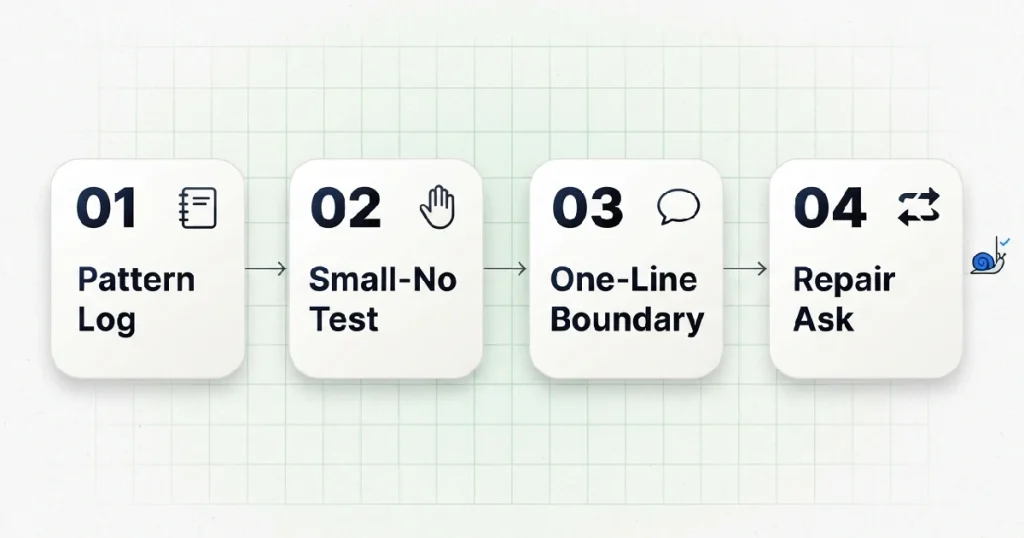
You never need to hand anyone a narcissism diagnosis to act on what you see. One safety note first: if a test feels dangerous, that fear is information. Skip the tests and talk with a counselor or an abuse advocate instead.
1. The Pattern Log. One place to begin: a notes app with three columns (date, what happened, did the behavior change afterward). Ten entries will teach you more than ten arguments. After each entry, ask yourself: would I accept this from a friend?
2. The Small-No Test. Consider declining one low-stakes request this week. Script: “Tonight doesn’t work for me, so let’s do Saturday.” Notice what follows: easy acceptance, or sulking, guilt trips, and payback.
If a small no makes your chest tighten, that reflex may predate this partner. Our guide to how unhealed father wounds shape what we tolerate unpacks where it comes from.
3. The One-Line Boundary. With gaslighting, one calm line beats a long argument. Try: “I remember it differently, and I’m not debating my memory.” Or: “I’ll keep talking when the name-calling stops.”
Say it once, then step away. Bill Eddy’s BIFF rule fits here: brief, informative, friendly, firm.
4. The Repair Ask. Consider one specific request, then give it fourteen days. Script: “When you joked about my job at dinner, I felt small. I need jokes about my work to stop. Can you do that?”
Watch behavior rather than words. Sustained change points toward stress or skill gaps. A sweet week followed by the same old pattern points toward the loop.
Frequently Asked Questions
What are some narcissistic behaviors that show up first?
Usually love bombing, one-sided talks, and small boundary pushes. Contempt and gaslighting tend to show up later, often after you move in together.
Can a narcissist change?
Some people soften these traits with years of steady therapy and real effort. Love alone rarely does it. Judge by months of changed behavior, never by a tearful promise.
Why do I miss someone who hurt me?
Intermittent reinforcement again. Your brain got hooked on random rewards, so distance feels like withdrawal. The ache fades with time, no contact, and steady routines.
Back to that dinner table, the one where you rehearsed a sentence about your day. You now hold a map: seven named behaviors, a table of healthy versions, and a repair test that cuts through charm. You can stop arguing over whether you are “too sensitive.” You can read the pattern like weather data instead.
The pattern only keeps its power while it stays unnamed.
My Closing Remarks
I have spent years reading relationship letters. The sentence I see most is “I feel like I’m going crazy.” If that is you, hear this: confusion is a symptom of the dynamic. It says nothing about how smart you are.
Start small. Log ten entries, test one no, and let the pattern answer the question your gut already asked. You deserve a love that never makes you rehearse the truth.
More Related Stories for You
Worried about a woman and the signs feel murkier? Our guide to the quiet signs of a narcissistic woman most checklists miss shows how the same pattern changes costume.
About The Author