 Elena Garcia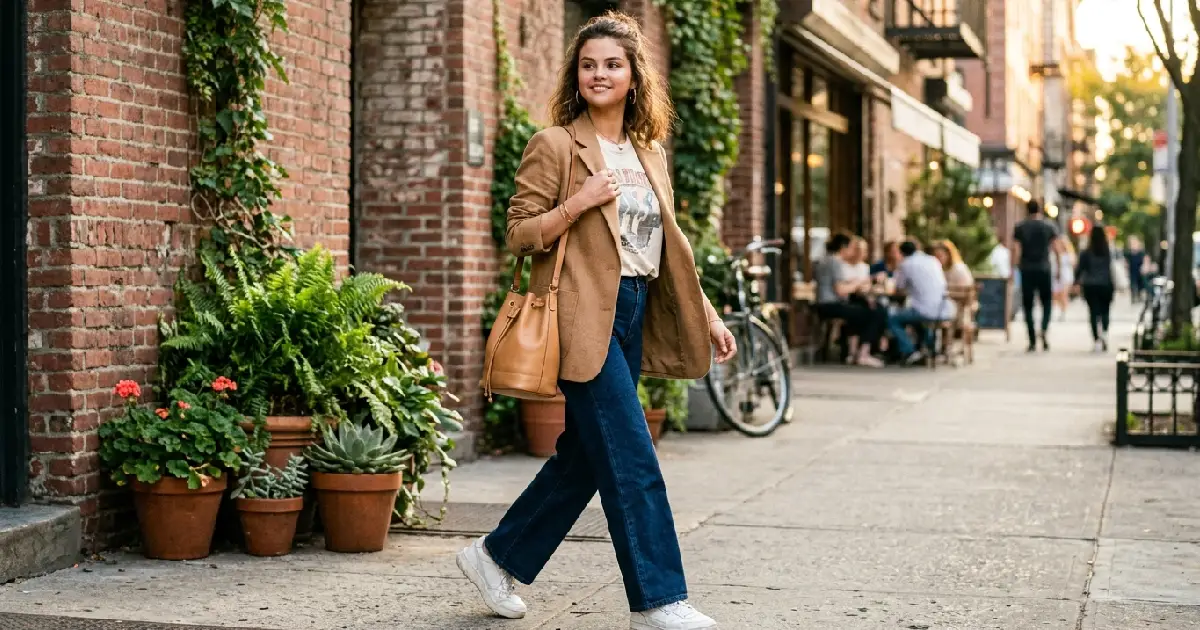
Gen Z’s style isn’t random it’s a carefully coded language, and once you understand it, getting dressed becomes something entirely different.
Key Points:
- What do Gen Z girls wear comes down to one surprisingly simple philosophy: clothing as identity, not performance.
- Understanding what do Gen Z girls wear means recognizing that their most stunning looks are built on psychological confidence, not trend-chasing.
- What do Gen Z girls wear often mixes unexpected pieces, and that intentional contrast is exactly what makes it look so effortlessly cool.
THE HOOK
You’re scrolling through your camera roll after a night out with friends. Everyone looks fine. But you keep pausing on one photo the girl in the oversized blazer, the vintage tee, and the low-rise jeans who looks like she just landed there, effortlessly, like the outfit assembled itself around her energy. Nothing she’s wearing is particularly expensive. Nothing is matching in the way you were taught things should match. And yet.
You can’t stop looking at her.
Here’s what no one tells you.
That feeling that magnetic pull toward her style isn’t about the clothes at all. It’s about what the clothes are communicating. And once you understand the psychology behind it, you’ll never look at a Gen Z outfit the same way again.
CONTEXT AND PROBLEM DEFINITION
The Real Reason Gen Z Style Feels So Different
Most of us grew up with a simple rulebook for dressing well. Match your colors. Wear your size. Follow the season’s trends. Look “put together.”
Gen Z threw that rulebook out.
And the result looks stunning, but for reasons that go much deeper than fashion. Research from the Journal of Consumer Psychology suggests that clothing choices function as a form of nonverbal communication, signaling group identity, values, and even personal narrative. Gen Z didn’t just accidentally stumble into good style. They built an aesthetic system rooted in authenticity, and that authenticity reads as magnetic to everyone watching.
The psychological term for this is enclothed cognition, the idea that what you wear doesn’t just signal who you are to others, it actively shapes how you feel and perform. In plain terms: your outfit changes your brain. Gen Z seems to understand this intuitively, even if they’ve never read a single psychology paper about it.
But here’s the part that surprises most people. What makes a Gen Z look stunning isn’t the individual pieces. It’s the relationship between the pieces, and the confidence with which they’re worn.
THE CORE CONTENT INSIGHT ENGINE
1. The “Contrast Formula” Mixing High and Low on Purpose
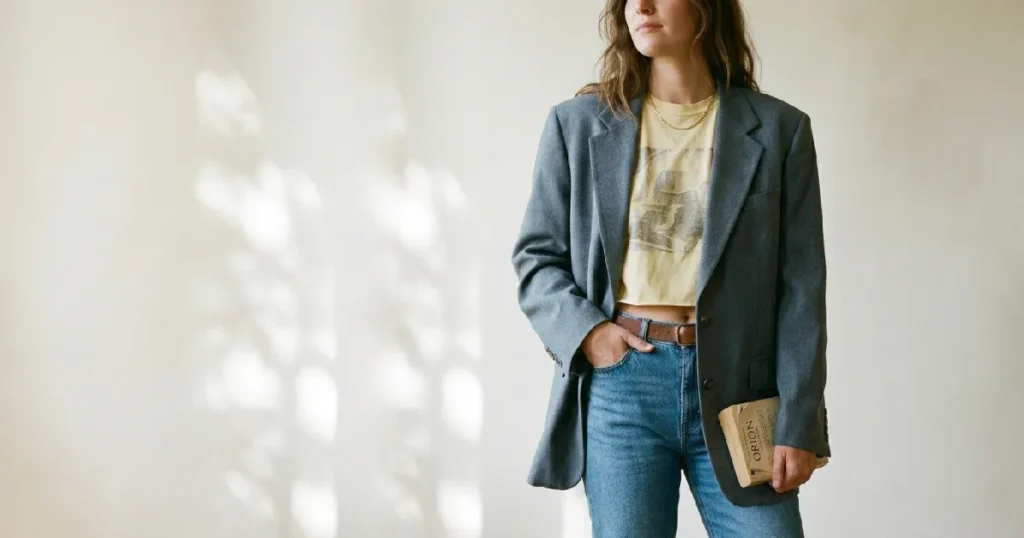
Gen Z girls aren’t confused when they pair a $12 thrifted crop top with a tailored blazer and chunky Adidas sneakers. That’s the formula. And it works because contrast creates visual interest in the same way a good story needs tension.
Think of it like a playlist where every song is the same tempo. Eventually, you stop listening. But throw in one unexpected track, and suddenly you’re paying attention again.
In clothing terms: styling something “elevated” next to something casual creates a visual conversation. It tells the person looking at you that you’re someone who makes intentional choices not someone who just bought a full outfit off a mannequin. The blazer says structure. The vintage tee says ease. Together, they say: I know exactly who I am.
A useful place to start is pairing one structured, intentional piece a blazer, a fitted vest, a leather jacket with something that feels more relaxed. The contrast does the work for you.
2. Fit Over Fashion Why Size-Fluid Dressing Looks So Good
One of the most misunderstood things about Gen Z style is the sizing. Oversized hoodies. Baggy jeans. Boxy tees. To an outside eye, it can look like she just grabbed something from the men’s section and called it a day.
But she didn’t. The silhouette is deliberate.
Gen Z dresses in what stylists call “proportion play” intentionally mixing volume in ways that create shape without requiring the body to provide it. A massively oversized top becomes striking when paired with a slim bottom. A wide-leg pant looks intentional when the top is cropped and fitted.
Take Mia, a 24-year-old I spoke with who described how she used to spend years trying to dress for her body type according to every “flattering” rule she’d been taught. Nothing ever felt right. The moment she started dressing for proportion instead of size, she said, “I finally looked like myself.”
That’s not just a style upgrade. That’s a psychological shift.
3. The “Thrift-First” Mindset And Why It Reads as Confident, Not Cheap
According to a 2023 report by ThredUp, Gen Z is the largest generation driving secondhand fashion, with over 40% reporting they shop resale before buying new. But this isn’t just an environmental choice. It’s a confidence statement.
When you wear something vintage or thrifted, you’re making a quiet announcement: I don’t need the latest drop to feel good. I found something better.
That energy is what makes thrift-forward styling look so stunning. It carries zero anxiety. There’s no “Did I get the right thing?” hovering over the outfit. The piece was chosen because it spoke to her not because it was available on every rack at the mall.
This is the insight differentiator most people miss: what makes a Gen Z look unforgettable isn’t the clothes themselves it’s the absence of approval-seeking in the way they’re worn.
4. Aesthetic Identity Choosing a “Style World” to Live In
Here’s where it gets genuinely fascinating.
Gen Z doesn’t just wear outfits. They affiliate with aesthetics cohesive style worlds with their own visual language, references, and mood. You’ve heard the names: Cottage core. Dark Academia. Clean Girl. Coquette. Y2K. Soft Grunge.
These aren’t just TikTok trends. They function as what psychologists call identity anchors external markers that help individuals communicate their values, interests, and personality to the world. According to research published in the Journal of Personality and Social Psychology, people who feel a strong sense of personal identity report higher self-esteem and lower social anxiety.
In other words, knowing your aesthetic isn’t shallow. It’s stabilizing.
You don’t need to pick one aesthetic forever. But giving yourself a starting point a “style world” that feels like home gives your wardrobe a center of gravity. And that center of gravity is exactly what makes an outfit feel intentional rather than random.
5. The “One Statement Piece” Architecture
If you look closely at the most stunning Gen Z outfits, you’ll notice something: there’s almost always one piece that’s doing the heavy lifting. One item that carries the story of the outfit. Everything else exists to support it.
A sculptural bag. An unexpected shoe. A vintage band tee worn with a silky skirt. An oversized trench coat over the simplest base outfit.
This is called the “statement anchor” approach and it’s the opposite of the maximalist disaster most people accidentally create when they try too hard. One brave piece, surrounded by supporting players, reads as more confident than five statement pieces fighting for attention.
Think of it like a conversation where one person speaks and everyone else listens. When everything talks at once, nothing gets heard.
LAYER 4: PRACTICAL APPLICATION THE “NOW WHAT?”
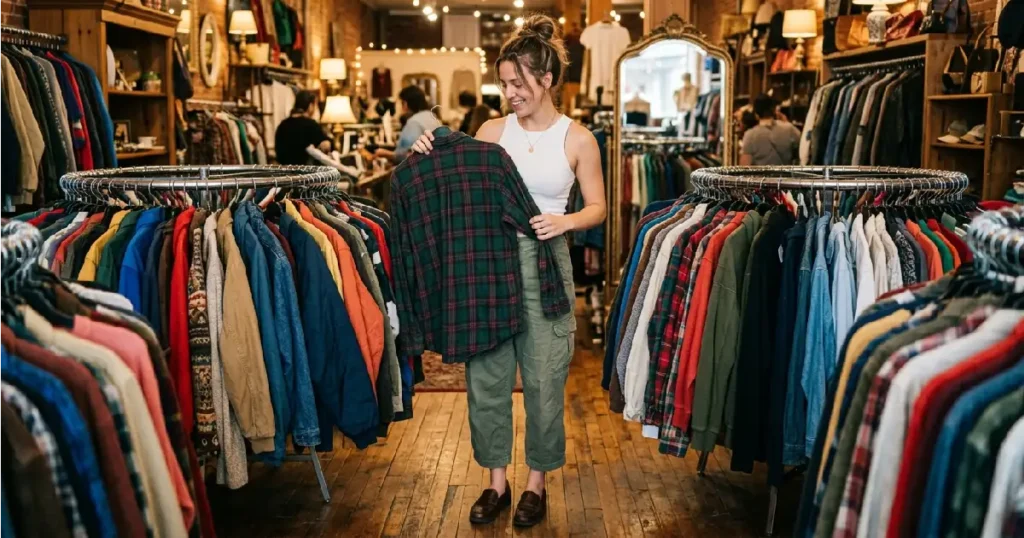
How to Actually Apply This to Your Wardrobe
The Contrast Audit: Go to your closet right now and pull out one piece you consider “dressy” and one piece you consider casual. Put them together. Don’t overthink it. Notice what the combination says. This one exercise builds the muscle memory for contrast dressing faster than any style guide.
The Aesthetic Scroll Test: Spend 10 minutes on Pinterest searching one aesthetic word that feels like it might fit your personality Dark Academia, Clean Girl, Y2K, whatever calls to you. Save every image that makes you feel something. Don’t analyze it. At the end, look at the patterns. The overlapping pieces become your starting point.
The Statement Piece Question: The next time you get dressed, ask yourself: What’s the one piece in this outfit I want someone to notice? Then make sure everything else is calm enough to let it speak.
The Proportion Swap: Try breaking one “rule” you were taught about dressing for your body. Wear the oversized top. Try the wide-leg pant. Notice how it feels. Notice whether you actually look worse or whether you just feel unfamiliar. Those are two very different things. And one of them is worth sitting with.
LAYER 5: THE CLOSE EMOTIONAL LANDING
Remember the girl in the photo? The blazer, the vintage tee, the effortless energy that made you stop scrolling?
She wasn’t born with a style gene. She wasn’t following a checklist. She was just deeply, quietly comfortable with the story her clothes were telling and that comfort is visible from across a room.
You don’t need to copy her. You need to find your own version of that comfort. Your own contrast formula. Your own statement anchor. Your own aesthetic home.
That’s what Gen Z figured out, and it’s available to anyone willing to stop dressing for approval and start dressing for themselves.
That shift from performance to identity is where every stunning outfit actually begins.
My Closing Remarks
I’ll be honest with you: I spent years giving people advice about confidence and self-expression, and I kept wondering why some people transformed instantly while others stayed stuck. Then I realized it. The people who changed fastest weren’t the ones who learned more rules. They were the ones who stopped apologizing for their own taste. If you’re reading this hoping for a formula to finally look “right” I want to gently challenge you. You don’t need permission. You never did. Start there. Everything else follows naturally.
More Related Stories for You
- If you’re navigating the bigger question of what a woman should wear at 40 and beyond, that piece offers a thoughtful look at dressing with intention at any stage of life and it pairs beautifully with everything we’ve talked about here.
About The Author