
 Nicole Adkins
The line between self-assured and self-serving is thinner than you think, and most people cross it without ever noticing.
Key Points:
- Real confidence makes you feel calm and capable; the 12 traits of a narcissist tend to leave you feeling small, confused, and oddly responsible for someone else’s mood.
- Charm, big talk, and instant flattery can hide deep insecurity, and this guide gives you the exact tests to tell the two apart.
- You’ll learn the precise moment narcissistic confidence breaks down, because it simply cannot survive a simple “no” or the slow pressure of ordinary time.
Contents
Table of Contents
We have been trained to clap for the person who never doubts themselves. The executive who owns the table. The date who decides you are “the one” by the second drink. The colleague whose personal brand looks airtight. You watch them and feel admiration mixed with a quiet, unnamed unease. You leave more tired than you arrived. Then you wonder if you are too sensitive, too small, or simply not confident enough to keep up.
You are not too sensitive.
The difference is not volume or polish. Genuine confidence is internally sourced and leaves you steadier. Narcissism is a performance that needs your applause to stay standing. The 12 traits of a narcissist mimic self-assurance until you say no, succeed beside them, or stop feeding the show.
That shrinking feeling is information.
The Core Distinction: Confidence Steadies You, Narcissism Drains You
True self-worth does not need you smaller. It can hear a “no,” share credit, and sit with being ordinary for a night. Narcissism cannot. It borrows its size from the room.
A useful way to hold this: genuine confidence is a well. It has its own water. Narcissism is a leaky bucket. It looks impressive when it is being filled in public. The moment the pouring stops, it panics, blames, and reaches for whoever is closest.
Clinicians writing for Psychology Today have drawn this line clearly. High self-esteem is relatively stable. Narcissism often hides a brittle self that spikes into anxiety and hyperarousal, meaning the body goes on high alert, when admiration is not guaranteed. The swagger is not peace. It is armor.
Listen to the language too. Confidence sounds like “I can.” Narcissism sounds like “I am the best,” and it needs a comparison to exist. One is rooted in skill. The other is rooted in ranking.
Most people in this situation do not realize they have been grading the performance instead of the aftermath. The mask holds in job interviews, first dates, and keynote energy. It slips in ordinary life: a delayed text, a boundary, a night when you are the one shining.
If you were raised around this pattern, you may also fear that your own growing backbone is secret narcissism. That fear itself is a clue. People with a narcissistic structure rarely sit in sincere worry that they have too little empathy. They are busier defending the image.
Here is how the disguise actually works.
The 12 Traits of a Narcissist Disguised as Rock-Solid Confidence
Here is where the disguise starts to come apart, one behavior at a time.
1. The Monopolized Monologue Mistaken for Conviction
They speak with authority. The room leans in. You call it presence.
What you are watching is a conversation treated as a stage. They do not listen. They wait. They talk over people and name it passion.
Share a win and watch the pivot. Within a few sentences the story is theirs again. A confident person can sit in someone else’s light without going dim. A narcissist cannot, because your moment steals their supply. Supply, here, means the attention they use to feel real.
2. The Constant Need for Admiration Mistaken for Independent Pride
They look unshakeable. They shrug off small opinions. You think they are free.
Their self-worth is often contingent, meaning it only holds when someone is clapping. Take the clapping away and the mood drops fast. A minor critique becomes an attack. They answer with contempt, ice, or a speech about how no one understands their standards.
As clinicians at Thriveworks describe, grandiosity can crumble into deep contempt when the validation stream is interrupted. That crash is sometimes called narcissistic injury: the ego bruise that happens when they are not treated as special. True pride can self-correct. This kind of pride can only counterattack.
3. Hyper-Curated Perfection Mistaken for High Standards
The aesthetic is immaculate. The brand is tight. The lifestyle looks like a mood board with a pulse.
People and rooms become props. Partners become accessories. Effort appears when there is an audience or a payoff. When the cameras are off, the warmth often drops. Hostility, laziness, or coldness shows up in private, then vanishes the second someone “important” walks in.
Confidence can be messy at home and still kind. Image-based “confidence” is kindest when it is being watched.
4. Boundary Violations Mistaken for Boldness
They ask big. They push. They call it being a go-getter.
Underneath is entitlement. Your limits feel like insults. Say no to a small favor and the temperature changes. Guilt. Negotiation. A subtle penalty. A joke that stings. A delayed reply that trains you not to refuse next time.
A confident person can want something and still accept your no. A narcissist treats your no as a problem to solve, or a slight to avenge.
5. Weaponized Vulnerability Mistaken for Emotional Intelligence
They share heavy stories early. Trauma. Betrayal. The cruel ex. The broken family. It feels intimate. It feels evolved.
It can also be information mining. They learn where you ache. Later, that ache returns as a “joke,” a public poke, or a reminder of your weakness when they want you off balance.
Real closeness is paced. It does not harvest your soft spots in week two.
6. The Flawless Hero or Tragic Victim Mistaken for Resilience
Every story has the same shape. They were the only decent one. The company was toxic. The last partner was crazy. The friend group was jealous.
Ask about a genuine mistake. Watch the rewrite. Blame slides off them like water. This is not resilience. Resilience includes accountability. What you are seeing is a self that cannot survive being ordinary and wrong at the same time.
Confident people can say “I blew it.” Narcissistic pride needs a villain so it can stay clean.
There is a quieter tell here too. Confident people often feel gratitude for how they grew. Narcissists tend to believe the world should be grateful they showed up.
7. Explosive Love-Bombing Mistaken for Romantic Decisiveness
You feel chosen at speed. Soulmate talk. Career destiny talk. “I have never met anyone like you.” The flattery is huge compared with how long they have known you.
This is idealization: putting you on a pedestal to lock you in as a reliable source of admiration. On dating apps it looks like chemistry. At work it looks like being fast-tracked as “the only one who gets it.” Then the pedestal becomes a drop.
Slow warmth is not boring. It is how trust is actually built.
8. The Zero-Sum Mindset Mistaken for Drive
They compete hard. They talk winning. They push the team. It can look like hunger.
Watch them when someone close succeeds. A partner’s promotion. A friend’s good news. A coworker’s praise. The smile thins. There is a joke. A “yeah, but.” A reminder of a flaw. Their security drops when a peer rises, because their worth was never “I am capable.” It was “I am above.”
Confidence can celebrate beside you. Envy that needs you small is not ambition. It is fear in a nicer suit.
9. Covert Micro-Demeaning Mistaken for Honest Candor
They call it straight talk. Dry humor. “I am just being real.”
You walk away feeling less competent than you were an hour ago. Not once. Repeatedly. The comments are small enough that you sound dramatic if you name them. That is the point. Slow erosion keeps you easier to manage.
If you consistently leave interactions foggy, ashamed, or eager to prove yourself, you are not in a growth relationship. You are in a power dynamic.
10. Gaslighting Mistaken for Ironclad Certainty
They are so sure of the facts that you start editing your own memory.
Gaslighting means they rewrite what happened so they never have to be wrong. You bring a screenshot, a date, a sentence they said last week. They attack your motives, your “overthinking,” or your sanity instead of the content.
Left unexamined, this pattern does not just strain a relationship. It can quietly become the reason you stop trusting your own mind.
Certainty without humility is not leadership. It is control.
11. Grandiose Superlatives Mistaken for Vision
They speak in futures. Unique talent. Once-in-a-generation ideas. Recognition they “should” already have.
Look at the gap between the noise and the record. Confidence can speak quietly because the work is sitting there. Narcissism makes a massive sound to cover an empty shelf. They want elite status first and competence later, if at all.
“I can” is a skill claim. “I am the best” is a ranking claim. Only one of those needs you to clap.
12. Transactional Networking Mistaken for Strategic Relationship Building
They collect impressive people. The circle looks powerful. You might admire the access.
People are tools with expiration dates. Warmth tracks usefulness. Watch how they treat the waiter, the intern, the friend who fell on hard times. Watch how fast the temperature drops when you can no longer give status, praise, sex, labor, or cover.
Confidence can be loyal when there is nothing to gain. Narcissism invoices the room.
Three Tests That Reveal the 12 Traits of a Narcissist Faster Than Any Label

You do not need to win an argument about their personality. You need a small, repeatable experiment.
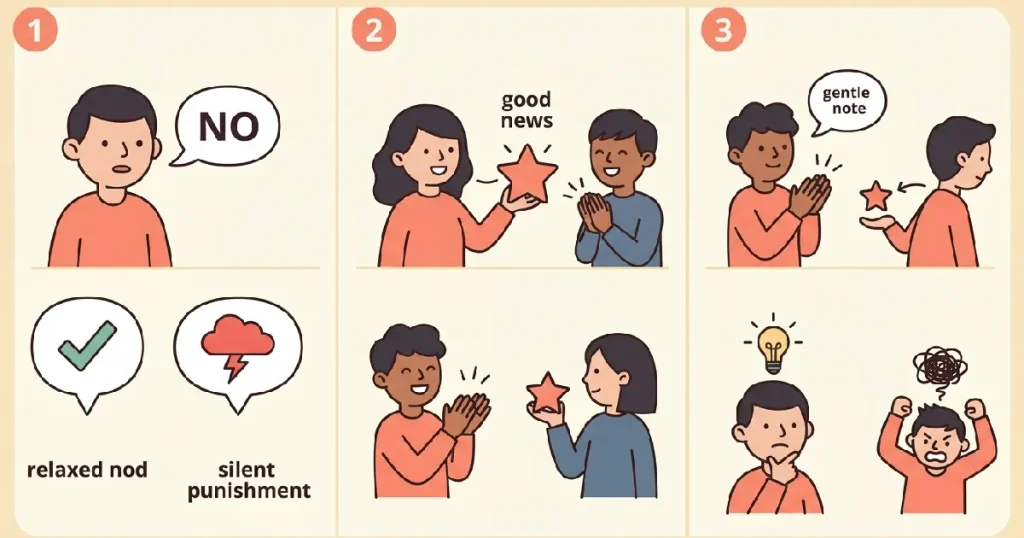
The No Litmus Test. Decline something minor. A last-minute invite. An extra task. A personal question you do not want to answer. A confident person adjusts. A narcissist guilt-trips, negotiates past the line, or quietly punishes you. The tell is not disappointment. Everyone feels that. The tell is retaliation.
The Success Pivot Test. Share good news with no apology attached. Watch their face before their words. Do they enlarge the moment or shrink it? Topic-shifting, visible discomfort, and “helpful” caveats are not quirks. They are the zero-sum mind at work.
The Gentle Critique Evaluation. Offer a small, fair note. “That timeline felt off to me.” “I need you not to joke about that in front of people.” Confident people may flinch, then think. Narcissistic structures often treat the note as an existential threat. The reaction is rage, stonewalling, or a sudden campaign against your character. When healthy coping is thin, volatility fills the gap.
Run the tests more than once. Narcissistic charm is built for short bursts. Consistency over months is the diagnostic tool your first impression never was.
Also track the somatic shift, meaning the body-level change. True confidence creates more calm, more clarity, more room to breathe. Narcissism creates eggshells, adrenaline, and a strange urge to manage their mood before you have even spoken.
Your nervous system is not confused. It is collecting data.
De-Weaponizing the Label Without Going Soft on the Behavior
The word “narcissist” is tired. People use it for any selfish night, any cocky boss, any ex who hurt them. That fatigue is fair. Simple selfishness is real. A bad week is real. You can dislike someone without turning them into a diagnosis.
Focus on the pattern, not the trophy of being right. Ask: Do they need me smaller to feel stable? Do they punish limits? Do they rewrite reality when they are caught? Does my world get more chaotic the closer I stand?
If you are dealing with this at work, parallel communication helps. Keep it factual. Confirm in writing. Do not offer emotional material they can play. Low contact is not pettiness. It is refusing to be the bucket’s water.
If this is a relationship, stop auditioning for a fairer version of them. The mask is the product. The slip is the manual.
In my practice I have watched capable people apologize for having needs after months inside this climate. They were not dramatic. They were adapted. Once they stopped taking the hunger personally, the fog lifted enough to choose.
You Were Never Meant to Be the Water
Go back to that room. The one they command. You can still notice the charm. You can also notice your chest, your guilt, the way your story gets stolen, the way a small no turns into a weather event.
Confidence is a well. It does not need you emptied. If their certainty requires your confusion, it was never confidence.
My Closing Remarks
I have sat with people who spent years calling this dynamic “a strong personality.” They were not weak. They were loyal to a story that made the other person look impressive and themselves look difficult. The day they trusted the tightness in their chest more than the performance in front of them, everything got simpler. You do not owe anyone a diagnosis. You owe yourself a life where your no does not become a crime. That is not cold. That is adult.
More Related Stories for You
- If you are trying to spot narcissistic traits in a partner, start with how they handle your no, not how well they work a room.
About The Author