 Elena Garcia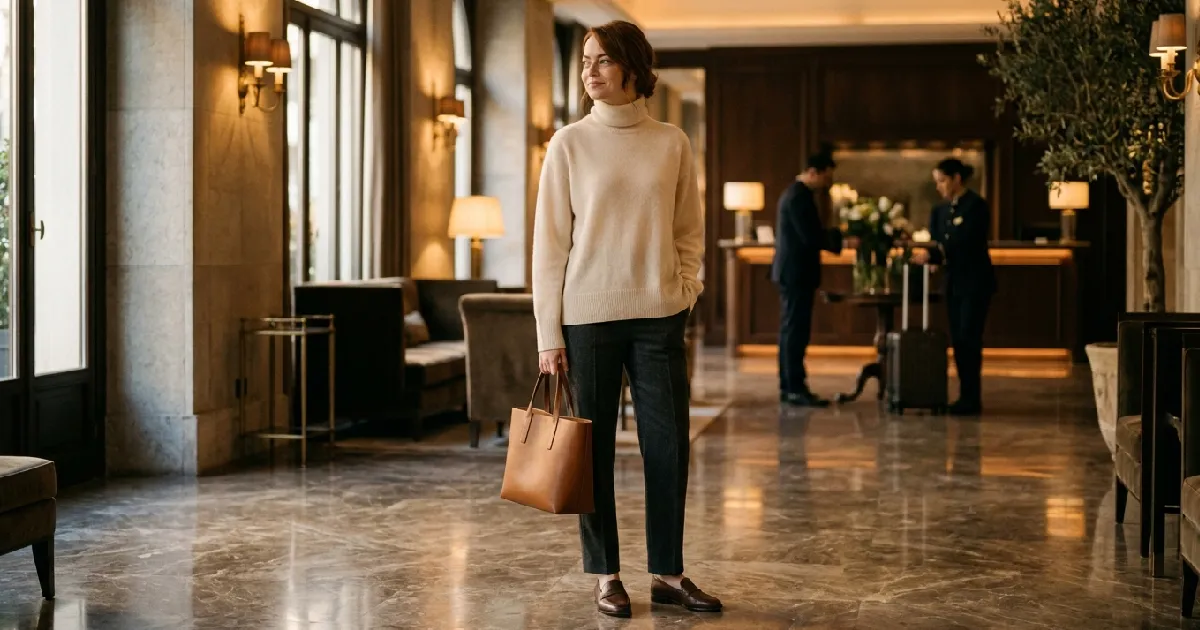
The wealthiest people in the room are often the hardest to spot, and that’s exactly the point.
Key Points
- What screams quiet luxury isn’t a logo, a price tag, or a trending piece. It’s the deliberate absence of all three.
- The aesthetic signals a psychological shift from external validation to internal confidence, backed by decades of consumer behavior research.
- Quiet luxury rewards craftsmanship, fit, and fabric over visibility, making it less about money and more about taste.
Contents
Table of Contents
The Hook
You’re standing in a hotel lobby in Milan. A woman walks in wearing a cream cashmere sweater, dark trousers, and unbranded leather loafers. No logos. No flash. Yet every staff member straightens up the moment she crosses the threshold.
You can’t quite figure out why.
That woman just taught you something the fashion industry has spent millions trying to hide. She doesn’t need her clothes to announce her. Her clothes are the announcement.
Why the Loudest Closets Often Belong to the Least Secure
For decades, designer logos served as social shortcuts. A Gucci belt told the world you’d arrived. A Louis Vuitton bag said you mattered. The louder the brand, the louder the message.
But something shifted.
A 2010 study by researchers Han, Nunes, and Drèze, published in the Journal of Marketing, found that consumers with higher wealth and stronger social standing actually preferred subtle, logo-free luxury items. They called this group “patricians.” The flashy, logo-heavy buyers? Those were “parvenus” — people using brands to climb, not to belong.
This is the psychological engine behind quiet luxury.
When you no longer need to prove you’ve made it, you stop dressing like you’re trying to. The shift isn’t just aesthetic. It’s a marker of identity stability. Psychologists call this internal locus of evaluation, which is just a fancy way of saying you measure your worth from the inside out.
And once you understand this, you can never unsee it.
What Screams Quiet Luxury (And Why It Works)
The phrase itself is a paradox. How can something quiet scream?
Because in a world drowning in noise, silence is the loudest signal of all. Quiet luxury whispers in a language only certain people are trained to hear, and once your ear is tuned, you’ll spot it everywhere.
Here’s what actually defines the aesthetic.
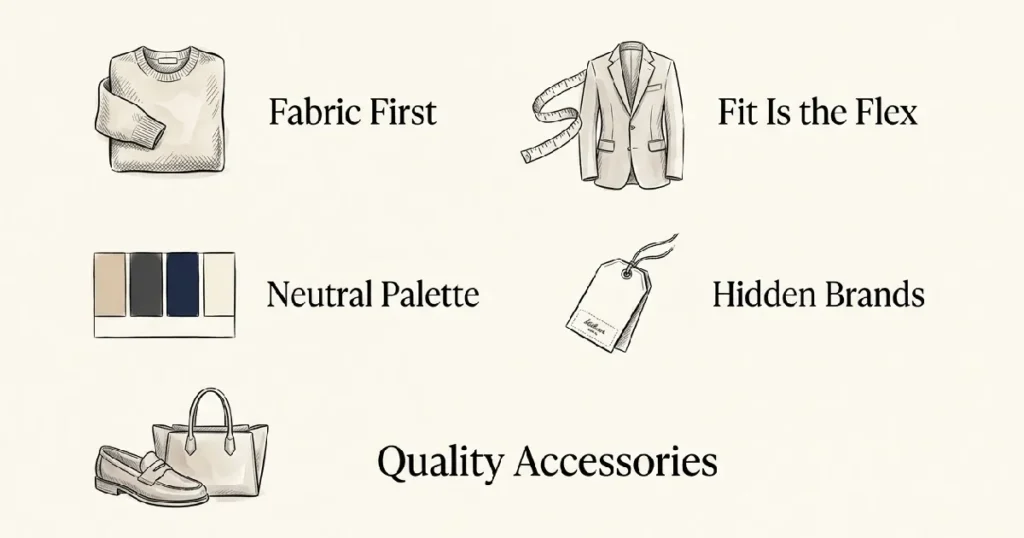
1. The Fabric Does the Talking
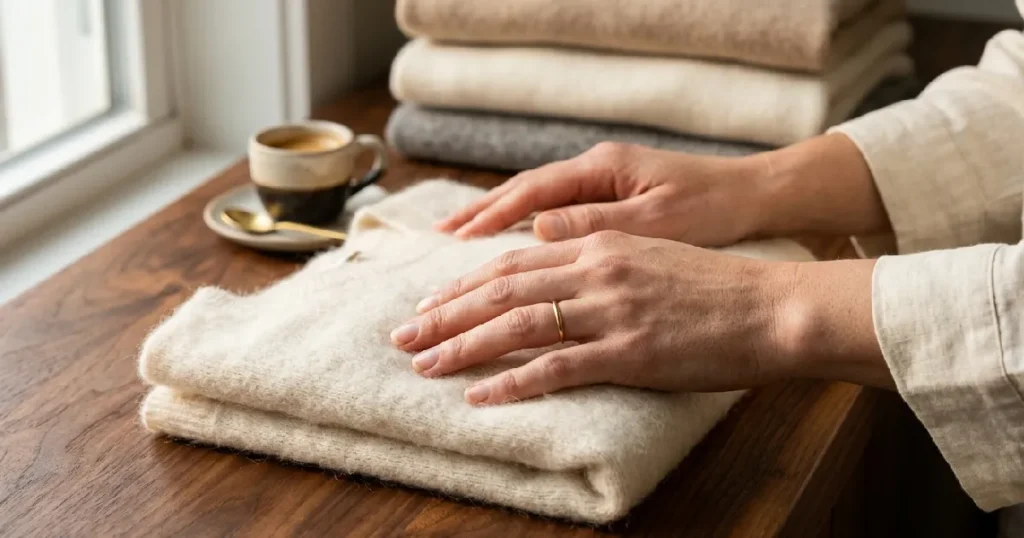
Pick up a true quiet luxury sweater and your fingers know before your eyes do. Mongolian cashmere. Long-staple cotton. Italian wool spun in mills that have operated for centuries.
These materials drape differently. They move with the body. They age beautifully instead of falling apart after three washes.
Brands like Loro Piana, The Row, and Brunello Cucinelli built empires on this principle. You’re not paying for a name. You’re paying for the goat herd, the weaver, and the 200-year-old loom.
The takeaway? The next time you shop, touch first. Look second. Your hands will tell you the truth your eyes might miss.
2. Fit Is the New Flex
A perfectly tailored blazer on a $40 shirt will outclass a designer outfit that bunches at the shoulders every single time. Fit is the great equalizer in fashion, and it’s also the most overlooked.
Quiet luxury obsesses over proportion. Sleeves end exactly at the wrist bone. Trousers break cleanly over the shoe. Shoulders sit where shoulders are supposed to sit.
Most people own clothes that almost fit. The quiet luxury wearer owns fewer pieces, but each one has been altered to their body. A good tailor is the cheapest upgrade you can make.
3. The Color Palette Tells the Story
Camel. Cream. Charcoal. Navy. Ivory. Stone.
Walk into the closet of someone who lives this aesthetic and you’ll see a palette that looks almost monastic. There’s a reason. Neutral colors photograph as expensive because they don’t compete with the wearer. They frame the person, not the other way around.
This is also why quiet luxury looks so good on social media without trying. The eye registers harmony as wealth.
But here’s what no one tells you.
4. The Brands Hide on Purpose
If you can read the logo from across the room, it’s not quiet luxury. Full stop.
Real stealth wealth brands often have no visible branding at all. The Row puts a tiny tag inside the seam. Brunello Cucinelli’s logo is so subtle you have to look for it. Hermès never plasters its name across anything except, occasionally, a belt buckle that requires you to already know what you’re looking at.
This is intentional exclusion. The brands are speaking to people who already know. Everyone else is invited to admire the shape, not the name.
5. The Shoes and Bags Carry the Weight
If your outfit is monochromatic and minimal, your accessories become the architecture. Quiet luxury enthusiasts invest heavily in two categories: leather goods and shoes.
A handmade pair of loafers from a small Italian workshop will outlast ten pairs of trend-driven sneakers. A structured leather tote without hardware will go everywhere a flashy bag can’t. These pieces don’t just complete the outfit. They are the outfit.
The Insight No One Talks About: Quiet Luxury Is About Time, Not Money
Here’s the part of the conversation almost every article misses.
People assume quiet luxury is about having more money than everyone else. It’s not. It’s about having more time than everyone else.
Time to research the right fabric mill. Time to find the right tailor. Time to build a wardrobe slowly, piece by piece, instead of panic-buying a whole new closet every season. Time to wear a coat for fifteen years instead of replacing it every fall.
True luxury is the absence of urgency.
That’s why the aesthetic feels so calming to look at. It signals someone who isn’t chasing. Someone who has stopped performing. Someone who has, in some quiet way, opted out of the visibility race entirely.
And that, more than any cashmere sweater, is what people are actually responding to.
Meet Sarah: A Quiet Luxury Conversion Story
Sarah, a 38-year-old marketing executive, used to fill her closet with logo-heavy designer pieces. Every promotion meant a new bag. Every vacation meant a new outfit. Her closet was bursting, but her confidence wasn’t.
Then her grandmother passed away, leaving her a single navy cashmere coat from the 1970s.
The coat fit like it had been made for her. The fabric felt like a hug. People stopped her on the street to ask where it was from. When she said it was vintage, their eyes lit up in a way they never had when she’d named a designer brand.
Sarah started paying attention. She sold half her closet. She found a tailor. She built a wardrobe of twenty pieces instead of two hundred. She told me she’s never felt more put-together in her life, and she’s never spent less on clothes annually.
The coat taught her something money couldn’t buy. Restraint is its own kind of wealth.
How to Start Living the Quiet Luxury Aesthetic
You don’t need a six-figure budget to adopt this approach. You need a different mindset.
Strategy 1: The One-In, Two-Out Rule
Before buying anything new, identify two items in your closet you’ll donate or sell. This forces you to slow down. It also forces your wardrobe to consolidate around pieces you actually love and wear.
In practice: You see a beige trench at a sample sale. Before you buy it, you mentally name the two trenches in your closet you’ll let go of. If you can’t name them, you don’t need the new one.
Strategy 2: The Touch Test
Stop shopping with your eyes. Start shopping with your hands. When you pick up a garment, ask yourself: does this feel like something I’d want to wear in ten years?
If the answer is no, put it back. The fabric is telling you everything you need to know.
Strategy 3: Build a Tailor Relationship
Find a local tailor and treat them like a doctor. Bring them every new piece you buy. Even a $50 thrifted blazer transformed by a $30 alteration will outclass an off-the-rack designer piece.
Tailors are the secret weapon of every well-dressed person you’ve ever envied.
Strategy 4: Audit Your Logos
Look at your closet. Count the visible logos. Now ask yourself an honest question: which of these am I wearing for me, and which am I wearing for other people?
You don’t have to throw anything away. Just notice. Awareness is the first move toward intention.
Why This Aesthetic Is Suddenly Everywhere
The rise of quiet luxury isn’t an accident. It’s a response.
After years of pandemic-era loungewear, economic anxiety, and a culture exhausted by fast fashion’s environmental cost, people started craving something that felt grounded. Real. Lasting. According to a 2023 Vogue Business report, searches for “quiet luxury” increased over 600% in a single year.
Television played a role too. Shows like Succession dressed the ultra-wealthy not in flashy designer pieces but in muted, expensive minimalism that confused regular viewers. Why does Logan Roy’s daughter look so rich in a plain gray sweater? Because the sweater costs $3,000 and the world’s elite have been buying clothes like this for generations.
Quiet luxury didn’t appear out of nowhere. It just got named.
And the moment something gets named, you can choose to participate in it consciously, instead of being swept along by trends that cost more and last less.
My Closing Remarks
Here’s what I want you to take from this. Quiet luxury isn’t really about clothes. It’s about who you’ve decided to become. The most stylish people I’ve ever met weren’t the wealthiest. They were the ones who’d stopped trying to impress and started trying to align. There’s a peace in that I wish more people felt. You don’t need permission to dress like someone who knows herself. You just need to start. Pick one piece this week. Make it count. Make it yours. Let the rest fall away.
More Related Stories for You
- Why the world’s most successful minds, like Steve Jobs, chose to wear the same outfit every single day — and what it taught us about decision fatigue and personal style.
About The Author